ORIGINAL ARTICLE
아시아 의사들의 바이오시밀러 단일 클론 항체에 대한 지식과 관점:
유럽 의사들과 비교
박수경, 문원
1, 김은수
2, 박상현, 박동일
성균관대학교 의과대학 강북삼성병원 소화기내과, 고신대학교 의과대학 내과학교실1, 경북대학교 의과대학 소화기내과학교실2
Knowledge and Viewpoints on Biosimilar Monoclonal Antibodies among Asian Physicians:
Comparison with European Physicians
Soo-Kyung Park, Won Moon1, Eun Soo Kim2, Sang Hyun Park and Dong Il Park
Division of Gastroenterology, Department of Internal Medicine, Kangbuk Samsung Hospital, Sungkyunkwan University School of Medicine, Seoul; Department of Internal Medicine, Kosin University College of Medicine1, Busan; Division of Gastroenterology and Hepatology, Department of Internal Medicine, Kyungpook National University School of Medicine2, Daegu, Korea
Background/Aims: Current knowledge and viewpoints regarding biosimilars among physicians in Asia are unknown, even though these were investigated by European Crohn’s and Colitis Organization (ECCO) members in 2013 and 2015. Thus, this study con- ducted a multinational survey to assess the awareness of biosimilar monoclonal antibodies among Asian physicians.
Methods: A 17-question multiple-choice anonymous web survey was conducted with the logistic support of the Asian Organization of Crohn’s and Colitis (AOCC). Randomly selected AOCC members were invited by e-mail to participate between February 24, 2017 and March 26, 2017.
Results: In total, 151 physicians from eight Asian countries responded to the survey. Most of the participants were gastro- enterologists (96.6%), and 77.5% had cared for inflammatory bowel diseases (IBD) patients for more than 5 years. The majority of the respondents (66.2%) were aware that a biosimilar is similar but not equivalent to the originator. The majority of respondents (77.5%) considered cost saving to be the main advantage of biosimilars, but a high percentage of respondents (38.4%) were con- cerned about a different immunogenicity from that of the originator (92.4% and 27.1% respectively in ECCO 2015). Only 19.2%
considered that the originator and biosimilars were interchangeable, and only 6.0% felt very confident in the use of biosimilars (44.4% and 28.8% respectively in ECCO 2015).
Conclusions: Asian gastroenterologists in 2017 are generally well informed about biosimilars. On the other hand, compared to the ECCO members surveyed in 2015, Asian gastroenterologists had more concerns and less confidence about the use of biosimilars in clinical practice. Thus, IBD-specific data on the comparison of the efficacy, safety, and immunogenicity in Asian patients are needed. (Korean J Gastroenterol 2019;74:333-340)
Key Words: Biosimilar pharmaceuticals; Infliximab; Asia
Received June 10, 2019. Revised August 9, 2019. Accepted September 6, 2019.
CC This is an open access article distributed under the terms of the Creative Commons Attribution Non-Commercial License (http://creativecommons.org/licenses/
by-nc/4.0) which permits unrestricted non-commercial use, distribution, and reproduction in any medium, provided the original work is properly cited.
Copyright © 2019. Korean Society of Gastroenterology.
교신저자: 박동일, 03181, 서울시 종로구 새문안로 29, 성균관대학교 의과대학 강북삼성병원 소화기내과
Correspondence to: Dong Il Park, Division of Gastroenterology, Department of Internal Medicine, Kangbuk Samsung Hospital, Sungkyunkwan University School of Medicine, 29 Saemunan-ro, Jongno-gu, Seoul 03181, Korea. Tel: +82-2-2001-2059, Fax: +82-2-2001-2049, E-mail: [email protected], ORCID:
https://orcid.org/0000-0003-2307-8575 Financial support: None. Conflict of interest: None.
Table 1. Baseline Characteristics of the Participants
Characteristic Patients (n=151)
Country
Korea 53 (35.1)
Japan 47 (31.1)
China 34 (22.5)
Othersa 17 (11.3)
Sex
Males 112 (74.2)
Females 39 (25.8)
Practice
Academic teaching hospital 142 (94)
Private clinic 5 (3.3)
Others 4 (2.6)
Specialty
Gastroenterologist specializing in IBD 102 (67.5)
General gastroenterologist 44 (29.1)
Surgeon 3 (2.0)
Pediatrician 0 (0.0)
Others 2 (1.3)
Time caring for patients with IBD (years)
<5 34 (22.5)
5-10 38 (25.2)
>10 79 (52.3)
Number of registered IBD patients
<100 18 (11.9)
100-500 68 (45.0)
>500 63 (41.7)
NA 2 (1.3)
Number of registered UC patients
<10 41 (27.2)
10-30 66 (43.7)
>30 41 (27.2)
NA 3 (2.0)
Number of registered CD patients
<10 46 (30.5)
10-30 56 (37.1)
>30 46 (30.5)
NA 3 (2.0)
Values are presented as n (%).
IBD, inflammatory bowel disease; NA, not available; UC, ulcerative colitis; CD, Crohn’s disease.
aOther countries included Hong Kong (n=7), Malaysia (n=4), Taiwan (n=3), Singapore (n=2), India (n=1).
INTRODUCTION
The introduction of biological therapies has led to marked changes in the management of debilitating immune-mediated inflammatory bowel diseases (IBD), including ulcerative colitis (UC) and Crohn’s disease (CD).
1,2On the other hand, the long-term use of these agents may be costly, placing a sig- nificant burden on the National Healthcare System. The devel- opment of the first biosimilar to infliximab, CT-P13 (Remsima
®; Celltrion Inc., Incheon, Korea, and Inflectra
®; Hospiral, Lake Forest, IL, USA) was conceived to decrease the medical care costs and increase the patient treatment options. Recently, infliximab biosimilar monoclonal antibodies (mAb) have been approved for IBD. The current knowledge and viewpoints re- garding biosimilars among European physicians were inves- tigated by European Crohn’s and Colitis Organization (ECCO) members in 2013. The survey showed that a minority of IBD specialists were aware and confident about the benefits and issues of biosimilars.
3In 2015, an ECCO survey was conducted to examine the evolution of IBD specialists’ views after 2 years.
The opinion of IBD experts on the use of biosimilar monoclonal antibodies has changed dramatically toward a more favorable and confident position.
4These might be because of the in- creased knowledge from postgraduate education and pub- lished evidence from clinical practice.
Although the incidence of IBD in Asia has increased rapidly in recent years
5-8and the first infliximab biosimilar, CT-P13 (Remsima
®; Celltrion Inc.), was produced by a Korean bio- pharmaceutical company and licensed for the Korean market in 2012, the current knowledge and viewpoints regarding bio- similars among physicians in Asia is unknown. Therefore, this study conducted a multinational survey to assess the aware- ness of biosimilar mAb among physicians in Asian countries.
SUBJECTS AND METHODS
1. Study design and data collection
This study adopted the questions used to survey ECCO members in 2013, 2015 or both. In 2013, a 15-question mul- tiple-choice anonymous web survey was conducted in Europe, with questions covering the most relevant aspects of biosimilars.
3In 2015, a 14-question multiple-choice anony- mous web survey was conducted in Europe again. Most of the questions used in 2013 were retained, but other ques-
tions were added or adapted on some new issues relevant to biosimilars in IBD.
4In this study, a 17-question multiple-choice anonymous web
survey was performed with the logistic support of the Asian
Organization of Crohn’s and Colitis (AOCC) (Supplementary
Table 1). Randomly selected AOCC members were invited by
Fig. 1. Issues or advantages of monoclonal antibodies biosimilars. ECCO, European Crohn’s and Colitis Organization; AOCC, Asian Organization of Crohn’s and Colitis.
e-mail to participate between February 24, 2017, and March 26, 2017 and their responses were provided to the coauthors for analysis.
2. Statistics analysis
Referring to the published results of 2013 and 2015 ECCO surveys,
3,4a simple comparison between European and Asian participant responses was performed with no statistical analysis. Within Asian countries, a chi-square test was per- formed to compare the results between countries. p-values
≤0.05 were considered significant. All calculations were per- formed using SPSS ver. 24.0 software (SPSS Inc., Chicago, IL, USA).
RESULTS
1. Participant characteristics
Initially, 320 AOCC members were selected randomly and invited to this study. The response rate was 47%. Overall, 151 physicians from eight Asian countries (Korea, Japan, China, Hong Kong, Malaysia, Taiwan, Singapore, and India) responded to the survey (Table 1). Most participants were gastroenterologists (96.6%), including IBD specialists (67.5%).
Of these, 94% worked in academic teaching hospitals, and 77.5% had cared for IBD patients for more than 5 years.
Similar to the ECCO members response in 2015, the ma-
jority (49.6%) had access to biosimilars and had already pre- scribed them, whereas 26.4% had access to biosimilars but had not yet prescribed them, and 19% of respondents had no access to biosimilars (ECCO members in 2015: 60%, 22%, and 18%, respectively). Within Asian countries, a high- er proportion of physicians in Korea (41.5%) had prescribed biosimilars for more than 2 years compared to other coun- tries (Japan 4.3%, China 20.6%, and others 0%, p<0.001) (Supplementary Table 2).
2. General aspects and advantages of biosimilars
In the definition of mAb, the majority of respondents (66.2%) were aware that a biosimilar is a similar product, but not equal to the originator; 27.8% responded that it is a copy of a biological agent, identical to the originator (like a generic), and a further 8% confused a biosimilar with a different anti-tumor necrosis factor (TNF) agent, like adalimu- mab to infliximab, which was similar to the ECCO members response in 2013 (70%, 19%, and 8%, respectively).
Interestingly, among Asian countries, a higher proportion of physicians in Korea (47.2%) defined a mAb as a copy of a biological agent that was identical to the originator compared to participants from other Asian countries (Japan 4.3%, China 20.6%, and others 0%, p<0.001) (Supplementary Table 2).
With regard to the issues or advantages of biosimilar mAb,
19.9% of respondents estimated that biosimilars had differ-
Fig. 2. Interchangeability and automatic substitution. ECCO, European Crohn’s and Colitis Organization; AOCC, Asian Organization of Crohn’s and Colitis; INN, International Nonproprietary Names.
ent activities than the originator, and 38.4% of respondents estimated that these would present a different immuno- genicity pattern than the originator, proportions which were similar to the ECCO members’ opinions in 2015 (16.9% and 27.1% respectively), but lower than those of the ECCO mem- bers in 2013 (43% and 67% respectively) (Fig. 1). On the other hand, a smaller percentage of respondents (77.5%) con- sidered cost saving to be the main advantage of biosimilars compared to 92.4% of ECCO members in 2015 and 89.5%
in 2013 (Fig. 1). Within Asian countries, a higher proportion of physicians in Korea (47.2%) believed that biosimilars would have only a marginal impact on the healthcare costs (Japan 27.7%, China 5.9%, and others 11.8%, p=0.002) (Supplementary Table 2).
Compared to other biosimilars available (erythropoietin, growth factors, etc.), 41.7% of respondents thought that mAb were more complex agents than other biosimilars, and thus had a higher risk of not being sufficiently similar. Approximately 45% of respondents believed that biosimilars required well-de- signed clinical trials evaluating each indication for which the originator was approved, which was lower than the ECCO 2013 respondents (62% and 65% respectively), but higher than those of the ECCO 2015 (32% and 27% respectively). Similar to the ECCO 2015 (54%) results, 53.6% of respondents believed that biosimilars required more accurate post-marketing pharmacovigilance.
3. Interchangeability and automatic substitution
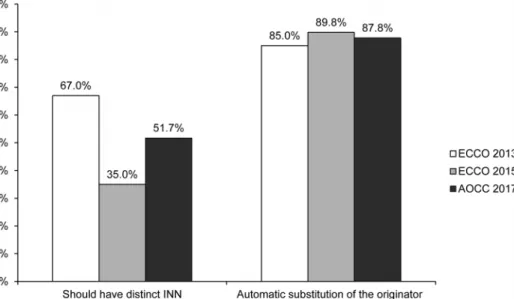
Of the physicians who participated in the survey, 51.7%
agreed that biosimilars should carry distinct International Nonproprietary Names (INN), which was lower than the results from the ECCO 2013 (67%), but higher than the ECCO 2015 (35%) survey (Fig. 2). Within Asian countries, a higher pro- portion of physicians in China (73.5%) thought that biosimilars should carry distinct INN (Korea 54.7%, Japan 29.8%, and others 58.5%, p=0.006) (Supplementary Table 2).
Most respondents (86.7%) disagreed with the automatic substitution of the originator with a biosimilar by a pharmacist, which was generally in line with the findings among ECCO members (85% in 2013 and 89.8% in 2015) (Fig. 2). In a detailed questionnaire regarding which specific cases should be applied to automatic substitution, most respondents (44.3%) said automatic substitution should not be applied in all kinds of cases. Within Asian countries, a higher pro- portion of physicians in Korea (62.3%) disagreed with auto- matic substitution in any case (Japan 38.3%, China 11.8, and others 12.6%, p<0.001) (Supplementary Table 2).
When participants were asked, in the case of an IBD pa-
tient in prolonged remission under an originator mAb, whether
the scheduled therapy should be continued with a biosimilar,
36.4% disagreed citing a lack of disease-specific evidence
of interchangeability (72.2% in ECCO 2013 and 39.9% in
ECCO 2015); 49.7% agreed but stated that they would provide
detailed information to their patient regarding the limited data
Fig. 3. Responses hypothesizing that a randomized controlled trial showed no difference between a biosimilar and the originator in CD. ECCO, European Crohn’s and Colitis Organization; AOCC, Asian Organization of Crohn’s and Colitis; CD, Crohn’s disease; UC, ulcerative colitis.
Fig. 4. Confidence in using biosimilars in clinical practice. ECCO, European Crohn’s and Colitis Organization; AOCC, Asian Organization of Crohn’s and Colitis.
on the safety of the biosimilar (22% in ECCO 2013 and 27.4%
in ECCO 2015), and only 19.2% said the two molecules were interchangeable (6% in ECCO 2013 and 44.4% in ECCO 2015).
4. Extrapolation across indications
In the theoretical case of a randomized controlled trial for rheumatology patients showing no differences between a bio- similar and its originator, 39.1% believed the biosimilar should be approved for all indications of the originator (24.2% in
ECCO 2013 and 50.8% in ECCO 2015). In the case of IBD, in which a theoretical randomized controlled trial showed no differences between a biosimilar and the originator in CD, 52.3% would use it only in CD (53% in ECCO 2013 and 25%
in ECCO 2015); 21.2% would also use the biosimilar in UC (16% in ECCO 2013 and 31% in ECCO 2015), and 23.8%
would still wait for more evidence for both CD and UC (30%
in ECCO 2013 and 8.6% in ECCO 2015) (Fig. 3).
For the actions required of medical societies, 45.7%
thought that medical societies should promote information on
Fig. 5. Confidence according to access to biosimilars.
biosimilars (66% in ECCO 2013 and 75% in ECCO 2015), and 55.6% of respondents expressed a need for collaboration with health institutions to develop a consensus on the use of bio- similars (compared to 78% in ECCO 2013 and 47% in ECCO 2015); 58.3%, recommended the development of multi- specialty practice guidelines (compared to 57% in ECCO 2013 and 26% in ECCO 2015), and 63.6% recommended the devel- opment of multispecialty safety registries (compared to 81%
in ECCO 2013 and 52% in ECCO 2015).
5. Confidence regarding the use of biosimilars
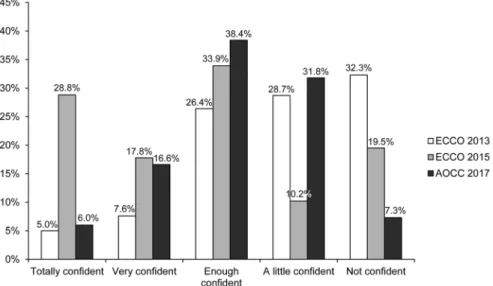
Finally, when asked whether they would feel confident in prescribing biosimilars to their participants, only 6.0% felt con- fident in the use of biosimilars compared to 5% and 28.8%
of ECCO members in 2013 and 2015, respectively (Fig. 4).
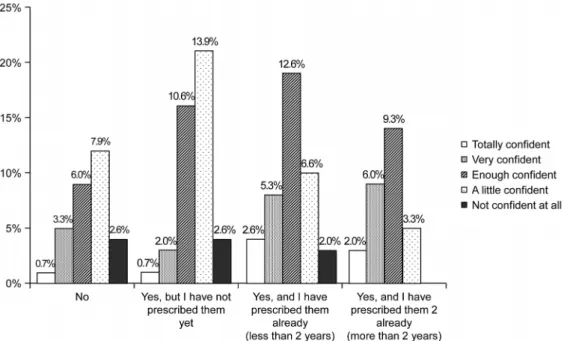
When the association between the degree of confidence and access to biosimilars was analyzed, participants who had nev- er prescribed these agents or participants from countries in which these agents were unavailable showed a higher proportion of little or no confidence (Spearman’s r=-0.31, p<0.001) (Fig. 5).
DISCUSSION
The first infliximab biosimilar was introduced to the European market in 2013, and a survey investigating the opin-
ions of European IBD physicians was undertaken with the lo- gistic support of the ECCO in 2013 and subsequently in 2015.
3,4The 2015 survey indicated that almost double the proportion of respondents were in favor of increasing the use of biosimilars, with limited concerns regarding their safety, compared to the 2013 survey.
4The present survey showed that Asian gastroenterologists in 2017 were generally as well informed of the definitions of biosimilars, as were ECCO mem- bers in 2015, and the concerns about immunogenicity were not as high as ECCO members in 2015. On the other hand, there were more concerns regarding the concept of ex- trapolation across indications and less confidence about their use in clinical practice than those among ECCO members in 2015.
The first infliximab biosimilar, CT-P13 (Remsima
®; Celltrion Inc.), was manufactured by a Korean biopharmaceutical com- pany and was licensed for the market in Korea in 2012.
Subsequently, CT-P13 (Remsima
®; Celltrion Inc.) was in- troduced across Asia, first in Japan in 2014, then in Taiwan and Singapore in 2016, and recently in Hong Kong in 2017.
Therefore, most of the participants (112/151, 74.2%) in the
present study had biosimilars available for their clinical prac-
tice, and they were generally as well informed of the defi-
nitions of biosimilars as the ECCO members in 2015. On the
other hand, there was a difference in the duration of bio-
similar prescription among physicians within Asian countries.
The proportion of physicians in Korea who prescribed bio- similars for more than 2 years was 41.5% in Korea, 20.6%
in China, and less than 5% in other Asian countries (Supplementary Table 2). In addition, a proportion of Asian gastroenterologists still had misconceptions regarding bio- similars, viewing them as generic copies of the original bio- logic agents. Compared to ECCO members, a lower percent- age of respondents considered lower prices as the main ad- vantage of biosimilars in this study. An explanation may be that because Asian governments are using pharmaceutical pricing strategies to contain rising healthcare costs, there is a relatively small price difference between the originators and biosimilars.
9In particular, the single price system is applied in Korea so that the prices of the innovator drug and its alter- native have become similar.
10In Asia, although the concerns of immunogenicity were not serious, they were higher than ECCO 2015, and the proportion of respondents who thought that each biosimilar should carry a distinct INN was higher than ECCO 2015.
In the present survey, there were more concerns regarding the extrapolation of biosimilars across indications and less confidence about their use in clinical practice than for the ECCO members in 2015. The reason might be that there have been few studies supporting the safety and effectiveness of infliximab biosimilars in the Asian IBD population, as all pub- lished studies were conducted in Korea.
11,12A retrospective multicenter study evaluated the clinical efficacy and safety of CT-P13 (Remsima
®; Celltrion Inc.) in 32 anti-TNF-naïve CD patients and 42 anti-TNF-naïve UC patients.
11In anti-TNF-naïve CD patients, the remission rates were 68.8%, 84.4%, 77.3%, and 75.0% at 2, 8, 30, and 54 weeks. In anti-TNF-naïve UC patients, remission rates were 19.0%, 38.1%, 47.8% and 50.0%
at 2, 8, 30, and 54 weeks. In another post-marketing study, which included patients with active moderate-to-severe CD, fistulizing CD, or moderate-to-severe UC treated with CT-P13 (Remsima
®; Celltrion Inc.),
12treatment-related adverse events occurred in 10% of patients and were mostly mild-moderate in severity. Positive outcomes for response/remission were reported regardless of whether the patients had received prior infliximab or not.
Currently, prospective randomized non-inferiority trials eval- uating the clinical efficacy and safety, as well as the inter- changeability of biosimilars in Korean IBD patients are ongoing.
13In Western countries, clinical evidence regarding
biosimilars is derived from cohort studies on IBD patients, both in CD and UC.
14-24Although the extrapolation for use in other indications is essential to keep the cost of biosimilars competitive, well-designed, prospective randomized non-in- feriority trials for efficacy and safety, as well as im- munogenicity and interchangeability will be needed before clinicians confidently integrate biosimilars into IBD treatment.
In addition, as the physician’s accessibility and experience derived from the follow-up time to the prescription were asso- ciated with increased confidence in using biosimilars in clin- ical practice in this survey, both clinical evidence and in- dividual experience might be needed. This study had limi- tations in that because most of the responders were from three Asian countries (Korea, Japan, and China), it will be difficult for the survey result to represent other Asian physi- cians’ knowledge and viewpoints. Therefore, this survey should be conducted on other Asian physicians’ in the future.
In conclusion, Asian gastroenterologists are generally well informed about biosimilars. On the other hand, compared to ECCO members in 2015, Asian gastroenterologists had more concerns and less confidence about the use of biosimilars in clinical practice. Thus, IBD-specific data on a comparison of the efficacy, safety, and immunogenicity in Asian patients will be needed.
ACKNOWLEDGEMENTS
We gratefully thank Silvio Danese for permission to for- mulate the questions for this study, which were based on the ECCO member surveys in 2013 and 2015 and thank Tadakazu Hisamatsu, Zhihua Ran, and Shu Chen Wei for col- lecting data.
REFERENCES
1. Katsanos KH, Papadakis KA. Inflammatory bowel disease: up- dates on molecular targets for biologics. Gut Liver 2017;11:
455-463.
2. Park DI. Current status of biosimilars in the treatment of in- flammatory bowel diseases. Intest Res 2016;14:15-20.
3. Danese S, Fiorino G, Michetti P. Viewpoint: knowledge and view- points on biosimilar monoclonal antibodies among members of the European Crohn's and Colitis Organization. J Crohns Colitis 2014;8:1548-1550.
4. Danese S, Fiorino G, Michetti P. Changes in biosimilar knowledge among European Crohn's Colitis Organization [ECCO] members:
an updated survey. J Crohns Colitis 2016;10:1362-1365.
5. Ng SC, Shi HY, Hamidi N, et al. Worldwide incidence and preva- lence of inflammatory bowel disease in the 21st century: a sys- tematic review of population-based studies. Lancet 2018;
390:2769-2778.
6. Ng WK, Wong SH, Ng SC. Changing epidemiological trends of in- flammatory bowel disease in Asia. Intest Res 2016;14:111-119.
7. Ooi CJ, Makharia GK, Hilmi I, et al. Asia pacific consensus state- ments on Crohn's disease. Part 1: definition, diagnosis, and epi- demiology: (Asia pacific Crohn's disease consensus--part 1). J Gastroenterol Hepatol 2016;31:45-55.
8. Yang SK, Yun S, Kim JH, et al. Epidemiology of inflammatory bow- el disease in the Songpa-Kangdong district, Seoul, Korea, 1986-2005: a KASID study. Inflamm Bowel Dis 2008;14:
542-549.
9. Verghese NR, Barrenetxea J, Bhargava Y, Agrawal S, Finkelstein EA. Government pharmaceutical pricing strategies in the Asia-Pacific region: an overview. J Mark Access Health Policy 2019;7:1601060.
10. Hasan SS, Kow CS, Dawoud D, Mohamed O, Baines D, Babar ZU.
Pharmaceutical policy reforms to regulate drug prices in the Asia Pacific region: the case of Australia, China, India, Malaysia, New Zealand, and South Korea. Value Health Reg Issues 2019;
18:18-23.
11. Jung YS, Park DI, Kim YH, et al. Efficacy and safety of CT-P13, a biosimilar of infliximab, in patients with inflammatory bowel dis- ease: a retrospective multicenter study. J Gastroenterol Hepatol 2015;30:1705-1712.
12. Park SH, Kim YH, Lee JH, et al. Post-marketing study of biosimilar infliximab (CT-P13) to evaluate its safety and efficacy in Korea.
Expert Rev Gastroenterol Hepatol 2015;9 Suppl 1:35-44.
13. Kim YH, Ye BD, Pesegova M, et al. Phase III randomized, dou- ble-blind, controlled trial to compare biosimilar infliximab (CT-P13) with innovator infliximab (INX) in patients with active Crohn's disease: early efficacy and safety results. Gastro- enterology 2017;152:S65.
14. Jahnsen J, Detlie TE, Vatn S, Ricanek P. Biosimilar infliximab (CT-P13) in the treatment of inflammatory bowel disease: a Norwegian observational study. Expert Rev Gastroenterol
Hepatol 2015;9 Suppl 1:45-52.
15. Keil R, Wasserbauer M, Zádorová Z, et al. Clinical monitoring: in- fliximab biosimilar CT-P13 in the treatment of Crohn's disease and ulcerative colitis. Scand J Gastroenterol 2016;51:1062-1068.
16. Smits LJ, Derikx LA, de Jong DJ, et al. Clinical outcomes following a switch from remicade® to the biosimilar CT-P13 in in- flammatory bowel disease patients: a prospective observational cohort study. J Crohns Colitis 2016;10:1287-1293.
17. Argüelles-Arias F, Guerra Veloz MF, Perea Amarillo R, et al.
Effectiveness and safety of CT-P13 (biosimilar infliximab) in pa- tients with inflammatory bowel disease in real life at 6 months.
Dig Dis Sci 2017;62:1305-1312.
18. Gecse KB, Lovász BD, Farkas K, et al. Efficacy and safety of the biosimilar infliximab CT-P13 treatment in inflammatory bowel diseases: a prospective, multicentre, nationwide cohort. J Crohns Colitis 2016;10:133-140.
19. Kaniewska M, Moniuszko A, Rydzewska G. The efficacy and safe- ty of the biosimilar product (inflectra®) compared to the refer- ence drug (remicade®) in rescue therapy in adult patients with ulcerative colitis. Prz Gastroenterol 2017;12:169-174.
20. Farkas K, Rutka M, Golovics PA, et al. Efficacy of infliximab bio- similar CT-P13 induction therapy on mucosal healing in ulcer- ative colitis. J Crohns Colitis 2016;10:1273-1278.
21. Fiorino G, Ruiz-Argüello MB, Maguregui A, et al. Full interchange- ability in regard to immunogenicity between the infliximab refer- ence biologic and biosimilars CT-P13 and SB2 in inflammatory bowel disease. Inflamm Bowel Dis 2018;24:601-606.
22. Smits LJT, Grelack A, Derikx LAAP, et al. Long-term clinical out- comes after switching from remicade® to biosimilar CT-P13 in inflammatory bowel disease. Dig Dis Sci 2017;62:3117-3122.
23. Boone NW, Liu L, Romberg-Camps MJ, et al. The nocebo effect challenges the non-medical infliximab switch in practice. Eur J Clin Pharmacol 2018;74:655-661.
24. Schmitz EMH, Boekema PJ, Straathof JWA, et al. Switching from infliximab innovator to biosimilar in patients with inflammatory bowel disease: a 12-month multicentre observational pro- spective cohort study. Aliment Pharmacol Ther 2018;47:
356-363.
1. Sex 1) Male 2) Female
2. What is your country?
1) Korea 2) Japan 3) China
4) Other (please specify, ) 3. What is your type of practice?
1) Private clinic
2) Academic teaching hospital
3) Other (please specify, ) 4. What is your specialty?
1) Gastroenterologist specializing in inflammatory bowel disease (IBD) 2) General gastroenterologist
3) Surgeon 4) Pediatrician
5) Other (please specify, )
5. How long have you been caring for patients with IBD?
1) Less than 5 years
2) More than 5 years; less than 10 years 3) More than 10 years
6. How many patients with IBD are registered in your unit?
1) Less than 100 2) 100-500 3) More than 500 4) NA
7. How many patients with ulcerative colitis (UC) per week do you care for in your practice?
1) Less than 10 2) 10-30 3) More than 30 4) NA
8. How many patients with Crohn’s disease (CD) do you care for in your practice?
1) Less than 10 2) 10-30 3) More than 30 4) NA
9. What is your e-mail address?
<Knowledge of biosimilars in IBD>
1. Do you have access to biosimilars in your country?
1) No
2) Yes, but I have not prescribed them yet
3) Yes, and I have prescribed them already (less than 2 years) 4) Yes, and I have prescribed them already (more than 2 years)
1) A biosimilar is similar, but not equal to the originator
2) A biosimilar is a copy of a biological agent, identical to the originator (like a generic) 3) A biosimilar is a different anti-TNF agent, like adalimumab and infliximab
3. What could be issues or advantages of a mAb biosimilar? (more than one answer possible) 1) They can work differently from the originator
2) They can have a different immunogenicity pattern than the originator
3) Switching from originator to one or more of its biosimilars may boost immunogenicity 4) The patients' rights to know which drug is given to them may be challenged 5) They will be less expensive than the originator
6) There will be more extensive indications than for the originator
7) The effectiveness of biosimilars in all indications may not have been derived from clinical trials 8) There is no additional issue
4. Regarding the impact of biosimilars on healthcare costs 1) Biosimilars can significantly reduce healthcare costs
2) Biosimilars can have only a marginal impact on healthcare costs
3) Additional costs of introduction, regulation and pharmacovigilance can develop to offset any potential savings 4) I don’t know
5. Do you think mAb biosimilars have different feature(s) compared to the other available biosimilars (erythropoietin, growth factors, etc.)?
(more than one answer possible)
1) Monoclonal antibodies are more complex than other biosimilars, thus there are higher risks of being not similar enough 2) They require more accurate postmarketing pharmacovigilance
3) They require well-designed clinical trials in each indication for which the originator is approved 4) There are no differences with other biosimilars
6. Do you think that a biosimilar mAb should have a different International Nonproprietary Names (INN) than its originator?
1) Yes 2) No
3) I do not know
7. Pharmacists can autonomously replace original medications with generics. Do you think that the same should apply for biosimilars?
1) Yes 2) No
3) I do not know
8. If the substitution is no longer in the hands of the physicians for biosimilars, do you think that it should be automatic?
1) Yes, in all cases
2) Yes, but only for new prescriptions
3) Yes, but only in patients responding well to the originator 4) No
5) I do not know
9. Which of the following actions do you think medical societies should undertake about biosimilars? (more than one answer possible) 1) Promote information and culture on biosimilars mAb
2) Collaborate with health institutions and regulators to develop rules in this sector 3) Endorse the extrapolation of indications for a biosimilar not tested in the specialty 4) Develop multispecialty practice guidelines
5) Create multispecialty international registries to monitor switching practices, effectiveness, safety, and immunogenicity of biosimilars 10. Which of the following actions do you think patient organizations should undertake regarding biosimilars?
1) Patient organizations should be involved in these processes (see answers in question 8) 2) There should be joint position statements by physicians and patients' associations to regulators 3) This is a matter for expert physicians and regulatory agencies only
1) Yes, activities have started in IBD
2) Yes, activities have started in another specialty
3) Not aware of any action or education by a patient organization
12. A randomized clinical trial on rheumatoid arthritis showed no differences in efficacy and safety between the originator and a biosimilar mAb.
You conclude:
1) The tested biosimilar mAb can be approved for all rheumatologic indications 2) All biosimilar mAb of the same originator can be approved for rheumatoid arthritis
3) The tested biosimilar mAb can be approved for all indications for which the originator is approved 4) All biosimilars of the same originator can be approved for all indications of the originator 5) None of the above
13. One randomized clinical trial on rheumatoid arthritis and one on ankylosing spondylitis showed no differences in efficacy and safety between the originator and a biosimilar mAb, with a 30% saving in costs. You conclude:
1) The tested biosimilar mAb should be the first choice for rheumatoid arthritis and ankylosing spondylitis 2) The tested biosimilar mAb should be the first choice for all indications as the originator
3) The originator and the tested biosimilar mAb should be first choices for the two indications
4) The originator and the tested biosimilar mAb should be first choices for the all indications of the originator 5) None of the above
14. Assume that there is a randomized clinical trial showing similarity between a biosimilar and the originator mAb in CD for the induction and maintenance of remission. Would you:
1) Use it only in CD
2) Use it also in ulcerative colitis for the induction and maintenance 3) Use it in ulcerative colitis also, but just for induction
4) I would wait for more evidence of biosimilarity for both diseases
15. An IBD patient of yours is in prolonged remission under an original mAb. You are asked to continue the scheduled therapy with a biosimilar mAb. Do you agree? (more than one answer possible)
1) Yes, the two molecules are interchangeable
2) No, because the SWITCH study between infliximab and adalimumab gave poor results
3) No, because there are limited data about the impact of switching on immunogenicity (against either originator or biosimilar) 4) Yes, but I would inform my patient in detail, because of the limited data on the safety of biosimilars
5) No, there is no disease specific evidence about their interchangeability
16. How would you qualify the education on biosimilars that you followed during the last 18 months?
1) Fair, balanced, and very useful as the issue is of importance to my practice 2) Too optimistic on biosimilars safety and efficacy
3) Confusing and leading to more uncertainty in your mind
4) Unneeded as biosimilars will be introduced into the system by regulators and payors anyway
5) Unneeded because biosimilars are at least as similar to their originator than separate batches of the originator have been during the last decade
17. Do you (or would you) feel confident in using biosimilars in your everyday clinical practice today?
1) Totally confident 2) Very confident 3) Sufficiently confident 4) A little confident 5) Not confident at all
AOCC, Asian Organization of Crohn’s and Colitis; NA, not available; TNF, tumor necrosis factor.
1. Access to biosimilars <0.001
Prescribed for more than 2 years 22 (41.5) 2 (4.3) 7 (20.6) 0 (0.0)
Prescribed for less than 2 years 17 (32.1) 20 (42.6) 2 (5.9) 5 (29.4)
Have not prescribed them yet 14 (26.4) 23 (48.9) 4 (11.8) 4 (23.5)
Not available in this country 0 (0.0) 2 (4.3) 21 (61.8) 8 (47.1)
2. Define a monoclonal antibodies <0.001
A biosimilar is a similar, but not equal to the originator 28 (52.8) 37 (78.7) 23 (67.6) 12 (70.6) A biosimilar is a copy of a biological agent, identical to the originator (like a generic) 25 (47.2) 8 (17.0) 5 (14.7) 4 (23.5) A biosimilar is a different anti-TNF agent, like adalimumab to infliximab 0 (0.0) 2 (4.3) 6 (17.6) 1 (59) 3. Issues or advantages of a mAb biosimilar
Different mechanism of action than the originator 9 (17.0) 8 (17.0) 10 (29.4) 3 (17.6) 0.04 Different immunogenicity pattern than the originator 23 (43.4) 9 (19.1) 16 (47.1) 10 (58.8) 0.007 Switching from originator to one or more of its biosimilars may boost
immunogenicity
10 (18.9) 7 (14.9) 11 (32.4) 4 (23.5) 0.27
Patients' right to know which drug is given to them may be challenged 26 (49.1) 9 (19.1) 12 (35.3) 7 (41.2) 0.02
Less expensive than the originator 40 (75.5) 38 (80.9) 23 (67.6) 16 (94.1) 0.17
More extensive indications than for the originator 0 (0.0) 2 (4.3) 3 (8.8) 0 (0.0) 0.12 The reported effectiveness of biosimilars in different indications may not have
been derived from clinical trials
25 (47.2) 16 (34.0) 18 (52.9) 12 (70.6) 0.05
4. Regarding the impact of biosimilars on healthcare costs 0.002
Biosimilars can significantly reduce healthcare costs 24 (45.3) 29 (61.7) 23 (67.6) 13 (76.5) Biosimilars have only a marginal impact on healthcare costs 25 (47.2) 13 (27.7) 2 (5.9) 2 (11.8) Additional costs of introduction, regulation and pharmacovigilance can develop
to offset any potential savings
2 (3.8) 1 (2.1) 4 (11.8) 0 (0.0)
5. mAb biosimilars have different feature(s) compared to the other available biosimilars (erythropoietin, growth factors, etc.)
Monoclonal antibodies are more complex than other biosimilars thus have higher risks of not being sufficiently similar
22 (41.5) 14 (29.8) 14 (29.8) 11 (64.7) 0.07
They require more accurate postmarketing pharmacovigilance 25 (47.2) 23 (48.9) 23 (48.9) 11 (64.7) 0.28 They require well-designed clinical trials in each indication for which the originator
is approved
24 (45.3) 15 (31.9) 15 (31.9) 6 (35.3) 0.01
There are no differences with other biosimilars 6 (11.3) 6 (12.8) 3 (8.8) 1 (5.9) 0.85 6. Biosimilar mAb should have a different INN than its originator 29 (54.7) 14 (29.8) 25 (73.5) 10 (58.5) 0.006 7. Autonomously replace original medications with biosimilars 3 (5.7) 5 (10.6) 12 (35.3) 0 (0.0) <0.001
8. Substitution automatically <0.001
In all cases 0 (0.0) 7 (14.9) 4 (11.8) 0 (0.0)
Only for new prescriptions 9 (17.0) 7 (14.9) 8 (23.5) 2 (11.8)
Only in patients responding well to the originator 8 (15.1) 4 (8.5) 15 (44.1) 1 (5.9)
Never 33 (62.3) 18 (38.3) 4 (11.8) 12 (12.6)
9. Actions, medical societies should undertake with regards to biosimilars
Promote information and culture on biosimilar mAb 20 (37.7) 17 (36.2) 20 (58.8) 12 (70.6) 0.02 Collaborate with health institutions and regulators to develop rules in this sector 32 (60.4) 16 (34.0) 22 (64.7) 14 (82.4) 0.001 Endorse the extrapolation of indications for a biosimilars not tested in the
specialty
8 (15.1) 2 (4.3) 11 (32.4) 4 (23.5) 0.007
Develop multispecialty practice guidelines 30 (56.6) 5 (53.2) 21 (61.8) 12 (70.6) 0.61
Create multispecialty international registries to monitor switching practices, effectiveness, safety, and immunogenicity of biosimilars
34 (64.2) 222 (46.8) 23 (67.6) 17 (100) 0.001
10. Actions of patient organizations <0.001 Actions patient organizations should undertake about biosimilars should be
involved in these processes
6 (11.3) 16 (34.0) 7 (20.6) 5 (29.4)
There should be joint position statements by physicians and patients' associations to regulators
24 (45.3) 25 (53.2) 21 (61.8) 2 (11.8)
This is a matter for expert physicians and regulatory agencies only 23 (43.4) 6 (12.8) 6 (17.6) 10 (58.8) 11. Aware of any action or education initiated by a patient organization about
biosimilars
0.004
Yes, activities have started in IBD 6 (11.3) 10 (21.3) 14 (41.2) 0 (0.0)
Yes, activities have started in another specialty 3 (5.7) 1 (2.1) 3 (8.8) 1 (5.9)
Not aware of any action or education 44 (83.0) 36 (76.6) 17 (50.0) 16 (94.1)
12. A RCT on RA showed no differences in efficacy and safety between the originator and a biosimilar mAb. You conclude:
0.18
The tested biosimilar mAb can be approved for all rheumatologic indications 17 (32.1) 23 (48.9) 10 (29.4) 2 (11.8) All biosimilar mAb of the same originator can be approved for RA 5 (9.4) 3 (6.4) 3 (8.8) 3 (17.6) The tested biosimilar mAb can be approved for all indications for which the
originator is approved
25 (47.2) 13 (27.7) 13 (38.2) 8 (47.1)
All biosimilars of the same originator can be approved for all indications of the originator
1 (1.9) 2 (4.3) 0 (0.0) 0 (0.0)
13. One RCT on RA and one on AS showed no differences in efficacy and safety between the originator and a biosimilar mAb, with a 30% saving in costs. You conclude:
0.24
The tested biosimilar mAb should be the first choice for RA and AS 4 (7.5) 10 (21.3) 10 (29.4) 3 (17.6) Should be the first choice for all indications as the originator 5 (9.4) 2 (4.3) 4 (11.8) 2 (11.8) The originator and the tested biosimilar mAb should be first choices for the two
indications
29 (54.7) 24 (51.1) 10 (29.4) 9 (52.9)
The originator and the tested biosimilar mAb should be first choices for the all indications of the originator
11 (20.8) 6 (12.8) 4 (11.8) 2 (11.8)
14. Let us assume that there is a RCT showing similarity between a biosimilar and the originator mAb in CD for the induction and maintenance of remission. Would you:
0.06
Use it only in CD 28 (52.8) 21 (44.7) 17 (50.0) 13 (76.5)
Use it also in UC for the induction and maintenance 15 (28.3) 11 (23.4) 4 (11.8) 2 (11.8)
Use it in UC also, but just for induction 1 (1.9) 0 (0.0) 3 (8.8) 0 (0.0)
I would wait for more evidence of biosimilarity for both diseases 9 (17.0) 15 (31.9) 10 (29.4) 2 (11.8) 15. Your IBD patient of yours is in prolonged remission under an original mAb. You
are asked to continue the scheduled therapy with a biosimilar mAb. Do you agree?
Yes, the two molecules are interchangeable 12 (22.6) 10 (21.3) 7 (20.6) 0 (0.0) 0.20
No, because the SWITCH study between infliximab and adalimumab gave poor results
3 (5.7) 2 (4.3) 2 (5.9) 1 (5.9) 0.98
No, because there are limited data about the impact of switching on immunogenicity (against either originator or biosimilar)
27 (50.9) 10 (21.3) 13 (38.2) 5 (29.4) 0.02
Yes, but I would inform my patient in detail because of the limited data on the safety of biosimilars
17 (32.1) 26 (55.3) 20 (58.8) 12 (70.6) 0.01
No, there is no disease specific evidence about their interchangeability 11 (20.8) 4 (8.5) 5 (14.7) 4 (23.5) 0.30 16. Qualify the education on biosimilars that you followed during the last 18
months
0.52
Fair, balanced and very useful as the issue is of importance to your practice 28 (52.8) 16 (34.0) 17 (50.0) 8 (47.1) Too optimistic on biosimilars safety and efficacy 10 (18.9) 17 (36.2) 9 (26.5) 4 (23.5) Confusing and leading to more uncertainty in your mind 11 (20.8) 9 (19.1) 5 (14.7) 4 (23.5)
Unneeded as biosimilars will be introduced into the system by regulators and payors anyway
0 (0.0) 1 (2.1) 0 (0.0) 1 (5.9)
Unneeded because biosimilars are at least as similar to their originator than separate batches of the originator have been during the last decade
4 (7.5) 4 (8.5) 3 (8.8) 0 (0.0)
17. Feel confident in using biosimilars in your everyday clinical practice today? 0.02
Totally confident 5 (9.4) 2 (4.3) 1 (2.9) 1 (5.9)
Very confident 13 (24.5) 4 (8.5) 7 (20.6) 1 (5.9)
Sufficiently confident 23 (43.4) 15 (31.9) 9 (26.5) 11 (64.7)
A little confident 12 (22.6) 19 (40.4) 14 (41.2) 3 (17.6)
Not confident at all 0 (0.0) 7 (14.9) 3 (8.8) 1 (5.9)
Values are presented as n (%).
AOCC, Asian Organization of Crohn’s and Colitis; TNF, tumor necrosis factor; mAb, monoclonal antibodies; INN, International Nonproprietary Names; IBD, inflammatory bowel diseases; RCT, randomized controlled trial; RA, rheumatoid arthritis; AS, ankylosing spondilitis; CD, Crohn’s disease; UC, ulcerative colitis.