大韓獸醫學會誌(2007) 第47卷 第1號
Korean J Vet Res
(2007) 47(1) : 99~102
99
A case of pulmonic stenosis in a Shihtzu dog
Chul Park, Jong-Hyun Yoo
1, Dong-In Jung, Ju-Won Kim, Byeong-Teck Kang, Hee-Myung Park*
College of Veterinary Medicine, Konkuk University, Seoul 143-701, Korea
1
BK21 Program of Integrative Network Systems for Veterinarians in Basic Science, Industrial Animals and Preventive Medicines, Konkuk University, Seoul 143-701, Korea
(Accepted: January 16, 2007)
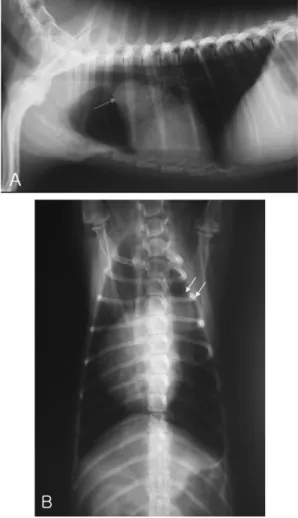
Abstract : A 3-year-old, intact female, Shih-tzu dog was presented with a 15-day history of vomiting, depression, and anorexia. On physical examination, systolic ejection murmurs with precordial thrill at the left heart base were detected. A diagnosis of congenital pulmonic stenosis (PS) was made mainly from the thoracic radiography, electrocardiography, and echocardiography. On complete blood counts and serum biochemistry profiles, the dog had already chronic renal failure (CRF). Thoracic radiography confirmed that main pulmonary artery was tremendously buldged and electrocardiography was suggestive of severe right ventricular hypertrophy. Echocardiographic findings revealed the pulmonic valve stenosis containing valvular dysplasia and poststenotic dilation. On Doppler echocardiography, ejection velocity of the lesion accounted for 3.38 m/sec, meaning mild velocity through the stenotic area. The dog’s condition was deteriorated with the complication of CRF. In this case, CRF was the most complicated problem and resulted in death. However, there has been no reliable relation between PS and CRF. Primary malformation of pulmonic valve was confirmed at necropsy after death.
Key words : congenital heart disease, dog, pulmonic stenosis
Introduction
Pulmonic stenosis (PS) is a common congenital heart defect in dogs and is occasionally recognized in cats [2, 7]. Congenital obstruction of the right ventricular outflow tract (RVOT) can develop in the infundibulum, subvalvular region, and above the pulmonic valve, but primary malformation of the pulmonary valve is the most frequently observed defects in dogs [4]. PS results in obstruction to right ventricular emptying due, in most cases, to partial fusion and dysplasia of the pulmonic valve cusps. Obstruction to RVOT causes an increase in right ventricular systolic pressure, leading to right ventricular hypertrophy, left-ward septal deviation or flattening, and a systolic pressure gradient across the pulmonary valve [6]. High velocity and turbulent flow about the stenosis is associated with systolic ejection murmurs and poststenotic dilation of the main pulmonary artery (MPA). Even though some dogs affected by congenital PS live normal, complicated dogs develop signs of right-sided congestive heart
failure, cardiac arrhythmias, exertional syncope, and sudden death.
The most appropriate form of treatment for severe congenital PS in dogs has not yet been determined.
Recently, the less invasive technique of percutaneous valvuloplasty has been used with increasing frequency [8]. Usually, PS concurrent with chronic renal failure (CRF) is very rare. However, there have been no evident relations between PS and CRF yet.
Case Report
A 3-year-old, intact female, Shih-tzu dog was evaluated because of 15-day history of vomiting, depression, and anorexia at the Veterinary Medical Teaching Hospital of Konkuk University. The dog had been treated with cardiac medication and had been CRF status for about 1 year at the local animal hospital. On physical examination, findings included mild depression, dry muzzle, and retained deciduous teeth. Grade IV/VI of systolic murmurs also was
*Corresponding author: Hee-Myung Park
College of Veterinary Medicine, Konkuk University, Seoul 143-701, Korea
[Tel: +82-2-450-4140, Fax: +82-2-450-3037, E-mail: [email protected]]