KOREAN JOURNAL OF APPLIED ENTOMOLOGY
한응곤지 50(1): 1~6 (2011) ⓒ The Korean Society of Applied Entomology
Kor. J. Appl. Entomol.
DOI: 10.5656/KSAE.2010.04.0.014
망실 내 해송 묘목에서 솔수염하늘소 성충의 이동에 관한 연구
김동수ㆍ이상명ㆍ김철수1ㆍ이동운2ㆍ박정규3*
국립산림과학원 남부산림연구소, 1국립산림과학원 산림병해충과, 2경북대학교 생물응용학과, 3경상대학교 응용생물학과/생명과학연구원
Movement of Monochamus alternatus Hope (Coleoptera: Cerambycidae) Adults among Young Black Pine Trees in a Screen Cage
Dong Soo Kim, Sang Myoeng Lee, Chul Su Kim1, Dong Woon Lee2 and Chung Gyoo Park3*
KFRI Southern Forest Research Center, Jinju, 660-300, Republic of Korea.
1
Division of Forest Insect Pest and Disease, Korea Forest Research Institute, Hoegiro 57, Dongdaemun-gu, Seoul, 130-712, Republic of Korea.
2
Department of Applied Biology, Institute of Agricultural Sciences, Kyungpook National university, Sangju, 742-711, Republic of Korea.
3
Department of Applied Biology (BK21 Program), Research Institute of Life Science, Gyeongsang National University, Jinju, 660-701, Republic of Korea.
ABSTRACT: Movement of adult Monochamus alternatus was investigated on young black pine, Pinus thunbergii, trees for about one month in a screen cage. Number of pine trees to which M. alternatus females and males moved during the experimental period was 6.4±1.4 and 7.2±1.5 out of 15 trees, respectively. Adult females and males moved to 0.2±0.1 and 0.3±0.1 tree per day, respectively. A 74.6 and 80.7%
of adult females and males moved at night (17:00-08:00) to other trees. After moving, most beetles (72.6% of females and 76.0% of males) stayed on the tree to which they moved for one to two days. Some beetles stayed for up to seven days.
Key words: Monochamus alternatus, Pinus thunbergii, Movement behavior
초 록:
솔수염하늘소 성충의 이동상황을 해송 유묘가 심겨진 망실 내에서 조사하였다. 실험에 사용한 총 15본의 묘목 중에서 암컷 1마리가 총 실 험기간 동안 이동 방문한 묘목 수는 6.4본, 하루 평균 0.2본을 옮겨 다녔으며, 수컷은 총 실험기간 동안 7.2본, 하루 평균 0.3본을 이동하였다. 밤 낮의 시간대별로 이동한 횟수를 조사한 결과 암컷은 74.6%가, 수컷은 80.7%가 밤 시간대(17시~08시)에 이동하였다. 성충이 한 기주에 머무는 기간은 최대 7일이었는데, 동일 기주에서 1~2일간 머무는 비율은 암컷의 경우 72.6%, 수컷의 경우 76.0%이었다.
검색어:
솔수염하늘소
,해송
,기주 이동 행동
*Corresponding author: [email protected] Received March 11 2010; Revised April 1 2010;
Accepted January 17 2011
소나무재선충(Pine wood nematode, Bursaphelenchus xylophilus) 은 소나무류에 시들음병(Pine wilt disease)을 일으켜 나무를 죽 게 만든다. 소나무재선충에 한 번 감염된 소나무는 100% 죽기 때문에 그 어떤 산림병해충보다 무서운 병해로 불리고 있다. 소 나무재선충은 미국, 캐나다, 멕시코 등 북미대륙 토착종(Knowles et al., 1983; Dwinell, 1993)으로 1900년대 초에 일본으로 유입 된 것으로 보고 있다(Mamiya, 1988). 소나무재선충에 의한 피 해는 원산지인 북미지역에서는 자생하는 수종들이 대부분 저항 성을 나타내며 병원성을 나타내는 것은 극히 드문 것으로 알려
져 있다. 그러나 이 선충이 다른 나라로 유입될 경우 그 지역 토착 소나무류는 대부분 감수성을 보이며 심각한 피해를 받는 것으 로 알려졌다(Wingfield et al., 1984; Bergdahl, 1988; Dwinell, 1997). 대표적인 예로 일본의 경우 1900년대 초부터 피해가 나 타나기 시작한 후 피해 면적이 확산되어 현재는 소나무와 해송 이 거의 전멸 상태에 이르렀다(Mamiya, 1988; Kishi, 1995).
소나무재선충은 스스로 다른 나무로 이동할 수 있는 능력이 없고 매개충을 통하여 이동한다. 소나무재선충을 옮겨주는 매 개충은 Monochamus속에 속하는 하늘소류로서 우리나라와 일 본, 중국, 대만에서는 솔수염하늘소(Mamiya and Enda, 1972;
Kishi, 1995), 북미지역에서는 M. carolinensis, M. mutator, M.
scutellatus, M. titillator (Linit, 1988), 포르투갈은 M. gallopro-
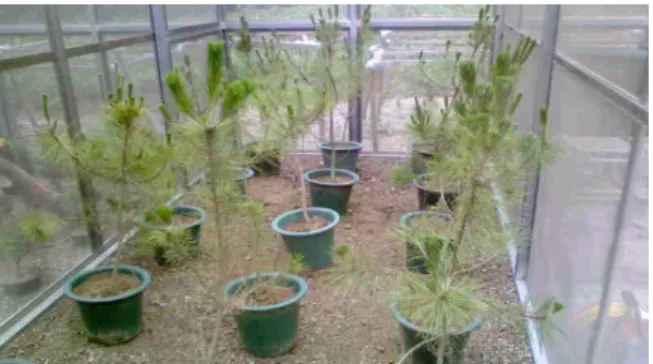
Fig. 1.
Arrangement of young (3-year-old) black pine trees in a screen cage.
vincialis (Sousa et al., 2001)로 알려져 있다. 뿐만 아니라 일본 동북지방의 한랭지역에서는 북방수염하늘소(M. saltuarius)도 소나무재선충을 매개하는 것으로 알려져 있는데, 최근 국내에 서도 중부지방의 잣나무림에서 발생한 소나무재선충병의 매개 충이 북방수염하늘소로 밝혀졌다(KFRI, 2007).
매개충인 솔수염하늘소는 성적으로 미성숙한 상태로 우화탈 출하여 성적성숙과 생존을 위하여 건전한 소나무류 가지를 섭 식하게 되는데, 이때 생기는 상처를 통해 소나무재선충이 건 전한 나무로 옮겨진다(Mamiya and Enda, 1972; Morimoto and Iwasaki, 1972; Wingfield and Blanchette, 1983; Edwards and Linit, 1992).
소나무재선충병을 방제하기 위한 국내연구로서 솔수염하늘 소와 북방수염하늘소의 지역적 분포(Moon et al., 1995; Kwon et al., 2006) 및 시기별 우화탈출 특성(Kim et al., 2003; Han et al., 2009), 개체별 형태(Lee et al., 2004; Han et al., 2007), 소나 무 내에서의 분포(Chung et al., 2003), 소나무재선충의 매개충 으로부터 이동 탈출(Kim et al., 2009) 등이 있다 . 그러나 매개충 의 이동행동과 연관된 소나무재선충병 피해발생에 대한 연구가 미흡한 실정이다.
따라서 본 연구에서는 망실 내에서 솔수염하늘소 성충의 해 송 기주 간 이동에 대하여 조사를 하였다.
재료 및 방법
기주식물
기주식물은 경남 김해 진영에 있는 분재 수출 지구에서 3년생 해송 폿트 묘(근원경 2~3 cm, 수고 1 m내외)를 구입하여 사용 하였다. 외관상 상처나 고사된 가지가 없었으며, 수관상태가 양 호한 해송을 진주시 가좌동에 위치한 망실(4×2×2.5 m) 내에 각 처리구당 15본(3×5배열)을 배치하고(Fig. 1.) 실험 기간 동안 매
일 수분을 공급하였다.
실험곤충
2006년 경남 진주시의 소나무재선충병 피해 지역에서 고사 한 소나무 가운데 솔수염하늘소 유충이 서식하고 있는 고사목 을 벌채하여 80 cm 길이로 절단하고, 진주시 가좌동의 남부산림 연구소 구내에 있는 야외 망실 내에 정(
井
)자 모양으로 적재한 후, 이듬해에 우화 탈출하는 솔수염하늘소 성충을 채집하여 당 일 실험에 사용하였다. 실험에 사용된 솔수염하늘소 성충은 하 늘소의 이동을 조사하기 용이하도록 크기가 서로 다른 개체를 사용하였다. 4개의 망실을 제작하고 솔수염하늘소 성충 1마리 (암컷), 2마리(♀1, ♂1), 4마리(상대적으로 크기가 큰 암수 1쌍 과 작은 암수 1쌍), 6마리(상대적으로 크기가 대, 중, 소로 구분된 암수 3쌍)를 각 망실의 출입구에서 방사하였다(Fig. 2).솔수염하늘소 성충의 기주 간 이동조사
솔수염하늘소를 망실 내에 방사한 후 20~34일 동안 솔수염 하늘소가 이동해 다니는 해송 기주의 수를 조사하였다. 하루를 밤 시간대(17시~08시)와 낮 시간대(08시~17시)로 구분하여 매일 08시와 17시의 2회에 걸쳐 솔수염하늘소 성충의 위치를 조사하였다. 솔수염하늘소 성충의 위치는 해송 기주(기주의 수 관부 또는 주간부, 폿트 내에 위치한 경우 포함)에 위치해 있는 경우와 그렇지 않은 경우로 구분하였다. 솔수염하늘소 성충이 1 일간 이동한 해송 기주의 수 및 해송 기주에 머무는 일수 등은 솔 수염하늘소 성충을 암수별로 구분하여 08시에 조사한 결과를 분석하였다.
결과 및 고찰
망실 내 해송 묘에서 솔수염하늘소 성충의 이동
망실의 해송 폿트 묘에서 20-34일 동안 솔수염하늘소의 기주 이동 활동을 조사한 결과는 Table 1과 같다. 방사 밀도에 관계없 이 전체적으로 보았을 때 솔수염하늘소는 망실 내의 폿트에 심 은 해송 15본 중에서 5-9본을 방문하였다. 암컷 한 마리를 방사 했을 때는 15본 중 7본(46.7%)에서 발견되었고, 암수 1쌍을 방 사한 사육상에서는 암컷은 6본 (40.0%), 수컷은 8본(53.3%)을 방문하였다. 암수 2쌍을 방사한 사육상에서 암컷은 6-7본(40~
46.7%), 수컷은 6-9본(40~60%)을 방문하였다. 암수 3쌍을 방 사한 구에서는 방사 1일차에 수컷 1마리가 죽어서 총 5마리만 조
Table 1.
Percentage of young black pine trees to which M. alternatus adults moved in a screen cage No. insects
inoculated
Insect no.
No. experiment days
No. young black pine trees in a cage
No. (%) young black pine trees to which M. alternatus adults moved
♀ 1 Female-1 34 15 7 (46.7)
♀ 1, ♂ 1 Female-1 32 15 6 (40.0)
Male-1 32 15 8 (53.3)
♀ 2, ♂ 2 Female-1 26 15 7 (46.7)
Female-2 26 15 6 (40.0)
Male-1 26 15 6 (40.0)
Male-2 26 15 9 (60.0)
♀ 3, ♂ 3* Female-1 24 15 5 (33.3)
Female-2 24 15 8 (53.3)
Female-3 24 15 9 (60.0)
Male-1 24 15 5 (33.3)
Male-2 20 15 9 (60.0)
*One male out of the three males released into a screen cage died in a day after inoculation.
Table 2.
Number of young black pine trees to which M. alternatus adults visited during the total experimental period
Sex No. adults observed
Number of young black pine trees
Female 7 6.4 ± 1.4
Male 5 7.2 ± 1.5
Mean ± SD - 6.8 ± 1.5
♀ 1 ♀ 1, ♂ 1
♀ 2, ♂ 2 ♀ 3, ♂ 3
Fig. 2.
Direction of movement by M. alternatus adults to young black pine trees in screened cage. Numbers in each box mean the percentages of adults moved to each young black pine tree.
사하였는데, 암컷은 5-8본(33.3~60%), 수컷은 5-9본(33.3~
60%)으로 이동하였다. 결국, 한정된 공간 내의 해송 폿트 묘에 솔수염하늘소를 방사했을 때, 솔수염하늘소가 방문하는 폿트 묘의 수는 방사 밀도에 따른 큰 차이는 없었다.
상기의 Table 1에서 방사 밀도에 관계없이 솔수염하늘소가 실험기간 동안 또는 하루 동안 방문한 해송 폿트 묘를 암수별로 정리해 본 결과(Table 2), 전체 조사 기간 중 암컷과 수컷이 각각 6.4본과 7.2본을 방문하였으며, 하루 동안에는 각각 0.2본과 0.3 본을 방문하였다. 또한 Fig. 2는 사육상 내에 배치된 해송 폿트 묘에서 솔수염하늘소가 이동하는 패턴을 모식화한 것이다. 천 정, 바닥 등 기주 외에 위치한 경우도 많았지만 북쪽 방향에 있는 해송 폿트 묘로 더 많이 이동하는 것을 알 수 있었다. 본 실험은 소나무재선충을 감염시키지 않은 폿트 묘를 대상으로 한 솔수 염하늘소의 기주 간 이동행동에 관한 실험으로, 솔수염하늘소 성충이 어느 특정한 기주와 인근 폿트 묘 가까이에 모이는 결과 를 얻었는데 솔수염하늘소가 어느 특정한 기주 가까이에 모인 다는 점에서는 Futai (2003)의 연구결과와 유사하였다. Futai (2003)는 야외 망실 내의 소나무 폿트 묘에 소나무재선충을 감 염시킨 후 솔수염하늘소 성충을 방사한 결과 고사 과정 중인 폿 트 묘에 많이 유인된다는 결과를 얻었다. 그러나 본 실험의 결과 로 보아 ‘소나무재선충병에 감염된 나무’라는 특정한 조건이 아 니더라도 다른 주변 환경에 의해 솔수염하늘소 성충의 기주 간 이동행동이 영향을 받을 수 있을 것으로 생각된다. Morimoto et al. (1975)은 우화탈출 후 섭식기의 솔수염하늘소 성충이 기주 에 머무는 것은 온도의 영향을 크게 받는데, 18℃ 이하에서 높고,
그 이상에서 28℃까지 낮으며 28℃가 넘으면 다시 높아지며, 야 간온도가 높아지면 이 시기에도 분산한다고 하였다. 그러나 산
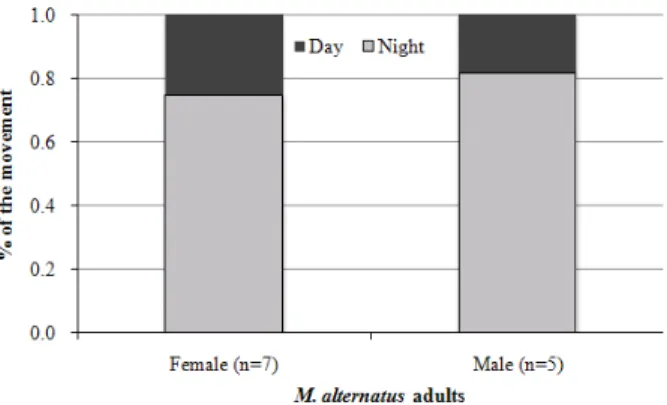
Fig. 3.
Diurnal pattern of Monochamus alternatus movement during the day (08:00~17:00) and at night (17:00~06:00).
Fig. 4.
Number of days Monochamus alternatus stayed on a single black pine tree before moving to another tree.
란기에 들어가면 머무는 비율은 아주 낮아지는 경향도 있다고 하였다(Morimoto and Iwasaki, 1974). 또한 Takeshita et al.
(1975)은 솔수염하늘소의 성충 행동 가능 일수를 제안하고, 온 도 및 강우가 고사목 피해분석에 좋은 지표라고 하였다.
솔수염하늘소 성충의 기주 이동 시간대
솔수염하늘소 성충이 밤 시간대(17시~08시)와 낮 시간대 (08시~17시)에 이동한 해송 폿트 묘의 수를 조사한 결과는 Fig.
3과 같다. 암컷(n=7)의 경우 밤 시간대에 74.6%, 낮 시간대에 25.4%가 이동하였고, 수컷(n=5) 또한 80.7%가 밤 시간대에 이 동을 하였다. 솔수염하늘소 성충은 일중 우화탈출 하는 것으로 알려져 있으며(Kim et al., 2003; Taniwaki et al., 2004), 우화탈 출한 성충은 활발하게 보행하면서 주변 지형지물의 돌출부로 이동한 후 날아가 소나무 가지와 마주치면 그곳에 머무르고 일 정 시간 후에 섭식(Maturation feeding)을 시작한다. 또한 우화 탈출 직후의 성적으로 미성숙한 성충들은 무작위로 분산하여 기주를 탐색하지만(Togashi, 1990) 섭식을 통해 성적으로 성숙 한 성충들은 죽어가는 나무나 죽은 지 얼마 안 된 나무로부터 발 산되는 휘발성 물질에 강하게 유인된다고 알려져 있다(Ikeda and Oda, 1980; Ikeda et al., 1980, 1981). 솔수염하늘소 성충은 불빛이 없는 오후 8시부터 오전 4~5시까지 활동하는 것으로 알 려져 있다(Nishimura, 1973). 본 실험에서도 밤 시간대에 기주 간 이동이 많은 결과를 보였는데 이는 솔수염하늘소 성충이 주 로 밤에 보행 및 비산활동을 한다는 보고(Nishimura, 1973;
Hosoda et al., 1974; Kobayashi, 1977)와 같은 결과였다.
솔수염하늘소가 해송기주에 머무는 기간
망실 내에서 솔수염하늘소 성충이 조사 기간 동안 기주에 머
무는 일수를 조사한 결과(Fig. 4.), 한 기주에서 1일간 머물고 다 른 기주로 이동한 비율은 암컷이 38.2%, 수컷은 60.7%이었고, 2 일간 머물고 이동한 비율은 암컷이 34.4%, 수컷은 15.3%로서 대부분의 성충이 1~2일간 방문한 기주에 머물렀다. 또한 한 기 주에 도착하여 최대 7일까지 머무는 것으로 나타났다. 본 실험에 서 조사된 1~2일의 기주 머무름 시간은 6년생 해송 묘목에서의 머무름 시간이 2.2~2.5일이고 야외에서 수관 울폐율이 낮은 지 역에서는 1.4~5.4일이라는 Morimoto et al. (1975)의 결과와 비슷하였다. 또한 우화탈출 직후 성적으로 미성숙한 솔수염하 늘소를 건전한 15~19년생 해송림에서 방사했을 때 그들 중 몇 몇은 방사된 나무에서 이동하지 않지만 다른 개체들은 1주일 이 내에 이동하는 행동을 보였다고 하였다(Togashi, 1990). 그러나 야외에서 방사된 나무에서 평균 머무름 시간은 수관 울폐율이 높은 지역에서는 11.5일 이었다(Morimoto et al., 1975). 한편 사 육상 내에서 관찰한 바에 의하면 탈출 후 섭식을 시작한 솔수염 하늘소 성충은 거의 이동하지 않았으며(Yamane and Fushimi, 1974), 이 시기에 소나무 가지에서 머무는 정도를 개체별로 조사 하면 탈출 1일째에만 잘 움직이고 2일 이후에는 거의 움직이지 않는다고 하였다(Morimoto and Iwasaki, 1974).
본 연구는 해송 유묘가 심겨진 망실 내에서 솔수염하늘소 성 충의 기주 간 이동을 조사한 결과로서, 암수 성충이 방문한 묘목 의 수, 일중 이동시각, 한 기주에서 머무는 기간 등을 조사 하였 다. 그러나 본 실험은 망실이라는 제한된 공간 내에서 이루어졌 기 때문에 수종의 구성, 수관 상태, 공간의 크기, 물리․화학적 환 경조건이 실제 야외의 소나무림과 상당한 차이가 있을 것으로 생각된다. 이러한 생물학적, 물리․화학적 환경조건이 솔수염하 늘소 성충의 이동 행동, 나아가 소나무재선충의 전파에도 영향 을 줄 것으로 판단된다. 따라서 본 연구를 토대로 하여 실제 야외 소나무림에서 솔수염하늘소의 기주 간 이동에 관한 추가적인 연구가 이루어진다면 소나무재선충병 발생동태 연구와 소나무
재선충병 방제전략 수립에 도움이 될 것으로 판단된다.
사 사
이 연구의 일부는 2008년도 경상대학교 연구년제 연구교수 지원에 의해 수행되었습니다.
Literature Cited