Fuzzy AHP를 적용한 클라우드 컴퓨팅 환경에서 보안 속성의 상대적 중요도 평가
Relative priority evaluation of security attributes in cloud computing using fuzzy AHP
최철림*, 송영재*
Cheol-Rim Choi*, Young-Jae Song*
요 약
클라우드 컴퓨팅의 장점에도 불구하고 보안성에 대한 문제들이 많은 사용자들의 선택에 장애가 되고 있다. 본 논문에서는 클라우드 컴퓨팅의 보안성에 대한 ISO 7498-2 표준의 관련 속성들이 전체 보안 품질에 미치는 상대적 영향도를 평가하였다. 많은 요인들의 영향도를 객관적으로 평가하기 위하여 Fuzzy AHP(Analytic hierarchical process)를 적용하였다. 본 연구는 클라우드 컴퓨팅 서비스의 보안 관련 각 속성들의 상대적 중요성을 구체적으로 수치화 할 수 있었고, 클라우드 컴퓨팅 서비스의 효율적인 선택 및 개발에 필요한 관리 방법을 제시할 수 있었다.
Abstract
In spite of many advantages of cloud computing, security concerns are a barrier in users' adopting the cloud service. In this paper, we evaluate relative priorities between security attributes of ISO 7498-2 standards affecting overall security quality in cloud computing. For an objective evaluation, the fuzzy AHP(Analytic hierarchical process) is applied. The evaluation results represented the relative priority with concrete number can be an effective management method to choose and develop the cloud computing service.
Key words : 클라우드 컴퓨팅(cloud computing), 보안 관계(security concerns), ISO 7498-2, 퍼지 AHP(fuzzy AHP), 상대적 중요성(Relative priority)
1)
Ⅰ. Introduction
Cloud computing has recently raised an intensive in- terest in various fields, but it is still an evolving para- digm that incorporates the evolutionary development of many existing computing technologies such as dis- tributed services, applications, information and infra-
structure consisting of pools of computers, networks, in- formation and storage resources [1]. It has shown tre- mendous potential to enhance collaboration, agility, scale, availability–although its definitions, issues, under- lying technologies, risks, and values need to be refined.
Despite the advantage and value that the cloud presents for users, several surveys of potential cloud adopters in-
* 경희대학교 컴퓨터공학과
‧ 제1저자 (First Author) : 최철림
‧ 투고일자 : 2011년 10월 7일
‧ 심사(수정)일자 : 2011년 10월 9일 (수정일자 : 2011년 12월 19일) ‧ 게재일자 : 2011년 12월 30일
dicate that security and privacy are the number one con- cern delaying its adoption and it will continue to keep some users out of cloud computing[2, 3, 15].
In this paper, by evaluating relative priorities between various security-related attributes we verify the first con- sideration to solve the security concerns.
The evaluation of relative priorities between security attributes is potentially very complex due to the multi- tude of variables that influence the decision process.
Determining the most important influences on security in cloud environments is crucial and helps cloud providers focus on factors with the highest weight and identify the best policy to improve security quality. How to evaluate the relative importance of these factors thus can be con- sidered as a multiple-attribute decision-making problem.
Analytic hierarchy process (AHP) is an appropriate method for solving multiple-attribute decision-making problems[4]. However, human judgment on the im- portance of alternatives or criteria is always subjective and imprecise. To make up for this deficiency in AHP, several researchers integrate fuzzy theory with AHP to determine the criteria weights from subjective judgments of decision makers[5, 6]. Consequently, this study ap- plies a fuzzy AHP approach to determine the relative priorities of security attributes in cloud computing environment.
Ⅱ. Related research
2-1. Security concerns and related researches in cloud computing
The US National Institute of Standards and Technology (NIST) defines cloud as follows: “Cloud computing is a model for enabling convenient, on-de- mand network access to a shared pool of configurable computing resources (e.g., networks, servers, storage, ap- plications, and services) that can be rapidly provisioned and released with minimal management effort or service provider interaction. This cloud model promotes avail-
ability and is composed of five essential characteristics, three delivery models, and four deployment models.”[7].
In spite of advantages, the security concerns are barriers to apply cloud computing services. In minimizing poten- tial security trust issues as well as adhering to gover- nance issues facing Cloud computing, a prerequisite con- trol measure is to ensure that a concrete Cloud comput- ing Service Level Agreement (SLA) is put in place and maintained when dealing with outsourced cloud service providers and specialized cloud vendors[8].
The Gartner Group lists seven security issues, priv- ileged access, regulatory compliance, data location, data segregation, recovery, investigative support, long-term viability, data availability, which one should discuss with a cloud-computing vendor. The following list shows security issues highlighted by Gartner[2]. By con- sidering the above mentioned cloud issues, executives can gain a comprehensive understanding as well as measure the feasibility of employing Cloud computing solutions to best match their Cloud strategy.
In the ISO 7498-2 standard [3], produced by The International Standards Organization (ISO), Information Security should cover a number of suggested themes.
Cloud computing security should also be guided in this regard in order to become an effective and secure tech- nology solution.
Therefore by exploring the information security re- quirements at each of the various cloud deployment and delivery models set out by the ISO, vendors and organ- izations can become confident in promoting a highly protected safe and sound cloud framework.
In this paper, we apply fuzzy AHP to security attrib- utes defined by ISO 7498 to calculate relative priorities between security-related attributes and figure out the first consideration to solve the security concerns.
2-2. AHP and Fuzzy AHP
Analytic hierarchy process (AHP) is a useful method
for solving complex decision-making problems involving
subjective judgment (Saaty, 1990)[4]. In AHP, the mul-
ti-attribute weight measurement is calculated via pair- wise comparison of the relative importance of two factors. Assuming there are N number of decision ele- ments, denoted as (W1, . . . , Wi, . . . , Wn), its judg- ment matrix would be A = [aij], in which aij represents the relative importance of Wi and Wj. Then, by using the row vector average normalization proposed by Saaty (1980), the weight of Wi is calculated as:
(1)
where wi denoted the weight of the ith decision ele- ment, and weight vector w = (wi), i = 1, ..., n.
Though AHP is designed to capture decision-maker knowledge, the conventional AHP does not fully reflect human thinking style[9]. However, it is well recognized that human judgments for qualitative items are repre- sented by linguistic and imprecise patterns. Linguistic and imprecise descriptions were difficult to solve using AHP until the recent development in fuzzy deci- sion-making. Fuzzy set theory resembles human reason- ing in its use of approximate information and uncertainty in decision generation. A major contribution of fuzzy set theory is its capability to represent vagueness.
Meanwhile, AHP was developed to solve the multi- ple-attribute decision-making problem. By incorporating fuzzy set theory with AHP, fuzzy AHP enables a more accurate description of the multiple-attribute deci- sion-making process[10, 14].
Therefore, in this study, we use the fuzzy AHP ap- proach since this approach is adequate to explicitly cap- ture the importance assessment for human imprecise judgments.
To convert fuzzy value into crisp value, we applied CFCS(converting fuzzy data into crisp scores) method developed by Opricovic and Tzeng (2003)[11]. While the center of gravity method is too complicated in its process, the CSCF method can clearly express fuzzy per-
ception, which is based on the procedure of determining the lower and upper scores by fuzzy min and fuzzy max, and the total score is determined as a weighted average according to the membership functions.
Ⅲ. Priority weight evaluation process and security attributes
The process of applying the fuzzy AHP comprise of the following main steps:
Step 1. Regarding the evaluation goal, configure a hier- archical attribute structure influencing security.
Step 2. Construct a pairwise comparison matrix of the attributes with fuzzy ratio judgments.
Step 3. Limit the matrix by raising it to a sufficiently large power (where is an arbitrarily large num- ber) until it converges into a stable matrix.
Step 4. Defuzzify the fuzzy set in the converged matrix.
Step 5. Derive relative priorities from the matrix
We apply fuzzy AHP to security attributes defined in ISO 7498-2 as Fig. 1. Explanations about each attribute are as follows:
A. Identification & authentication: this process is target- ing at verifying and validating individual cloud users by employing usernames and passwords protections to their cloud profiles.
B. Authorization: authorization is an important in- formation security requirement in Cloud computing to ensure referential integrity is maintained. It fol- lows on in exerting control and privileges over proc- ess flows within Cloud computing.
C. Confidentiality: in Cloud computing, confidentiality plays a major part especially in maintaining control over organizations’ data situated across multiple dis- tributed databases.
D. Integrity: the integrity requirement lies in applying the due diligence within the cloud domain mainly when accessing data.
Therefore ACID (atomicity, consistency, isolation
그림 1. 보안관련 속성의 계층적 구조 Fig. 1. Hierarchical structure of security attributes
Security Identification &
authentication Authorisation Confidentiality Integrity Non-repudiation Availability
Identification &
authentication (0.1757, 0.1664, 0.1535) (0.1757, 0.1664, 0.1535) (0.1757, 0.1664, 0.1535) (0.1757, 0.1664, 0.1535) (0.1757, 0.1664, 0.1535) (0.1757, 0.1664, 0.1535) Authorisation (0.2818, 0.2855, 0.2784) (0.2818, 0.2855, 0.2784) (0.2818, 0.2855, 0.2784) (0.2818, 0.2855, 0.2784) (0.2818, 0.2855, 0.2784) (0.2818, 0.2855, 0.2784) Confidentiality (0.3803, 0.4142, 0.4567) (0.3803, 0.4142, 0.4567) (0.3803, 0.4142, 0.4567) (0.3803, 0.4142, 0.4567) (0.3803, 0.4142, 0.4567) (0.3803, 0.4142, 0.4567) Integrity (0.0675, 0.0590, 0.0512) (0.0675, 0.0590, 0.0512) (0.0675, 0.0590, 0.0512) (0.0675, 0.0590, 0.0512) (0.0675, 0.0590, 0.0512) (0.0675, 0.0590, 0.0512) Non-repudiation (0.0578, 0.0470, 0.0386) (0.0578, 0.0470, 0.0386) (0.0578, 0.0470, 0.0386) (0.0578, 0.0470, 0.0386) (0.0578, 0.0470, 0.0386) (0.0578, 0.0470, 0.0386) Availability (0.0369, 0.0279, 0.0216) (0.0369, 0.0279, 0.0216) (0.0369, 0.0279, 0.0216) (0.0369, 0.0279, 0.0216) (0.0369, 0.0279, 0.0216) (0.0369, 0.0279, 0.0216)
Table 2. Conversion matrix by power method 표 2. 거듭 제곱법에 의해 얻은 수렴 행렬
Security Identification &
authentication Authorisation Confidentiality Integrity Non-repudiation Availability
Identification &
authentication (1.0000, 1.0000, 1.0000) (0.4167, 0.3333, 0.2778) (0.3125, 0.2500, 0.2778) (4.0000, 5.0000, 6.0000) (4.0000, 5.0000, 6.0000) (4.8000, 6.0000, 7.2000) Authorisation (2.4000, 3.0000, 3.6000) (1.0000, 1.0000, 1.0000) (0.6250, 0.5000, 0.4167) (4.8000, 6.0000, 7.2000) (4.8000, 6.0000, 7.2000) (5.6000, 7.0000, 8.4000) Confidentiality (3.2000, 4.0000, 6.0000) (1.6000, 2.0000, 2.4000) (1.0000, 1.0000, 1.0000) (5.6000, 7.0000, 8.4000) (5.6000, 7.0000, 8.4000) (7.2000, 9.0000, 10.800) Integrity (0.2500, 0.2000, 0.1667) (0.2083, 0.1667, 0.1389) (0.1786, 0.1429, 0.1190) (1.0000, 1.0000, 1.0000) (1.6000, 2.0000, 2.4000) (2.4000, 3.0000, 3.6000) Non-repudiation (0.2500, 0.2000, 0.1667) (0.2083, 0.1667, 0.1389) (0.1786, 0.1429, 0.1190) (0.6250, 0.5000, 0.4167) (1.0000, 1.0000, 1.0000) (2.4000, 3.0000, 3.6000) Availability (0.2083, 0.1667, 0.1389) (0.1786, 0.1429, 0.1190) (0.1389, 0.1111, 0.0926) (0.4167, 0.3333, 0.2778) (0.4167, 0.3333, 0.2778) (1.0000, 1.0000, 1.0000)
표 1. 퍼지 집합에 의한 대쌍 비교 행렬
Table 1. Pairwise comparison results by fuzzy set
and durability) properties of the cloud’s data should without a doubt be robustly imposed across all Cloud computing deliver models.
E. Non-repudiation: non-repudiation in Cloud computing can be obtained by applying the traditional e-com- merce security protocols and token provisioning to data transmission within cloud applications such as digital signatures, timestamps and confirmation re- ceipts services (digital receipting of messages con- firming data sent/received).
F. Availability: availability is the critical information se- curity requirements in Cloud computing because it is a key decision factor when deciding among private, public or hybrid cloud vendors as well as in the de- livery models.
This study applied fuzzy AHP to above 6 attributes.
Ⅳ. Evaluating relative priority weights
The AHP method provides a structured framework for setting priorities on each level of the hierarchy using pair-wise comparisons that are quantified using a 1-9 scale. Instead of a crisp value, fuzzy AHP applies a range of values to incorporate the decision maker’s uncertainly. In this method, the fuzzy conversion scale is as in [12, 13].
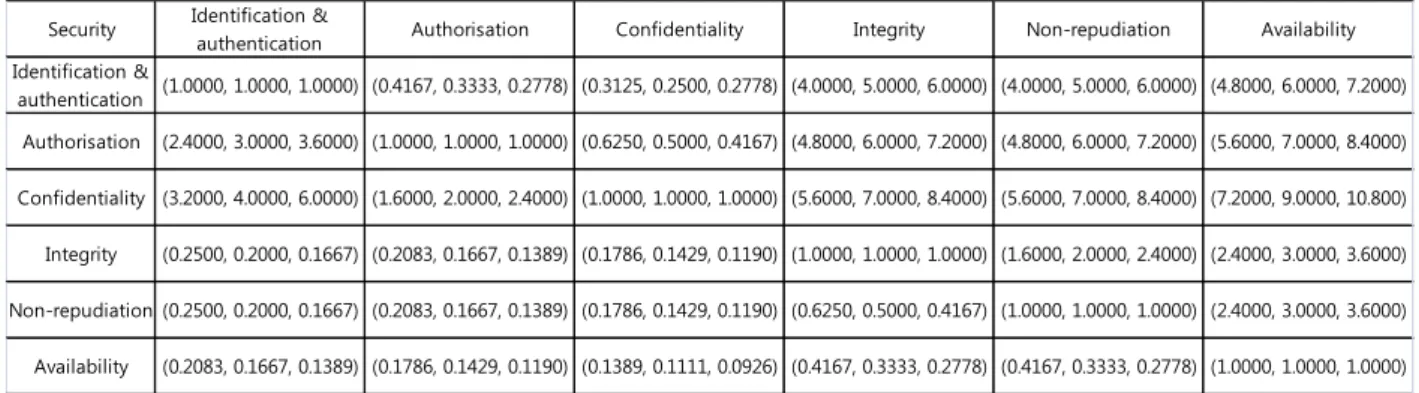
Table 1 shows the pairwise comparison results be-
tween security attributes. The pairwise comparison is
performed with triangular fuzzy set.
For each matrix with fuzzy set, the conversion matrix is obtained by power method as shown in Table 2. Since the conversion matrix is composed with fuzzy set, it needs a defuzzyfication process to get crisp value. The CSCF method was applied in this process.
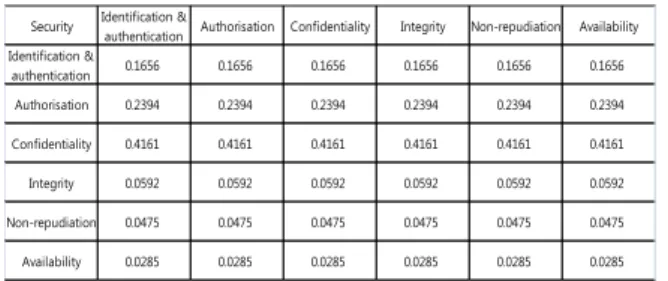
Table 3 represents the final relative priority between security attributes by crisp values after the defuzzyfica- tion process.
In the evaluation, Confidentiality is the highest prior- ity and is followed by Authorization and Identification
& authentication. Integrity and Non-repudiation which are attributes for data management and protection show lower priority relatively and it means that in cloud envi- ronments, an access by a person not verified and not certified is considered as the biggest concern.
표 3. 역퍼지화 후의 최종 상대적 우선순위
Table 3. Relative priority calculation results after defuzzyfication
Security Identification &
authentication Authorisation Confidentiality Integrity Non-repudiation Availability Identification &
authentication 0.1656 0.1656 0.1656 0.1656 0.1656 0.1656
Authorisation 0.2394 0.2394 0.2394 0.2394 0.2394 0.2394
Confidentiality 0.4161 0.4161 0.4161 0.4161 0.4161 0.4161
Integrity 0.0592 0.0592 0.0592 0.0592 0.0592 0.0592
Non-repudiation 0.0475 0.0475 0.0475 0.0475 0.0475 0.0475
Availability 0.0285 0.0285 0.0285 0.0285 0.0285 0.0285
Ⅴ. Conclusions
Although cloud computing shows many advantages, it is still in its infancy. More than all, since security con- cerns are delaying its adoption, we need to study and verify factors affecting the security. To set up plans to improve and manage security concerns. it needs to figure out the priority between the security-related factors.
This study applies fuzzy AHP to ISO 7498-2 standards to develop an evaluation method which helps system de- signers understand the critical factors in implementing cloud computing services with trustful security quality.
The analysis results show that a confidentiality attribute
should be considered as the most important factor and three attributes, confidentiality, authorization and identi- fication & authentication, come to be more than 82%
priorities of all.
However, there are several limitations to this study, requiring further research. This study was conducted with ISO standards only.
More quality standard samples that bring more ex- planatory power would have allowed more sophisticated evaluation analysis. Also, the study findings thus should be verified with a case study to increase a reliability. To provide more objective information on security concerns and its solutions in cloud environments, future research needs to be undertaken using case studies of particular cloud computing services.
References
[1] Hassan Takabi, James B. D. Joshi, Gail-Joon Ahn,
"Security and Privacy Challenges in Cloud Computing Environments", IEEE Security and Privacy, pp. 24-31, 2010.
[2] Brodkin J, "Gartner: Seven cloud- computing security risk", viewed 1 August 2011, from < http://www.idi.ntn u.no/emner/tdt60/papers/Cloud_ Computing _Security_
Risk.pdf>, 2008.
[3] ISO/IEC 7498-2: 1995, "ISO 7498-2:1989, Information processing systems-Open Systems Interconnection. ISO 7498-2", 1995.
[4] Saaty T.L., "The Analytic Hierarchy Process", McGraw-Hill, New York, 1980.
[5] Hsiu-Fen Lin, "An application of fuzzy AHP for evalu- ating course website quality", Computers & Education, vol. 54, pp. 877–888, 2010.
[6] Shing-Ko Liang and Chi-Tai Lien, "Selecting the Optimal ERP Software by Combining the ISO 9126 Standard and Fuzzy AHP Approach", Contemporary Management Research, vol. 3, No. 1, pp. 23-44, 2007.
[7] Cloud Security Alliance Report, “Security Guidance for
Critical Areas of Focus in Cloud Computing V2.16”, viewed 1 Aug. 2011, from <http:// cloudsecur- ityalliance.org/csaguide.pdf>, 2011.
[8] Ramgovind S, Eloff MM, and Smith E, "The Management of Security in Cloud Computing", Information Security for South Africa, pp. 1-7, Aug.
2010.
[9] Buyukozkan, G., "Multi-criteria decision making for e-marketplace selection", Internet Research, vol. 14(2), pp. 139–154, 2004.
[10] Bozbura F. T., Beskese A., and Kahraman C.,
"Prioritization of human capital measurement indicators using fuzzy AHP", Expert Systems with Applications, vol. 32(4), pp. 1100–1112, 2007.
[11] Opricovic, S., and Tzeng, G. H., "Defuzzification within a multicriteria decision model", International Journal of Uncertainty, Fuzziness and Knowledge-based Systems, vol. 11(5), pp. 635–652, 2003.
[12] R. Kuswandari, “Assessment of Different Methods for Measuring the Sustainability of Forest Management”, International Institute for Geo-Information Science and E.O.E, Netherlands, 2004.
[13] L. Mikhailov, “Deriving Priorities from Fuzzy Pair Wise Comparison Judgments”, Fuzzy Sets and Systems, vol. 134, pp. 365-385, 2003.
[14] Chan-Sook Noe, "Design of the Medical Knowledge-Based System using Fuzzy Relational
Method", Korean Institute of Information Technology, vol. 9, no. 11, pp. 161-169, 2011.
[15] Gwi-Bong Lee, Byung-Soo Lee, "A Study on RFID information protection with the modified ECC Algorithm", Korean Institute of Information Technology, vol. 8, no. 3, pp. 77-85, 2010.
송 영 재 (Young-Jae Song)
1979년 : 명지대학교 대학원 졸업(공학박사)
1982년~1983년: 미국 Univ. of Maryland 전산학과 연구교수 1976년~현재 : 경희대학교
컴퓨터공학과 교수 관심분야 : 소프트웨어공학, 컴포넌트기반 개발 방법론, OOP/S, CASE 도구, S/W 개발도구론, S/W 재사용
최 철 림 (Cheol-Rim Choi)
1996년 3월: 연세대학교 화학공학과(공학석사) 2004년 3월~현재 : 경희대학교
컴퓨터공학과 박사과정 관심분야 : Software engineering,
component composition, learning system, software system quality evaluation.