Asian Pacific Journal of Cancer Prevention, Vol 14, 2013
7229
Health Partner Training Program for Long-Term Disease-Free Cancer Survivors in Korea
Asian Pac J Cancer Prev, 14 (12), 7229-7235
Introduction
As a result of early detection of cancer and improvements in its treatment, the population of cancer survivors has increased (Parry et al., 2011). Many cancer survivors, however, exhibit poor health behaviors such as little physical inactivity and overweight and show psychological distress. Since the point of transition from intensive treatment to survivorship is considered a “teachable moment”, it would be an appropriate time for intervention (Bodenheimer, 2008; Cheung et al.,
Abstract
Background: To determine whether the Health Partner Program is effective in training long-term cancer survivors to be health coaches. Materials and Methods: We randomly assigned cancer survivors who were selected through a rigorous screening process to either the Health Partner Program or the waiting-list control group. The program consisted of 8 weeks of training in health management, leadership, and coaching. At baseline, 8, and 16 weeks, we measured primary outcomes using the Seven Habit Profile (SHP), the Korean Leadership Coaching Competency Inventory (KCCI), Ed Diner’s Satisfaction with Life Scale (SWLS), and the Posttraumatic Growth inventory (PTGI) and secondary outcomes using the Hospital Anxiety and Depression Scale (HADS), the Impact of Event Scale-Revised (IES-R), and the Medical Outcomes Study (MOS) short form 36-item questionnaire (SF- 36). Results: We recruited 70 subjects and randomly assigned 34 to the intervention group. The Sharpen the Saw habit of the SHP increased significantly more in intervention group than in the control group (p = 0.049), as did most PTGI factors. The intervention group also showed a significantly greater enhancement of vitality (p = 0.015) and mental health (p = 0.049) SF-36 scores but no improvement in KCCI, SWLS, HADS, or IES-R scores. The intervention group also showed a greater clinically meaningful improvement in the “Think Win-Win” of SHP (p = 0.043) and in the personal strength score (p = 0.025) and total score (p = 0.015) of the PTGI. Conclusions:
Long-term cancer survivors can benefit from the Health Partner Program to become health coaches.
Keywords: Health Partner Program - long-term cancer survivors - health coaches - Korea
RESEARCH ARTICLE
Efficacy of a Training Program for Long-Term Disease- Free Cancer Survivors as Health Partners: A Randomized Controlled Trial in Korea
Young Ho Yun
1*, Myung Kyung Lee
2, Yeonmin Bae
3, Eun-Jung Shon
3, Bo-Ram Shin
3, Hyonsook Ko
4, Eun Sook Lee
3, Dong-Young Noh
5, Jae-Young Lim
6, Sung Kim
7, Si-Young Kim
8, Chi-Heum Cho
9, Kyung Hae Jung
10, Mison Chun
11, Soon Nam Lee
12, Kyong Hwa Park
13, Yoon Jung Chang
32010; Ganz and Hahn, 2008; Grunfeld and Earle, 2010;
Grunfeld et al., 2006; Khatcheressian et al., 2006; Jemal et al., 2009; Kinsey et al., 2008; Rosmawati, 2010; Moon, 2013). Survivorship is now an integral phase in the cancer control continuum (Miedema et al., 2003; Centers for Disease Control and Prevention, 2004; Khatcheressian et al., 2006; Ezat, 2012).
A growing body of randomized controlled trials of self-management for cancer survivors—behavioral interventions based on the transtheoretical model or cognitive behavioral therapy—has resulted in improved
1Cancer Research Institute, Seoul National University Hospital and College of Medicine, 4Coaching Management Institute, 5Cancer Research Institute, Department of Surgery, Seoul National University College of Medicine, 7Department of Surgery, Sungkyunkwan University School of Medicine, 8Department of Internal Medicine, Kyung Hee University Hospital, 10Department of Oncology, Asan Medical Center, University of Ulsan College of Medicine, 12Department of Internal Medicine, Ewha Womans University School of Medicine, 13Division of Medical Oncology, Department of Internal Medicine, Korea University College of Medicine, Seoul,
2Department of Nursing, Dong-A University, Busan, 3Research Institute and Hospital, National Cancer Center, Goyang, 6Department of Rehabilitation Medicine, Seoul National University Bundang Hospital, Seoul National University College of Medicine, Bundang,
9Department of Obstetrics and Gynecology, Keimyung University School of Medicine, Daegu, 11Department of Radiation Oncology, Ajou University School of Medicine, Suwon, Korea *For correspondence: [email protected]
health outcomes (Covey, 1991; Lewis et al., 2006). Few studies, however, have targeted cancer survivors in the teachable moment (Lewis et al., 2006). Patient Navigation is one such intervention model, but it lacks a standard training program, and a well-designed clinical trial has not tested its efficacy (Paskett, 2011).
Here we describe a novel transtheoretical model-based health management program for cancer survivors called Leadership and Coaching for Health (LEACH) designed to help patients take better care of themselves while empowering them to take care of others in a chronic care model. LEACH includes two training programs—the Health Master Coach Program for professionals and the Health Partner Program for long-term cancer survivors.
Patients are coached by Health Partners, long-term cancer survivors trained in the Health Partner Program who are mentored and supervised by a Health Master Coach who, in turn, was trained in the Health Master Coach Program.
The 8-week Health Partner Program consists of training in health management, leadership, and coaching.
We conducted a randomized controlled trial comparing its efficacy with that of routine care and hypothesized that cancer survivors trained in the program would show more improvement in leadership skills, coaching technique, and satisfaction of life and more post-traumatic positive growth than the waiting-list control group. In addition, we determined the impact of the training on a wide range of modifiable health behaviors and on the health-related quality of life (HRQOL).
Materials and Methods
Study participants
Health Partner candidates were recruited during March and April of 2011 with promotional posters, leaflets, and ads on participating hospital webpages. Candidates were cancer survivors 5 years past the completion of their primary treatment. The application documents included a self-reported questionnaire on traits such as leadership ability, health behaviors, interpersonal relationships, and willingness to participate, and a letter of referral from a physician and one from the Health Master Coach.
Secondary screening included a personal interview that evaluated the applicant’s willingness to participate and spirit of service. All evaluations were conducted by a LEACH trial quality assessment committee that consisted of the principle investigators, 5 medical oncologists, 7 surgical oncologists, a radio-oncologist, a rehabilitation physician, and a statistician. Applicants were excluded from the study if they 1) were receiving cancer treatment, 2) were not psychologically stable (e.g., had bipolar disease, schizophrenia, an eating disorder, depression, or anxiety), 3) had a serious acute or chronic illness such as stroke, heart attack, chronic renal failure, or breathing difficulties requiring oxygen use or hospitalization, 4) did not understand the intent of the study, 5) could not read Korean or communicate with others, or 6) were pregnant.
Selected participants provided written informed consent.
Study design
We randomly assigned the selected participants to
either the Health Partner training Program or the waiting- list control group. Randomization was accomplished by blocks of four (male, female, <45 yr old, or ≥45 yr old). Participants assigned to the control group waited a minimum of 8 weeks, which corresponded to the duration of the intervention, were assessed again for study outcome variables, and then trained in the Health Partner training program. This second assessment (pretreatment or post- waiting assessment) of control patients was contrasted with the post-treatment evaluation of treated patients to verify the short term effect of Health Partner training program. Additional evaluations were conducted 16 weeks after the end of treatment to assess the maintenance of treatment effects over time. The study protocol was approved by the ethical review boards of the 10 South Korean hospitals that were host to the study.
Procedures
The training workshop consisted of three components—
health education, leadership, and coaching—delivered in four steps. Step 1 dealt with tips on health self-management and improving quality of life, self-leadership, and personal relationship. Step 2 placed the lessons of step 1 into actual practice in four multilateral telephone sessions, and results were discussed through group discussion. Step 3 taught health coaching, and Step 4 placed those lessons into actual practice in 8 multilateral telephone sessions, with results discussed through group discussion.
Outcome measures
Leadership competency: we used SHP to assess leadership competency. The first two components are the foundational habits (Emotional Bank Account, Life Balance), and those are followed by the Seven Habits (Be Proactive, Begin with the End in Mind, Put First Things First, Think Win-Win, Seek First to Understand, Synergize, and Sharpen the Saw). A higher score represents closer alignment with the Seven Habits principles (Covey F). The SHP Cronbach alpha value was 0.93.
Satisfaction of life: we assessed patients’ global life satisfaction with Ed Diner’s Satisfaction with Life Scale (SWLS) (Diener et al, 1985). The scale involves 5 questionnaires and a possible total of 7 points (1, strongly disagree; 2, disagree; 3, slightly disagree; 4, neither agree nor disagree; 5, slightly agree; 6, agree; 7, strongly agree). A higher score indicates higher satisfaction.
The psychometric properties of the Korean version of SWLS exhibit adequate levels of reliability and validity (Nangyeon et al., 2010). The Cronbach alpha values for the SWLS were 0.81.
Anxiety and depression: we measured anxiety and depression with the Hospital Anxiety and Depression Scale. The Scale contains 14 items; 7 explore anxiety (HADS-A) and 7 depression (HADS-D) (Zigmond and Snaith, 1983). Each subscale is scored from 0-21, with a higher score indicating a greater level of distress. The HADS is highly reliable; the Cronbach alpha range is 0.68- 0.93 for the HADS-Alay and 0.67-0.90 for the HADS-D (Bjelland et al., 2002), and the Korean version of the HADS has been validated (Oh et al., 1999). The Cronbach alpha in the present study was 0.82 for HADS-A and 0.80
Asian Pacific Journal of Cancer Prevention, Vol 14, 2013
7231
Health Partner Training Program for Long-Term Disease-Free Cancer Survivors in Korea for HADS-D.
Posttraumatic distress: we used the Impact of Event Scale-Revised (IES-R) to evaluate posttraumatic distress.
The IES-R is a self-measure of current subjective distress in response to a specific traumatic event (Motlagh, 2010). The 22-item scale is composed of 3 subscales representative of the major symptom clusters of post- traumatic stress: intrusion, avoidance, and hyperarousal.
The IES-R uses a 5-point scale (0, not at all; 1, a little bit;
2, moderately; 3, quite a bit; 4, extremely), with a higher score indicating more severe posttraumatic distress. The psychometric properties of the Korean version of IES-R exhibit adequate levels of reliability and validity (Lim et al., 2009). In the present study, the Cronbach alpha for the IES-R was 0.94.
Coaching competency: we used the Korean Leadership Coaching Competency Inventory (KCCI) to evaluate coaching competency (Korea Leadership Center). The scale’s 92 items measure competency in motivation, communication, strategic thoughts, performance orientation, messaging, recognition, questioning, listening, sincerity, use of coaching language, partnership, and supportiveness. The KCCI total was obtained by assigning a 1 to each “yes” answer and a 0 to each “no” answer and summing up the scores. A higher score indicates higher coaching competency. The Cronbach alpha for coaching competency was 0.82 in the current study.
HRQOL: we measured HRQOL with the Medical Outcomes Study (MOS) short form 36-item questionnaire (SF-36) (Ware Jr and Sherbourne, 1992). This questionnaire contains 8 subscales that cover the 3 general areas of HRQOL—physical, emotional, and social well-being.
The subscales include physical function, role function- physical (assessing role limitations caused by physical factors), bodily pain, social function, mental health, role function-emotional (assessing role limitations caused by emotional factors), vitality, and general health perceptions.
These 8 subscales include a physical component (i.e., general health perception, physical function, role function- physical, bodily pain) and a mental component (i.e., vitality, social function, role function-emotional, mental health), each scored on a scale from 0 to 100 with higher scores indicating better functioning. The validity and reliability of the MOS SF36 has been confirmed (Han et al., 2004), and the Cronbach alpha ranges from 0.68 to 0.93 (0.67 to 0.87 in this study).
Posttraumatic positive growth: we used the Posttraumatic Growth Inventory (PTGI) to assess posttraumatic positive growth. The PTGI contains 21 statements and asks participants to indicate the degree to which they experienced each as a result of being diagnosed with cancer. Inventory subscales describe positive life change in domains of relationships with others, personal strength, new possibilities, appreciation of life, and religious/spiritual change. Items are rated on a 6-point scale going gradually from 0 to 5 (Tedeschi and Calhoun, 1996). A higher score indicates greater posttraumatic positive growth. Research has shown strong internal consistency for the PTGI total and subscale scores in cancer survivors (Isikhan, 2010; Morris et al., 2011), and in this study, the Cronbach alpha was 0.90 for the total
PTGI score, with subscale scores ranging from 0.81 to 0.94.
Statistical analysis
We used frequencies and means±SDs to describe group characteristics and the t-test (for continuous variables) or chi-square test (for categorical variables) to explore between-group homogeneity of baseline characteristics. We performed two sequential analyses.
First, we determined whether the intervention group had improved more than the control group after their waiting period using both mean differences between the groups and their clinical meaningfulness. Then we calculated the mean differences in pre- and post-treatment scores between the two groups. We also calculated an effect size to assess the effect of clinically meaningful changes from baseline to 8 weeks of training, and we considered an effect size ≥0.5 clinically meaningful (Cohen, 1988). We used a chi-square test to compare the proportions showing clinically meaningful differences between the two groups.
We then pooled the data of both groups together to evaluate whether the benefits observed at post-treatment were maintained at 16 weeks, reporting those using a paired t-test adjusted for baseline score.
We performed univariate logistic regression to identify factors predictive of clinical meaningful improvement of posttraumatic growth and life satisfaction, formulating the dependent variables as binary using a 75th percentile cut- off value. For factors significantly associated in univariate analysis, we performed multivariable logistic regression analysis with stepwise selection. We used SAS version 9.2 (SAS Institute, Cary, NC) in all statistical analyses, reported 2-sided p values, and considered p<0.05 as statistically significant.
Results
Participants
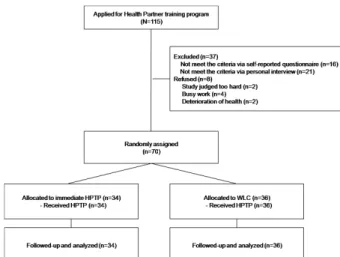
Of 115 applicants, the initial screening selected 99.
The second screening reduced that number to 78, 8 of whom did not complete the training course because their health deteriorated, they were too busy, or they judged the
Figure 1. Flow Diagram of Participants’ Progress through the Study Phases. HPTP, Health Partner Training Program; WLC, waiting-list control
Asian Pacific Journal of Cancer Prevention, Vol 14, 2013
7232
program too difficult (Figure 1).
Baseline characteristics of participants
The socio-demographic and clinical characteristics of the two groups did not differ significantly (Table 1).
Effect of health partnership program
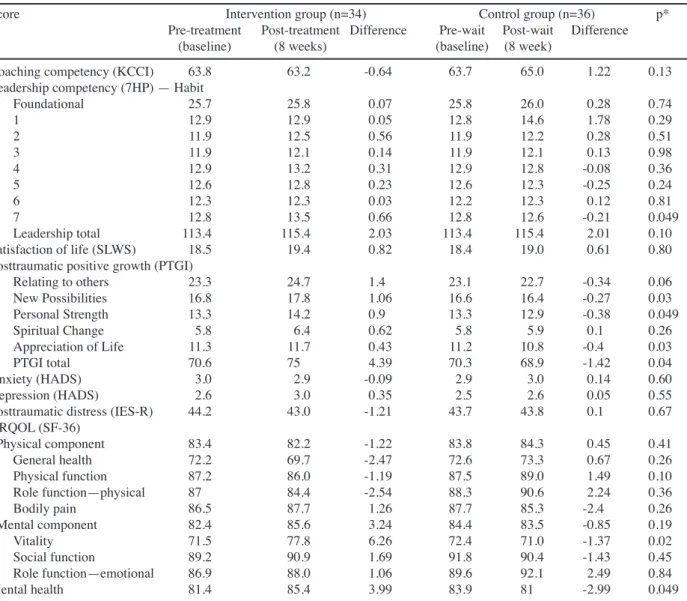
Table 2 shows the differences in scores between the intervention and control groups. For leadership competency (Seven Habits), only the 7th habit (Sharpen the Saw) increased significantly more in the intervention group than in the control group. For posttraumatic positive growth, 3 of the 5 scores and the total score increased significantly more in the intervention group than the control group and actually decreased slightly in the latter.
The intervention group showed a significantly greater enhancement of two mental components in the HRQOL.
Clinically meaningful improvement
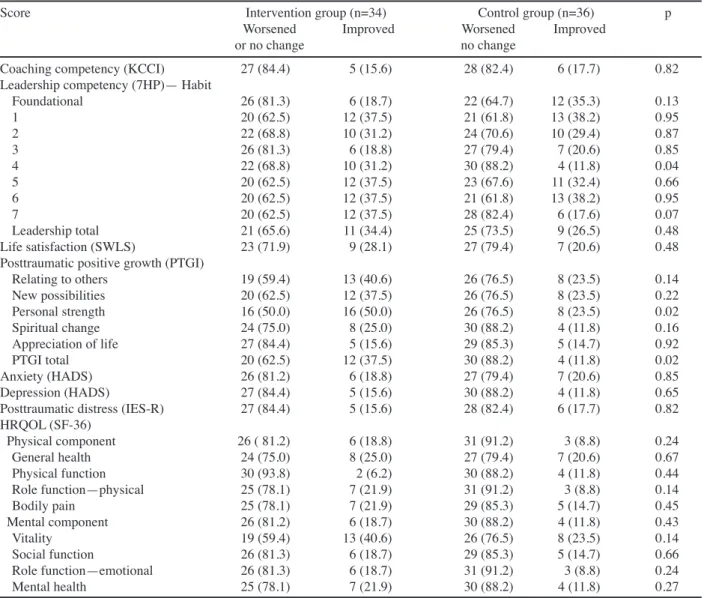
Table 3 shows differences in clinically meaningful changes in scores occurring at 8 weeks between the intervention and control groups. The 4th habit of leadership competency (Think Win-Win) showed a
0 25.0 50.0 75.0 100.0
Newly diagnosed without treatment Newly diagnosed with treatment Persistence or recurrence Remission None Chemotherapy Radiotherapy Concurrent chemoradiation
10.3
0 12.8
25.0 30.0 10.1 20.3
6.3
51.7 51.1 75.0
31.3 30.0 54.2
56.3 46.8
25.0 27.6 30.0 33.1
23.7 31.3 31.3 38.0
Table 2. Group Differences in Pre- and Post-treatment Scores
Score Intervention group (n=34) Control group (n=36) p*
Pre-treatment Post-treatment Difference Pre-wait Post-wait Difference (baseline) (8 weeks) (baseline) (8 week)
Coaching competency (KCCI) 63.8 63.2 -0.64 63.7 65.0 1.22 0.13
Leadership competency (7HP) — Habit
Foundational 25.7 25.8 0.07 25.8 26.0 0.28 0.74
1 12.9 12.9 0.05 12.8 14.6 1.78 0.29
2 11.9 12.5 0.56 11.9 12.2 0.28 0.51
3 11.9 12.1 0.14 11.9 12.1 0.13 0.98
4 12.9 13.2 0.31 12.9 12.8 -0.08 0.36
5 12.6 12.8 0.23 12.6 12.3 -0.25 0.24
6 12.3 12.3 0.03 12.2 12.3 0.12 0.81
7 12.8 13.5 0.66 12.8 12.6 -0.21 0.049
Leadership total 113.4 115.4 2.03 113.4 115.4 2.01 0.10
Satisfaction of life (SLWS) 18.5 19.4 0.82 18.4 19.0 0.61 0.80
Posttraumatic positive growth (PTGI)
Relating to others 23.3 24.7 1.4 23.1 22.7 -0.34 0.06
New Possibilities 16.8 17.8 1.06 16.6 16.4 -0.27 0.03
Personal Strength 13.3 14.2 0.9 13.3 12.9 -0.38 0.049
Spiritual Change 5.8 6.4 0.62 5.8 5.9 0.1 0.26
Appreciation of Life 11.3 11.7 0.43 11.2 10.8 -0.4 0.03
PTGI total 70.6 75 4.39 70.3 68.9 -1.42 0.04
Anxiety (HADS) 3.0 2.9 -0.09 2.9 3.0 0.14 0.60
Depression (HADS) 2.6 3.0 0.35 2.5 2.6 0.05 0.55
Posttraumatic distress (IES-R) 44.2 43.0 -1.21 43.7 43.8 0.1 0.67
HRQOL (SF-36)
Physical component 83.4 82.2 -1.22 83.8 84.3 0.45 0.41
General health 72.2 69.7 -2.47 72.6 73.3 0.67 0.26
Physical function 87.2 86.0 -1.19 87.5 89.0 1.49 0.10
Role function—physical 87 84.4 -2.54 88.3 90.6 2.24 0.36
Bodily pain 86.5 87.7 1.26 87.7 85.3 -2.4 0.26
Mental component 82.4 85.6 3.24 84.4 83.5 -0.85 0.19
Vitality 71.5 77.8 6.26 72.4 71.0 -1.37 0.02
Social function 89.2 90.9 1.69 91.8 90.4 -1.43 0.45
Role function—emotional 86.9 88.0 1.06 89.6 92.1 2.49 0.84
Mental health 81.4 85.4 3.99 83.9 81 -2.99 0.049
*Adjusted for baseline score. KCCI, The Korean Leadership Coaching Competency Inventory; 7HP, The Seven Habit Profile; SWLS, The Ed Diner’s Satisfaction with Life Scale; PTGI, The Posttraumatic Growth inventory; HADS, The Hospital Anxiety and Depression Scale; IES-R, The Impact of Event Scale-Revised; SF-36, The Medical Outcomes Study (MOS) short form 36-item questionnaire
0 25.0 50.0 75.0 100.0
Newly diagnosed without treatment Newly diagnosed with treatment Persistence or recurrence Remission None Chemotherapy Radiotherapy Concurrent chemoradiation
10.3
0 12.8
25.0 30.0 10.1 20.3
6.3
51.7 51.1 75.0
31.3 30.0 54.2
56.3 46.8
25.0 27.6 30.0 33.1
23.7 31.3 31.3 38.0
0 25.0 50.0 75.0 100.0
Newly diagnosed without treatment Newly diagnosed with treatment Persistence or recurrence Remission None Chemotherapy Radiotherapy Concurrent chemoradiation
10.3
0 12.8
25.0 30.0 10.1 20.3
6.3
51.7 51.1 75.0
31.3 30.0 54.2
56.3 46.8
25.0 27.6 30.0 33.1
23.7 31.3 31.3 38.0
0 25.0 50.0 75.0 100.0
y diagnosed without treatment Newly diagnosed with treatment Persistence or recurrence Remission None Chemotherapy Radiotherapy Concurrent chemoradiation
10.3
0 12.8
30.0 25.0
10.1 20.3 6.3
51.7 51.1 75.0
31.3 30.0 54.2
56.3 46.8
25.0 27.6 30.0 33.1
23.7 31.3 31.3 38.0
0 25.0 50.0 75.0 100.0
y diagnosed without treatment Newly diagnosed with treatment Persistence or recurrence Remission None Chemotherapy Radiotherapy Concurrent chemoradiation
10.3
0 12.8
30.0 25.0
10.1 20.3 6.3
51.7 51.1 75.0
31.3 30.0 54.2
56.3 46.8
25.0 27.6 30.0 33.1
23.7 31.3 31.3 38.0
Table 1. Demographic and Clinical Characteristics of Study Participants
Characteristic Intervention Control p group group (n=34) (n=36)
Sex, n (%) Male 7 (20.6) 8 (22.2) 0.87 Female 27 (79.4) 28 (77.8) Age (yr), mean (SD) 56.1 (5.6) 55.3 (7.3) 0.59
<55 14 (41.2) 14 (38.9)
≥55 20 (58.8) 22 (61.1) 0.84 Educational level
≤High school 15 (44.1) 15 (41.7)
≥College 19 (55.9) 21 (58.3) 0.84 Having a religion
No 6 (17.6) 4 (11.1)
Yes 28 (82.4) 32 (88.9) 0.43
Residence Metropolitan 24 (72.7) 30 (83.3)
Rural 9 (27.3) 6 (16.7) 0.29
Household income, US$
<2000 1 (2.9) 3 (8.3) 2000-2999 12 (35.3) 4 (11.1) 3000-3999 9 (26.5) 13 (36.2)
≥4000 12 (35.3) 16 (44.4) 0.10 Cancer type, n (%)
Breast 19 (55.9) 17 (47.2)
Stomach, colon, rectal 9 (26.5) 15 (41.7) Other (thyroid, gynecological) 6 (17.6) 4 (11.1) 0.38
Asian Pacific Journal of Cancer Prevention, Vol 14, 2013
7233
Health Partner Training Program for Long-Term Disease-Free Cancer Survivors in Korea
0 25.0 50.0 75.0 100.0
Newly diagnosed without treatment Newly diagnosed with treatment Persistence or recurrence Remission None Chemotherapy Radiotherapy Concurrent chemoradiation
10.3
0 12.8
30.0 25.0
10.1 20.3 6.3
51.7 51.1 75.0
31.3 30.0 54.2
56.3 46.8
25.0 27.6 30.0 33.1
23.7 31.3 31.3 38.0
0 25.0 50.0 75.0 100.0
Newly diagnosed without treatment Newly diagnosed with treatment Persistence or recurrence Remission None Chemotherapy Radiotherapy Concurrent chemoradiation
10.3
0 12.8
30.0 25.0
10.1 20.3 6.3
51.7 51.1 75.0
31.3 30.0 54.2
56.3 46.8
25.0 27.6 30.0 33.1
23.7 31.3 31.3 38.0
Table 3. Clinical Meaningful Changes* between Baseline and 8 Weeks
Score Intervention group (n=34) Control group (n=36) p
Worsened Improved Worsened Improved
or no change no change
Coaching competency (KCCI) 27 (84.4) 5 (15.6) 28 (82.4) 6 (17.7) 0.82
Leadership competency (7HP)— Habit
Foundational 26 (81.3) 6 (18.7) 22 (64.7) 12 (35.3) 0.13
1 20 (62.5) 12 (37.5) 21 (61.8) 13 (38.2) 0.95
2 22 (68.8) 10 (31.2) 24 (70.6) 10 (29.4) 0.87
3 26 (81.3) 6 (18.8) 27 (79.4) 7 (20.6) 0.85
4 22 (68.8) 10 (31.2) 30 (88.2) 4 (11.8) 0.04
5 20 (62.5) 12 (37.5) 23 (67.6) 11 (32.4) 0.66
6 20 (62.5) 12 (37.5) 21 (61.8) 13 (38.2) 0.95
7 20 (62.5) 12 (37.5) 28 (82.4) 6 (17.6) 0.07
Leadership total 21 (65.6) 11 (34.4) 25 (73.5) 9 (26.5) 0.48
Life satisfaction (SWLS) 23 (71.9) 9 (28.1) 27 (79.4) 7 (20.6) 0.48
Posttraumatic positive growth (PTGI)
Relating to others 19 (59.4) 13 (40.6) 26 (76.5) 8 (23.5) 0.14
New possibilities 20 (62.5) 12 (37.5) 26 (76.5) 8 (23.5) 0.22
Personal strength 16 (50.0) 16 (50.0) 26 (76.5) 8 (23.5) 0.02
Spiritual change 24 (75.0) 8 (25.0) 30 (88.2) 4 (11.8) 0.16
Appreciation of life 27 (84.4) 5 (15.6) 29 (85.3) 5 (14.7) 0.92
PTGI total 20 (62.5) 12 (37.5) 30 (88.2) 4 (11.8) 0.02
Anxiety (HADS) 26 (81.2) 6 (18.8) 27 (79.4) 7 (20.6) 0.85
Depression (HADS) 27 (84.4) 5 (15.6) 30 (88.2) 4 (11.8) 0.65
Posttraumatic distress (IES-R) 27 (84.4) 5 (15.6) 28 (82.4) 6 (17.7) 0.82 HRQOL (SF-36)
Physical component 26 ( 81.2) 6 (18.8) 31 (91.2) 3 (8.8) 0.24
General health 24 (75.0) 8 (25.0) 27 (79.4) 7 (20.6) 0.67
Physical function 30 (93.8) 2 (6.2) 30 (88.2) 4 (11.8) 0.44
Role function—physical 25 (78.1) 7 (21.9) 31 (91.2) 3 (8.8) 0.14
Bodily pain 25 (78.1) 7 (21.9) 29 (85.3) 5 (14.7) 0.45
Mental component 26 (81.2) 6 (18.7) 30 (88.2) 4 (11.8) 0.43
Vitality 19 (59.4) 13 (40.6) 26 (76.5) 8 (23.5) 0.14
Social function 26 (81.3) 6 (18.7) 29 (85.3) 5 (14.7) 0.66
Role function—emotional 26 (81.3) 6 (18.7) 31 (91.2) 3 (8.8) 0.24
Mental health 25 (78.1) 7 (21.9) 30 (88.2) 4 (11.8) 0.27
*An effect size of ≥0.5 was considered clinically meaningful change. KCCI, The Korean Leadership Coaching Competency Inventory; 7HP, The Seven Habit Profile;
SWLS, The Ed Diner’s Satisfaction with Life Scale; PTGI, The Posttraumatic Growth inventory; HADS, The Hospital Anxiety and Depression Scale; IES-R, The Impact of Event Scale-Revised; SF-36, The Medical Outcomes Study (MOS) short form 36-item questionnaire
significantly greater clinically meaningful improvement in the intervention group than in the control group. In posttraumatic positive growth, the personal strength score and total PTGI score showed a statistically greater clinically meaningful improvement in the intervention group than in the control group.
Pooled data analyses
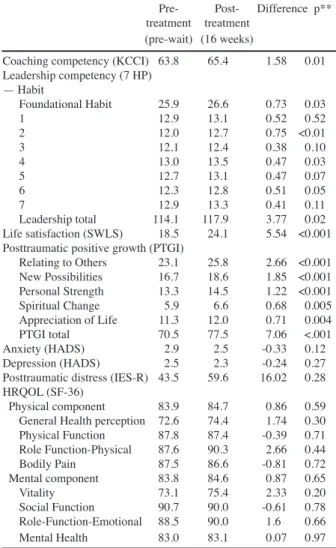
Table 4 presents the pooled mean scores of both groups of participants at baseline and at their 16-week follow- up evaluations. Coaching competency, most leadership competencies, life satisfaction, all PTGI subscales, and PTGI total score were significantly higher than they were before the 16-week intervention.
Predictors of clinically meaningful improvement
Table 5 presents the logistic regression analysis exploring predictive factors of clinical meaningful improvement of posttraumatic positive growth and life satisfaction scores. Those who had a lower score (≤ 13) for the 2nd habit in leadership competency (Begin with the End in Mind) and a higher score in posttraumatic distress (≥ 45.5) experienced more positive growth than
the reference group. For life satisfaction, those who had a lower score (≤13) for the 7th habit (Sharpen the Saw) showed more life satisfaction, and those who had less bodily pain (≥74) experienced more life satisfaction than the reference group.
Discussion
The results of this randomized controlled trial—the first to demonstrate the effectiveness of a program to train long-term cancer survivors to become coaches for other survivors—are consistent with those of other programs for health trainers, such as Patient Navigator and Collaborative Nurse (Appel et al., 2011; Paskett et al., 2011).
Although pooled analysis of the pre- and post-treatment groups showed that the program improved coaching skills, many habits, and post-traumatic positive growth, the intervention group did not show more improvement in coaching skills than the control group, nor did it show greater improvement in life satisfaction. Our finding that the intervention had no greater impact than usual care on the symptoms of anxiety and depression may follow
Table 4. Pooled Analysis of between Pre- and Post- treatment Scores (n=70)
Pre- Post- Difference p**
treatment treatment (pre-wait) (16 weeks)
Coaching competency (KCCI) 63.8 65.4 1.58 0.01 Leadership competency (7 HP)
— Habit
Foundational Habit 25.9 26.6 0.73 0.03
1 12.9 13.1 0.52 0.52
2 12.0 12.7 0.75 <0.01
3 12.1 12.4 0.38 0.10
4 13.0 13.5 0.47 0.03
5 12.7 13.1 0.47 0.07
6 12.3 12.8 0.51 0.05
7 12.9 13.3 0.41 0.11
Leadership total 114.1 117.9 3.77 0.02 Life satisfaction (SWLS) 18.5 24.1 5.54 <0.001 Posttraumatic positive growth (PTGI)
Relating to Others 23.1 25.8 2.66 <0.001 New Possibilities 16.7 18.6 1.85 <0.001 Personal Strength 13.3 14.5 1.22 <0.001 Spiritual Change 5.9 6.6 0.68 0.005 Appreciation of Life 11.3 12.0 0.71 0.004
PTGI total 70.5 77.5 7.06 <.001
Anxiety (HADS) 2.9 2.5 -0.33 0.12
Depression (HADS) 2.5 2.3 -0.24 0.27 Posttraumatic distress (IES-R) 43.5 59.6 16.02 0.28 HRQOL (SF-36)
Physical component 83.9 84.7 0.86 0.59 General Health perception 72.6 74.4 1.74 0.30 Physical Function 87.8 87.4 -0.39 0.71 Role Function-Physical 87.6 90.3 2.66 0.44
Bodily Pain 87.5 86.6 -0.81 0.72
Mental component 83.8 84.6 0.87 0.65
Vitality 73.1 75.4 2.33 0.20
Social Function 90.7 90.0 -0.61 0.78 Role-Function-Emotional 88.5 90.0 1.6 0.66
Mental Health 83.0 83.1 0.07 0.97
*KCCI, The Korean Leadership Coaching Competency Inventory; 7HP, The Seven Habit Profile; SWLS, The Ed Diner’s Satisfaction with Life Scale; PTGI, The Posttraumatic Growth inventory; HADS, The Hospital Anxiety and Depression Scale; IES-R, The Impact of Event Scale-Revised; SF-36, The Medical Outcomes Study (MOS) short form 36-item questionnaire. **Paired t-test with adjustment for baseline score
Table 5. Predictive Factors for Clinically Meaningful Improvement of Post-traumatic Growth and Life Satisfaction
Posttraumatic growth Life satisfaction (PTGI) (SWLS) aOR 95%CI aOR 95%CI Coaching competency (KCCI), ≤64 (ref. >64)
1.88 0.53 to 6.63 NA -
Leadership competency (7 HP)
Habit 2, ≤13 (ref. >13) 3.23 1.22 to 11.76 NA - Habit 7, ≤13 (ref. >13) 2.75 0.90 to 8.37 4.69 1.10 to 19.97 Posttraumatic distress (IES-R), ≥45.5 (ref. <45.5)
3.04 1.12 to 10.15 NA -
HRQOL (SF-36)
Vitality, ≤85 (ref. >85) 4.20 0.78 to 10.53 3.6 0.78 to 16.48 Bodily Pain, ≥74 (ref. <74) NA - 7.2 1.25 to 15.6
*KCCI, The Korean Leadership Coaching Competency Inventory; 7HP, The Seven Habit Profile; SWLS, The Ed Diner’s Satisfaction with Life Scale; PTGI, The Posttraumatic Growth inventory; IES-R, The Impact of Event Scale-Revised;
SF-36, The Medical Outcomes Study (MOS) short form 36-item questionnaire;
aOR, adjusted odds ratio; NA, Not available
from the fact that the participants went through a careful selection process and were likely to be less distressed and more positive than the normal pool of cancer survivors (Kim et al., 2010). Nevertheless, the program needs to be made more effective and more appropriate for coaching.
While the goal of the training program is to empower patients’ to take care of others in a chronic care model, our findings suggest that modification of the program might empower participants at that “teachable moment”
to adopt more positive attitudes toward their own lives beyond cancer. Health coaching as a model for proactive health management tailored to each patient’s health status and preference would enable patients to achieve the target levels set for their own health (Vale et al., 2003). From a public health perspective, the Health Partner program would be of value linking cancer patient to healthcare professionals so that they could work together to restore health more effectively. The effectiveness of a health coach training program for long-term survivors, however, needs further development and larger trials.
Several limitations of this trial should be noted. The first and most important is that the small number of participants and our use of half of them as a waiting-list
control resulted in a small experimental arm, limiting the trial’s statistical power. Second, since the participants went through a highly selective interview process they were likely to be more motivated than the general population, suggesting that the findings were not generalizable.
The Health Partner Program, however, requires a select population, so generalizability may not be an appropriate criterion. Third, the training program was based on the leadership program of the Seven Habits coaching program, but a more specialized program should be developed.
Finally, studies comparing the Health Partner Program with similar training programs such as Patient Navigation are needed to evaluate effectiveness and long-term effects.
Acknowledgements
This study was supported by National Cancer Center grants (1010470-3).
References
Appel LJ, Clark JM, Yeh HC, et al (2011). Comparative effectiveness of weight-loss interventions in clinical practice.
N Engl J Med, 365, 1959-68.
Bjelland I, Dahl AA, Haug TT, et al (2002). The validity of the Hospital Anxiety and Depression Scale: an updated literature review. J Psychosom Res, 52, 69-77.
Bodenheimer T (2008). Coordinating care--a perilous journey through the health care system. N Engl J Med, 358, 1064-71.
Centers for Disease Control and Prevention (2004). A National Action Plan for Cancer Survivorship: Advancing Public Health Strategies. Atlanta, Georgia, U.S. Department of Health and Human Services.
Cheung WY, Neville BA, Earle CC (2010). Associations among cancer survivorship discussions, patient and physician expectations, and receipt of follow-up care. J Clin Oncol, 28, 2577-83.
Cohen J (1988). Statistical power analysis for the behavioral sciences, Lawrence Erlbaum.
Covey SR (1991). The seven habits of highly effective people.
Natl Med Leg J, 2, 8.
Diener E, Emmons RA, Larsen RJ, et al (1985). The satisfaction with life scale. J Pers Assess, 49, 71-5.
Ezat WP, Noraziani K, Sabrizan O (2012). Improving quality of
Asian Pacific Journal of Cancer Prevention, Vol 14, 2013
7235
Health Partner Training Program for Long-Term Disease-Free Cancer Survivors in Korea life among cancer patients in Malaysia. Asian Pac J Cancer
Prev, 13, 1069-75.
Ganz PA, Hahn EE (2008). Implementing a survivorship care plan for patients with breast cancer. J Clin Oncol, 26, 759-67.
Grunfeld E, Earle CC (2010). The interface between primary and oncology specialty care: treatment through survivorship. J Natl Cancer Inst Monogr, 2010, 25-30.
Grunfeld E, Levine MN, Julian JA, et al (2006). Randomized trial of long-term follow-up for early-stage breast cancer:
a comparison of family physician versus specialist care. J Clin Oncol, 24, 848-55.
Han CW, Lee EJ, Iwaya T, et al (2004). Development of the Korean version of Short-Form 36-Item Health Survey: health related QOL of healthy elderly people and elderly patients in Korea. Tohoku J Exp Med, 203, 189-94.
Isikhan V (2010). Coping with stress in patients with advanced cancer. Asian Pac J Cancer Prev, 11, 81-92.
Jemal A, Siegel R, Ward E, et al (2009). Cancer statistics, 2009.
CA Cancer J Clin, 59, 225-49,
Khatcheressian JL, Wolff AC, Smith TJ, et al (2006). American Society of Clinical Oncology 2006 update of the breast cancer follow-up and management guidelines in the adjuvant setting. J Clin Oncol, 24, 5091-7.
Kim SH, Kang S, Kim YM, et al (2010). Prevalence and predictors of anxiety and depression among cervical cancer survivors in Korea. Int J Gynecol Cancer, 20, 1017.
Kinsey T, Jemal A, Liff J, et al (2008). Secular trends in mortality from common cancers in the United States by educational attainment, 1993-2001. J Natl Cancer Inst, 100, 1003-12.
Korea Leadership Center. Korea Leadership Center Coaching Competency Inventory (KCCI), http://www.eklc.co.kr/
consulting/c_s04_kcci.asp.
Lewis FM, Casey SM, Brandt PA, et al (2006). The enhancing connections program: pilot study of a cognitive-behavioral intervention for mothers and children affected by breast cancer. Psychooncology, 15, 486-97.
Lim HK, Woo JM, Kim TS, et al (2009). Reliability and validity of the Korean version of the Impact of Event Scale-Revised.
Compr Psychiatry, 50, 385-90.
Miedema B, MacDonald I, Tatemichi S (2003). Cancer follow-up care. Patients’ perspectives. Can Fam Physician, 49, 890-5.
Moon SH, Lee DT, Son Y (2013). Adherence to health-related lifestyle behavior recommendations and association with quality of life among cancer survivors and age-matched controls in Korea. Asian Pac J Cancer Prev, 4, 2949-54.
Morris BA, Shakespeare-Finch J, Scott JL (2011). Posttraumatic growth after cancer: the importance of health-related benefits and newfound compassion for others. Support Care Cancer, 20, 749-56.
Motlagh H (2010). Impact of event scale-revised. J Physiother, 56, 203.
Nangyeon L, Hwaryung LS. EM (2010). of the satisfaction With Life Scale(SWLS) findings in Korea. Korean J Psychol, 29, 21-47.
Oh SM, Min KJ, Park DB (1999). A study on the standardization of the hospital anxiety and depression scale for Koreans:
a comparison of normal, depressed and anxious groups. J Korean Neuropsychiatr Assoc, 38, 289-96.
Parry C, Kent EE, Mariotto AB, et al (2011). Cancer survivors:
a booming population. Cancer Epidemiol Biomarkers Prev, 20, 1996-2005.
Paskett ED, Harrop JP, Wells KJ (2011). Patient navigation: an update on the state of the science. CA Cancer J Clin, 61, 237-49.
Rosmawati NH (2010). Knowledge, attitudes and practice of breast self-examination among women in a suburban area in Terengganu, Malaysia. Asian Pac J Cancer Prev, 11, 1503-8.
Tedeschi RG, Calhoun LG (1996). The Posttraumatic Growth Inventory: Measuring the positive legacy of trauma. J Trauma Stress, 9, 455-71.
Vale MJ, Jelinek MV, Best JD, et al (2003). Coaching patients On Achieving Cardiovascular Health (COACH): a multicenter randomized trial in patients with coronary heart disease.
Arch Intern Med, 163, 2775.
Ware Jr JE, Sherbourne CD (1992). The MOS 36-item short- form health survey (SF-36): I. Conceptual framework and item selection. Med Care, 30, 473-83.
Zigmond AS, Snaith RP (1983). The hospital anxiety and depression scale. Acta Psychiatr Scand, 67, 361-70.
.