37
*Corresponding author: Ki-Seuk Kim, Tel. +82-53-950-5962, Fax. +82-53-950-5955, E-mail. [email protected]
국내 가축 유래 대장균에서 CTX-M 및 TEM형 extended-spectrum β-lactamases의 검출
조재근ㆍ성명숙1ㆍ김진현2ㆍ김기석2*
대구광역시 보건환경연구원, 1경상북도 가축위생시험소, 2경북대학교 수의과대학
(접수 2011. 2. 25, 게재승인 2011. 3. 24)
Detection of CTX-M and TEM type extended-spectrum β-lactamases in Escherichia coli isolated
from livestocks in Korea
Jae-Keun Cho, Myung-Suk Sung1, Jin-Hyun Kim2, Ki-Seuk Kim2*
Metropolitan Health & Enviornmental Research Institute, Daegu 706-732, Korea
1Gyeongbuk Veterinary Service Laboratory, Daegu 702-911, Korea
2College of Veterinary Medicine, Kyungpook National University, Daegu 702-701, Korea (Received 25 February 2011, accepted in revised from 24 March 2011)
Abstract
This study was conducted to investigate the prevalence and genotypes of extended-spectrum β-lactamase (ESBL) in 377 Escherichia coli isolated from healthy and sick animals. Two isolates (0.5%), each of which were isolated from diseased swine and chicken, respectively, were confirmed as ESBL produc- ing isolates by double disk synergy test, and showed a multidrug resistant phenotype. Minimum in- hibitory concentration of cefotaxime for the two ESBL producing isolates were 3∼4 times higher than those of ceftazidime, respectively. By PCR and sequencing, one isolate from swine have both blaCTX-15
and blaTEM-1, and one isolate from chicken have blaCTX-15 and blaTEM-116. Also, these genes were trans- ferred to E. coli J53 by conjugation. These two isolates showed unrelated pulsed-field gel electrophoresis. To our knowledge, this is the first time that blaTEM-116 gene was identified in E. coli isolated from animals in Korea. These results suggest more prudent use of third- generation cepha- losporins, and surveillance and monitoring for ESBL producing E. coli in both animals and their envi- ronments should be necessary.
Key words : Escherichia coli, ESBL, blaTEM-1, blaTEM-116, blaCTX-15
서 론
β-lactam 계열의 항균제는 사람과 동물의 세균 감 염증 치료에 널리 사용되고 있고 내성균의 출현이 세 계 여러 나라에서 증가하고 있다. 세균이 β-lactam 항 균제에 대한 내성을 획득하는 가장 중요한 기전은
β-lactamase의 생성에 의한 항균제의 불활성화로 알려 져 있다(Livermore, 1995).
Exteneded-spectrum β-lactamase (ESBL)은 가수분해 활성범위가 매우 높은 효소로, penicillin계와 협범위 cephalosporin뿐만 아니라 제3세대 cephalosporin계 및 monobactam계 등의 광범위 항균제를 가수분해하는 효소이지만, clavulanic acid, sulbactam 등 β-lactamase
inhibitor에 의해서는 활성이 억제되는 특징이 있다(Oliver 등, 1999). ESBL은 1983년 독일에서 Klebsiella(K) pneu- moniae에서 처음 분리 보고된 이후(Knothe 등, 1983) 현재까지 150여 종 이상이 보고되고 있다(Bradford.
2001). ESBL은 Ambler 등(1991)의 class A 및 Bush 등 (1995)의 group 2be에 속하는 효소로서 대부분 ESBL 은 TEM-1, TEM-2 및 SHV-1 효소의 유도체로 broad- spectrum β-lactamase(BSBL) 유전자의 점 변이에 의한 아미노산 치환에 의해서 생성되었다(Jacoby와 Medeiros, 1991; Paterson과 Bonomo, 2005). Plasmid에 의해 매개 되는 TEM 및 SHV형 효소는 ESBL 중 가장 흔하며 국내에서는 TEM-52, SHV-2a 및 SHV-12가 널리 유행 하는 것으로 보고되고 있으나, 최근에는 CTX-M형이 가장 흔히 보고되고 있다(Jeong 등, 2004; Kim 등, 1998; Kim 등, 2005a; Kim 등, 2005b; Pai 등, 1999).
CTX-M형 ESBL은 1989년 독일의 Bauernfeind 등 (1990)에 의해서 사람에서 분리한 E. coli에서 CTX-M-1 이 처음 보고된 이후 우리나라를 비롯하여 유럽, 북 아메리카, 남아메리카, 아시아 및 아프리카 등 세계 각국에서 다양한 유형의 CTX-M형 ESBL이 보고되고 있으며 그 빈도는 계속 증가하고 있다(Bonnet, 2004;
Pai 등 2001; Tzouvelekis 등, 2000). CTX-M형 ESBL 역시 plasmid에 의해 매개 되며 가수분해 기질특이성 및 억제특이성이 TEM형이나 SHV형 ESBL과 유사하 지만, ceftazidime보다는 cefotaxime에 대한 가수분해 활성이 더 강한 특성이 있다(Poirel, 2002).
지금까지 국내에서 ESBL에 관한 연구는 주로 대학 병원이나 3차 종합병원에 입원 중인 환자유래 세균 에 대해서만 이루어지고 있을 뿐, 동물 유래 세균에 서 이에 관한 보고는 드문 실정이다(성 등, 2008; 정 등, 2010; Lim 등, 2009). 이 연구는 건강한 동물과 환 축으로부터 분리한 E. coli를 대상으로 ESBL 생성 균 주를 분리확인하고, 이들 균주에 대해서는 ESBL 유 전자의 유전형, 항균제 내성 양상, 접합에 의한 유전 자 전달능 및 PFGE를 이용하여 ESBL 산생 균주 간 유전학적 관련성 여부를 알아보고자 실시하였다.
재료 및 방법
공시재료
2006년부터 2008년까지 대구지역 도축장에서 분리
하여 보관 중인 E. coli 227주(소; 111주, 돼지; 116주) 및 질병검사 의뢰된 환축에서 분리한 E. coli 150주 (소; 67, 돼지; 51주, 닭; 32주) 등 총 377주를 대상으 로 실험을 하였다.
ESBL 생성 균주의 검출
ESBL 생성주 검색을 위하여 cefotaxime (CTX, sig- ma, USA)과 ceftazidime (CAZ, sigma, USA)에 대한 최 소발육억제농도(minimum inhibitory concentration, MIC) 가 2 μg/ml 이상인 균주를 대상으로 double disk syn- ergy (DDS) 시험을 실시하였다(Jarlier, 1988). Mueller- Hinton Agar (Difco, USA)에 MacFarland No. 0.5로 탁 도를 맞춘 균 부유액을 균등 도말한 후 배지의 중앙 에 amoxacillin/clavulanic acid (AMC) (20/10 μg, BBL, USA) 디스크를 놓고 가장자리로부터 2cm가 되는 곳 에 30 μg의 aztreonam (ATM), ceftazidime (CAZ), CTX 및 cefoxitin (FOX) 디스크(BBL, USA)를 놓고 37oC에 서 18시간 배양한 후, AMC 디스크와 각 디스크 사이 에서 상승작용을 나타내는 억제대의 확장현상이 5 mm 이상으로 관찰되면 양성으로 판정하였다.
접합에 의한 내성전달 시험
내성전달시험은 ESBL 생성 균주를 공여군으로 하 고, sodium azide (SA, sigma, USA)에 내성인 E. coli J53을 피전달균주로 하여 Bradley 등(1980)의 방법에 준하여 실시하였다. 공시균과 피전달균을 각각의 4ml Tryptic soy broth (TSB, Difco, USA)에 접종하여 37oC 에서 18시간 배양한 다음, 미리 가온시켜 둔 0.5ml TSB에 공시균 0.1ml와 피전달균 0.4ml를 넣은 후 37oC에서 4시간 배양한 후, CTX와 SA가 각각 2 μg/ml 및 100 μg/ml의 농도로 함유된 MacConkey agar (Difco, USA)에 접종하여 37oC에서 18시간 배양한 후 transconjugant를 선별하였다.
항균제 감수성 시험
항균제 감수성 시험은 National Committee for Clini- cal Laboratory Standards(NCCLS, 2003a)의 기준에 따 라서 CAZ와 CTX에 대한 MIC는 평판희석법(NCCLS, 2003)으로 ampicillin (AM), amikacin (AN), cefazolin (CZ), cefalothin (CF), cefepime (FEP), chloramphenicol
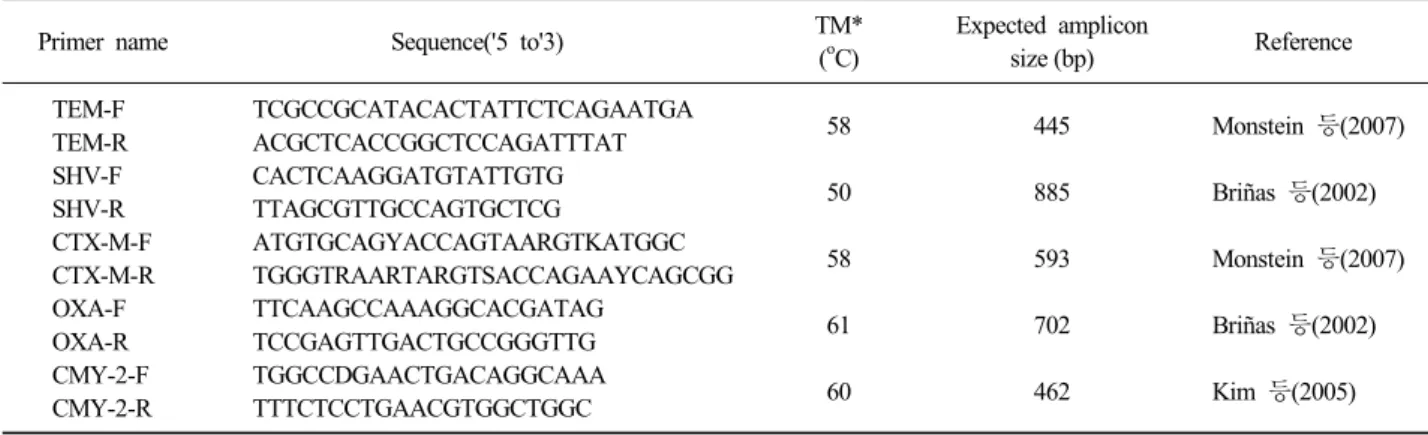
Table 1. The list of sequence of primers used in this study
Primer name Sequence('5 to'3) TM*
(oC)
Expected amplicon
size (bp) Reference TEM-F
TEM-R SHV-F SHV-R CTX-M-F CTX-M-R OXA-F OXA-R CMY-2-F CMY-2-R
TCGCCGCATACACTATTCTCAGAATGA ACGCTCACCGGCTCCAGATTTAT CACTCAAGGATGTATTGTG TTAGCGTTGCCAGTGCTCG
ATGTGCAGYACCAGTAARGTKATGGC TGGGTRAARTARGTSACCAGAAYCAGCGG TTCAAGCCAAAGGCACGATAG
TCCGAGTTGACTGCCGGGTTG TGGCCDGAACTGACAGGCAAA TTTCTCCTGAACGTGGCTGGC
58
50
58
61
60
445
885
593
702
462
Monstein 등(2007)
Briñas 등(2002)
Monstein 등(2007)
Briñas 등(2002)
Kim 등(2005)
* Annealing temperature used for PCR
(CM), ciprofloxacin (CIP), gentamicin (GM), imipenem (IPM), kanamycin (KM), nalidixic acid (NA), sulfame- thoxazole/trimethoprim (SXT) 및 tetracycline (TC) 등 13 종의 항균제에 대해서는 BBL사의 sensi-disc (USA)를 이용하여 디스크 확산법으로(NCCLS, 2003b) 실시하 였다. 항균제 감수성 시험을 위한 표준균주로는 E.
coli ATCC 25922를 사용하였다.
Polymerase chain reaction (PCR) 및 염기서열분석 Plasmid DNA는 AccuPrepⓇ Plasmid Extraction kit (Bioneer, Korea)를 사용하여 제조사의 술식에 준하여 추출한 다음 PCR을 위한 template DNA로 사용하였 다. ESBL 유전자의 검출을 위한 각각의 primers는 (주)바이오니아(한국)에 의뢰하여 합성 제작하였다 (Table 1).
PCR 반응은 Maxime PCR PreMix (i-Star Taq, intron Biotech, Korea)에 각각의 10 pM primer 1μl와 template DNA 2 μl를 넣은 후 멸균된 증류수를 첨가하여 최종 반응량이 20 μl가 되게 하여 TProfessional Thermal Cycler(Biometra, Germany)를 이용하여 수행하였다.
반응조건은 95oC에서 15분간 초기 denaturation 후, denaturation (94oC에서 30초), annealing (Table 1의 온 도에서 30초), extention (72oC에서 2분) 과정을 30회 반복하고 최종 extention은 72oC에서 10분간 실시하였 다. 증폭된 산물은 1.2% agarose gel에서 100V로 30분 간 전기영동을 실시한 후 UV transiluminator (Biometra, Germany)를 이용하여 특이 밴드의 유무를 확인하였 다. 유전자 염기서열 분석을 위해 PCR 반응 산물은 (주)솔젠트(한국)에 의뢰하여 분석하였다.
Pulsed-Field Gel Electrophoresis (PFGE) PFGE 분석은 제한효소 XbaI (20,000U, Roche, Bio-Rad, USA)을 사용하여 미국질병통제센터(Centers for Disease Control and Prevention, CDC, 2004)에서 운 영 중인 PFGE network인 ‘PulseNet’에서 사용되는 PFGE 표준실험법(CDC, 2004)에 따라 실시하였다.
PFGE 분석을 위한 전기영동은 0.5×TBE buffer (Bio- neer)를 사용하여 CHEF-Mapper XA Chiller system (Bio-Rad, Hercules, Calif. USA)으로 6 v/cm, 120o, 15oC, ramped pulse time 21.6∼63.8초의 조건으로 20 시간 전기영동을 실시하였다.
결 과
ESBL 생성균주의 검출
공시한 E. coli 377주 중 CTX에 대한 MIC가 2 μg/ml 이상인 7주를 대상으로 DDS 시험을 실시한 결 과 돼지 및 닭 유래에서 각각 1주(ES46 및 EP26)가 ESBL 생성 균주로 확인되었으며 이들 2주는 모두 환 축에서 분리되었다.
항균제 내성 양성
ESBL 생성균주 2주를 대상으로 AM 등 15종의 항균 제에 대한 감수성 시험을 한 결과 ES46은 AM, CAZ, CF, CIP, CM, CTX, CZ, GM, KM, NA, SXT 및 TC 등 12종의 약제에 내성을 보였고, EP26은 AM, CAZ,
Table 2. Phenotypic and genotypic characteristics of E. coli isolates producing extended-spectrum β-lactamase Strain Origin MIC (μg/ml)
Antimicrobial resistance pattern DDST** bla gene detected CAZ* CTX
ES46 EP26 TES46 TEP26
Swine Chicken Swine Chicken
16 32 16 16
256 512 256 128
AM, CAZ, CF, CIP, CM, CTX, CZ, GM, KM, NA, SXT, TC AM, CAZ, CF, CTX, CZ, NA
AM, CAZ, CTX, CZ, KM AM, CAZ, CF, CTX, CZ
+
+ NT***
NT
blaCTX-M-15
blaCTX-M-15
blaCTX-M-15
blaCTX-M-15
blaTEM-1
blaTEM-116
blaTEM-1
blaTEM-116
*CAZ, ceftazidime; CTX, cefotaxime; AM, ampicillin; CF, cefalothin; CIP, ciprofloxacin; CM, chloramphenicol; CZ, cefazolin; Gm, gen- tamicin; Km, kanamycin; NA, nalidixic acid; SXT, sulfamethoxazole/trimethoprim; TC, tetracycline. **DDST: double disk synergy test.
***NT: Not test.
Fig. 2.PCR for detecting β-lactamase gene (blaCTX-M). Lanes:
M, 100 bp DNA ladder; 1, positive control for blaCTX-M; 2, ES46; 3, EP26; 4, TES46; 5, TEP26.
Fig. 1. PCR for detecting β-lactamase gene (blaTEM). Lanes: M, 100 bp DNA ladder; 1, positive control for blaTEM; 2, ES46; 3, EP26; 4, TES46; 5, TEP26.
CF, CTX, CZ 및 NA 등 6종의 약제에 내성을 나타내 었다. CTX에 대한 MIC는 돼지와 닭 유래균에서 각 각 256 μg/ml 및 512 μg/ml 이상을 보여 CAZ의 MIC 인 16 μg/ml 및 32 μg/ml 보다 높았다(Table 2).
접합에 의한 내성전달
ESBL 생성균주 2주를 대상으로 접합에 의한 내성 전달시험을 실시한 결과, ES46은 AM, CAZ, CF, CTX, CZ 및 KM 등의 약제에 대한 내성이 피전달균 인 E. coli J53으로 전달되었고, EP26은 AM, CAZ, CF, CTX 및 CZ 등의 약제에 대한 내성이 피전달균 으로 전달되었다(Table 2).
ESBL 유전자의 검출 및 염기서열 분석
ESBL 생성 균주 2주 및 이들의 transconjugants 2주 를 대상으로 TEM, SHV, CTX, CMY 및 OXA 등 5종 의 ESBL 유전자를 검출하기 위해 PCR을 실시한 결 과, ES46과 EP26 은 모두 TEM과 CTX-M형 유전자를
동시에 보유하고 있었고, 이들 균의 transconjugants에 서도 공여균과 동일한 유전자가 검출되었다(Fig. 1, 2).
한편, 이들 TEM 및 CTX-M형 유전자의 염기서열을 분석한 결과, ES46은 blaTEM-1과 blaCTX-M-15를 동시에 가지고 있었고, EP26은 blaTEM-116과 blaCTX-M-15를 동시 에 보유하고 있는 것으로 확인되었으며, 이들 균의 transconjugants인 TES46과 TEP26에서도 공여균과 동 일한 성상의 유전자를 확인할 수 있었다(Table 2).
PFGE
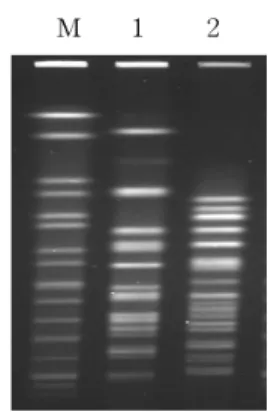
ESBL 유전자가 검출된 ES46 및 EP26을 대상으로 분자역학적인 유사성을 알아보기 위해 PFGE를 실시 한 결과 두 균주 간에는 서로 다른 양상을 나타내었 다(Fig. 3).
고 찰
1983년도에 plasmid 매개에 의해서 ESBL 생성 균
Fig. 3. PFGE pattern of genomic DNAs of CTX-M-15 produc- ing E. coli isolates digested with XbaⅠ. Lanes: M, Salmonella braenderup; 1, ES46; lane 2, EP26.
주가 독일에서 처음 보고된 이후(Knothe 등, 1983), E.
coli와 K. pneumoniae는 대표적인 ESBL 생성 균주로 세계 곳곳에서 분리 보고되고 있으며 이들 ESBL 생 성균주의 출현으로 기존의 β-lactam 항균제와 제 3세 대 cephalosporin 계열의 항균제들이 무력화됨에 따라 환자의 치료에 많은 어려움을 주고 있다(Jacoby와 Medeiros, 1991). 국내에서는 1990년대 이후부터 주로 대학병원과 종합병원의 장기입원 환자를 대상으로 ESBL 생성 균주에 대한 연구가 활발히 진행되고 있 으며 이들 균의 내성유전자 양상도 매우 다양하게 나 타나고 있다(Kim 등, 2005a; Kim 등, 2005b). 이번 연 구에서 공시한 E. coli 337주 중 돼지 유래 1주 및 닭 유래 1주 등 총 2주(0.6%)가 ESBL 생성 균주로 확인 되어 ESBL 생성 균주의 출현 빈도는 국내 이전 연구 자들의 결과와 유사하였다(성 등, 2008; 정 등, 2010, Lim 등, 2009). 또한, 이들 두 균주는 모두 환축에서 분리된 것으로 확인되어 ESBL 생성 균주의 출현은 가축에서 질병치료를 위한 제3세대 cephalosporins계 항생제의 사용과도 어느 정도 연관성이 있는 것으로 생각한다. 따라서 동물에서 이들 약제의 신중한 사용 이 요구된다.
초기 ESBL은 대부분 TEM과 SHV형이었으나 근년 에 이르러 CTX-M형 ESBL의 출현이 세계 여러 나라 에서 급격히 증가하고 있다(Bonnet, 2004). 이번 연구 에서는 돼지 유래 1주에서 blaTEM-1 및 blaCTX-M-15,와 닭 유래 1주에서 blaTEM-116 및 blaCTX-M-15 유전자가 동 시에 검출되었다. 특히 여러 가지 ESBL 유전자를 동 시에 지니고 있는 균주는 치료에 사용되는 항균제에 따라서 다양한 β-lactamase를 발현할 수 있으므로 임 상적으로 더욱 위험하다(Bradford, 2001). 따라서 이들
균주의 확산에 대한 대비책이 시급히 마련되어야 할 것으로 생각한다.
TEM형 ESBL은 TEM-1과 TEM-2의 유도체로 TEM-1, TEM-2 및 TEM-13을 제외한 TEM형 β-lactamase는 모 두가 ESBL이다(Bradford, 2001). TEM-1은 그람음성 세균에서 가장 흔히 관찰되는 plasmid 매개 β-lacta- mase로, E. coli에서 ampicillin 내성의 90% 이상이 이 효소의 생성과 관련이 있다(Livermore, 1995). TEM- 116은 TEM-1 유전자의 염기서열 84와 184에서 valine 이 isoleucine으로 alanine이 valine으로 변이를 보여 나 타난 효소형으로 국내에서는 Jeong 등(2004)이 2002 년 국내 대형병원에서 분리된 E. coli와 K. pneumo- niae에서 최초로 보고하였으나, 동물에서 분리된 E.
coli에서 blaTEM-116 유전자에 관한 보고는 이번 연구에 서 처음으로 확인되었다.
최근 세계적으로 CTX-M형 ESBL은 사람뿐 만아니 라 동물에서도 보고가 되고 있으며(Briñas 등, 2005;
Carattoli 등, 2005; Meunier, 2006). 국내 동물에는 성 등(2008)이 가금 유래 병원성 E. coli에서 CTX-M-15 를 보고하였고, Lim 등(2009)은 소와 개에서 분리된 E. coli에서 CTX-M-14와 돼지에서 분리된 E. coli에서 CTX-M-15를 보고하였으며, 정 등(2010)은 병성감정 의뢰된 동물에서 분리된 E. coli 및 E. fergusonii에서 CTX-M-15를 보고한 바 있다. 본 조사에서도 돼지와 닭 유래 E. coli에서 CTX-M-15가 분리되어 국내 동물 에서는 주로 CTX-M-15 유전형이 유행함을 확인할 수 있었다. 한편, CTX-M-15 유전자는 CTX-M-3에 비 와 비교하면 염기서열 240번째 aspartate에서 glycine 으로 1개의 아미노산이 치환된 효소로써 이 치환은 다른 CTX-M형 효소보다 CAZ에 대한 활성을 강화시 킨다(Kim, 1998; Pai, 2001; Paterson과 Bonomo, 2005).
이번 조사에서도 CTX-M-15 생성균주는 CAZ보다 CTX에 높은 MIC를 나타냄과 동시에 다제내성균으로 확인되어 이들 다제내성 ESBL 산생균주의 출현은 질 병 발생 때 치료약제의 선정에 어려움을 줄 수 있다.
한편, 이전 조사(성 등, 2008)에서 가금 유래 대장 균에서 CMY-2 유전자의 검출을 보고한 바 있으며 돼지유래 대장균에서의 SHV 유전자 검출 연구로 대 장균 400예 가운데 20예인 5.9%에서 SHV 유전자를 갖고 있는 것으로 보고하였으나(Park 등, 2007) 본 연 구에서 CMY-2, OXA 및 SHV 등의 유전자는 검출되 지 않아 다른 분포 양상을 보였다.
접합에 의해 ESBL 생성균주의 내성 및 유전자 전
달시험을 실시한 결과, 공여균은 일부 약제의 내성을 피전달균에게 전달하였으며 또한 transconjugants에서 도 공여균과 동일한 유전자가 확인되어, ESBL 생성 균주의 내성은 다른 균에 쉽게 전달됨을 알 수 있었 다. 한편, ESBL 생성균주에 대하여 균주 간 상관관계 를 알아보기 위하여 PFGE를 실시하여 유전자형의 분 석을 하였으나 균주간의 유사성은 매우 낮은 것으로 나타났다.
이번 연구 결과 ESBL 생성 균주는 병원이나 임상 검사 대상물에 국한되지 않고 동물에까지 서식처가 다양화되고 있음을 알 수 있었다. 더욱이 ESBL 생성 균주가 동물에서 분리되고 있음은 가축질병 치료 시 항균제의 선택에 제한을 줄 수 있을 뿐 아니라 사람 이나 다른 동물로의 전파 가능성 또한 배제할 수 없 으므로 공중보건학적으로 문제가 될 수 있음을 시사 해주고 있다. 따라서 ESBL 생성균주의 확산과 다양 화를 감시하기 위해 동물뿐만 아니라 그 주변 환경에 대해서도 지속적인 조사와 더불어 내성 세균의 확산 방지를 위한 제3세대 cephalosporin제제 같은 항생제 의 신중한 사용이 요구된다.
결 론
소, 돼지 및, 닭으로부터 분리한 E. coli를 대상으로 ESBL 유전자의 생성여부 및 그 특성을 알아보기 위 해 본 시험을 하여 아래와 같은 결과를 얻었다.
공시균 377주 중 돼지와 닭 유래에서 각각 1주 가 ESBL 생성균주로 확인되었으며, 돼지 유래 균은 blaTEM-1과 blaCTX-M-15, 닭 유래 균은 blaTEM-116과
blaCTX-M-15, 유전자를 동시에 가지고 있었고, 이들 공
시균의 transconjugant에서도 동일한 유전자가 검출되 었다. 한편, ESBL 생성균주에 대해 PFGE를 실시하여 유전자형을 분석한 결과 두 균주간의 유사성은 매우 낮은 것으로 나타났다.
참 고 문 헌
성명숙, 김진현, 조재근, 설성용, 김기석. 2008. 국내 가금유래 병원성 대장균의 extended-spectrum β-lactamases (ESBL) 특성 조사. 대한수의학회지 48(3): 259-265.
정병렬, 신동호, 변재원, 김하영, 하현수, 임숙경. 2010. 국내 동물 유래 extended-spectrum β-lactamase 생성균주의
유전자형 및 분포율. 한국수의공중보건학회지 34(2):
103-108.
Ambler RP, Coulson AF, Frère JM, Ghuysen JM, Joris B, Forsman M, Levesque RC, Tiraby G, Waley SG. 1991.
A standard numbering scheme for the class A be- ta-lactamases. Biochem J 276(pt1): 269-270.
Bauernfeind A, Grimm H, Schweighart S. 1990. A new plasmidic cefotaximase in a clinical isolate of Escherichia coli.
Infection 18(5): 294-298.
Bonnet R. 2004. Growing group of extended-spectrum β-lacta- mases: The CTX-M- enzymes. Antimicrob Agents Chemother 48(1): 1-14.
Bradford PA. 2001. Extended-spectrum β-lactamases in the 21st century: Characterization, epidemiology, and detection of this important resistance threat. Clin Microbiol Rev 14(4): 933-951.
Bradley DE, Taylor DE, Cohen DR. 1980. Specification of sur- face mating systems among conjugative drug resistance plasmids in Escherichia coli K-12. J Bacteriol 143(3):
1466-1470.
Briñas L, Zarazaga M, Sáenz Y, Ruiz-Larrea F, Torres C. 2002.
β-lactamases in ampicillin-resistant Escherichia coli iso- lates from foods, humans, and healthy animals.
Antimicrob Agents Chemother 46(10): 3156-3163.
Briñas L, Moreno MA, Teshager T, Sáenz Y, Porrero MC, Domínguez L, Torres C. 2005. Monitoring and charac- terization of extended-spectrum beta-lactamases in Escherichia coli strains from healthy and sick animals in Spain in 2003. Antimicrob Agents Chemother 49(3):
1262-1264.
Bush K, Jacoby GA, Medeiros AA. 1995. A functional classi- fication scheme for beta-lactamases and its correlation with molecular structure. Antimicrob Agents Chemother 39(6): 1211-1233.
Carattoli A, Lovari S, Franco A, Cordaro G, Di Matteo P, Battisti A. 2005. Extended-spectrum beta-lactamases in Escheri- chia coli isolated from dogs and cats in Rome, Italy, from 2001 to 2003. Antimicrob Agents Chemother 49(2): 833-835.
CDC, Pulsenet. 2004. Standardized laboratory protocol for molec- ular subtyping of Escherchia coli O157:H7, non- typhoi- dal Salmonella serotypes, and Shigella sonnei by PFGE.
http://www.cdc.gov/pulsenet/protocols/ecoli_salmonella_
shigella_protocols.pdf.
Jacoby GA, Medeiros AA. 1991. More extended-spectrum be- ta-lactamases. Antimicrob Agents Chemother 35(9):
1697-1704.
Jarlier V, Nicolas MH, Fournier G, Philippon A. 1988. Extended broad-spectrum beta-lactamases conferring transferable resistance to newer beta-lactam agents in Enterobacter- iaceae: hospital prevalence and susceptibility patterns.
Rev Infect Dis 10(4): 867-878.
Jeong SH, Bae IK, Lee JH, Sohn SG, Kang GH, Jeon GJ, Kim YH, Jeong BC, Lee SH. 2004. Molecular character-
ization of extended-spectrum beta-lactamases produced by clinical isolates of Klebsiella pneumoniae and Escherichia coli from a Korean nationwide survey. J Clin Microbiol 42(7): 2902-2906.
Kim J, Kwon Y, Pai H, Kim JW, Cho DT. 1998. Survey of Klebsiella pneumoniae strains producing extended- spec- trum beta-lactamases: prevalence of SHV-12 and SHV-2a in Korea. J Clin Microbiol 36(5): 1446-1449.
Kim J, Lim YM, Jeong YS, Seol SY. 2005a. Occurrence of CTX-M-3, CTX-M-15, CTX-M-14, and CTX-M-9 ex- tended-spectrum β-lactamases in Enterobacteriae clinical isolates in Korea. Antimicrob Agents Chemother 49(4):
1572-1575.
Kim J, Lim YM, Rheem I, Lee Y, Lee JC, Seol SY, Lee YC, Cho DT. 2005b. CTX-M and SHV-12 β-lactamases are the most common extended-spectrum enzymes in clinical isolates of Escherichia coli and Klebsiella pnemoniae collected from 3 university hospitals within Korea.
FEMS Microbiol Let 245(1): 93-98.
Knothe H, Shah P, Krcmery V, Antal M, Mitsuhashi S. 1983.
Transferable resistance to cefotaxime, cefoxitin, cefa- mandole and cefuroxime in clinical isolates of Klebsiella pneumoniae and Serratia marcescens. Infection 11(6):
315-317.
Lim SK, Lee HS, Nam HM, Jung SC, Bae YC. 2009. CTX- M-type beta-lactamase in Escherichia coli isolated from sick animals in Korea. Microb Drug Resist 15(2):
139-142.
Livermore DM. 1995. β-lactamases in laboratory and clinical resistance. Clin. Microbiol Rev 8(4): 557-584.
Meunier D, Jouy E, Lazizzera C, Kobisch M, Madec JY. 2006.
CTX-M-1 and CTX-M-15-type beta-lactamases in clin- ical Escherichia coli isolates recovered from food-pro- ducing animals in France. Int J Antimicrob Agents 28(5): 402-407.
Monstein HJ, Ostholm-Balkhed A, Nilsson MV, Nilsson M, Dornbusch K, Nilsson LE. 2007. Multiplex PCR amplifi- cation assay for the detection of blaSHV, blaTEM and blaCTX-M genes in Enterobacteriaceae. APMIS 115(2):
1400-1408.
National Committee for Clinical Laboratory Standards. 2003a.
Methods for dilution antimicrobial susceptibility tests for bacteria that grow aerobically ; Approved standard-sixth edition. NCCLS document M7-A. National Committee for Clinical Laboratory Standards, Villanova, Pa.
National Committee for Clinical Laboratory Standards. 2003b.
Performance standards for antimicrobial disk suscepti- bility test, 8th infomational supplement: approved stand- ard M2-A8. NCCLS, Wayne, Pa, USA.
Oliver A, Pérez-Vázquez M, Martínez-Ferrer M, Baquero F, De Rafael L, Cantón R. 1999. Ampicillin-sulbactam and amoxicillin-clavulanate susceptibility testing of Escheri- chia coli isolates with different beta-lactam resistance phenotypes. Antimicrob Agents Chemother 43(4): 862- 867.
Pai H, Choi EH, Lee HJ, Hong JY, Jacoby GA. 2001.
Identification of CTX-M-14 extended-spectrum beta-lac- tamase in clinical isolates of Shigella sonnei, Escherichia coli, and Klebsiella pneumoniae in Korea. J Clin Microbiol 39(10): 3747-3749.
Pai H, Lyu S, Lee JH, Kim J, Kwon Y, Kim JW, Choe KW.
1999. Survey of extended-spectrum β-lactamase in clin- ical isolates of Escherichia coli and Klebsiella pneumo- niae : prevalence of TEM-52 in Korea. J Clin Microbiol 37(6): 1758-1763.
Park NY, NA SH, Cho HS. 2007. Detection of beta-lactam anti- biotic resistant genes in Escherichia coli from porcine fecal samples using DNA chip. Kor J Vet Serv 30(4) : 505-510.
Paterson DL, Bonomo RA. 2005. Extended-spectrum beta-lacta- mases: a clinical update. Clin Microbiol Rev 18(4):
657-686.
Poirel L, Gniadkowski M, Nordmann P. 2002. Biochemical analy- sis of the ceftazidime-hydrolysing extended-spectrum be- ta-lactamase CTX-M-15 and of its structurally related beta-lactamase CTX-M-3. J Antimicrob Chemother 50(6):
1031-1034.
Tzouvelekis LS, Tzelepi E, Tassios PT, Legakis NJ. 2000.
CTX-M-type beta-lactamases: an emerging group of ex- tended-spectrum enzymes. Int J Antimicrob Agents 14(2): 137-142.