• 검색 결과가 없습니다.

Discharge Phenomena of Low Pressure Vacuum under AC Applied Voltage

N/A
N/A
Protected

Academic year: 2021

Share "Discharge Phenomena of Low Pressure Vacuum under AC Applied Voltage"

Copied!
2
0
0

로드 중.... (전체 텍스트 보기)

전체 글

(1)

- 2301 -

교류전압하에서 저압 진공관의 방전현상

전진, 최용성, 이경섭 동신대학교 전기공학과

Discharge Phenomena of Low Pressure Vacuum under AC Applied Voltage

Jin Jun, Yong-Sung Choi, and Kyung-Sup Lee Dept. of Electrical Eng., Dongshin University

Abstract - We experimentally investigated discharge phenomena inside vacuum interrupter at 1 to 20 Torr to simulate the vacuum leakage. We used glass type of vacuum interrupter where the internal pressure and the type of gasses can be varied according to requirement.

The experiment is conducted under ac applied voltage and the experimental circuit is constructed to simulate the actual circuit used in cubical type insulated switchgear.

We used two types of gases such as air and SF

6

. The use of glass type vacuum interrupter allowed us to measure discharges occurring in vacuum interrupter optically. We measured and discussed the discharge occurring in both gases with a current transformer and ICCD camera. We also revealed that electromagnetic wave spectra emitted by the discharge have same frequency range for both gasses.

1. Introduction

Vacuum circuit breaker (VCB) has an alternative to contribute reduction of usage of SF

6

gas insulated devices in future [1, 2]. This information indicates that the use of VCB in power distribution and transmission will be expanded. Nowadays VCB is widely used in electric power distribution such as cubicle-type gas insulated switchgear (C-GIS). Thus, the stability and reliability of the system operation should be maintained for the consumer satisfaction. One of the methods is detecting the performance of VCB. The new developed VCB also have to monitor their performance so that early detection would prevent serious fault from occurring and save the cost of maintenance as well as to keep the stability and reliability of system operation.

An abnormality of vacuum degree in vacuum interrupter (VI) is one of the items in the assessment for degree of obsolescence of VCB [3]. The causes of an abnormality of vacuum degree are slow leak of vacuum. These phenomena would lead to the low performance of VI such as interruption failure. If no measures were taken, these phenomena could not be detected and lead to serious fault of VI as well as the operation system. Therefore the effective method of monitoring is essential. There are numerous reports on the developed diagnosis technique on detecting vacuum performance [4] but the diagnosis technique based on discharge emission in low vacuum of VI is still not well developed. The reports on monitoring vacuum performance based on partial discharge are still insufficient. In this paper we focused on investigation of the phenomena of discharge in low vacuum of VI as a fundamental towards development of a technique for monitoring the performance of VI.

2. Experiment

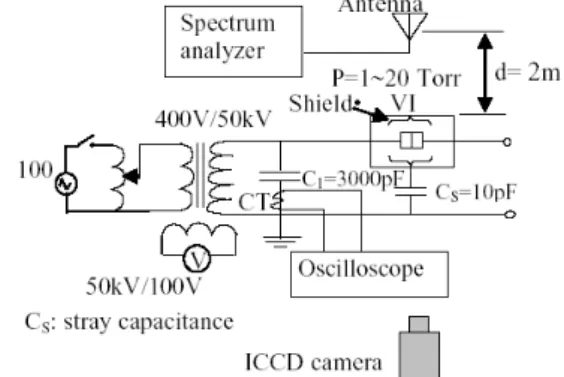
Fig. 1 shows the equivalent circuit for closed contact

condition used in measurement of discharges to simulate an actual condition in C-GIS. A capacitance C

1

is connected to the high voltage side of transformer in parallel with VI. C

1

has value of 3000pF to simulate the capacitance of an actual cable used in the field which has 0.2'ハF/km. C

S

is a stray capacitance between the shield and the tank wall used in actual C-GIS. The value of C

S

is estimated around 10pF. In order to keep the value of C

S

, the distance between the ground plate and shield is fixed at 27mm. The gap distance was calculated by using an electric field software.

Fig. 1. Equivalent circuit of closed contact condition.

A CT, having frequency range from 10 kHz to 250 MHz, is clamped at the bottom side of C

1

. The output of CT is connected to an oscilloscope (LeCroy 9362 1.5GHz) to measure discharge current occurring inside VI.

The light emission of discharge is measured by ICCD camera (C7772-2) with UV filter. The spectrum range of UV filter is from 240 to 370 nm. The camera is fixed 1.5 m from VI to observe the light emission. The experiment was conducted under ac applied voltage (Va) varying from partial discharge inception voltage (PDIV) to 15 kVrms. In addition, a bar antenna, having frequency range 10 to 100 MHz is connected to the spectrum analyzer to measure the electromagnetic wave (EMW) spectrum emitted by discharge in VI. The antenna is fixed at 2m distance from VI. A transformer with 400V/50kV and 75kVA capacity is used as a power source and an applied voltage is measured at third winding of the transformer.

3. Result and Discussion

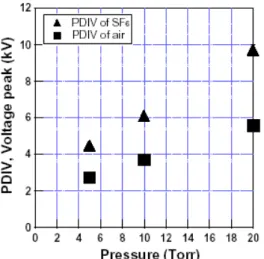
Fig. 2 shows PDIV against the internal pressure of VI for air and SF6 gas. The result shows PDIV increases with the increase of internal pressure for both types of gases. The PDIV in SF6 gas is higher than that in air.

This result indicates that the discharge is occurring inside

the VI. Moreover the magnitude of PDIV at pressure 10

Torr of air obtained from this result is 5 times higher

than that obtained by Donald G. Kasten et al [5]. This is

2008년도 대한전기학회 하계학술대회 논문집 2008. 7. 16 - 18

(2)

- 2302 -

because they have used needle plane electrode with 20 mm gap distance.

Fig. 2. PDIV against internal pressure of VI.

Figs. 3 (a) and (b) show discharge current peak against Va at 10 Torr of air and SF

6

gas, respectively.

The graph indicates that the current peak initially increases with the increase of Va, from PDIV up to 1.3 times of PDIV (region A) for air and 1.14 times of PDIV for SF

6

gas, then decreases as Va increases further (region B). These phenomena can be explained by results of phase angle dependence of discharge pulses accumulated in 15 cycles of different ac applied voltage as shown in Figs. 4. The ac applied voltage shown in Figs. 4 (a) and (b) are at 1.1 (region A) and 1.6 (region B) times of PDIV in air, respectively. It is found that the discharge pulses occur in positive half cycle of the applied voltage at region A. As the applied voltage enters region B, the discharge pulse is observed at the earlier phase acrossing the zero phase angles.

(a) Air (b) SF

6

Figs. 2. Discharge current peak against applied voltage at 10 Torr.

(a) Va= 1.1 times PDIV (b) Va= 1.6 times PDIV Figs. 3. Phase angle dependence of discharge pulses accumulated in 15 cycles of different ac applied voltage at 10 Torr of air.

4. Conclusion

In this paper, discharge phenomena are reported in low vacuum region of glass type VI with air and SF

6

under ac applied voltage at closed contact condition. The discharge current peak increased with increase of applied voltage up to 1.3 times of PDIV, then decreased as the applied voltage increased further. These results indicate that 2 different modes of discharge occur in low vacuum region of VI.

[Acknowledgement]

This work was finally supported by MOCIE program (I-2006-0-092-01).

[References]

[1] H. Okubo, S. Yanabu, "Feasibility study on application of high voltage and high power vacuum circuit breaker", XXth International Symposium on Discharges and Electrical Insulation in Vacuum (ISDEIV), Tours, France, pp. 275-278, 2002.

[2] T. Kawamura, M. Meguro, H. Hama and T. Yamagiwa,

"Industrial outlook: How to reduce SF

6

use and emission - various aggressive approaches to realize less SF6 environment", chapter 74, 2004.

[3] IEEJ technical report, "Environmental friendliness and technology of diagnosis preservation of vacuum circuit breaker and switchgear", Vol. 941, pp. 81, Oct. 2003.

[4] W. W. Watrous jr, "Method and apparatus for measuring in vacuum circuit interrupter", US-Patent No. 3575656, 20th April 1971.

[5] Donald G. Kasten, Xin Liu, Stephen A. Sebo, Dennis

F. Grosjean, Daniel L. Schweickart, "Partial discharge

characteristic at low pressure in dry air and argon",

IEEE Int. Symp. on Electrical Insulation, Indianapolis,

USA, pp. 540-543, Sept. 2004.

수치

Fig.  1  shows  the  equivalent  circuit  for  closed  contact
Fig.  2.  PDIV  against  internal  pressure  of  VI.

참조

관련 문서

In this study, the reliability of high efficiency air conditioning compressor applied with high vacuum local pressure die casting technique is to be analyzed through

platensis under variously mixed medium conditions of low cost medium based on deep sea water.. platensis in the growth medium at 22 days

Freitas, “Low voltage zones to support fault location in distribution systems with smart meters,” IEEE Trans.. Smart

3.3 Measured current-voltage waveform and high-speed camera images during the constant voltage DC-AC pulse tandem GMAW welding · · · ·20 Fig.. 3.4 Comparison of

The rectifier is a circuit that acts as a dc voltage source by converting the ac voltage from a standard wall outlet to a dc voltage. This voltage is effectively applied

Vacuum pre-cooling system's principle is that water saturated temperature is lowered according to the vacuum pressure established in the storage chamber,

Effects of vacuum, mold temperature and cooling rate on mechanical properties of press consolidated glass fiber/PET composite , Composites Part A: Applied Science

In this study, if the cell potential increases in voltaic cell environment and the effect of charge increases with applied external voltage, it promote s phase change