Biological Degradation of Cypermethrin by Marine Bacteria, Cellulophaga lytica DAU203
Je-Hoon Lee
1†, Yong-Suk Lee
1†, Ah-Young You
2and Yong-Lark Choi
1*
1Department of Biotechnology, Dong-A University, Busan 49315, Korea
2Department of Microbiology, Busan National University, Busan 46241, Korea Received February 3, 2018 /Revised April 16, 2018 /Accepted April 23, 2018
Cypermethrin, a commonly used domestic and agricultural pyrethroid pesticide, is widely considered detrimental to the environment and to many organisms because of its residual property and toxicity.
Cellulophaga lytica DAU203, isolated from coastal sediment, was chosen because it degrade cypermeth- rin. Cellulophaga lytica DAU203 effectively degraded cypermethrin, as the utilized carbon source and substrate, in a mineral salt medium. Effective factors, such as carbon source, nitrogen source, initial pH, and temperature, for cypermethtin biological degradation by Cellulophaga lytica DAU203 were ana- lyzed by one factor at a time method. Temperature (22~42°C), initial pH (5~9), and yeast extract con- centration (0.1~2.5%[w/v]) were selected as the three most important factors. There were optimized at 33.4°C, pH 7.7, and 2.4%(w/v) by response surface methodology, respectively. The Box- Behnken design consisting of 46 experimental runs with three replicates was used to optimize the independent variables which significantly influenced the cypermethrin biological degradation. This model for cy- permethrin degradation by Cellulophaga lytica DAU203 is highly significant (p<0.05). Under the opti- mized condition, Cellulophaga lytica DAU203 degraded approximately 83.7 % of the cypermethrin with- in 5 days. These results suggest that Cellulophaga lytica DAU203 may be useful for the biological deg- radation of cypermethrin in cypermethrin-contaminated environments.
Key words : Bioremediation, cypermethrin, Cellulophaga lytica, DAU203, pyrethroid
†Authors contributed equally.
*Corresponding author
*Tel : +82-51-200-7585, Fax : +82-51-200-6536
*E-mail : [email protected]
This is an Open-Access article distributed under the terms of the Creative Commons Attribution Non-Commercial License (http://creativecommons.org/licenses/by-nc/3.0) which permits unrestricted non-commercial use, distribution, and reproduction in any medium, provided the original work is properly cited.
Journal of Life Science 2018 Vol. 28. No. 4. 483~487 DOI : https://doi.org/10.5352/JLS.2018.28.4.483
Introduction
Pyrethrins are natural materials originated from the six insecticide components of Chrysanthemum cinerariifolium.
Synthetic pyrethroid insecticides are synthetic versions of natural pyrethrin and their use has increased over the past few decades [11]. The structure of pyrethroid typically con- sists of a combination of acid and alcohol moieties by an ester bond [7]. These pesticides show highly improved sta- bility, photostability, and insecticidal effects, and have re- placed organophosphorus pesticides such as chlorpyrifos and diazinon [8, 10].
Pyrethroid pesticides such as bifenthrin, cyfluthrin, cy- permethrin, and permethrin were studied in the coastal em- bayment of the Southern California Bight, USA. It is as-
sumed that pyrethroid pesticides from different countries have identical properties [6]. Among the pyrethroid pesti- cides, cypermethrin is widely used in agriculture to protect animals from infestation by insects, in homes, and in buildings. Recent studies have warned that excessive cy- permethrin could disrupt the ecosystem and be toxic for mammals [2, 3, 5].
The many pyrethroid degradation researches by micro- organisms isolated from the soil, such as Micrococcus sp.
strain CPN1 [9], Pseudomonas aeruginosa CH7 [13], Serratia sp. JC1 and JCN13 [12], Sphingobium sp. JZ-2 [4], and Bacillus cereus ZH-3 and Streptomyces aureus HP-S-01 [3], have reported.
Here we describe the identification and isolation of the cypermethrin-degrading bacterium, C. lytica DAU203, from coastal sediment. Optimization of the biological degradation of cypermethrin by C. lytica DAU203 was performed using response surface methodology (RSM) based on the Box- Behnken design. The isolated bacterium might be useful for the bioremediation of cypermethrin-contaminated coastal sediment and soil.
- Note -
Materials and Methods
Media and chemicals
Mineral salt medium (MSM) containing 6 g/l Na
2HPO
4, 3 g/l KH
2PO
4, 1 g/l NH
4Cl, 0.5 g/l NaCl, 0.011 g/l CaCl
2, and 0.24 g/l MgSO
4, and marine broth (MB) 2216 (Difco, Detroit, MI, USA) were used for isolation of the strain and for the evaluation of its degradation ability. Cypermethrin (98% pure) was obtained from Agros Chemicals (Karnataka, India); it was dissolved in acetonitrile to prepare stock sol- utions (50,000 mg/l), and was then sterilized by filtration using a 0.2 μm pore size PTFE (polytetrafluoroethylene) membrane (Advantec MFS, Inc., Dublin, CA, USA). Chroma- tographic grade acetonitrile and water were purchased from Honeywell International (Morristown, NJ, USA).
Inoculum preparation
Isolated strains were stocked in 20% glycerol at -80℃; pri- or to use, they were thawed and cultured in a 100 ml flask that contained 20 ml MB with cypermethrin (100 mg/l), as the carbon source and substrate, at 30℃, with shaking at 180 rpm, for 16 hr, whenever necessary. Each strain was har- vested by centrifugation at 6,000 rpm and 4℃ for 20 min and the pellet obtained was washed twice with 0.9% sterile saline, which yielded 0.2 g of dry weight/l of biomass before inoculation. Two percent of this suspension was used as the inoculum for all experiments.
Biodegradation of cypermethrin
Cypermethrin biodegradation experiments were per- formed in 250 ml flasks containing sterile MSM with 50 mg/l of cypermethrin. Triplicate cultures were grown at 30℃, with shaking at 180 rpm on a rotary shaker, for 5 days.
Non-inoculated media served as controls.
Samples (10 ml) were withdrawn periodically from the cultures to measure the cypermethrin concentration by HPLC. Cypermethrin from experimental samples was ex- tracted with petroleum ether and acetone by ultrasonication (3510E-DTH, Branson Co., Danbury, CT, USA), evaporated, and re-dissolved in acetonitrile. The prepared samples were analyzed using HPLC (Waters, Milford, MA, USA) equipped with a Waters 1525 binary pump, Waters 1500 column heater heated to 30℃, and Waters 2489 UV/visible detector. There- after, 20 μl sample was injected (Waters 2707 autosampler) and was detected at a wavelength of 235 nm. C
18reversed- phase column (Eclipse XDB, 4.6×150 mm, 5 μm) was used,
and the mobile phase was consisted of acetonitrile and water (90:10, v/v), with a flow rate of 1.0 ml/min [3].
Effects of carbon and nitrogen sources on cyper- methrin degradation
A variety of carbon (C) sources, such as carboxymethyl cellulose, colloidal chitin, galactose, glucose, lactose, maltose, soluble starch, and sucrose, and nitrogen (N) sources with 0.5%(w/v), such as ammonium nitrate, casamino acids, ca- sein, peptone, skim milk, tryptone, urea, and yeast extract, were prepared to determine the best source for cypermethrin biodegradation. The medium was incubated at 30℃ in 250 ml flasks with 50 mg/l cypermethrin on a rotary shaker, and experiments were performed in triplicate, using non-in- oculated samples as controls. After 5 days, the cypermethrin concentration of the samples was determined by HPLC.
Optimization of cypermethrin degradation conditions A variety of factors were identified as the main variables by preliminary experiments, and the range of independent variables were determined as follows: yeast extract concen- tration (0.1-2.5%, [w/v]), temperature (22-42℃), and pH (5- 9). RSM based on the Box-Behnken design was used to inves- tigate the inter-variable interactions that markedly affected the degradation of cypermethrin by DAU203. 3-factors of Box-Behnken design, consisting of 46 experimental runs, were generated using the Design-Expert software (Version 8.0.7.1; Stat-Ease Inc., Minneapolis, MN, USA). Regression analysis was performed using the conditions obtained from the program, with each experiment performed in triplicate.
The dependent variable was the degradation ratio of 50 mg/l cypermethrin in MSM after 5 days of culture by DAU203. The significance of each value for degradation was analyzed by the Design-Expert software, the model equation of which was a quadratic polynomial equation (Eq. (1)), as follows:
Y = b
0+ ∑b
iX
i+ ∑b
ijX
iX
j+ ∑b
iiX
i2(1) where Y is the measured response (degradation degree of 50 mg/l cypermethrin), b
ois the constant, b
iis the linear coefficient, b
ijis the interaction coefficient, and b
iiis the quadratic coefficient [3].
Results and Discussion
Effect of carbon and nitrogen sources on cyper-
methrin degradation by DAU203
Table 1. Box-Behnken experimental design and response of dependent variables for cypermethrin degradation
Run X1 X2 X3 Response (Y1)
Cypermethrin degradation (%) 1
2 3 4 5 6 7 8 9 10 11 12 13 14 15
2.5 1.3 2.5 0.1 1.3 2.5 1.3 1.3 1.3 1.3 2.5 0.1 0.1 0.1 1.3
5 9 7 7 7 7 7 7 9 5 9 7 9 5 5
32 42 22 22 32 42 32 32 22 22 32 42 32 32 42
62.6 63.9 83.0 31.5 62.1 71.6 68.0 55.1 23.9 50.0 68.6 20.9 21.0 33.2 4.1 X1: yeast extract; X2: initial pH; X3: temperature.
All results were calculated from three replicate experiments.
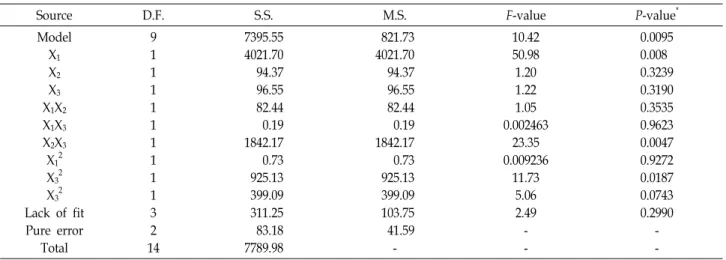
Table 2. Parameter estimates and analysis of variance (ANOVA) of the design for cypermethrin degradation
Source D.F. S.S. M.S. F-value P-value*
Model X1
X2
X3
X1X2
X1X3
X2X3
X12
X32
X32
Lack of fit Pure error
Total
9 1 1 1 1 1 1 1 1 1 3 2 14
7395.55 4021.70 94.37 96.55 82.44 0.19 1842.17 0.73 925.13 399.09 311.25 83.18 7789.98
821.73 4021.70 94.37 96.55 82.44 0.19 1842.17 0.73 925.13 399.09 103.75 41.59
-
10.42 50.98 1.20 1.22 1.05 0.002463
23.35 0.009236
11.73 5.06 2.49 - -
0.0095 0.008 0.3239 0.3190 0.3535 0.9623 0.0047 0.9272 0.0187 0.0743 0.2990
- - Note: R2= 0.9494; coefficient of variation (CV) = 18.51; Adj. R2= 0.8582
D.F.: degrees of freedom; S.S.: sum of sequences; M.S.: mean square
*P<0.05 indicates that the model terms are significant.
The one factor at a time test was used to determine the rest of the independent variables including carbon and nitro- gen sources. Various carbon sources did not significantly af- fect to degrade cypermethrin by DAU203 (data not shown).
0.5% nitrogen sources such as ammonium nitrate, casamino acid, casein, peptone, skim milk, tryptone, urea, and yeast extract were also added to MSM containing 50 mg/l cypermethrin. DAU203 could degrade approximately 53% of the initial cypermeththrin with yeast extract, followed by 38% with casein, 32% with urea, 31% with peptone, 29%
with tryptone, 23% with casamino acid, 20% with skim milk, and 15% with ammonium nitrate, at 30℃ within 5 days. As evident from these results, only yeast extract from among the various nitrogen sources affected cypermethrin degrada- tion by DAU203 and was thus selected as a factor.
Optimization of yeast extract concentration, tem- perature, and pH for cypermethrin degradation by DAU203
The optimization of cypermethrin degradation by cultur- ing of DAU203 was conducted using a combination of yeast extract (0.1-2.5%[w/v]), initial pH (5-9), and temperature (22-42℃) values, using the Box-Behnken experimental de- sign matrix with a range of combinations. The pH and tem- perature factors were known as important factor to degrade cypermethrin biologically [3]. In this experiment, using the Box-Behnken design, the degradation of cypermethrin was evaluated and the effect of combined experimental design as a dependent variable was shown (Table. 1). These results were analyzed by the statistical software Design-Expert (Ver.
8.0.7.1) and the results of the quadratic polynomial model fitting in the term of analysis of variance (ANOVA) are pre- sented in Table 2. A quadratic polynomial model equation (Ep. (2)), calculated from ANOVA, was generated to predict the maximum value of cypermethrin degradation, as follow:
Y = 61.72 + 22.42X
1+ 3.43X
2− 3.47X
3+ 4.54X
1X
2− 0.22X
1X
3+ 21.46X
2X
3+ 0.44X
12− 15.83X
22− 10.40X
32(2)
where Y is the predicted cypermethrin degradation (%), and
Fig. 1. Response surface plot showing the ef- fects of pH and temperature on cy- permethrin degradation by Cellulopha- ga lytica DAU203, using 2.4% yeast extract.
X
1, X
2, and X
3are the coded values for yeast extract concen- tration (%), initial pH of the medium, and temperature, respectively. The F-value of 10.42 implied that this model was significant. P<0.05 suggested statistical significance at
>95% confidence level. The determination coefficient (R
2= 0.9494) indicated approximately 94.94% of the variability in response, demonstrating that the predicted values of the model were in perfect agreement with the experimental values. The high value of the adjusted R
2(0.8582) further supported the accuracy of the model. The lack of fit value was not significant (p>0.05), indicating that the equation was adequate for prediction of cypermethrin degradation. The low coefficient of variation (CV=18.51%) also indicated the accuracy and reliability of the model. The regression analysis indicated that X
1and X
2X
3played significant roles (p<0.05), while other terms had no significant effects on cypermethrin degradation (p>0.05). A 3-D response surface plot was gen- erated to show the effects of two variables (pH and temper- ature) on cypermethrin degradation (Fig. 1). The predicted maximal degradation rate was 83.7% at the stationary point, for which yeast extract concentration, pH, and temperature were fixed at 2.4%(w/v), 7.7, and 33.4℃, respectively.
RSM is an experiential statistics way that has been with success utilized to optimize and improve the biological deg- radation procedures [1, 3, 13]. The optimal conditions for the biological degradation of beta-cypermathrin by Pseudo- monas aeruginosa CH7 were 29.4℃, a pH of 7.0, and an in- oculum of 0.15 g/l, determined using RSM. CH7 could de- grade approximately 90% of the beta-cypermethrin within
12 days under these conditions [13]. The optimal conditions for cypermethrin degradation by the co-culture of Bacillus cereus ZH-3 and Streptomyces aureus HP-S-01 were a temper- ature of 28.2℃, pH 7.5, and an inoculum of 0.4 g/l. The co-culture of Bacillus cereus ZH-3 and Streptomyces aureus HP-S-01 could completely degrade cypermethrin within 72 h under these conditions [3]. The optimal conditions for the degradation of cyfluthrin by Brevibacterium aureum DG-12 were a temperature of 26.9℃, a pH of 7.8, and an inoculum of 0.2 g/l. DG-12 could degrade approximately 88.6% of the cyfluthrin within 5 days under these conditions [1].
Acknowledgments
This research was supported by the Basic Science Research Program through the National Research Foundation of Korea (NRF) funded by the Ministry of Education, Science and Technology (2011-0008619), the Ministry of Education (2017-0434), and the Ministry of Science and ICT (2017-0182).
References
1. Chen, S. H., Dong, Y. H., Chang, C. Q., Deng, Y. Y., Zhang, X. F., Zhong, G. H., Song, H. W., Hu, M. Y. and Zhang, L. H. 2013. Characterization of a novel cyfluthrin-degrading bacterial strain Brevibacterium aureum and its biochemical degradation pathway. Bioresour. Technol. 132, 16-23.
2. Chen, S. H., Hu, M. Y., Liu, J. J., Zhong, G. H., Yang, L., Rizwan-ul-Haq, M. and Han, H. T. 2011. Biodegradation of beta-cypermethrin and 3-phenoxybenzoic acid by a novel
초록:해양 세균 Cellulophaga lytica DAU203에 의한 사이퍼메트린의 생물학적 분해 이제훈
1†․이용석
1†․유아영
2․최용락
1*
(1동아대학교 생명자원과학대학 생명공학과, 2부산대학교 미생물학과)
사이퍼메트린은 피레스로이드 계열 살충제로서 오랫동안 농업과 가정에서 이용되어 왔으며 그들의 잔여 성분 과 독성에 대한 경각심이 고취되고 있다. 부산 인근의 해안에서 분리된 Cellulophaga lytica DAU203 균주가 사이퍼 메트린의 생물학적 분해 활성을 나타내었다. DAU203 균주는 최소 배지에서 유일 탄소원으로 사이퍼메트린을 첨 가하였을 때, 이를 분해하여 탄소원으로 활용 하였다. 반응표면분석법을 통하여 DAU203 균주의 사이퍼메트린 분해를 위한 최적 조건을 탐색하였다. 온도, pH와 yeast extract 첨가 농도와 같은 인자가 분해 활성에 영향을 미 치는 것으로 분석 되었고, 각각의 최적 값은 33.4℃, pH 7.7와 2.4%(w/v)이다. 최적 조건에서 DAU203 균주는 5일 동안 대략 83.7%의 사이퍼메트린을 분해하였다. 본 연구는 미생물 중에서 잘 연구되지 않은 해양 미생물에 대한 활용 가능성을 증가시켰다고 판단된다.
Ochrobactrum lupini DG-S-01. J. Hazard Mater. 187, 433-440.
3. Chen, S. H., Luo, J. J., Hu, M. Y., Lai, K. P., Geng, P. and Huang, H. S. 2012. Enhancement of cypermethrin degrada- tion by a coculture of Bacillus cereus ZH-3 and Streptomyces aureus HP-S-01. Bioresour. Technol. 110, 97-104.
4. Guo, P., Wang, B. Z., Hang, B. J., Li, L., Ali, S. W., He, J. and Li, S. P. 2009. Pyrethroid-degrading Sphingobium sp.
JZ-2 and the purification and characterization of a novel pyrethroid hydrolase. Int. Biodeterior. Biodegr. 63, 1107-1112.
5. Kuivila, K. M., Hladik, M. L., Ingersoll, C. G., Kemble, N.
E., Moran, P. W., Calhoun, D. L., Nowell, L. H. and Giliom, R. J. 2012. Occurrence and potential sources of pyrethroid insecticides in stream sediments from seven U.S. metropoli- tan areas. Environ. Sci. Technol. 46, 4297-4303.
6. Lao, W., Tiefenthaler, L., Greenstein, D. J., Maruya, K. A., Bay, S. M., Ritter, K. and Schiff, K. 2012. Pyrethroids in Southern California coastal sediments. Environ. Toxicol. Chem.
31, 1649-1656.
7. Shafer, T. J., Meyer, D. A. and Crofton, K. M. 2005. Develop- mental neurotoxicity of pyrethroid insecticides: critical review and future research needs. Environ. Health Perspect.
113, 123-136.
8. Soderlund, D. M., Clark, J. M., Sheets, L. P., Mullin, L. S., Piccirillo, V. J., Sargent, D., Stevens, J. T. and Weiner, M.
L. 2002. Mechanisms of pyrethroid neurotoxicity: implica- tions for cumulative risk assessment. Toxicology 171, 3-59.
9. Tallur, P. N., Megadi, V. B. and Ninnekar, H. Z. 2008.
Biodegradation of cypermethrin by Micrococcus sp. strain CPN 1. Biodegradation 19, 77-82.
10. Weston, D. P., Holmes, R. W. and Lydy, M. J. 2009. Residen- tial runoff as a source of pyrethroid pesticides to urban creeks. Environ. Pollut. 157, 287-294.
11. Wolansky, M. J. and Harrill, J. A. 2008. Neurobehavioral toxicology of pyrethroid insecticides in adult animals: a crit- ical review. Neurotoxicol. Teratol. 30, 55-78.
12. Zhang, C., Jia, L., Wang, S. H., Qu, J., Li, K., Xu, L. L., Shi, Y. H. and Yan, Y. C. 2010. Biodegradation of beta-cyper- methrin by two Serratia spp. with different cell surface hydrophobicity. Bioresour. Technol. 101, 3423-3429.
13. Zhang, C., Wang, S. H. and Yan, Y. C. 2011. Isomerization and biodegradation of beta-cypermethrin by Pseudomonas aeruginosa CH7 with biosurfactant production. Bioresour.
Technol. 102, 7139-7146.