Print ISSN: 2288-4637 / Online ISSN 2288-4645 doi:10.13106/jafeb.2020.vol7.no12.337
Financial Stability of GCC Banks in the COVID-19 Crisis:
A Simulation Approach
Sami AL-KHARUSI
1, Sree Rama MURTHY
2Received: August 01, 2020 Revised: October 11, 2020 Accepted: November 05, 2020
Abstract
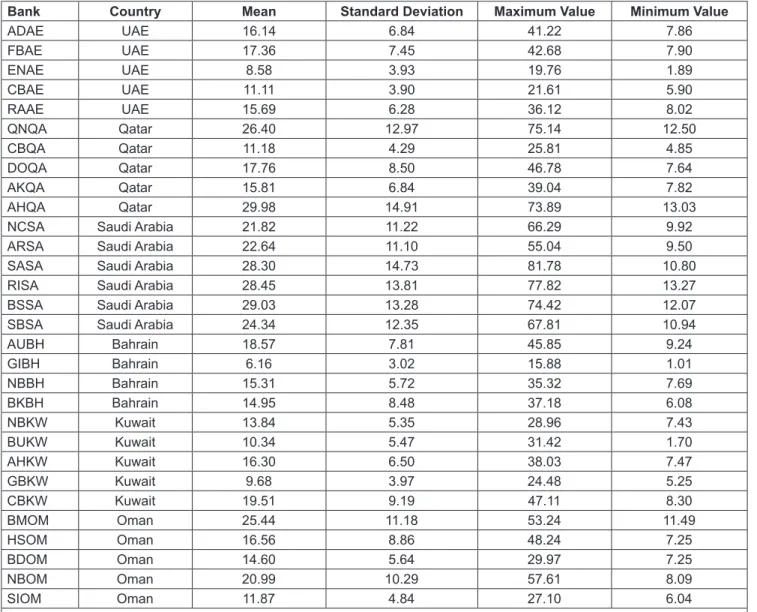
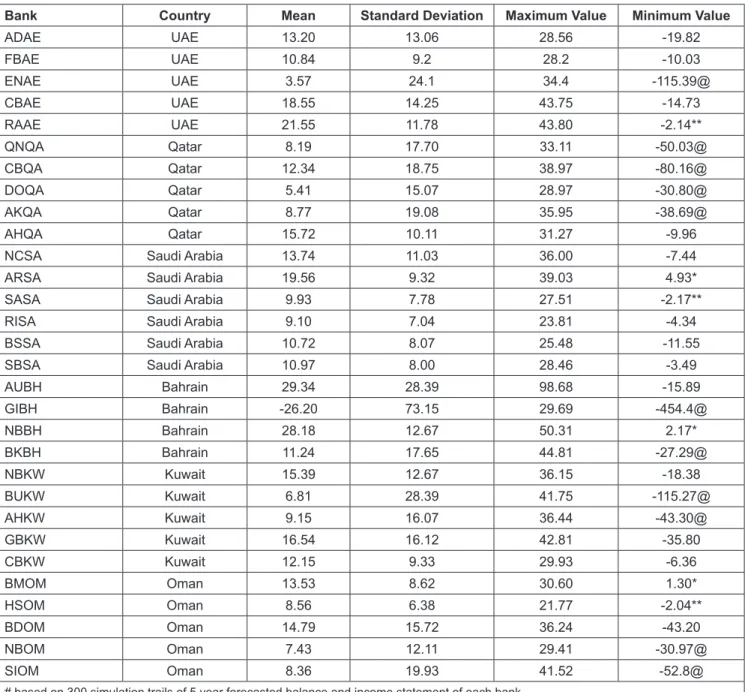
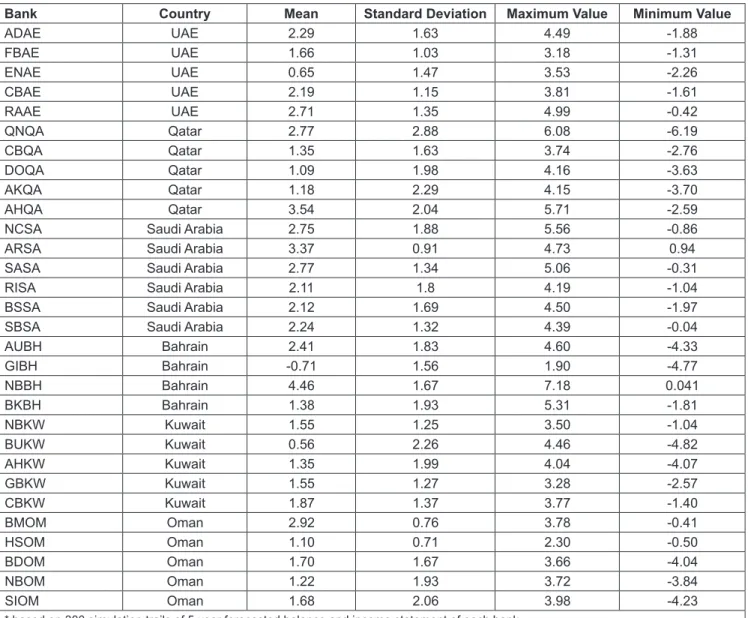
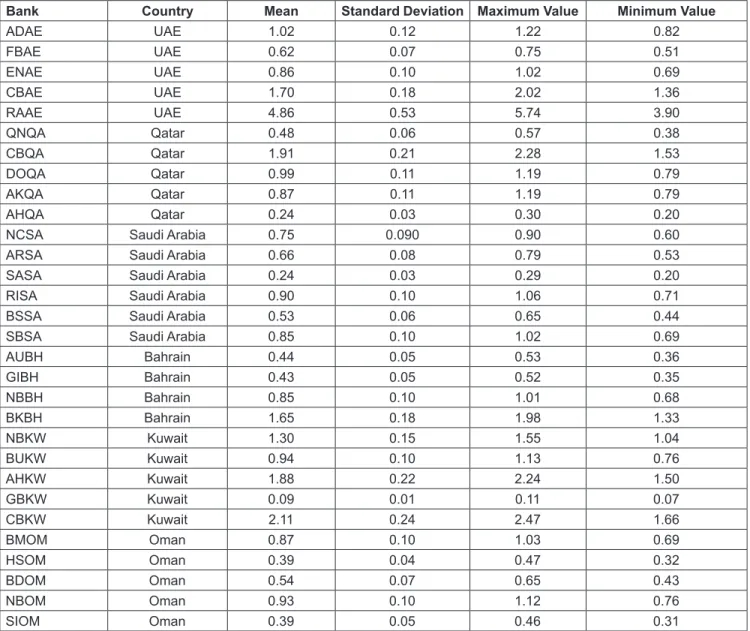
Stability and sustainability of the biggest banks in any country are extremely important. When big banks become unstable and vulnerable, they typically stop lending. The resulting credit squeeze pushes the economy into recession or a slow growth path. The present study examines the financial stability and sustainability of the 30 large banks operating in the six Gulf Cooperation Council countries. These banks represent 70% of the GCC banking market. Monte Carlo simulation was attempted assuming that key drivers can vary randomly by twenty percent on either side of the current values. The conclusions are drawn based on 300 simulation trails of the five-year forecast balance and income statement of each bank. Year 2020 is not favorable for the GCC countries because of the COVID-19 pandemic and low oil prices, though the future years may be better. The study identifies several banks, which may become financially unsustainable because the simulations indicate the possibility of negative profitability, unacceptably low capital ratios and potential for heavy credit losses during periods of economic turbulence, which is the current situation due to the COVID-19 pandemic. Through simulation the paper is able to throw light on which factors lead to bank instability and weakness.
Keywords: Financial Sustainability, Banks, Publicly Traded, Simulation, Gulf Cooperation Council JEL Classification Code: C15, G17, G21, L25
surrounding economic environment, and one can never be certain about how the future will evolve, the paper uses simulation to forecast financial statements assuming that the future macroeconomic trends in these countries may be either favorable or unfavorable. Year 2020 is not favorable for the GCC countries because of the COVID-19 pandemic and the low oil prices, though the future years may be better. Through simulation the paper is able to throw light on which factors lead to bank instability and weakness.
2. Review of Literature
There are large number of papers that examined the issue of financial stability and sustainability of commercial banks.
The papers can be broadly divided into those that looked at financial ratios and bank stability and, bank business model and stability. Papers that looked at the relationship between business model and bank stability (Altunbas et al., 2011;
Ayadi et al., 2011; Kohler, 2015; Mergaerts & Vennet, 2016;
Rungporn et al., 2017; Rachman et al., 2018; Tran et al., 2020;
Duong et al., 2020) conclude that retail banking model leads to stability, while wholesale banking and trading activity oriented banking is not sustainable. Most of the studies that
1. Introduction
Stability and sustainability of the biggest banks in any country are extremely important for financial sector stability and real economic growth. When big banks become unstable and vulnerable, they typically stop lending. The resulting credit squeeze pushes the economy into recession or a slow growth path. The purpose of this paper is to analyze and forecast the financial statements of large commercial banks operating in the six Gulf Cooperation Council countries (Bahrain, Kuwait, Oman, Qatar, Saudi Arabia, and United Arab Emirates).
Since forecasts are based on certain assumptions about the
1
First Author and Corresponding Author. [1] Assistant Dean, Training and Community Services [2] Assistant Professor, Economics and Finance Department, Sultan Qaboos University, Oman [Postal Address: PO Box 20, PC 123, Muscat, Oman]
Email: [email protected]
2