화장품에서 금 콜로이드 입자에 의한 사프라닌 염료의 분해 연구
한 문 숙⋅이 용 근⋅이 영 호⋅김 대 욱⋅오 성 근† 한양대학교 화학공학과
(2008년 5월 7일 접수, 2008년 5월 26일 채택)
Photodegradation of Safranin-O Dye by Au Metal Colloid in Cosmetics
Moon-suk Han, Yong-Geun Lee, Young-Ho Lee, Dae-Wook Kim, and Seong-Geun Oh† Department of Chemical Engineering, Hanyang University, Haengdang 1-dong, Seongdong-gu,
Seoul 133-791, Korea
(Received May 7, 2008; Accepted May 26, 2008)
요 약: 본 연구에서는 금 나노입자 콜로이드를 이용하여 safranin-O의 광촉매적 분해를 관찰하였다. 금 나노입자는 용 액상에서 safranin-O의 분해 속도를 빠르게 하기 위해서 사용되었다. 금 나노입자 콜로이드는 수용액상에서 Na2CO3
와 PVP 고분자(poly(vinyl pyrrolidone))를 이용하는 환원방법에 의하여 제조하였다. Safranin-O의 분해현상은 자외선 (UV light)와 과산화수소(H2O2)의 존재 하에서 금 나노입자 콜로이드와 염화금의 농도, 반응계의 산도(pH), 반응시간 과 같은 실험조건들의 조절을 통해 연구되었다. 분해반응에 사용된 금 나노입자 콜로이드의 농도가 증가함에 따라서 염료가 분해되는 속도가 증가하였다. Safranin-O의 광산화 반응은 광학적으로 측정되었고, 금 나노입자의 기본적인 물 성과 촉매 특성은 UV-Vis 광학계를 이용하여 측정되었다.
Abstract: In this study, the photocatalysed degradation of safranin-O was investigated using Au colloids. Au metal nanoparticle wasused to eliminate safranin-O fast in solution. Au nanoparticles were prepared reduction method using Na2CO3 and PVP in aqueous solution. The degradation of safranin-O was examined using a variety of condition such as concentration of Au colloid or Au salt, reaction pH, and reaction time in the presence of UV light and H2O2. As the concentration of Au colloid increases, the rate of dye degradation increases. The photo-oxidation of the safranin-O was monitored spectrophotometrically. The properties of Au nanoparticles were characterized by UV-Vis spectroscopy. In addition, catalytic capacities of Au nanoparticles were also determined by UV-Vis spectroscopy.
Keywords: Au nanoparticle, dye, degradation, safranin-O, UV-Vis spectroscopy
1)
1. Introduction
Organic dyes have many advantages that it offers a vast range of new color and it can be achieved a cheap price. Owing to the usefulness of organic dyes such as a sense of rich and various colors, organic dyes are im- portant chemicals and it has been widely used in many industries such as textile, paper, food, cosmetics field.
But the photodegradation of these dyes is one of major
† 주 저자 (e-mail: [email protected])
issues in their applications. In case of wastewater, the problem of the dye is toxicity in wastewater. It is known that effluents including dyes badly affect to the human health and the underwater ecosystem. Therefore, degradation of dyes in wastewater treatment is an im- portant process to eliminate the remained colors of dyes and to reduce the environment damages. To solve these problems, many research conducted in interdisciplinary fields using inorganic materials[1-7].
In general, photocatalysts including ZnO and TiO2
have effect in the degradation and mineralization of environmental pollutants such as azo dyes. The photo- catalytic capacity of ZnO and TiO2 occurs with the il- lumination of UV lights. These materials are applied in the combinative sonolysis and photocatalysis for dye degradation. ZnO was more effective in degradation of dyes than TiO2[8].
Moreover, metal salts were used to eliminate the color of dyes. When the complex materials (metal salt and organic materials) exist together, metal salt affects the physical property of organics by transferring electron.
Many attempts have been made to identify the degra- dation of dye in aqueous solution in the presence of H2O2 and UV light until now. The ferric ion is well-known to catalyze decomposition of hydrogen per- oxide (known as the Fenton reaction). It is classically applied to remove the color of water in the side of envi- ronmental science[6]. Also, F. H. Abdullah et al. con- ducted that the overall photolytic oxidation occurred in the reaction of the dye with the hydroxyl radicals[1].
In the case of Fe3+, it is dramatically enhanced the rate of dye degradation.
Au nanoparticle was widely studied over the last few years because they have specific properties which re- veal their interesting photochemical and catalytic prop- erties[9]. The one of discovery is that nanosized gold catalysts can affect the oxidation of carbon monoxide at room temperature. Haruta et al. found that Au can exhibit surprisingly catalytic reactivity when it is high- ly dispersed on selective metal oxides (Au/oxides)[10].
In this study, the metal colloid nanoparticles were used for the first time to demonstrate the effect on the degradation of organic dye in the presence of H2O2. The experimental results show that Au noble metal colloid helps to increase the degradation of safranin-O.
Also, when the metal colloid was used, degradation speed of safranin-O is faster than the Au metal salt used. The safranin-O is chosen as one of organic dye.
Safranin-O (CI name is Basic Red 2) is a representa- tive example of organic dye, which belongs to qui- none-imine class, and is used for counter staining pur- poses, for example, as metachromatic method for cartilages.
Scheme 1. The structure of safranin-O.
2. Materials and Methods
Safranin-O (CI name is Basic Red 2, F.W = 350.85) was obtained from Sigma (USA). The water was triple distilled by filtering through a Milli-Q Plus system (Millipore, France), having an 18.2 MΩ electrical resistiveness. H2O2 (minimum 28 %, w/w) was pur- chased from Duksan Pure Chemical Company (Korea).
HAuCl4ㆍ3.7H2O was used from kojima (Japan) as a gold ion source. Poly (vinyl pyrrolidone) (PVP K15, Mw= 10,000, Junsei Chemical co., Japan) was used as a nucleation-prompting agent and stabilizer for Au nanoparticles. All materials were used as received.
The gold nanoparticles were synthesized in the water by citrate reduction. The reduction of HAuCl4 was car- ried out as follows: 1 wt% of HAuCl4ㆍ3.7 wt% H2O, sodium citrate dehydrate and Na2CO3 were added with stirring to 178 g of distilled water containing PVP. And then, this solution was heated to 100 ℃ during 20 min with reflux. Transparent solution was changed to the purple color when the Au metal colloids were prepared.
Finally, the metal colloids cooled at room temperature for 1 day. The colloid is diluted to 250 ppm to use in the experiments.
Safranin-O stock solution of 0.1 wt% was prepared in 50 g of distilled water. The concentration of safranin-O was 2 µM and the concentration of H2O2 was 49.5 mM.
The concentration (m/m) of the materials is followed;
(noble metal) : (safranin-O) = 1 : 3, 1 : 5, 1 : 7, and 1 : 10. These samples were stirred by magnetic bar for a constant time and put into the box including UV lamp. The samples were irradiated with a UV light of 254 nm for the maximum 4 days. After a certain time, the changes in the absorbance were monitored using UV-Vis spectroscopy. To compare the degradation ef-
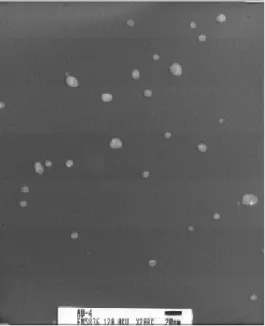
Figure 1. The TEM image of Au nanoparticles by citrate reduction.
Figure 2. The UV spectra of Au nanoparticles.
fect of Au salt with Au nanoparticles, 1 % HAuCl4 was added in aqueous solution. In the experiments of pH ef- fect with the dye, the samples were prepared with same concentration of safranin-O and H2O2. Dilute HCl and NaOH solution were used for pH adjustment.
To investigate the formation and the morphology of a metal colloid (Au), transmission electron microscopy (TEM, JEOL Model JEM-2000EXII, Japan) was used.
For photolytic experiments, the samples were irradiated in a UV box produced by black acrylic resin covered with aluminum foil. The box includes a lamp of 15 W
with emitting a UV output at 254 nm. It was obtained from Vilber Lourmat France. UV-Vis spectroscopy was manufactured on Agilent 8453, using a disposable 1 cm cell by Kartell.
3. Results and Discussion
3.1. Preparation Au Nanoparticles in Colloidal System Au colloid is prepared using Na2CO3 and PVP K 15 as catalyst of Au ion’s reduction. In the case of gold ion reduction, the degree of reduction was monitored by the change in color of the solution during the reaction.
Figure 1 is a typical TEM image of Au nanoparticles.
The gold nanoparticles have a spherical shape. It is ob- served a relative narrow size range of approximately 5 nm to 10 nm.
In the preparation of metal colloids, reaction speed was controlled by heating and polymer. The reaction speed can be increased by the thermal energy supplied heating in the system; when the temperature of the system increase, the oxidation potential decrease. In addition, even though the reduction potentials of metal species are insensitive to the temperature, the creation of metal species is temperature dependent[11].
Another way to increase the reaction rate is the use of PVP polymer. It is well known that PVP acts not only as a stabilizer but also as a nucleation-prompting agent for metal particles[12]. Using of PVP is proper for con- trolling the small size of particles due to their slower re- duction rate compared with direct reduction method. It is known that the fast reduction rate makes it difficult to control the metal particles.
Preparation methods for metal nanoparticles has a four main steps: (1) reduction of metal ions to metal atoms, (2) aggregation of metal atom to form a metal nuclei, (3) growth of nuclei to metal particles, and (4) stabilization of metal nanoparticles by stabilizer[13].
After the reduction of gold ions occurs, it is not clear whether the solution consists of single atoms or microclusters. However, aggregation of atoms or micro- clusters gives metal nuclei, and the microcluster may work as a nucleus. In present preparation route involv- ing reduction method, PVP acts as a stabilizing agent
Figure 3. Time-dependent photodegradation of safranin-O with Au nanoparticles by UV light. [Safranin-O]= 20 µM [H2O2]=49.5 mM.
for Au nanoparticles.
To identify and compare the degree of dye degrada- tion, a standard data was made mixing Au colloid and dye of safranin-O. Figure 2 shows UV-Vis spectra of solution mixed Au nanoparticles and dye. In Figure 2, curves indicate the UV-Vis absorption spectra of re- sulting particles in the presence of PVP, respectively.
An absorption peak appears about 520 nm and the maximum absorbance of Au nanoparticles is 0.15 when the composition of Au : dye was used 1 : 3. As the increase the concentration of Au colloids, the intensity of UV spectra was increased.
3.2. Photodefaradation of Safranin-O in Water by Gold Nanoparticles.
Photodegradation of safranin-O was performed under the UV lamp with black cabinet to use the UV light effectively. The inside of black is covered with alumi- num foil for efficiency of UV light. The light stability of safranin-O could be measured through using UV-Vis photospectrometer. Figure 3 shows the UV in- tensity of the degraded safranin-O dye solution includ-
Figure 4. R value of safranin-O with Au nanoparticles in ac- cordance with time.
ing Au nanoparticles on the time-dependence. The four graphs (Composition of Au : Dye is 1 : 3, 1 : 5, 1 : 7, and 1 : 10) of Figure 3 have similar shape.
Safranin-O reveals a main peak of absorption spectra in aqueous solution at 520 nm. The decrease in the con- centration of the dyes was ascertained from the change
Figure 5. Time–dependent photodegradation of safranin-O with HAuCl4 solution by UV light.
of absorbance at 520 nm[14,15]. As a time passed dur- ing 4 days, UV intensity was decrease about from 1 to 0.25. Figure 2 and Figure 3 have a similar UV intensity on the Initial time (0 day). However, UV intensity is sharply decreased as a time passed during 4 days. It is showed that the Au nanoparticles accelerate the degra- dation of safranin-O compare with Figure 2.
To confirm the rate of dye degradation, the R value was introduced in this study. R value means the degree of remaining safranin-O after irradiation of UV light for a certain time. Differences between the absorbance of UV peak reveal the effectiveness of dye degradation.
As the amount of R value is low, degree of dye degra- dation is high.
R value = I / I0
(I = absorbance of the certain time, I0 = absorbance of initial time)
Figure 4 confirms the rate of safranin-O’s oxidation using an R value changing a constant time interval and the concentration of Au nanoparticles. The slope of graphs in Figure 4 is a rate of degradation. Au and dye
composition is adjusted to 1 : 3, 1 : 5, 1 : 7, 1 : 10, and no added Au colloid. When the Au nanoparticles does not used in the degradation of dye, R value was decrease from 1 to 0.4. Interestingly, as increasing a concentration of Au colloid, R value was decrease relatively. Especially, when the Au and dye composi- tion is 1 : 3 and 1 : 5, almost all of the dye was degraded.
In this study, Au nanoparticles increase the rate of dye degradation on the UV irradiation with H2O2. Generally, it was found that the position of absorbance of the dye solution and noble metal nanoparticles have an effect on the photodegradation of organic dyes [16-20]. To degrade the safranin-O fast, more energy of light needs. When the UV light directly irradiated safranin-O solution in the presence of Au nanoparticles, UV energy hit the Au nanoparticles. And then, light energy penetrates into the Au nanoparticles. They give energy to safranin-O and the rate of dye degradation increase. Also, because the Au colloid has an equivalent wavelength with safranin-O, it interacts easily with sa- franin-O. After all, Au colloid absorbs the light energy
Figure 6. R value of safranin-O with HAuCl4 in accordance with time and concentration.
which acts to the dye as a catalyst.
3.3. The Photodegradation of Safranin-O in Water by HAuCl4 (Au Metal Salt)
In contrast with metal nanoparticle, Au metal salt added in aqueous solution does not affect to the degra- dation of safranin-O. In previous studies, it is ascer- tained that metal salt such as Fe3+ accelerates the pho- todegradation of dyes by UV light. But, in the case of Au metal salt, it inhibits the degradation of dye. Figure 5 shows the photodegradation of safranin-O in the pres- ence of Au metal salt. The degree of degradation was drawn in 520 nm of UV peaks. As a time passed for 4 days, UV intensity was decreases from about 1.3 to 0.5 and it reveals same trend on the different pro- portion of HAuCl4 with dye varied to 1 : 3, 1 : 5, 1 : 7, and 1 : 10. To clearly identify the rate of photo- degradation, it is also introduced as R value using HAuCl4 aqueous solution in Figure 6. It shows typical plots of R value with UV light irradiation time at four different initial noble metal salt concentrations.
Although, the Au salt has a slight effect on the photo- degradation of safranin-O, all of R value has a same compared with the R value of Figure 4 (without Au colloid). As a result, Au metal salt does not have an ability to accelerate the degradation of safranin-O.
3.4. Effect of pH on Safranin-O
Au colloid reveals significant effect on the degrada- tion of dye in high or low pH. The effect of pH value was studied by adding certain amounts of HCl or NaOH to the dye solution in the presence of Au colloid and H2O2. In Figure 7, R values were similar in each condition of pH 4 and 10 compared with pH 7.5. The R values show the rate of degradation of safranin-O.
As the time passed to 4 days, R values were decreased sharply from 1 to 0.1. Also, to decrease the degradation of dye using Au colloid, concentration of Au colloid increases. These data show that all of R values similar compared with Figure 4. As a result, the rate of degra- dation of safranin-O using Au colloids was affected in highly basic or acidic condition.
4. Conclusion
Photolytic oxidation of safranin-O dye (also called as Basic Red 2) was carried out in the presence of hydro- gen peroxide and noble metal nanoparticles. To apply the Au nanoparticles in dye solution, Au nanoparticle was prepared using reduction method. The degradation of the dye solution was observed by monitoring the ab- sorbance peaks of the solution as time went. When the Au nanoparticles were used with safranin-O to degrade or eliminate the dye, Au nanoparticles accelerated the rate of degradation of safranin-O. As the concentration of Au colloid increases, the degree of the dye degrada- tion also increase. Degradation of dye using Au nano- particles was not effected by pH condition. However, Au salt has not an ability degrading a dye. Unique re- action of Au nanoparticles can be used to clean the wastewater including harmful dye in environmental applications. The details of the feature and further ap- plication are under investigation in our laboratory.
Figure 7. R value of safranin-O with Au nanoparticle as different pH value.
References
1. F. H. Abdullah, M. A. Rauf, and S. S. Ashraf, Photolytic oxidation of safranin-O with H2O2, Dyes and Pigments, 72, 349 (2007).
2. O. Legrini, E. Oliveros, and A. M. Braun, Photochemical processes for water treatment, Chem.
Rev., 93, 671 (1993).
3. T. Robinson, G. McMullan, R. Marchant, and P.
Nigam, Remediation of dyes in textile effluent; a critical review on current treatment technologies with a proposed alternative, Bioresour, 77(3), 247 (2001).
4. W. P. Halperin, Quantum size effects in metal par- ticles, Reviews of Modern Physics, 58(3), 533 (1986).
5. A. C. Templeton, J. J. Pietron, R. W. Murray, and P. Mulvaney, Solvent refractive index and core charge influences on the surface plasmon absorb- ance of alkanethiolate monolayer-protected gold clusters, J. Phys. Chem. B, 104, 564 (2004).
6. P. V. Kamat, Photophysical, photochemical and
photocatalytic aspects of metal nanoparticles, J.
Phys. Chem. B, 106, 7729 (2002).
7. M. A. Rauf, S. Ashraf, and S. N. Alhadrami, Photolytic oxidation of Coomassie brilliant blue with H2O2, Dyes and Pigments, 66, 197 (2005).
8. D. Li and H. Haneda, Morphologies of zinc oxide particles and their effects on photocatalysis, Chemosphere, 51, 129 (2003).
9. G. C. Bond and D. T. Thomson, Catalysis by gold, Catal. Rev. Sci. Eng., 41(3) (1999).
10. M. Haruta and M. Date, Advances in the catalysis of Au nanoparticles, Appl. Catal. A, 222, 427 (2001).
11. F. Bonet, C. Guéry, D. Guyomard, R. Herrera-Urbina, K. Tekaia-Elhsissen, and J. M. Tarascon, Electrochemical reduction of noble metal compounds in ethylene glycol, Int. Inorg. Mater., 1, 47 (1999).
12. P. Y. Silvert, R. H. Urbina, N. Duvauchelle, V.
Vijayakrishnan, and K. T. Elhsissen, Preparation of colloidal silver dispersions by the polyol process.
Part 1-synthesis and characterization, J. Mater.
Chem., 6(4), 573 (1996).
13. N. Toshima, Fine particles: synthesis, character- ization, and mechanisms of growth, ed. T. Sugimoto, Dekker, New York, 92, 430 (2000).
14. P. Mahata, T. Aarthi, G. Madrad, and S. Natarajan, Photocatalytic degradation of dyes and organics with nanosized GdCoO3, J. Phys. Chem. C, 111, 1665 (2007).
15. S. S. Ashraf, M. A. Rauf, and A. Alhadrami, Degradation of methyl red using Fenton's reagent and the effect of various salts, Dyes and Pigments, 69, 74 (2006).
16. H. Y. Shu and C. R. Huang, Ultraviolet enhanced oxidation for color removal of azo dye wastewater, American Dyestuff Reporter, 84, 30 (1995).
17. N. Chandrasekharan, P. V. Kamat, J. Hu, and G.
Jones II, Dye-capped gold nanoclusters: photo- induced morphological changes in gold/rhodamine 6G nanoassemblies, J. Phys. Chem. B, 104, 11103 (2000).
18. A. Maezawa, H. Nakadoi, K. Suzuki, T. Furusawa, Y. Suzuki, and S. Uchida, Treatment of dye waste- water by using photo-catalytic oxidation with soni- cation, Ultrasonics Sonochemistry, 14, 615 (2007).
19. J. Stieglitz, A theory of color production I, Proceedings of the national academy of sciences, 9(9), 303 (1923).
20. Z. Csepregi, P. Aranyosi, I. Rusznak, L. Toke, J.
Frankl, and A. Vg, The light stability of azo dyes and azo dyeings I, Dyes and pigments, 37, 14 (1998).