Author contributions: K.O.C. generated mouse EEG data. H.J.J. per- formed deep neural networks-based experiments. H.J.J. and K.O.C. wrote the manuscript.
This is an Open Access article distributed under the terms of the Creative Commons Attribution Non-Commercial License, which permits unrestricted non-commercial use, distribution, and reproduction in any medium, provided the original work is properly cited.
Copyright © Korean J Physiol Pharmacol, pISSN 1226-4512, eISSN 2093-3827
INTRODUCTION
Epilepsy is a chronic neurological disorder affecting about 50 million people worldwide [1]. It is a group of diseases character- ized by spontaneous recurrent seizures, suggesting that epilepsy is a spectrum disorder [2,3]. Although multiple causes including high fever, brain tumor, stroke, and traumatic brain injury can contribute to epilepsy [4], no specific, unified diagnostic tools have been developed to differentiate the types of epilepsy. Cur- rently, electroencephalography (EEG) is the principal test used to identify seizures, with the aid of brain imaging modalities [5].
EEG is a non-invasive test that can depict macroscopic electro- physiologic activities in the brain, helping to detect seizures and
spikes and localize seizure foci [6-9]. Due to its superior temporal resolution, low cost, and lack of safety restrictions, EEG is an es- sential resource in both epilepsy clinics and research, even though it has poor spatial resolution and high noise.
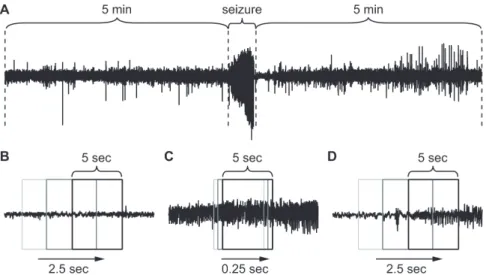
Approximately 40% of epilepsy patients are refractory to phar- macological treatments [10]. To find clues to a cure for epilepsy, various animal models of epilepsy have been developed to reca- pitulate abnormal epileptiform discharges and investigate critical biochemical and genetic factors during epileptogenesis [11]. EEG monitoring is also valuable for examining diverse types of sei- zures in experimental epileptic animals. Although clinical scalp EEG datasets are limited by factors such as low signal intensity or high noise in EEG signals, invasive electrocorticography can
Original Article
Dual deep neural network-based classifiers to detect experimental seizures
Hyun-Jong Jang 1,2,3 and Kyung-Ok Cho 2,3,4,5, *
1