• 검색 결과가 없습니다.

Prevalence of Premenstrual Syndrome in Korean Female National Athletes and Associated Risk Factors

N/A
N/A
Protected

Academic year: 2021

Share "Prevalence of Premenstrual Syndrome in Korean Female National Athletes and Associated Risk Factors"

Copied!
9
0
0

로드 중.... (전체 텍스트 보기)

전체 글

(1)

https://doi.org/10.5763/kjsm.2021.39.1.10 pISSN 1226-3729 eISSN 2288-6028

대한민국 국가대표 여자 선수들의 월경전 증후군 유병률과 위험 요인

연세대학교 의과대학 재활의학교실

1

, 용인세브란스병원 재활의학과

2

, 충남대학교 대학원

3

, 대한체육회 의과학부

4

이 태 임

1,2,3

배 문 정

4

Prevalence of Premenstrual Syndrome in

Korean Female National Athletes and Associated Risk Factors

Taeim Yi 1,2,3 , Moonjung Bae 4

1

Department of Rehabilitation Medicine, Yonsei University College of Medicine, Seoul,

2

Department of Rehabilitation Medicine, Yongin Severance Hospital, Yongin,

3

Graduate School, Chungnam National University, Daejeon,

4

Medicine & Science Department, Korean Sports

& Olympic Committee, Seoul, Korea

Purpose: The purpose of this study was to investigate the prevalence of premenstrual syndrome in elite female athletes and the associated factors.

Methods: We surveyed elite female athletes in the National Training Center about their experiences of premenstrual syndrome. Premenstrual syndrome was diagnosed using the premenstrual symptoms screening tool. The Mann- Whitney test was applied to determine the association of premenstrual syndrome with differences in age, training time, and body mass index; and the chi-squared test was performed to investigate the association of premenstrual syndrome with differences in alcohol and coffee intake, diet for weight loss, stress fracture, and menstrual regularity.

Results: Of the 124 athletes, 18 (14.5%) met the criteria for the diagnosis of premenstrual syndrome. These athletes complained of symptoms such as fatigue/lack of energy (18, 100%), anger/irritability (14, 77.8%), joint/muscle pain (10, 55.6%). There was no significant difference in menarche age, training time, or body mass index between the premen- strual syndrome and non-premenstrual syndrome groups. There was also no significant difference in alcohol or coffee intake, diet for weight, stress fracture, or menstrual regularity between the two groups. The athletes with premenstrual syndrome felt that premenstrual symptoms interfered with their performance, but few of them visited the doctor.

Conclusion: Premenstrual syndrome athletes felt that their performance was hampered because their symptoms were not adequately managed. However, none of the factors we investigated showed any association with premenstrual syndrome. Hence more research and proactive management of the premenstrual symptoms of female athletes is recommended.

Keywords: Premenstrual syndrome, Female, Athletes, Mental health

Received: December 11, 2020 Revised: January 21, 2021 Accepted: January 26, 2021 Correspondence: Moonjung Bae

Jincheon National Training Center of Korean Sport and Olympic Committee, 105 Seonsuchon-ro, Gwanghyewon-myeon, Jincheon 27809, Korea

Tel: +82-43-531-0093, Fax: +82-43-531-0070, E-mail: [email protected]

Copyright ©2021 The Korean Society of Sports Medicine

CC

This is an Open Access article distributed under the terms of the Creative Commons Attribution Non-Commercial License (http://creativecommons.org/

licenses/by-nc/4.0) which permits unrestricted non-commercial use, distribution, and reproduction in any medium, provided the original work is properly cited.

(2)

Table 1. General characteristics of the participants

Sports Participant (n)

Age (yr)

Weight (kg)

Height (cm)

Body mass index (kg/m

2

)

Artistic gymnastics 3 18.3±1.5 45.0±2.7 151.7±3.8 19.7±1.2

Diving 4 21.5±1.3 51.0±1.2 156.5±4.4 21.0±1.2

Wrestling 11 27.0±4.2 60.0±13.0 164.1±4.2 22.2±4.4

Rhythmic gymnastics 3 16.3±0.6 44.3±2.5 163.0±3.0 16.7±0.6

Bowling 7 29.0±3.5 70.3±5.9 161.7±3.4 26.7±1.9

Sepak takraw 12 27.3±3.1 58.2±7.9 167.3±8.1 20.7±1.9

Softball 17 26.1±4.8 65.9±12.2 165.5±5.4 23.9±3.3

Swimming 1 22.0 55.0 164.0 20.0

Squash 3 26.0±1.0 62.3±8.3 167.3±8.3 22.0±1.0

Artistic swimming 11 17.3±1.6 51.6±3.9 164.8±4.9 18.8±0.9

Archery 6 26.17±6.05 57.3±7.0 167.7±4.8 20.5±1.8

Weight lifting 8 22.6±3.4 81.6±23.7 165.1±6.7 29.5±6.2

Wushu 3 22.3±2.3 55.3±1.5 162.7±4.5 21.0±1.0

Judo 7 23.9±2.3 60.7±7.7 162.6±5.3 22.9±1.5

Rowing 4 24.8±2.5 65.8±7.3 176.0±5.7 21.3±2.5

Taekwondo 6 22.2±2.9 59.8±6.7 173.0±6.1 20.2±1.7

Field hockey 18 25.9±3.1 57.7±4.1 163.3±4.2 21.8±1.6

Total 124 24.4±4.7 60.5±12.3 164.9±6.5 22.2±3.8

Values are presented as mean±standard deviation.

Introduction

Premenstrual syndrome (PMS) occurs during the luteal phase of the menstrual cycle. Psychological symptoms such as anxiety, tension, insomnia, and physical symptoms such as breast tenderness, abdominal bloating, and headache appear repeatedly during the premenstrual period. These symptoms usually improve within a few days of the onset of menstruation 1 . According to the criteria of International Classification of Diseases 10th revision, PMS can be diagnosed when one or more of the seven symptoms such as mild mental discomfort, abdominal bloating, weight gain, breast tenderness, muscle pain or strain, poor concentration, and appetite changes are experienced and the symptoms are confined to the luteal phase 2 .

The symptoms of PMS can range from mild to severe, and they can have a negative impact on daily life. When the symptoms are so severe that they cause difficulties with social functioning, it is defined as premenstrual dysphoric disorder (PMDD) 3 .

Many women of childbearing age suffer from PMS. In a survey of 289 female workers in Bucheon, 38% of the subjects met the criteria of American College of Obstetricians and Gyneco- logists 4 . In a study of 1,688 female high school students in Seoul, 20.1% of the subjects met the criteria for moderate-to-severe

PMS and 6.4% met the criteria for PMDD 5 .

PMS also affects female athletes. In a study of medium- to long-distance female athletes in Poland, 9.33% of athletes experi- enced PMDD and 49.33% reported PMS 6 . A study of 232 female athletes in Japan showed a prevalence of 2.9% for PMDD and 8.6% for moderate-to-severe PMS and 44.3% of them reported that the symptoms negatively affected their sports performance 7 .

In female athletes, symptoms such as anxiety, nervousness, breast tenderness, and bloating can negatively affect sports performance; therefore, PMS should be closely monitored and managed. To achieve this, we have to know more about the prevalence and impact of PMS in female athletes as there is little published literature about the condition in female athletes in South Korea.

The purpose of this study was to investigate the prevalence

of PMS and to find out the factors that are associated with it

among female elite athletes. We examined the athletes’ subjective

perception of the effects of premenstrual symptoms on performance

and the management of PMS in elite female athletes.

(3)

Table 2. Premenstrual syndrome (PMS) according to the sports category

Category Non-PMS Moderate-to -severe PMS Total Ball

Bowling 7 (100) 0 (0) 7

Sepak takraw 9 (75.0) 3 (25.0) 12 Softball 15 (88.2) 2 (11.8) 17

Squash 3 (100) 0 (0) 3

Field hockey 17 (94.4) 1 (5.6) 18

Total 51 (89.5) 6 (10.5) 57

Record (archery) 5 (83.3) 1 (16.7) 6 Water

Diving 3 (75.0) 1 (25.0) 4

Swimming 1 (100) 0 (0) 0

Artistic swimming 9 (81.8) 2 (18.2) 11

Total 13 (81.2) 3 (18.8) 16

Weight division

Wrestling 8 (72.7) 3 (27.3) 11 Weight lifting 8 (100) 0 (0) 8

Wushu 3 (100) 0 (0) 3

Judo 6 (85.7) 1 (14.3) 7

Rowing 2 (50.0) 2 (50.0) 4

Taekwondo 5 (83.3) 1 (16.7) 6

Total 32 (82.1) 7 (17.9) 39

Gymnastics

Artistic gymnastics 2 (66.7) 1 (33.3) 3 Rhythmic gymnastics 3 (100) 0 (0) 3

Total 5 (83.3) 1 (16.7) 6

Total 106 (85.5) 18 (14.5) 124

Values are presented as number (%) or number only.

p=0.88.

Methods

1. Participants

This was a cross-sectional observational study. We surveyed female athletes training at the Jincheon National Training Center in 2019. The study was performed according to the Declaration of Helsinki. All participants were fully informed about the purpose of the study, and the participants who agreed to the study were included in this study. We obtained written consent from the participants. We excluded athletes from the study if they did not wish to participate, if they had gynecological or endocrine disorders, or if they were under care for psychological disorders.

This study was approved by the Institutional Review Board of Bundang Jesaeng Hospital for research ethics (No. DMC 2019- 04-002).

2. Measurement

In this study, the premenstrual symptoms screening tool (PSST) was used to identify PMS symptoms in female elite athletes.

It is a simple and useful questionnaire that can screen for PMS and determine its severity (Supplementary Table 1) 8 .

To find out the factors affecting PMS, we asked questions about the athletes’ body mass index (BMI), menarche age, the regularity of menstrual cycle, training time, alcohol, caffeine intake, and diet for weight control. We also asked about the occurrence of stress fractures to investigate any relationship to PMS and about subjective perceptions of the effects of PMS on their athletic performance.

3. Data analysis

The Mann-Whitney test was performed to determine the relationship of menstrual age, current age, training time, and BMI with the presence of PMS. The chi-square test was performed to find out the differences in the prevalence of PMS between sports categories and to investigate whether differences in alcohol and coffee intake, diet for weight loss, or regularity of menstrual cycle correlated with the presence of PMS. The chi-square test was also used to determine if any relationship between stress fractures and the presence of PMS existed, especially related to the physical symptoms.

Frequency analysis was performed on each item of the PSST to identify the emotional and physical symptoms that athletes complained of before menstruation. In addition, frequency analysis was performed to find out about subjective perceptions of the effect the premenstrual symptoms had on performance and whether the athletes tended to visit the doctors for this reason. A p-value of <0.05 was considered statistically significant, and data were analyzed using IBM SPSS ver. 24.0 (IBM Corp., Armonk, NY, USA).

Results

1. Study participants

Of the 169 female athletes, 124 agreed to participate in the

(4)

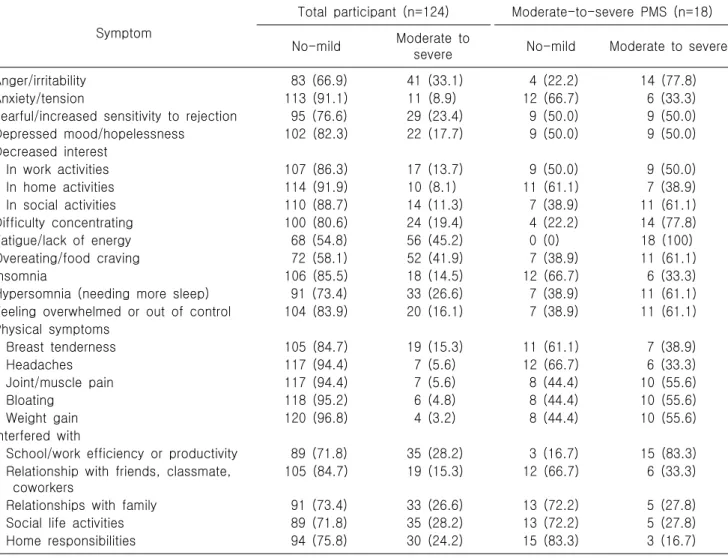
Table 3. Premenstrual symptoms of all participants

Symptom

Total participant (n=124) Moderate-to-severe PMS (n=18)

No-mild Moderate to

severe No-mild Moderate to severe

Anger/irritability 83 (66.9) 41 (33.1) 4 (22.2) 14 (77.8)

Anxiety/tension 113 (91.1) 11 (8.9) 12 (66.7) 6 (33.3)

Tearful/increased sensitivity to rejection 95 (76.6) 29 (23.4) 9 (50.0) 9 (50.0)

Depressed mood/hopelessness 102 (82.3) 22 (17.7) 9 (50.0) 9 (50.0)

Decreased interest

In work activities 107 (86.3) 17 (13.7) 9 (50.0) 9 (50.0)

In home activities 114 (91.9) 10 (8.1) 11 (61.1) 7 (38.9)

In social activities 110 (88.7) 14 (11.3) 7 (38.9) 11 (61.1)

Difficulty concentrating 100 (80.6) 24 (19.4) 4 (22.2) 14 (77.8)

Fatigue/lack of energy 68 (54.8) 56 (45.2) 0 (0) 18 (100)

Overeating/food craving 72 (58.1) 52 (41.9) 7 (38.9) 11 (61.1)

Insomnia 106 (85.5) 18 (14.5) 12 (66.7) 6 (33.3)

Hypersomnia (needing more sleep) 91 (73.4) 33 (26.6) 7 (38.9) 11 (61.1) Feeling overwhelmed or out of control 104 (83.9) 20 (16.1) 7 (38.9) 11 (61.1) Physical symptoms

Breast tenderness 105 (84.7) 19 (15.3) 11 (61.1) 7 (38.9)

Headaches 117 (94.4) 7 (5.6) 12 (66.7) 6 (33.3)

Joint/muscle pain 117 (94.4) 7 (5.6) 8 (44.4) 10 (55.6)

Bloating 118 (95.2) 6 (4.8) 8 (44.4) 10 (55.6)

Weight gain 120 (96.8) 4 (3.2) 8 (44.4) 10 (55.6)

Interfered with

School/work efficiency or productivity 89 (71.8) 35 (28.2) 3 (16.7) 15 (83.3) Relationship with friends, classmate,

coworkers

105 (84.7) 19 (15.3) 12 (66.7) 6 (33.3)

Relationships with family 91 (73.4) 33 (26.6) 13 (72.2) 5 (27.8)

Social life activities 89 (71.8) 35 (28.2) 13 (72.2) 5 (27.8)

Home responsibilities 94 (75.8) 30 (24.2) 15 (83.3) 3 (16.7)

Values are presented as number (%).

PMS: premenstrual syndrome.

survey. The participants were from 17 sports. The average age, height, weight, and BMI according to each sport are listed in Table 1.

2. Prevalence of premenstrual syndrome

Of the 124 participants, 17 met the criteria of moderate-to-severe PMS. Since only one athlete was diagnosed with PMDD, we categorized it as moderate-to-severe PMS. The athletes who did not meet the criteria of moderate-to-severe PMS were defined as non-PMS athletes.

The prevalence of moderate-to-severe PMS was 14.5% in all participants. We evaluated the prevalence of moderate-to-severe PMS according to the sports. It was evenly distributed regardless of the 17 sports. And there were few participants to compare

each of the 17 sports. Therefore we divided the 17 sports into weight division and non-weight division categories. And non- weight division sports were divided into ball, record, water, gymnastics sports according to characteristic of the sports. There were no significant differences by sports category (Table 2).

3. Symptoms and associated factors

To determine the general pattern of physical and emotional

symptoms during the premenstrual period, we conducted a

frequency analysis on each item of the PSST. Moderate-to-severe

PMS athletes complained of fatigue/lack of energy mostly. And

they complained of joint or muscle pain, bloating, and weight

gain in the physical domain. They were also interference with

school and work efficiency or productivity (Table 3).

(5)

Table 5. Stress fracture according to the premenstrual syndrome (PMS) and physical symptoms

Variable Stress fracture (+) Stress fracture (−) Total p-value

Non-PMS 28 (26.4) 78 (73.6) 106 0.54

Moderate-to-severe PMS 6 (33.3) 12 (66.7) 18

Physical symptoms of moderate-to-severe PMS 0.84

No to mild 14 (26.4) 39 (73.6) 53

Moderate to severe* 20 (28.2) 51 (71.8) 71

Total 34 (27.4) 90 (72.6) 124

*Cases in which at least one of the five symptoms are moderate to severe.

Table 4. Comparison of selected factors between moderate-to-severe PMS and non-PMS groups

Variable Non-PMS (n=106) Moderate-to-severe

PMS (n=18) p-value

Age (yr) 24.3±4.8 24.8±4.3 0.62

Age of menarche (yr) 13.6±1.8 13.7±2.0 0.79

Training time (hr/wk) 32.9±9.8 34.4±10.0 0.72

Body mass index (kg/m

2

) 22.4±3.7 20.8±4.4 0.09

Alcohol intake during previous month (time/wk) 0.25

0 35 (33.0) 3 (16.7)

1 62 (58.5) 13 (72.2)

2−3 8 (7.5) 2 (11.1)

>4 1 (0.9) 0 (0)

Coffee intake/day (cup) 0.80

0 58 (54.7) 10 (55.6)

1−2 46 (43.4) 8 (44.4)

3 1 (0.9) 0 (0)

>4 1 (0.9) 0 (0)

Diet for weight loss 0.08

Diet (+) 36 (34.0) 10 (55.6)

Diet (−) 70 (66.0) 8 (44.4)

Menstrual regularity 0.29

Regular 69 (65.1) 9 (50.0)

Irregular 37 (34.9) 9 (50.0)

Values are presented as mean±standard deviation or number (%).

PMS: premenstrual syndrome.

We examined the factors that were associated with moderate- to-severe PMS. There were no significant differences in age, BMI, training time per week, or age of menarche between moderate- to-severe PMS and non-PMS athletes (Table 4). We also examined the differences in alcohol and coffee consumption, diet for weight loss, and menstrual regularity between moderate-to-severe PMS and non-PMS athletes. There were no significant differences between the two groups (Table 4).

The relationship between moderate-to-severe PMS and stress fracture was analyzed. In the non-PMS group, 28 athletes (26.4%) had been diagnosed with a stress fracture, while in the moderate-

to-severe PMS group, 6 (33.3%) had been similarly diagnosed.

There was no statistical difference between the two groups (Table 5). We investigated the relationship between physical symptoms during the luteal phase and stress fractures. Athletes who complained of a moderate-to-severe degree of at least one of five PSST physical symptoms were classified into the moderate- to-severe group and the rest were included in the no-mild group.

There was no statistical difference between the two groups (Table 5).

4. Effect on performance and visits to the doctor

We asked participants whether their sports performance was

(6)

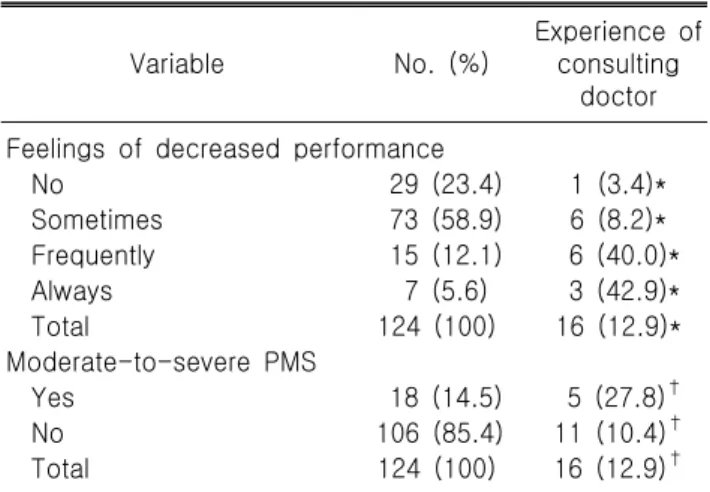
Table 6. Feelings of decreased performance and experience of consulting a doctor due to premenstrual symptoms

Variable No. (%)

Experience of consulting

doctor Feelings of decreased performance

No 29 (23.4) 1 (3.4)*

Sometimes 73 (58.9) 6 (8.2)*

Frequently 15 (12.1) 6 (40.0)*

Always 7 (5.6) 3 (42.9)*

Total 124 (100) 16 (12.9)*

Moderate-to-severe PMS

Yes 18 (14.5) 5 (27.8)

No 106 (85.4) 11 (10.4)

Total 124 (100) 16 (12.9)

PMS: premenstrual syndrome.

*Number (% of feeling of decreased performance);

number (% of PMS).

affected by PMS-related symptoms. A total of 95 athletes (76.6%) claimed that PMS-related symptoms affected their sports perfor- mance. In particular, seven athletes (5.6%) reported that it “always affected” their performance (Table 6). Although not included in the criteria for PMS, many athletes subjectively recognized that their performance was affected by PMS-related symptoms.

We asked all participants whether they were in the habit of visiting a doctor for the symptoms related to PMS. Among the 95 athletes affected by PMS-related symptoms, 15 (15.8%) had visited doctors (Table 6). Of the 18 athletes diagnosed with moderate-to-severe PMS, 5 (27.8%) had visited a doctor (Table 6). Despite diagnosis of PMS, there were few athletes who had visited doctors.

Discussion

This study is the first cross-sectional study to assess the prevalence and risk factors of PMS in Korean elite female athletes.

We found that 18 (14.5%) of the 124 female athletes were diagnosed with moderate-to-severe PMS. We did not identify any risk factors for moderate-to-severe PMS.

According to a meta-analysis of PMS prevalence studies from 1996 to 2011, the prevalence of PMS was 47.8% (95% confidence interval, 32.6%–62.9%). However, there were various prevalence rates ranging from 10% to 98.2% 9 . In a study of Korean female

adolescents in 2014, 20% of adolescents reported having moderate- to-severe PMS 10 .

There have been some other studies of PMS in female athletes.

In a study of medium to long-distance female athletes in Poland, 9.33% of athletes had PMDD and 49.33% suffered from PMS 6 , while a study of 232 female athletes in Japan found that 2.9%

of athletes experienced PMDD and 8.6% reported moderate- to-severe PMS 7 . In a study of 52 Brazilian female football players, 59.6% of athletes had PMS 11 , and in a study of 45 Polish female gymnasts, 48.89% of athletes were shown to have PMS 12 . The reported prevalence of PMS varies according to the study subjects.

With the exception of a Japanese university study on athletes 7 , the prevalence of PMS in our study was lower than that in other studies.

The pathophysiology of PMS is not well understood, but it is thought to be related to hormonal changes and serotonergic dysfunction during the luteal phase. Poor dietary habits, stress, and lack of exercise are thought to contribute to the development of PMS 13,14 . Participants in this study are national elite athletes who thoroughly control diet and exercise for their best condition.

The results of the study show that the participants had less alcohol, coffee and exercised regularly. This point is thought to explain the relatively low prevalence of this study.

Several previous studies have reported that exercise can help in relieving symptoms of PMS. In a study of 748 female college students, women who exercised reported fewer symptoms of PMS than women who did not 15 . An 8-week study comparing aerobic and resistance exercise reported that both types of exercise improved symptoms of PMS although the aerobic exercise group showed more benefit, especially in relieving depressive symptoms during the premenstrual period 16 . Exercise blocks the renin- angiotensin system overactivity 17 . It decreases the reabsorption of sodium and water, thereby reducing edema and improving physical symptoms.

The point that participants are athletes who exercise regularly

may explain our relatively low prevalence of PMS. However,

there are some reports 6,11,12 that the prevalence of PMS is high

among elite female athletes. It is therefore difficult to generalize

that low PMS prevalence is due to the exercise of elite female

athletes in this study. Athletes with severe symptoms of PMS

might have already dropped out before becoming a national team

(7)

member. Further studies are needed to address this question.

In this study, we surveyed participants to find out risk factors associated with moderate-to-severe PMS. Training time per week was not associated with PMS, a finding supported by a study of Polish gymnasts that has also shown that training time and frequency did not affect the prevalence of PMS 12 . Several studies have reported that regular exercise can help improve PMS symptoms 18-20 . The subjects of this study are national athletes who follow a regular training program and this may have helped reduce the symptoms of PMS reported. National athletes, however, do high-intensity training, but we did not investigate the intensity of exercise in this study. Further study on the relationship between the intensity of the exercise and PMS is desirable.

In this study, caffeine and alcohol intake were not significantly different when analyzed according to the presence of PMS.

According to the other study, however, caffeine and alcohol intake was significantly correlated with the incidence of premenstrual symptoms (PMS, PMDD) among elite gymnasts 12 . Other previous studies have shown that alcohol consumption after menstruation was significantly associated with the development of PMS 21 . In one study, women who consumed alcohol had a 2.5-fold higher incidence of PMS than those who did not 14 . These results are all contrary to the results of our study.

The subjects of our study are disciplined in managing their physical condition. We found that 122 of our athletes (98.4%) consumed less than two or three cups of coffee a day and 113 of them (91.1%) consumed alcohol less than once a week. This low consumption may explain why caffeine and alcohol intake did not appear to affect the chance of PMS in our study. More research is needed in this regard.

Our study did not find any association between diet for weight loss and PMS. Previous studies have investigated aspects of nutrition; for example, vitamin and micronutrient status in subjects with PMS have been investigated but no nutrient deficiency affecting PMS was found 22 . Another study reports that calcium and vitamin D may help improve symptoms of PMS 23 . Since we simply surveyed the diet status of athletes, the actual nutritional status was not investigated. This is a limitation of our study, and further study on the relationship between nutritional status and PMS in athletes is needed.

The BMI of female athletes was not significantly associated

with the PMS in our study. Earlier work has shown that obese women with a BMI of 30 kg/m 2 or higher are nearly three times more likely to develop PMS than women who are not obese 24 . The subjects of our study had an average BMI of nearly 20 kg/m 2 and few athletes were obese.

Our study also found no relationship between menstrual cycle regularity and PMS. In a study of 221 Japanese college students, premenstrual symptoms were not significantly associated with irregular menstrual cycles 25 . However, there are no consistent reports on the association between PMS and menstrual cycle, current age, or age at menarche; therefore, further studies are needed.

There was no significant association between PMS and stress fracture in this study. In a previous study of Japanese high school club athletes, the “physical symptoms” of PMS had a significant association with the occurrence of stress fractures 26 , which was not the case in our study. As research in this area is minimal, more studies on this aspect are needed.

Regardless of the diagnosis of moderate-to-severe PMS, most participants felt that symptoms related to PMS interfered with their performance. Many of the participants had emotional symp- toms such as fatigue/lack of energy (45.2%), overeating/food craving (41.9%), anger/irritability (33.1%), and physical symptoms such as breast tenderness (15.3%), headaches (5.6%), and joint/muscle pain (5.6%) during the premenstrual period. These symptoms are thought to have influenced the subjective perception of athletes’ performance decrease. This result was derived through a simple questionnaire. There is a limitation that it is not an experimental measurement of changes in performance. Therefore, we think that experimental research on the effect of PMS on sports performance is necessary in the future.

Participants complained of symptoms and subjective perfor-

mance decrease due to PMS, but few athletes met a doctor for

these symptoms. Even those athletes diagnosed with PMS rarely

met a doctor for these symptoms. In an earlier study of factors

influencing the decision of female college students to visit the

gynecology clinic, fear and concern for social stigma regarding

gynecologic diagnoses was a significant influence 27 . The require-

ment for nudity, intimate gynecologic examination, and social

prejudice experienced by women who visit the gynecologist are

among the factors that may have made our young athletes in

(8)

their late teens and early twenties reluctant to seek medical care.

The negative feelings and delay in seeking treatment for symptoms may then have had an additional impact on their sports performance.

It is important for athletes who suffer from PMS to visit a gynecologist and other relevant specialists for proper treatment.

There are some limitations to our study. First, this is a cross-sectional study that reflects only the situation at the time it was carried out. We were not able to consider life events such as upcoming important competitions and injuries. Keeping a journal about PMS is recommended as an effective investigative tool for PMS 28 . Prospective studies of PMS based upon the daily records of elite female athletes would be valuable.

In addition, it is difficult to generalize this study because the subjects were limited to elite female athletes trained at the National Training Center in 2019. However, there are very few domestic studies that have targeted Olympic-level female athletes in South Korea, which may therefore also be considered a strength of this study.

In conclusion, the 18 elite female athletes (14.5%) experienced moderate-to-severe PMS and none of the factors we investigated were related to PMS. Regardless of the diagnosis, many of the participants felt that symptoms related to PMS interfered with their sports performance. Nevertheless, they did not seek pro- fessional treatment. We recommend that elite female athletes constantly manage this aspect of their health and seek treatment for PMS when needed. In addition, further research on related characteristics, effects on performance, and treatment of PMS in elite female athletes are needed.

Conflict of Interest

No potential conflict of interest relevant to this article was reported.

Acknowledgments

All authors appreciate the athletes who participated in this study.

ORCID

Taeim Yi https://orcid.org/0000-0001-6369-4677 Moonjung Bae https://orcid.org/0000-0003-0070-3681

Author Contributions

Conceptualization: TY. Data curation: MB. Formal analysis:

MB. Methodology: TY. Project administration: TY. Visualization:

MB. Writing–original draft: MB. Writing–review & editing: TY.

Supplementary Material

Supplementary Material can be found at https://doi.org/10.5763/

kjsm.2021.39.1.10.

References

1. O’Brien PM, Backstrom T, Brown C, et al. Towards a consensus on diagnostic criteria, measurement and trial design of the premenstrual disorders: the ISPMD Montreal consensus. Arch Womens Ment Health 2011;14:13-21.

2. Janca A, Hiller W. ICD-10 checklists: a tool for clinicians’

use of the ICD-10 classification of mental and behavioral disorders. Compr Psychiatry 1996;37:180-7.

3. American Psychiatric Association. Diagnostic and statistical manual of mental disorders: DSM-IV. 4th ed. Washington (DC): American Psychiatric Association; 1994.

4. Kim TH, Park HS, Lee HH, Chung SH. Premenstrual syndrome and dysmenorrhea in the career women at Bucheon city. Korean J Obstet Gynecol 2011;54:523-8.

5. Chang HJ, Jeong HG, Ko YH, Han CS, Joe SH. Frequency, clinical characteristics and correlates of premenstrual syndrome in high school students. Korean J Psychosom Med 2013;21:

44-54.

6. Czajkowska M, Drosdzol-Cop A, Galazka I, Naworska B, Skrzypulec-Plinta V. Menstrual cycle and the prevalence of premenstrual syndrome/premenstrual dysphoric disorder in adolescent athletes. J Pediatr Adolesc Gynecol 2015;28:492-8.

7. Takeda T, Imoto Y, Nagasawa H, Muroya M, Shiina M.

Premenstrual syndrome and premenstrual dysphoric disorder in Japanese collegiate athletes. J Pediatr Adolesc Gynecol 2015;28:215-8.

8. Steiner M, Macdougall M, Brown E. The premenstrual symp-

(9)

toms screening tool (PSST) for clinicians. Arch Womens Ment Health 2003;6:203-9.

9. Direkvand-Moghadam A, Sayehmiri K, Delpisheh A, Kaikhavandi S. Epidemiology of premenstrual syndrome (PMS): a systematic review and meta-analysis study. J Clin Diagn Res 2014;8:

106-9.

10. Yang J, Joe SH, Lee MS, Kim SH, Jung IK. Survey of premenstrual symptom severity and impairment in Korean adolescents: premenstrual dysphoric disorder, subthreshold premenstrual dysphoric disorder and premenstrual syndrome.

Asia Pac Psychiatry 2014;6:135-44.

11. Foster R, Vaisberg M, Araujo MP, et al. Relationship between anxiety and interleukin 10 in female soccer players with and without premenstrual syndrome (PMS). Rev Bras Ginecol Obstet 2017;39:602-7.

12. Czajkowska M, Plinta R, Rutkowska M, Brzek A, Skrzypulec- Plinta V, Drosdzol-Cop A. Menstrual cycle disorders in pro- fessional female rhythmic gymnasts. Int J Environ Res Public Health 2019;16:1470.

13. Grady-Weliky TA. Clinical practice: premenstrual dysphoric disorder. N Engl J Med 2003;348:433-8.

14. Deuster PA, Adera T, South-Paul J. Biological, social, and behavioral factors associated with premenstrual syndrome.

Arch Fam Med 1999;8:122-8.

15. Timonen S, Procope BJ. Premenstrual syndrome and physical exercise. Acta Obstet Gynecol Scand 1971;50:331-7.

16. Samadi Z, Taghian F, Valiani M. The effects of 8 weeks of regular aerobic exercise on the symptoms of premenstrual syndrome in non-athlete girls. Iran J Nurs Midwifery Res 2013;18:14-9.

17. Cunha TS, Silva KA, Sanches A, et al. Exercise and renin angiotensin system. In: Casarini DE, Arita DY, Cunha TS, Colucci JA, editors. New aspects of the renin angiotensin system in cardiovascular and renal diseases. Sharjah: Bentham Science Publishers; 2016. p. 275-321.

18. Prior JC, Vigna Y, Sciarretta D, Alojado N, Schulzer M.

Conditioning exercise decreases premenstrual symptoms: a prospective, controlled 6-month trial. Fertil Steril 1987;47:

402-8.

19. Ghanbari Z, Manshavi FD, Jafarabadi M. The effect of three months regular aerobic exercise on premenstrual syndrome. J Fam Reprod Health 2008;2:167-71.

20. Steege JF, Blumenthal JA. The effects of aerobic exercise on premenstrual symptoms in middle-aged women: a preliminary study. J Psychosom Res 1993;37:127-33.

21. Caan B, Duncan D, Hiatt R, Lewis J, Chapman J, Armstrong MA. Association between alcoholic and caffeinated beverages and premenstrual syndrome. J Reprod Med 1993;38:630-6.

22. Mira M, Stewart PM, Abraham SF. Vitamin and trace element status in premenstrual syndrome. Am J Clin Nutr 1988;47:

636-41.

23. Thys-Jacobs S. Micronutrients and the premenstrual syndrome:

the case for calcium. J Am Coll Nutr 2000;19:220-7.

24. Masho SW, Adera T, South-Paul J. Obesity as a risk factor for premenstrual syndrome. J Psychosom Obstet Gynaecol 2005;26:33-9.

25. Yamamoto K, Okazaki A, Sakamoto Y, Funatsu M. The relationship between premenstrual symptoms, menstrual pain, irregular menstrual cycles, and psychosocial stress among Japanese college students. J Physiol Anthropol 2009;28:129-36.

26. Takeda T, Imoto Y, Nagasawa H, Takeshita A, Shiina M.

Stress fracture and premenstrual syndrome in Japanese adole- scent athletes: a cross-sectional study. BMJ Open 2016;6:

e013103.

27. Han Y. The factors affecting on obstetrics and gynecology exam fear, social norm and sexual knowledge of intention to visiting the obstetrics and gynecology in female college students. J Korean Data Anal Soc 2019;21:1087-98.

28. Freeman EW. Premenstrual syndrome and premenstrual

dysphoric disorder: definitions and diagnosis. Psychoneuroen-

docrinology 2003;28 Suppl 3:25-37.

수치

Table  1.  General  characteristics  of  the  participants Sports Participant  (n) Age (yr) Weight (kg) Height (cm)
Table  2.  Premenstrual  syndrome  (PMS)  according  to  the  sports  category
Table  3.  Premenstrual  symptoms  of  all  participants
Table  5.  Stress  fracture  according  to  the  premenstrual  syndrome  (PMS)  and  physical  symptoms
+2

참조

관련 문서

Purpose:The purpose of this study was to investigate effect of the lumbo-pelvic stabilization exercise on relief of menstrual pain and premenstrual syndrome

Purpose: This study aimed to investigate the effects of exposure to endocrine disruptors, burnout, and social support from peers on premenstrual syndrome (PMS) in

PURPOSE: The purpose of this study was to investigate the current state of rapid weight loss and physical and mental complaints among elite combat athletes who were selected

Purpose:The purpose of this study was to investigate effect of the lumbo-pelvic stabilization exercise on relief of menstrual pain and premenstrual syndrome of

Purpose: This study was to examine the differences in the degree of premenstrual syndrome, dysmenorrhea, and stress according to the gender role identity

Purpose: This study aimed to examine the effects of premenstrual syndrome (PMS) symptoms and coping strategies on the health-related quality of life in elementary and

Prevalence and associated factors with metabolic syndrome in South Korea-from the Korean National Health and Nutrition Examination Survey, 1998-.. Obesity and

Prevalence and associated factors with metabolic syndrome in South Korea-from the Korean National Health and Nutrition Examination Survey, 1998-.. Association