Phonetic Implementation of the Darkness of English Word-final /l/ across Prosodic Positions: Comparison of
Native English Speakers and EFL Korean Speakers
*Hyang˗Sook Sohn (Kyungpook National University )
**1Shinyoung Lim (Yeungjin University)
Sohn, Hyang˗Sook and Shinyoung Lim. 2020. Phonetic implementation of the darkness of English word-final /l/ across prosodic positions: Comparison of native English speakers and EFL Korean speakers. Korean Journal of English Language and Linguistics 20, 450-474. This study investigates the way in which darkness of the word-final /l/
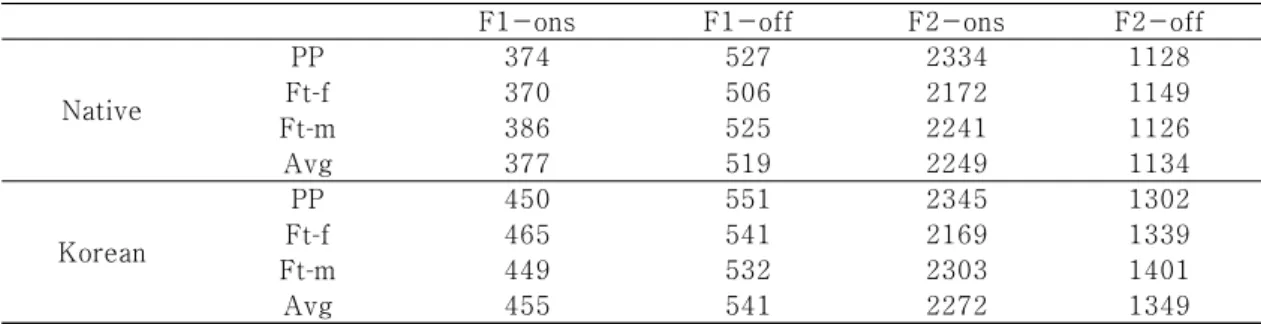
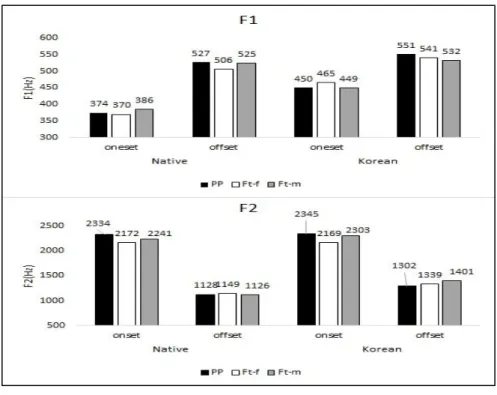
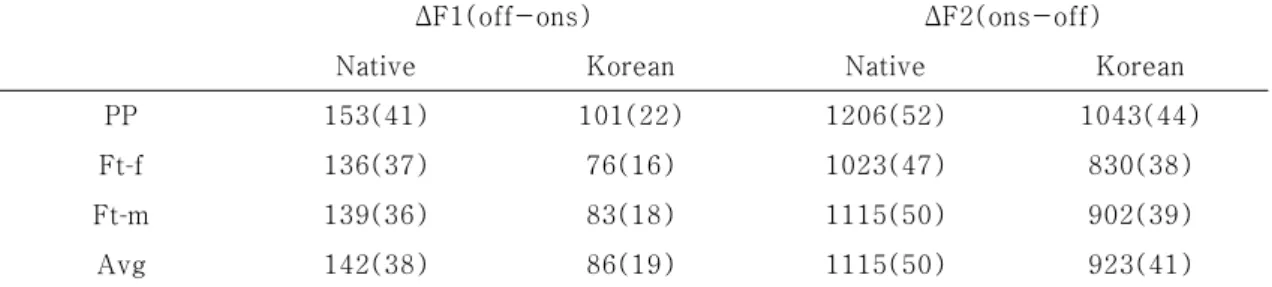
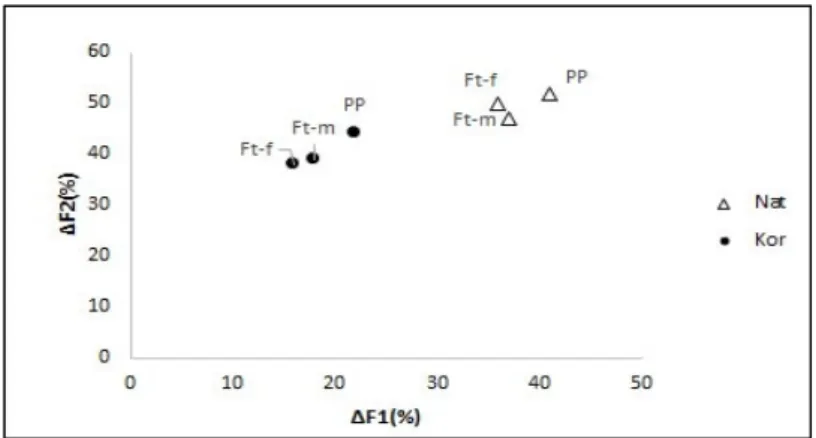
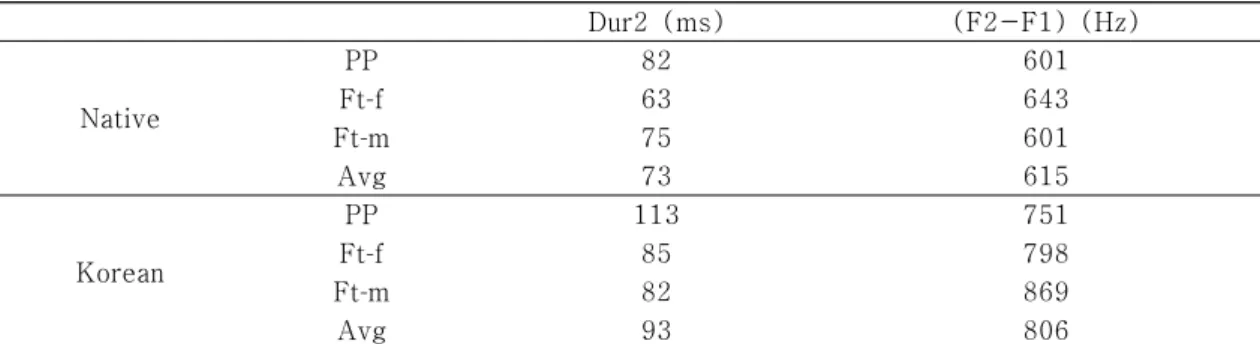
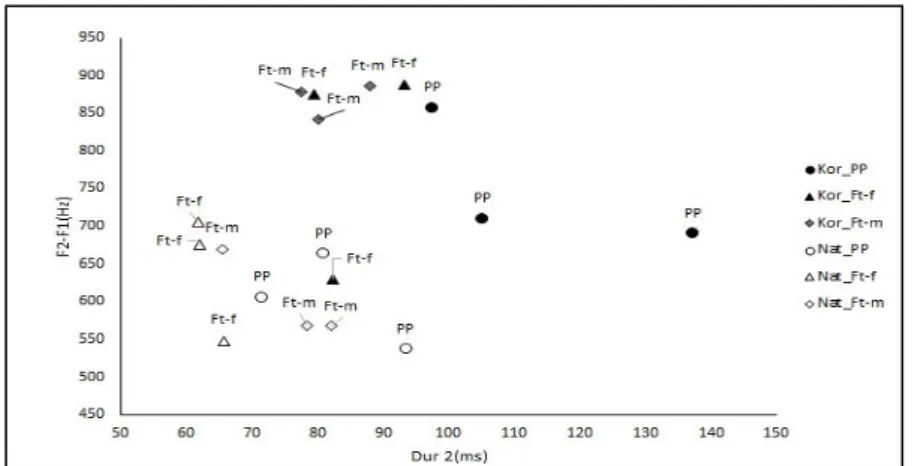
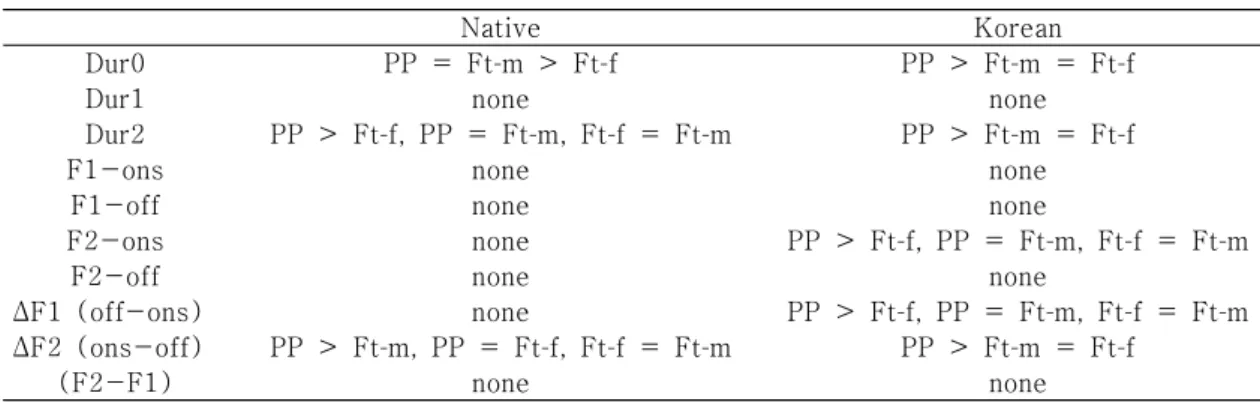
is implemented in two speaker groups of the native English speakers and EFL Korean speakers across three prosodic contexts, by measuring the acoustic parameters of pre-lateral vowel duration and formant frequencies at the time of onset and offset of post-peak duration. The rates of the F1 increase and those of the F2 decrease, and values of (F2-F1) indicate implementation of darker /l/ for the native English speakers compared with the Korean speakers despite shorter vowel duration. Acoustic parameters derived from the measures suggest that the two speaker groups are more dependent on tongue dorsum retraction than tongue body lowering to implement velarization. This asymmetry is particularly characteristic of the Korean speakers and is attributed to interference of the articulatory property of the Korean lateral. Prosodic strengthening was partially observed between PP and the foot level for both speaker groups, with no foot-internal distinction. Within each speaker group post-peak duration and the F2 decrease rate cumulatively increased in PP compared with the foot level, which lends supporting evidence to the undershoot effect on velarization. Prosodic effects on acoustic measures suggest that darkness of /l/ is not categorical but gradient on a phonetic continuum.
Keywords: coarticulatory gesture, darkness of /l/, F1 raising, F2 lowering, lateral /l/, prosodic strengthening, undershoot, velarization, vowel duration
*
We are grateful to three anonymous reviewers for their extensive comments and insightful suggestions. Any remaining error, however, is solely ours.
**
![Figure 1. Measurement Example of deal [diɫ]](https://thumb-ap.123doks.com/thumbv2/123dokinfo/5427534.645625/7.892.213.682.308.534/figure-measurement-example-deal-diɫ.webp)