Development of Marker-free TaGlu-Ax1 Transgenic Rice Harboring a Wheat High-molecular-weight Glutenin Subunit (HMW-GS) Protein
Namhee Jeong
1†, Seung-Ho Jeon
2†, Dool-Yi Kim
1, Choonseok Lee
1, Hyun-Choong Ok
1, Ki-Do Park
1, Ha-Cheol Hong
4, Seung-Sik Lee
3, Jung-Kyung Moon
4and Soo-Kwon Park
1*
1National Institute of Crop Sciences, Rural Development Administration, Wanju-gun, Jeollabuk-do 55365, Korea
2Research Center for Seed Utilization, Gyeongsangnam-do National University of Science Technology, Jinju 52725, Korea
3Advanced Radiation Technology Institute, Atomic Energy Research Institute, Jeongeup 56212, Korea
4National Institute of Agricultural Sciences, Rural Development Administration, Jeonju-si, Jeollabuk-do 54874, Korea Received September 12, 2016 /Revised October 12, 2016 /Accepted October 12, 2016
High-molecular-weight glutenin subunits (HMW-GSs) are extremely important determinants of the functional properties of wheat dough. Transgenic rice plants containing a wheat TaGlu-Ax1 gene en- coding a HMG-GS were produced from the Korean wheat cultivar ‘Jokyeong’ and used to enhance the bread-making quality of rice dough using the Agrobacterium-mediated co-transformation method.
Two expression cassettes with separate DNA fragments containing only TaGlu-Ax1 and hygromycin phosphotransferase II (HPTII) resistance genes were introduced separately into the Agrobacterium tume- faciens EHA105 strain for co-infection. Rice calli were infected with each EHA105 strain harboring TaGlu-Ax1 or HPTII at a 3:1 ratio of TaGlu-Ax1 and HPTII. Among 210 hygromycin-resistant T
0plants, 20 transgenic lines harboring both the TaGlu-Ax1 and HPTII genes in the rice genome were obtained.
The integration of the TaGlu-Ax1 gene into the rice genome was reconfirmed by Southern blot analysis. The transcripts and proteins of the wheat TaGlu-Ax1 were stably expressed in rice T
1seeds.
Finally, the marker-free plants harboring only the TaGlu-Ax1 gene were successfully screened in the T
1generation. There were no morphological differences between the wild-type and marker-free trans- genic plants. The quality of only one HMW-GS (TaGlu-Ax1) was unsuitable for bread making using transgenic rice dough. Greater numbers and combinations of HMW and LMW-GSs and gliadins of wheat are required to further improve the processing qualities of rice dough. TaGlu-Ax1 marker-free transgenic plants could provide good materials to make transgenic rice with improved bread-making qualities.
Key words : Co-transformation, high-molecular-weight glutenin subunit (HMW-GS) protein, marker-
free transgenic rice, wheat
†Authors contributed equally.
*Corresponding author
*Tel : +82-63-238-5324, Fax : +82-63-238-5305
*E-mail : [email protected]
This is an Open-Access article distributed under the terms of the Creative Commons Attribution Non-Commercial License (http://creativecommons.org/licenses/by-nc/3.0) which permits unrestricted non-commercial use, distribution, and reproduction in any medium, provided the original work is properly cited.
Journal of Life Science 2016 Vol. 26. No. 10. 1121~1129 DOI : http://dx.doi.org/10.5352/JLS.2016.26.10.1121
Introduction
Rice is the most important cereal in the developing world and is a staple food consumed by a large part of world hu- man population [10]. Rice flour is one of the most valuable cereal flours from a nutritional viewpoint due to its hypo- allergenic proteins and low calcium content, moreover the absence of gluten [12]. Rice flour is used in many food prod- ucts and improving rice quality is of great relevance to many
Asian countries. However, dough made from rice lacks ex- tensibility and elasticity, whereas that of wheat is suitable for many food products including breads and noodles.
Wheat flour is different from other cereal flours, including rice, because it contains gluten that gives it the elasticity and extensity required for bread-making [5].
Gluten consists mainly of two types of seed storage pro- teins, the glutenins and the gliadins. Glutenins are classified into high-molecular-weight glutenin subunits (HMW-GS) and low-molecular-weight glutenin subunits (LMW-GS).
Although the HMW-GS contribute only about 5% of the total protein in mature wheat kernels [28], the elasticity of wheat dough depends mainly on the HMW-GS, so their network- ing is important determinants of bread-making quality [23].
The HMW-GS are encoded by the Glu-A1, Glu-B1 and
Glu-D1 genes on the long arm of chromosomes 1A, 1B and
1D, respectively [13]. Each locus includes two genes linked
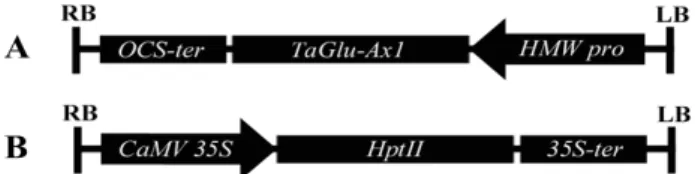
Fig. 1. Vector constructs expressing the TaGlu-Ax1 (upper panel) and hygromycin phosphotransferase II (HPTII) (lower panel) genes in the binary vectors. HMW pro, TaGlu-Bx7-own promoter; OCS-ter, octopine synthase terminator; CaMV 35S, cauliflower mosaic virus pro- moter; 35S-ter, 35S terminator; RB, right border; LB, left border.
together encoding two different types of HMW-GS, x- and y-type subunits [24]. Several HMW-GS genes have been shown to be functional when transformed into Escherichia coli [11], tobacco [25], wheat [2, 3, 5, 6] and tritordeum [26].
Development of transgenic plants increasing bread-mak- ing quality using various HMW-GS genes is good way to solve lacks of rice extensibility and elasticity. Araki’s [4]
group has developed transgenic rice using transformation- competent artificial chromosome (TAC) clones harboring a HMW-GS and LMW-GS genes from wheat genomic DNA.
All transgenic lines had HMW-GS subunit proteins in the rice endosperm, and the expressed proteins are processed at the same site as the mature protein in wheat seeds.
The persistence of selectable marker genes in transgenic crops destined for field cultivation and human food leads to serious public concerns about the safety of transgenic crops, even though several risk-assessment reports [17, 27]
have shown that neither the genes nor their products are harmful to human or environmental health. Moreover, gen- erating marker-free transgenic plants responds not only to public concerns over the safety of genetically engineered crops, but supports multiple transformation cycles for trans- gene pyramiding. Repeated use of the same promoter and a polyadenylation signal for different selectable marker genes could result in transcriptional gene silencing [15].
Therefore, eliminating selectable marker genes is crucial for stacking multiple traits in a transgenic plant.
As one of major Gluten proteins, the HMW-GS Ax1 has been reported that there is associated with processing properties. Although co-expression of TaGlu-Ax1 and PINA in durum wheat have combined effects on dough mixing behaviors with a better dough strength and resistance to ex- tension than those from lines expressing TaGlu-Ax1 or Pina [19], the expression of TaGlu-Ax1 is no doubt to influence the processing properties. Overexpression of HMW-GS Ax1 in several durum wheat cultivars resulted in increased dough strength [13].
In this study, we generated marker-free transgenic rice expressing the wheat HMW-GS protein without any herbi- cide or antibiotic resistance marker genes using the co-trans- formation method. The marker-free transgenic plant express- ing TaGlu-Ax1 gene is critical material for generating trans- genic plant advanced quality processing of bread and noodle without antibiotic markers. Moreover, the marker-free trans- genic rice developed in this study should provide useful for improving processing quality in rice breeding program.
Materials and Methods
Cloning of the wheat TaGlu-Ax1 glutenin gene
‘Jokyeong’ (Triticum aestivum L. cv. Jokyeong) was used for cloning the TaGlu-Ax1 gluenin gene. The TaGlu-Ax1 gene was amplified by polymerase chain reaction (PCR) of ge- nomic DNA using the primers TaGlu-Ax1-CF (primer se- quences: 5‘-TCATCACCCACAACACCGAGCA-3’) and TaGlu- Ax1-CR (primer sequences: 5‘- AGCTGCAGAGAGTTCTAT CACTG-3’), which were designed from a sequence on Gen- Bank (accession no. X61009). The PCR temperature cycling conditions were 4 min at 94°C, followed by 35 cycles of 94°C for 30 sec, 60°C for 30 sec, 72°C for 2 min, and a final ex- tension at 72°C for 10 min. The amplification products were separated on a 1% agarose gel and visualized with EtBr. The amplified products were sub-cloned using a TOPO TA Cloning kit for sequencing (Invitrogen, Carlsbad, CA, USA).
DNA constructs
To make a marker-free vector, we first inserted TaGlu- Bx7-own promoter from wheat cultivar ‘Jokyeong’ into the pBTEX binary vector, which modified from pCAMBIA1300 binary vector. The HPTII expression cassette (CaMV 35S pro- moter-HPTII gene-CaMV 35S terminator) in the pBTEX bina- ry vector was removed by XhoI and EcoRI restriction enzyme treatment. After klenow enzyme treatment for blunt ligation, the vector was self-ligated. Then, amplified the TaGlu-Ax1 gene with the EcoRI and KpnI restriction enzyme sites was constructed into pBTEX binary vectors under the control of TaGlu-Bx7-own promoter (Fig. 1A). The positive selectable marker cassette for co-transformation was used by an empty pBTEX binary vector (Fig. 1B).
Agrobacterium handling
Competent Agrobacterium tumefaciens EHA105 was trans-
formed with TaGlu-Ax1- cloned binary vector and an empty vector containing HPTII for the selectable marker using the freeze-thaw method [7]. T
0plants were selected on YEP me- dia containing kanamycin (50 mg/l). Transformation was confirmed by PCR amplification of plasmids mini-prepped from each Agrobacterium strain [3].
Rice co-transformation
Mature seeds of Oryza sativa L. subsp. japonica var.
Dongjin were used to induce callus formation on callus in- duction (CI) medium [N
6salts [9] with vitamins, 2.5 g/l pro- line, 2 mg/l 2,4-D, 0.5 g/l casamino acid, 30 g/l sucrose and 2 g/l gelrite, pH 5.7]. After 21 days of incubation in the dark at 25°C, the scutellum-derived calli were excised and preincubated on CI medium for 1 week. Agrobacterial cells were grown on YEP solid medium containing anti- biotics at 25°C for 2 days. And then, agrobacterial cells were resuspended in suspension medium (N
6salts with vitamins, 2 mg/l 2,4-D, 0.5 g/l casamino acid, 30 g/l sucrose, and 10 g/l glucose, pH 5.7) with 200 μM acetosyringone as a final concentration. After two Agrobacterium cells were mixed in a 3:1 ratio of EHA105 with TaGlu-Ax1 gene expressing cassette and EHA105 with HPTII gene expressing cassette, the calli were transformed by swirling in the mixture of Agrobacterium cultures for 30 min. The calli were blotted on Whatman no. 1 paper and cocultivated on the cocultivation medium (N
6salts with vitamins, 2 mg/l 2,4-D, 0.5 g/l casa- mino acid, 30 g/l sucrose, 10 g/l glucose, and 2 g/l gelrite, pH 5.2 with 200 μM acetosyringone as a final concentration).
After 3 days, the calli were washed with liquid CI medium supplemented with 250 mg/l cefotaxime and 150 mg/l and placed on the selection medium (CI medium supplemented with 50 mg/l hygromycin, 250 mg/l cefotaxime). After se- lection and regeneration, the regenerated plantlets were ac- climatized and grown in a greenhouse.
PCR analysis of T
0plants
PCR was performed with the GeneAmp System 9700 (Applied Biosystems, Foster City, CA, USA) with a gene-spe- cific primer set (TaGlu-Ax1; forward 5'- TCATCACCCACAA CACCGAGCA -3', reverse 5'- GACCTTGTCCTGGTTGCT GTCTTTG -3', HPTII; forward 5'-CGCTTCTGCGGGCGA TTT-3', reverse 5'-CCCATTCGGACCGCAAGGA -3') and EF Taq DNA polymerase (Solgent Co. Seoul, South Korea). Each reaction mixture (30 μM) consisted of 10 mM Tris-HCl (pH 9.0), 1.5 mM MgCl
2, 40 mM KCl, 250 μM dNTPs, and 1 U
Taq DNA polymerase. Amplified products were separated on a 1% agarose gel, stained with EtBr, and visualized with a UV illuminator.
Southern hybridization analysis
Rice genomic DNA was prepared by the CTAB extraction method [31]. Aliquots of 5 μg of purified DNA were digested with restriction endonuclease (EcoRI), size-fractionated on a 0.8% agarose gel, and the DNA was transferred to a nylon membrane through capillary blotting in 10× SSC (Gene Screen, DuPont, Wilmington, DE, USA). The blots were la- beled using AlkPhos Direct (Amersham, GE Healthcare.
Piscataway, NJ, USA) according to the manufacturer’s instructions. After hybridization, the filters were washed for 30 min at 55°C to remove unlabelled probe. Subsequently, CD-star Detection Reagent (Amersham, GE Healthcare.
Piscataway, NJ, USA) was used to detect and generate signals.
RNA extraction and RT-PCR analysis
T
1generation seeds were frozen in liquid nitrogen and then ground to powder using a mortar and pestle. Total RNA was extracted using a method reported previously [34].
The isolated RNA preparations were then reverse-tran- scribed with oligo-dT primer and a First Strand cDNA Synthesis kit for RT-PCR (Roche Co., Basel, Switzerland) with gene-specific primers. The primers were as follows:
TaGlu-Ax1 forward 5'- TCATCACCCACAACACCGAGCA -3', TaGlu-Ax1 reverse 5'- GACCTTGTCCTGGTTGCTGTCT TTG -3'; OsActin primers were used as internal standards for mRNA expression profiling [21, 33]. The PCR conditions consisted of initial denaturation at 94°C for 4 min, followed by 30 cycles at 94°C for 1 min, 60°C for 1 min, 72°C for 2 min, and a final extension at 72°C for 10 min. The experi- ments were repeated three times and all produced similar results. The OsActin control primers were 5'- GGA ACT GGT ATG GTC AAG GC -3' and 5'- AGT CTC ATG GAT ACC CGC AG -3' [8].
Protein extraction and Western blot
T
1generation seeds were frozen in liquid nitrogen and
then ground to powder using a mortar and pestle. Total stor-
age proteins in the rice endosperm were extracted with 50
mM Tris-HCl (pH 8.0) containing 2% SDS, 50% of 1-propanol
and 1% of dithiothreitol, as described [4]. Amount of ex-
tracted total proteins was measured by Nanodrop Spec-
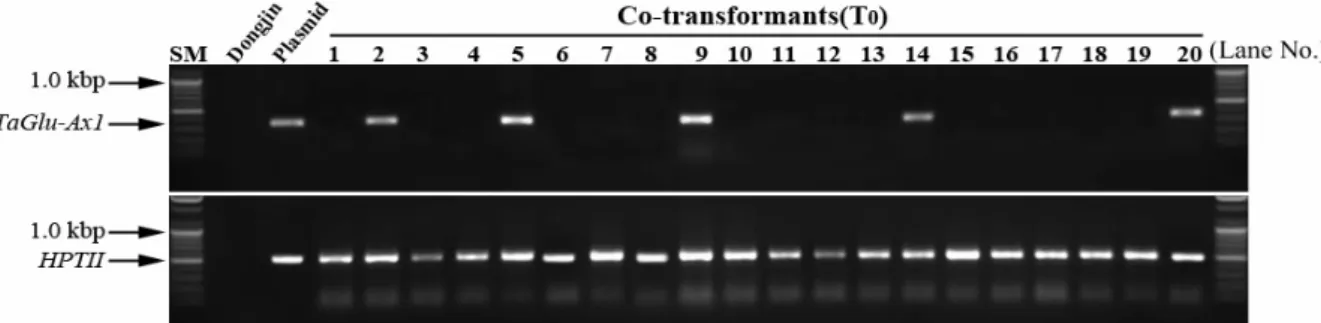
Fig. 2. Identification of T0 plants by gene specific primer sets. TaGlu-Ax1 (upper panel) and HPTII (lower panel) genes were amplified using TaGlu-Ax1 and HPTII specific primer sets, respectively. SM, molecular marker; Dongjin (Korean rice cultivar), non-trans- genic plant; Plasmid, vector construct containing TaGlu-Ax1 and HPTII genes; 1-20, co-transformant transgenic lines, Lane No.; lane number. Only 5 transformants of 210 transfomants were shown in figure. PCR reactions were performed after randomly chosen 20 T0 plants of 210 transformants (upper panel). Genomic DNAs from each plant were used as the template for TaGlu-Ax1 and HPTII specific amplification. The reaction products of the sample plant were analyzed by electrophoresis on a 1.0% agarose gel.
trophotometer (ND-1000, Thermo Fischer Scientific, Wilmin- gton DE, USA). Western blot analysis was performed as de- scribed [22].
Simplified analysis of bread-making quality The bread-making procedure used the straight dough method with 100 g of wheat and rice flours (Goami, Dongjin and TaGlu-Ax1 transgenic rice), 6 g of sugar, 1.5 g of salt, 3 g of dry milk, 6 g of butter, 3 g of yeast and 60 g of fresh water at 30°C, 90% moisture conditions for 60 min first fermentation. After punching, second fermentation and bak- ing were carried out at 30°C for 40 min, and 210°C for 25 min, respectively. Height of baked doughs were measured from bottom to top after baking.
Results
Vector construction and Agrobacterium transfor- mation for marker-free transgenic rice
To improve dough properties of rice flour, we cloned high-molecule weight glutenin subunit gene (TaGlu-Ax1) from genomic DNA of Triticum aestivum cv. Jokyeong by PCR analysis with specific primers. We tried to generate marker-free transgenic plant expressing only TaGlu-Ax1 gene on rice through Agrobacterium-mediated co- trans- formation system. To make a marker-free vector, we first removed the HPTII expression cassette (CaMV 35S pro- moter-HPTII gene- CaMV 35S terminator) by treatment of XhoI and EcoRI restriction enzymes and inserted wheat Glu-Bx7-own promoter. And then TaGlu-Ax1 gene was con- structed under the control of Glu-Bx7-own promoter into
pBTEX vector, which was modified pCAMBIA1300 binary vector (Fig. 1, upper panel). And original pCAMBIA1300 bi- nary vector harboring HPTII gene was used to select hy- gromycin resistant T
0plants (Fig. 1, lower panel). The two expression binary vectors were separately introduced into A. tumefaciens EHA105 strain for plant transformation. Each binary vector was rescued from the EHA105 strain harboring TaGlu-Ax1 and the HPTII, and the HPTII and TaGlu-Ax1 genes were validated by PCR analysis.
Generation of marker-free TaGlu-Ax1 transgenic rice plants
Each EHA105 strain harboring TaGlu-Ax1 expression vec- tor or HPTII expression vector was cultured in YEP medium for plant transformation. The cultured cells were re- suspended to OD
600= 0.1 in AAM medium [14], and each TaGlu-Ax1 and HPTII cell was added at a 3 : 1 ratio. These mixed cells were co-infected into rice calli. The transformed calli were selected with hygromycin because we co-infected calli with the HPTII gene. We obtained 210 independent hy- gromycin-resistant T
0plants through co-infection in the Agrobacterium transformation system.
Genomic DNA from 210 independent T
0plants was ex- tracted and insertion of HPTII and TaGlu-Ax1 genes was ana- lyzed using PCR analysis with gene specific primers. As shown in Fig. 2, HPTII gene in all of T
0plants was amplified, but no PCR products of Dongjin used as negative controls were detected. Next, we investigated the insertion of TaGlu- Ax1 gene into rice genome within T
0plants by PCR analysis.
Among 210 independent transgenic lines, TaGlu-Ax1 gene
in 20 T
0plants was amplified PCR product which is same
Table 1. Co-transformation efficiency calculated during re- generation in rice-transformation experiments
Gene No. of T0 plants
No. of plants containing the
Glu-Ax1
Frequency of co-transformation
(%)
TaGlu-Ax1 210 20 9.52
Fig. 3. Southern hybridization analysis of TaGlu-Ax1 gene from T0 plants. The 1.35 kb fragment of TaGlu-Bx7-own promoter was amplified by PCR us- ing specific primer sets as the probe.
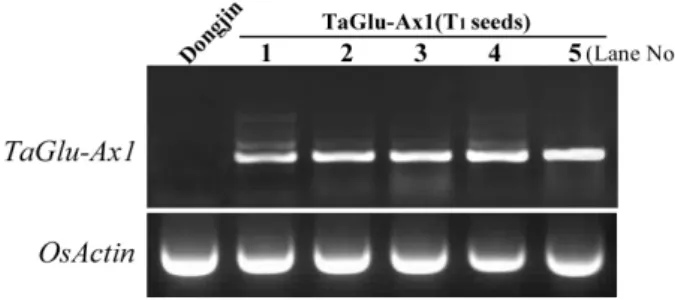
Fig. 4. Transcript analysis of the TaGlu-Ax1 gene from T1 seeds.
RT-PCR was performed with TaGlu-Ax1 T1 seed tran- scripts to measure TaGlu-Ax1 mRNA expression.
Gene-specific PCR primers (forward and reverse pri- mers) were designed to amplify the TaGlu-Ax1 gene.
OsActin was used as a control. RT-PCR reactions were performed after randomly chosen 5 T1 seeds in line 6.
The reaction products of the sample plant were analyzed by electrophoresis in a 1.0% agarose gel. Lane No.; lane number.
PCR product size of plasmid used as positive controls (Fig.
2). This result means that 20 transgenic lines harbored both TaGlu-Ax1 and HPTII genes. And the frequency co-trans- formation was about 9.52% in our experimental system (Table 1). We performed Southern blot analysis with the TaGlu-Bx7-own promoter as probes to validate their in- sertion and guessed segregation ratio of the marker-free plant in T
1plants. One or multi signal bands in 20 selected T
0plants lines were detected (Fig. 3).
Transcript and protein analysis of TaGlu-Ax1 gene in the co-transformed rice plants
Because TaGlu-Ax1 expression in rice endosperm is im- portant for rice flour quality and we used TaGlu-Bx7-own promoter to express TaGlu-Ax1, total RNA from one copy-in- serted T
1generation transgenic seeds was extracted, and TaGlu-Ax1 gene transcript level was examined by semi- quantitative RT-PCR after randomly chosen five T
1seeds in line 6 of transformants. The TaGlu-Ax1 transcripts were suc- cessively expressed in the T
1generation transgenic seeds, whereas TaGlu-Ax1 expression in Dongjin was not detected (Fig. 4). OsActin expression was used as a quantitative control. And we analyzed the protein expression of TaGlu- Ax1 by Western blot with an anti x-type HMW specific antibody. The seven transgenic plants (1, 2, 5, 9, 16, 18 and 20) which were shown abnormal morphologies comparing with Dongjin were removed. After total protein extraction from wheat (‘Jokyeong’ cultivar), Dongjin and transgenic plants (line 6 in fig. 3), 0.5 μg of wheat and 40 μg of total protein extract of transgenic plants were used for SDS-
PAGE. The immunospecificity of the anti-x-type HMW spe- cific antibody was verified by in vivo experiment. Although the protein bands were well detected in transgenic plants, however, the level of protein expression did not depend on their inserted copy number (Fig. 5). Multi- copies of TaGlu- Ax1 gene were inserted into genome in some transgenic plants (16, and 20), no or weak bands were detected. We suppose that this phenomenon is homology-dependent gene silencing in plants [2].
Selection of marker-free plants harboring TaGlu- Ax1 gene in the T
1generation
To select TaGlu-Ax1 marker-free plants harboring only the
TaGlu-Ax1 gene, 100 T
1generation seeds of the transgenic
plant 6 were planted in soil and genomic DNA was extracted
from leaves of plantlets after 4 weeks. Insertion of the TaGlu-
Ax1 and HPTII genes was investigated by PCR analysis. As
shown in Fig. 6, most of the transgenic lines harbored both
the TaGlu-Ax1 and HPTII genes, and some inserted only the
HPTII gene. However, transgenic 3, 4, 8 and 18 lines con-
tained only the TaGlu-Ax1 gene (Fig. 6). This result shows
Fig. 5. Protein expression analysis of TaGlu-Ax1 gene from T1 seeds. Western blotting was performed with an anti x-type HMW specific antibody. Total protein extracts of 0.5 μg of wheat and 40 μg of transgenic plants and ‘Dongjin’ were used for SDS-PAGE. The numbers were indicated tansformants lines.
Fig. 6. PCR analysis of T1 progenies to select marker-free transgenic plant containing TaGlu-Ax1 gene. Dongjin, non-transgenic plant as negative control; 1-23, T1 progeny lines from T0 plants containing both TaGlu-Ax1 and HPTII genes, Lane No.; lane number.
PCR reactions were performed after randomly chosen 23 T1 plants in line 6. The reaction products of the sample plant were analyzed by electrophoresis in a 1.0% agarose gel.
Fig. 7. Analysis of bread-making quality of Jokeong (Korea wheat variety), Goami (Korea rice variety), Dongjin (non-transgenic rice) and marker-free transgenic rice (T2
seeds in line 6). Heights of swollen doughs of Jokyeong and rice flours were measured after baking procedure.
that marker-free plants containing only the TaGlu-Ax1 gene were successfully screened at the T
1generation. Finally, we produced marker-free transgenic rice plants harboring TaGlu-Ax1 gene for advanced quality processing of bread and noodle.
Analysis of bread-making quality in marker-free transgenic rice
In this study, we developed marker-free TaGlu-Ax1 trans- genic rice. The final objective of this study is to develop transgenic rice of increased processing quality than non- transgenic rice. Therefore, we first measured swollen ratio of dough in TaGlu-Ax1 transgenic rice (line 6), with Jokyeong (Korea wheat variety), Dongjin and Goami (Korea rice varie- ty) which used for material of rice noodle after first fermentation. As a result, the marker-free TaGlu-Ax1 trans- genic rice was slightly higher than Goami on swollen ratio of dough, whereas the Dongjin showed same level with the marker-free TaGlu-Ax1 transgenic rice (Fig. 7). This results indicated that only one HMW-GS (TaGlu-Ax1) insufficient for increasing processing quality (especially bread-making quality) of transgenic rice dough. Finally, we think that accu- mulation and combination of more HMW-GSs and LMW- GSs and gliadins of wheat is required for improved process- ing quality of rice dough.
Discussion
Wheat gluten proteins are classified into two broad
groups based on their aggregation and functional properties, including the glutenins, which form polymers stabilized by inter-chain disulfide bonds, and gliadins, which are present as monomers and interact by non-covalent forces [29]. In particular, HMW-GSs are minor components in terms of quantity, but they are key factors during bread making be- cause they are major determinants of gluten elasticity [30]
by promoting the formation of larger glutenin polymers.
In this study, we cloned TaGlu-Ax1, which is one of
HMW-GS genes, and validated the insertion of the TaGlu-
Ax1 gene in T
0plants through PCR analysis with gene specif- ic primers and Southern blot analysis (Fig. 2, Fig. 3). The TaGlu- Bx7-own promoter was introduced for seed specific expression of TaGlu-Ax1 gene.
The transcript and protein of TaGlu-Ax1 in the transgenic plants were stably expressed in T
1generation rice seeds (Fig.
4). This result suggests that the protein processing system was conserved between rice and wheat. However, the level of protein expression did not depend on their inserted copy number (Fig. 5). Genetic engineering of plants sometimes results in transgene silencing after integration into the ge- nome, which may relate to a defense mechanism against for- eign DNA expression [18, 32]. This phenomenon may be re- lated to homology-dependent gene silencing in plants.
Homology-dependent gene silencing has attracted consid- erable interest because it may be detrimental to genetic en- gineering and also because of its usefulness as a tool to study the mechanisms involved in detecting and inactivating exog- enous DNA [18, 20].
Multi- copies of TaGlu-Ax1 gene were inserted into ge- nome in some transgenic plants (5, 9, 19 and 20), no proteins were detected. We suppose that this phenomenon is homol- ogy-dependent gene silencing in plants [2].
The co-transformation frequency in our experimental con- ditions was 9.52% (Table 1). In a previous report, co-trans- formation frequency in rice was about from 2% to 14% [16].
This result indicates that transformation efficiency is de- pendent on rice cultivar and the experimental conditions.
Although the generating of marker-free plants based on the Agrobacterium-mediated co-transformation using two differ- ent expression cassettes was need more time consuming and effort, this method could be efficiently produced marker-free transgenic rice plants. In addition, expression of only the TaGlu-Ax1 gene in rice was no better the processing quality (Fig. 7). However, co-expression of TaGlu-Ax1 and PINA in durum wheat is increased dough strength and resistance to extension than lines expressing TaGlu-Ax1 or Pina [19].
Accumulation and combination of more HMW-GSs and LMW-GSs, gliadins and other genes of wheat is required for improved processing quality of rice dough.
As a result, the marker-free TaGlu-Ax1 transgenic rice de- veloped in this study is valuable to be utilized in breeding programs as a good material for improved processing quality.
Finally, we obtained marker-free transgenic plants con- taining only TaGlu-Ax1 gene from each of the T
1plants (Fig.
6). This marker-free transgenic plant harboring TaGlu-Ax1 will become useful material to optimize transgenic rice plants, which has advanced quality processing of bread and noodle by crossing with genetically engineered rice plants with other gluten genes. In other words, our results should be seen as a process for improving the processing quality.
Acknowledgments
This work was supported by a grant from the Crop Foundation Division, NICS, RDA (No. PJ 01155201), Republic of Korea. We would like to thanks sincerely to Dr.
Paul Scott's assistance of USDA-ARS for offering anti-x-type HMW specific antibody.
References
1. Altpeter, F., Vasil, V., Srivastava, V. and Vasil, I. K. 1996.
Integration and expression of the high-molecular-weight glutenin subunit 1Ax1 gene into wheat. Nat. Biotechnol. 14, 1155-1159.
2. Alvarez, M. L., Guelman, S., Halford, N. G., Lusting, S., Reggiardo, M. I., Ryabushkina, N., Shewry, P., Stein, J. and Vallejos, R. H. 2000. Silencing of HMW glutenins in trans- genic wheat expressing extra HMW subunits. Theor. Appl.
Genet. 100, 319-327.
3. An, G., Evert, P. R., Mitra, A. and Ha, S. B. 1988. Binary vectors. pp. A3/1-19 In: Gelvin, S.B. and. Schilperoort, R.A.
(eds.), Plant molecular biology manual. Kluwer Academic Publishers, Boston, MA.
4. Araki, E., Ikeda, M. T., Ohgihara, Y., Toyoda, A. and Yano, H. 2008. Development of transgenic rice (Oryza sativa L.) expressing wheat high- and low-molecular-weight glutenin subunit proteins. Breed. Sci. 58, 121-128.
5. Barro, F., Rooke, L., Bekes, F., Gras, P., Tatham, A. S., Fido, R., Lazzeri, P. A., Shewry, P. R. and Barcelo, P. 1997.
Transformation of wheat with high-molecular-weight sub- unit genes results in improved functional properties. Nat.
Biotechnol. 15, 1295-1299.
6. Blechl, A. E. and Anderson, O. D. 1996. Expression of a nov- el highmolecular-weight glutenin gene in transgenic wheat.
Nat. Biotechnol. 14, 875–879.
7. Chen, H., Nelson, R. S. and Sherwood, J. L. 1994. Enhanced recovery of transformants of Agrobacterium tumefaciens after freeze-thaw transformation and drug selection. Biotechni- ques 16, 664-669.
8. Cho, J. I., Ryoo, N., Ko, S., Lee, S. K., Lee, J., Jung, K. H., Lee, Y. H., Bhoo, S. H., Winderickx, J., An, G., Hahn, T.
R. and Jeon, J. S. 2006. Structure, expression, and functional analysis of the hexokinase gene family in rice (Oryza sativa L.). Planta 224, 598-611.
9. Chu, C. C., Wang, C. S., Sun, C. S., Hsu, C., Yin, K. C., Chu, C. Y. and Yun., B. F. 1975. Establishment of an efficient me-
dium for anther culture of rice through comparative experi- ments on the nitrogen sources. Sci. China. Math. 18, 659-668.
10. Ebuehi, O. A. T. and Oyewole, A. C. 2008. Effect of cooking and soaking on physical, nutrient composition and sensory evaluation of indigenous and foreign rice varieties in Nigeria. Nutr. Food Sci. 38, 15-21.
11. Galili, G. 1989. Heterologous expression of a wheat high- molecular-weight glutenin gene in Escherichia coli. Proc. Natl.
Acad. Sci. USA 86, 7756-7760.
12. Gujral, H. S. and Rosell, C. M. 2004. Improvement of the bread making quality of rice flour by glucose oxidase. Food Res. Int. 37, 75-81.
13. He, G. Y., Rooke, L., Steele, S., Bekes, F., Gras, P., Tatham, A. S., Fido, R., Barcelo, P., Shewry, P. R. and Lazzeri, P.
A. 1999. Transformation of pasta wheat (Triticum turgidum L. var. durum) with high-molecular-weight glutenin subunit genes and modification of dough functionality. Mol. Breed.
5, 377-386.
14. Hiei, Y., Ohta, S., Komari, T. and Kumashiro, T. 1994.
Efficient transformation of rice (Oryza sativa L.) mediated by agrobacterium and sequence analysis of the boundaries of the T-DNA. Plant J. 6, 271-282.
15. Hohn, B., Levy, A. A. and Puchta, H. 2001. Elimination of selection markers from transgenic plants. Curr. Opin. Bio- technol. 12, 139-143.
16. Komari, T., Hiei, Y., Saito, Y., Murai, N. and Kumashiro, T. 1996. Vectors carrying two separate T-DNAs for co-trans- formation of higher plants mediated by Agrobacterium tu- mefaciens and segregation of transformants free from se- lection markers. Plant J. 10, 165-174.
17. Kuiper, H. A., Kleter, G. A., Noteborn, H. P. and Kok, E.
J. 2001. Assessment of the food safety issues related to genet- ically modified foods. Plant J. 27, 503-528.
18. Kumpatla, S. P., Chandrasekharan, M. B., Iyer, L. M., Li, G. and Hall, T. C. 1998. Genome intruder scanning and modulation systems and transgene silencing. Trends Plant Sci. 3, 97-104.
19. Li, Y., Wang, Q., Li, X., Xiao, X., Sun, F., Wang, C., Hu, W., Feng, Z., Chang, J., Chen, M., Wang, Y., Li, K., Yang, G. and He, G. 2012. Coexpression of the high molecular weight glutenin subunit 1Ax1 and puroindoline improves dough mixing properties in durum wheat (Triticum turgid- um L. ssp. Durum). Plos One 7, e50057.
20. Matzke, M. A., Matzke, J. M. and Eggleston, W. B. 1996.
Paramutation and transgene silencing: a common response to invasive DNA? Trends Plant Sci. 1, 382-388.
21. McElroy, D., Zhang, W., Cao, J. and Wu, R. 1990. Isolation of an efficient actin promoter for use in rice transformation.
Plant Cell 2, 163-171.
22. Park, S. K., Jung, Y. J., Lee, J. R., Lee, Y. M., Jang, H. H., Lee, S. S., Park, J. H., Kim, S. Y., Moon, J. C., Lee, S. Y., Chae, H. B., Shin, M. R., Jung, J. H., Kim, M. K., Kim, Y.
Y., Yun, D. J., Lee, G. O. and Lee, S. Y. 2009. Heat-shock
and redox-dependent functional switching of an h-type ara- bidopsis thioredoxin from a disulfide reductase to a molec- ular chaperone. Plant Physiol. 150, 552-561.
23. Payne, P. I., Corfield, K. G., Holt, L. M. and Blackman, J.
A. 1981. Correlations between the inheritance of certain high-molecular-weight subunits of glutenin and breadmak- ing quality in progenies of six crosses of bread wheat. J.
Sci. Food Agric. 32, 51-60.
24. Payne, P. I., Nightingale, M. A., Krattiger, A. F. and Holt, L. M. 1987. The relationship between HMW glutenin sub- unit composition and the bread-making quality of British- grown wheat varieties. J. Sci. Food Agric. 40, 51-65.
25. Roberts, L. S., Thompson, R. D. and Flavell, R. B. 1989.
Tissue-specific expression of a wheat high-molecular-weight glutenin gene in transgenic tobacco. Plant Cell 1, 569-578.
26. Rooke, L., Barro, F., Tatham, A. S., Fido, R., Steele, S., Bekes, F., Gras, P., Martin, A., Lazzeri, P. A., Shewry, P. R. and Barcelo, P. 1999. Altered functional properties of tritordeum by transformation with HMW glutenin subunit genes. Theor.
Appl. Genet. 99, 851-858.
27. Ramessar, K., Peremarti, A., Gómez-Galera, S., Naqvi, S., Moralejo, M., Muñoz, P., Capell, T. and Christou, P. 2007.
Biosafety and risk assessment framework for selectable marker genes in transgenic crop plants: a case of the science not supporting the politics. Transgenic Res. 16, 261-280.
28. Shewry, P. R., Halford, N. G. and Tatham, A. S. 1989. The high-molecularweight subunits of wheat, barley and rye: ge- netics, molecular biology, chemistry and role in wheat glu- ten structure and functionality. Oxford Surveys Plant Mol.
Cell Bio. l6, 163-219.
29. Shewry, P. R., Tatham, A. S., Fido, R., Jones, H., Barcelo, P. and Lazzeri, P. A. 2001 Improving the end use properties of wheat by manipulating the grain protein composition.
Euphytica 119, 45-48.
30. Tatham, A. S. and Shewry, P. R. 1985. The conformation of wheat gluten proteins. The secondary structures and ther- mal stabilities of alpha-, beta-, gamma- and omega- gliadins.
J. Cereal Sci. 3, 103-113.
31. Thompson, B. G., Anderson, R. and Murray, R. G. 1980.
Unusual polar lipids of Micrococcus radiodurans strain Sark. Can. J. Microbiol. 26, 1408-1411.
32. Vaucheret, H., Béclin, C., Elmayan, T., Feuerbach, F., Godon, C., Morel, J-B., Mourrain, P., Palauqui, J-C. and Vernhettes, S. 1998. Transgene-induced gene silencing in plants. Plant J. 16, 651-659.
33. Volkov, R. A., Panchuk, I. I. and SchoZ, F. 2003. Heat- stress-dependency and developmental modulation of gene expression: the potential of house-keeping genes as internal standards in mRNA expression profiling using real-time RT-PCR. J. Exp. Bot. 54, 2343-2349.
34. Zhiwu, Li. and Harold, N. T. 2005. Rapid method for high-quality RNA isolation from seed endosperm contain- ing high levels of starch. Biotechniques 38, 872-876.
초록:벼에서 밀 고분자 글루테닌 단백질( TaGlu-Ax1 ) 발현을 통하여 쌀가루 가공적성 증진을 위한 마 커프리(marker-free) 형질전환 벼의 개발
정남희
1†․전승호
2†․김둘이
1․이춘석
1․옥현충
1․박기도
1․홍하철
1․이승식
3․문중경
4․박수권
1*
(1국립식량과학원 작물기초기반과, 2경남과학기술대학교 농학한약자원학과, 3한국원자력원구원 첨단방사선 연구
소, 4국립농업과학원 기획조정과)