• 검색 결과가 없습니다.

A Study on the Mixing method and Mixing Temperature of Positive Paste to Improve the Capacity of the Lead-Acid Batteries

N/A
N/A
Protected

Academic year: 2021

Share "A Study on the Mixing method and Mixing Temperature of Positive Paste to Improve the Capacity of the Lead-Acid Batteries"

Copied!
7
0
0

로드 중.... (전체 텍스트 보기)

전체 글

(1)

http://dx.doi.org/10.12925/jkocs.2016.33.3.568

A Study on the Mixing method and Mixing Temperature of Positive Paste to Improve the Capacity of the Lead-Acid

Batteries

Soon-Wook Jeong

School of Materials and Science and Engineering, Kumoh National Institute of Technology, Gumi, Gyeongbuk, 39177, South Korea

(Received July 5, 2016; Revised August 8, 2016; Accepted September 29, 2016)

Abstract : In this study, the mixing method of positive paste and mixing temperature to improve the capacity of the lead-acid batteries has been investigated. The results show that the initial current capacity of lead acid battery depend on the mixing temperature and mixing method of positive paste. In the results of the capacity cycle repetition tests for estimating the life cycle, the 3BS showed the PCL. but the fine 4BS represented certain improved cycles compared to that of the coarse 4BS. It was considered that the fine 4BS showed higher bond strength between active materials than the coarse 4BS and represented large contact areas and that lead to prevent possible sulfation due to the suppression of insulating layers.

Keywords : lead-acid battery, current capacity, positive paste, PCL, 4BS,

1. Introduction

Several studies on the production method of pastes, which form 4BS (4PbO•PbSO4) active materials, have been conducted in order to prevent the pre-mature capacity loss(PCL) of lead acid batteries[1-3]. The existing production process for forming the 4BS applies a curing process at high temperature more than 80℃ after completing the paste mixing at low temperature. This curing process produces lead sulfate (PbSO

4

) that is mutually bonded as a large scale through the reaction between small particle masses, such as PbO and Pb,



Corresponding author

(E-mail: [email protected])

and H

2

SO

4

, H

2

O, and O

2

and changes the shape, scale, and chemical component of the active materials sprayed on plates.

In the case of the tri-basic lead sulfate (3BS: 3PbO•PbSO

4

) in which the curing was applied at low temperature less than 50℃, it showed fine particles (about 5~10㎛) and represented excellent charge efficiency and initial performance.

However, it reduces the performance and life

cycle of batteries due to the pre-mature

capacity loss (PCL) caused by the lowering of

the bond strength between grids and active

materials [4]. Thus, the curing process is

applied at relatively high temperature more

than 80℃ and high humidity in recent years

for changing the component of active materials

from such 3BS to tetra-basic lead sulfate

(2)

(4BS: 4PbO•PbSO

4

), which shows a hexahedron shape [5-8]. The 4BS active materials cured at high temperature increase the bond strength with grids and improve the interfacial conductivity, and they will not present the pre-mature capacity loss (PCL) as shown in some reports. However, there are some problems in lacks of charge capacity, long charge time, unevenness of specific gravity between unit cells caused by the lowering of charge efficiency, and lowering of the initial performance according to the decrease in the initial charge efficiency caused by the coarse grain of active materials (50~100㎛). To solve the problem of the initial charge, studies on the addition of red lead, multi-step charge, size and amount of 4BS grains have been conducted [9-12].

Thus, this study attempts to verify the factors that affect the charge efficiency by investigating the influences of the size and amount of 4BS grains on the initial performance and pre-mature capacity loss (PCL) of batteries after completing a charge process. In addition, the conventional 4BS formation method that has been generally used by applying a curing process at high temperature after completing a paste mixing process increases facilities, time, and costs according to the change in temperature and humidity in the curing process and progress of a long period of curing time. Thus, this study was performed to investigate the factors that affect the curing of 4BS pastes and PCL of lead acid batteries by generating the 4BS using the paste mixing at high temperature.

2. Experiments

2.1. Fabrication of alloys and grids

The alloys for grids used in this study were fabricated by adding Ca and Sn to Pb, which is known as excellent high temperature corrosion resistance and durability[13-14].

First, the Pb was melted at 500±30℃ in order

to analyze the components of such melted lead. Then, its shortage components were added to a melting furnace using mater alloys.

The mixture was stirred for 30 minutes and stabilized for an hour in order to obtain alloys with required components.

2.2. Fabrication of lead-oxide

The lead-oxide, the major component of active materials in which the component of Pb included by more than 99.97%, was grinded to maintain a proper particle size in order to produce PbO more than 74% by promoting oxidation reactions in a high temperature furnace [15-16].

2.3. Paste mixing and pasting

Red lead was added to the lead-oxide produced by the mentioned method in order to produce pastes in which sulphuric acid and compounding agent for the positive and negative plates were mixed as a proper level.

In the paste applied to the positive plates, the temperature of sulphuric acid and purified water increased to perform a mixing process by maintaining the paste temperature of one sample more than 90℃, and the temperature of another sample was controlled by less than 60℃ using a cooling system[17-19].

2.4. Capacity test of batteries

After completing the charge of the batteries

assembled using sample plates, the

temperatures of these batteries were maintained

by 25℃ for an hour and the discharge

capacities were measured as the voltage was

approached to 1.75V with 25A. Also, after

applying the first measurement of discharge

capacities for each sample, the discharge

capacities were repeatedly measured by

charging it for nine hours with 10A (130% of

the theoretical capacity). Then, samples were

let for two hours after charging it to 150% of

the capacity. The decrease rates of the

capacity for each sample were measured

through applying 20 repetitive cycles in which

(3)

(a) (b)

Fig. 1. SEM images of 3BS and 4BS particles in the paste after mixing it at (a) 60℃(3BS) and (b) 90℃(4BS).

Phase Pb α-PbO β-PbO Pb

3

O

4

3BS 4BS PbSO

4

at 60℃ before mixing 20.6 65.2 4.2 10 - - -

after mixing 3.6 14.8 1.1 9.4 44.1 12.8 2.8

at 90℃ before mixing 20.6 65.2 4.2 10 - - -

after mixing 3.3 14.8 0.3 3.8 6.8 63.9 1.6

Table 1. Quantitative analysis of lead pastes before and after mixing. (Unit: %) a cycle was determined as a discharge level of

1.75V with 25A.

3. Results and discussion

3.1. Shapes and components of the active materials after the paste mixing

Fig. 1 (a) and (b) show 5.00K SEM images for the pastes mixed at 60℃ and 90℃, respectively, in order to investigate the changes in active materials after completing the mixing.

As shown in these images, the active materials mixed at 60℃ demonstrated the growth of grains with the width and length of 1~2㎛

and 2~5㎛ of 3BS, respectively, in which 0.3~1.5㎛ of the lead oxides were reacted with sulphuric acid. In addition, the active materials mixed at 90℃ showed the grains generated by the length of 10~20 ㎛ of 4BS[20].

Table 1 shows the results of the XRD analysis to examine the component of active materials after completing the mixing. The major components of the active materials

mixed at 60℃ and 90℃ were the 3BS and 4BS, respectively, in which the rate of the 4BS was about 63.9%. The 4BS generated by this process showed a very small level of about 1/5 of the conventional 4BS, 50~100㎛, that were typically generated through a curing process. It can be estimated that the active materials were generated as small sizes due to the disturbance of the growth of grains from the mixing and grinding of the mixing process of the paste even though the nucleus of the 4BS was to be formed at high temperature more than 90℃ and the grains of the 4BS should be continuously grown under the condition, which maintained the high temperature.

3.2. Shapes of the positive active

materials after the curing process

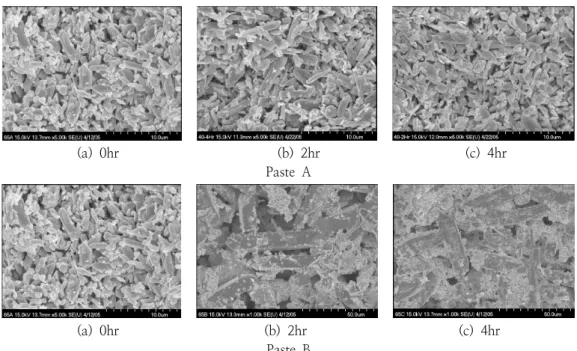
Fig. 2 shows SEM images of the shape and

condition of active materials according to the

curing condition and the time for the positive

active materials mixed at 60℃. In the case of

the paste A, the grains showed no growth in

its sizes even though the curing was applied at

(4)

(a) 0hr (b) 2hr (c) 4hr Paste A

(a) 0hr (b) 2hr (c) 4hr Paste B

Fig. 2. SEM images of the positive active materials during different curing processes in the paste mixing at 60℃: paste A (40℃ curing), paste B (90℃ curing).

a low temperature condition of 45℃, and represented the generation of fine 3BS with 3~5㎛. Also, there were no changes in its sizes according to the progress of a curing process because the generation of the 3BS was already completed.

In the case of the paste B cured at a high temperature condition of 90℃, it generated fine 3BS in the initial stage and was changed to 4BS grains by growing it up to 50~100㎛

after two hours from the curing process. In addition, the number of 4BS grains increased according to the progress of curing time.

Fig. 3 illustrates SEM images of the shape and the condition of the paste C according to the passage of time in which the positive active materials were mixed at 90℃ and also cured at 90℃. Although the 4BS with 10~20

㎛ generated after the mixing process showed no significant changes in its size according to the progress of the curing and the number of grains increased according to the passage of the curing time.

The 3BS and 4BS were the major components that were cured at low and high temperatures, respectively. In addition, in the case of the active materials mixed at 60℃ for generating the 3BS at the initial stage, it generated 4BS with a large scale of 50~100㎛

due to the curing process performed at high

temperature (paste B). However, the active

materials mixed at 90℃ represented no

significant changes in the sizes of 4BS, which

were generated after completing the mixing

process even though the number of grains

increased due to the curing performed at high

temperature (paste C). It can be considered

that the 4BS generated after completing the

mixing process showed no additional growth

due to the completion of the growth, and the

newly generated 4BS showed small sizes

because the newly generated 4BS, which

showed a stable state, disturbed the growth.

(5)

(a) 0hr (b) 2hr (c) 4hr Paste C

Fig. 3. SEM images of the positive active materials (mixing: 90℃) duricuring process;

Paste C(90℃ curing).

3.3. Performance of batteries for the mixing and curing conditions

Fig. 4 illustrates the results of the reservation capacity (RC) repetition tests for the plates fabricated according to the mixing and curing conditions in order to verify the durability and life cycle of the plates, which were charged with the same capacities. In the case of the paste in the initial stage, it showed the highest capacity due to the generation of 3BS, but it represented a pre-mature capacity loss in the early stage due to the significant decrease in its width according to the progress of its cycle.

In the case of the paste B formed coarse 4BS, it showed low capacities in the initial stage, but the decrease in its capacities represented an easy way compared to that of the paste A according to the repetitive cycle.

In the case of the Paste C, it showed excellent initial capacities due to the generation of fine 4BS and the lowest decrease in its capacities as the cycles were repeated.

In the case of fine 4BS, it was estimated that the reason that showed no decreases in the initial capacity for the cycle repetition was due to the increase in the bond strength between active materials by the small network structure of the 4BS and that increased the contact area between active materials to suppress the generation of insulation layers due to the small grain size of the 4BS.

Fig. 4. Life cycle depending on mixing-Curing conditions.

4. Conclusions

In the mixing process applied at low temperature (60℃), 3~5㎛ of 3BS were produced and 10~20㎛ of 4BS grains were formed at high temperature (90℃). It was considered that the growth of paste grains suppressed a certain unidirectional growth of grains due to the mixing and grinding applied by the mixing process. Then, it disturbed the growth of final grains and that formed 4BS grains, which showed some advantages in the performance of lead acid batteries.

In the results of the capacity cycle repetition

tests for estimating the life cycle, the 3BS

(paste A) showed the PCL, but the fine 4BS

(paste C) represented certain improved cycles

compared to that of the coarse 4BS (paste B).

(6)

It was considered that the fine 4BS showed higher bond strength between active materials than the coarse 4BS and represented large contact areas and that lead to prevent possible sulfation due to the suppression of insulating layers. In the results of the experiments applied in this study, it was possible to reduce the curing time in which the fine 4BS was formed by the mixing of the positive active materials of lead acid batteries applied at high temperature compared to that of the existing coarse 4BS and that represented some improvements in the life cycle performance.

Acknowledgement

This paper was supported by Kumoh National Institute of Technology

References

1. D. Pavlov, M. Dimitrov, T. Rogachev, L.

Bogdanova, Lead/Acid Battery Positive Plates Manufactured from 4PbO.PbSO

4

Pastes Prepared from Lead oxide and RED lead, J. power sources , 31, 189(1990).

2. D. Pavlov, M. Dimitrov, T. Rogachev, L.

Bogdanova, Influence of paste Composition and Curing Program and Used for the Production of Positive Plates with PbCaSn Grids on the Performance of Lead Acid Batteries, J. power sources , 114, 137(2003).

3. Chih-Hsien Yu, Hao-Yuan Tseng, Development of an Automatic Idling Stop and Go Control Apparatus for an EFI Scooter, Journal of Circuits, Systems, and Computers , 23(4), 28(2014).

4. M. Matrakova and D. Pavlov, Thermal Analysis of Lead-Acid Battery Pastes and Active Materials, J. of power sources , 158, 1004(2006)

5. R. Wagner, Failure modes of valve regulated lead/acid batteries in different

applications, 4th European lead battery conference , 153(1995).

6. S. Laruelle, Grugeon-Dewaele, L. Torcheux , A.Delahaye-Vidal, The Curing Reaction Study of the Active Material in the Lead Acid Battery, J. Power Sources , 77, 83(1999).

7. S.W. Jeong et.al., Effects of Curing &

Formation Conditions on the Capacity of Positive Plate for Automotive Vehicles VRLA Batteries, J. of Korean Oil Chemists' Soc ., 33(1), 83(2016)

8. S.W. Jeong et.al., A Study on the AGM Lead Acid Battery for Automotive Vehicles, J. of Korean Oil Chemists' Soc ., 32(2), 181(2015)

9. J. Wang, S. Zhong, H.K. Liu, S.X.Dou, In fluence of Charge Mode on the Capacity and Cycle Life of Lead-acid Battery Negative Plates, J. Power Sources , 113, 355(2003).

10. C.H. Yu, H.Y. Tseng, Development of an Automatic Idling Stop and Go Control Apparatusbfor an EFI Scooter, Journal of Citcuits, System and Computers , 23(4), 28(2014)

11. S.W. Jeong et.al., Effects of 4BS Crystal Size on the Positive Plate Behavior in Lead Acid Battery, J. of Korean Oil Chemists' Soc ., 26(3), 335(2009)

12. S.W. Jeong et.al., A Study on the Plate for Deep discharge in Lead Acid Battery, J. of Korean Oil Chemists' Soc ., 31(2), 197(2014)

13. J.S. Chen, L.F. Wang, Effects of Curing on Positive-Plate Behaviour in Electric Scotter Lead/Acid Cells, J. Power Sources , 70, 269 (1998).

14. M. J. Weighall, Techniques for Jar Formation of Valve-Regulated lead-Acid Batteries, J. Power Sources , 116, 219(2003).

15. J. E. Dix, A, A Comparison of Barton-pot and Ball-Mill Processes for Making Lead Oxide, J. Power Sources , 19, 157(1987).

16. S.W. Jeong et.al., A Study on the Effects

(7)

of Semi-Gel Electrolyte in Electricity Storage Battery, J. of Korean Oil Chemists' Soc. , 29(2), 193(2012).

17. B. Drenchev, M. Dimitrov, V. Boev, Absorptive glass mat separator surface modification and its influence on the heat generation in valve-regulated lead-acid battery, J. Power Sources , 280, 66(2015).

18. Hammouche Abderrezak, Thele Marc and Sauer Dirk Uwa, Analysis of gassing processes in a VRLA/spiral wound battery, J. Power Sources , 158, 987(2009).

19. A. Kirchev, D. Pavlov, B. Monahov, Gas-diffusion approach to oxygen recombination in lead-acid battery, J.

Power Sources , 113, 245(2003).

20. Ku Bon-Keun, Jeong Soon-Wook, Effects

of Curing Conditions on the Chemical

Compositions of Positive Plate of Lead

Acid Battery Plates, J. of Korean Oil

Chemists' Soc. , 23(4), 347(2006)

수치

Table  1.  Quantitative  analysis  of  lead  pastes  before  and  after  mixing.  (Unit:  %)a  cycle  was  determined  as  a  discharge  level  of
Fig.  2.  SEM  images  of  the  positive  active  materials  during  different  curing  processes  in  the  paste  mixing  at  60℃:  paste  A  (40℃  curing),  paste  B  (90℃  curing).
Fig.  4.  Life  cycle  depending  on  mixing-Curing  conditions.

참조

관련 문서