• 검색 결과가 없습니다.

The UNESCO Action Plan and 2030 Agenda of Sustainable Development Goals for Climate Change

N/A
N/A
Protected

Academic year: 2021

Share "The UNESCO Action Plan and 2030 Agenda of Sustainable Development Goals for Climate Change"

Copied!
6
0
0

로드 중.... (전체 텍스트 보기)

전체 글

(1)

To whom corresponding should be addressed.

Tel : +82-42-868-3578 E-mail: [email protected]

Development Goals for Climate Change

Thenepalli Thriveni

1

, Chilakala Ramakrishna

2

, Lulit Habte

3

, Ahn Ji Whan

4†

1&2

Hanil Cement, 302 Maepo-gil, Maepo-eup, Danyang-gun, Chungcheongbuk-do, 395-903, Korea.

3

University of Science and Technology, Daejeon, Korea.

4
Mineral Resources Research Division, Korea Institute of Geosciences and Mineral Resources (KIGAM), 124, Gwahak-ro, Yuseong gu, Daejeon-305350, South Korea.

(Received 25 May 2018, Revised 12 June 2018, Accepted 13 June 2018) Abstract

UNESCO is an international specialized agency based on the United Nations (UN) located in the Paris.

The United Nations Educational, Scientific and Cultural Organization abbreviated as UNESCO. The mission and goal of UNESCO are to maintain the peace and security throughout the globe by encouraging international collaborations through educational, scientific, and cultural heritage in order to increase respect for principals of justice, international rules of law, and international human rights. Recently, the UNESCO published a new set of 17 goals for the nation’s sustainable society. The Organization ensures to actively participate in UN activities to improve harmony and planning within the United Nations system. The 2030 agenda is primarily about shifting the world on to a sustainable and most in-depth. Currently, UNESCO launched broad goals and objectives for the international community including the Millennium Development Goals (MDGs). Among these sustainable goals, climate change, water security is more significant. In this paper, we briefly reviewed the seventeen goals by UNESCO.

Key words : UNESCO, global, sustainable goals, climate change.

1. Introduction:

Climate change is a significant change in weather patterns. It has brought many environmental risks to human health, such as infectious diseases, damage of biodiversity, increased stress on food-producing sys- tems, ozone layer reduction. The emission of methane from the oil and gas sector, from coal mines and farms, and municipal solid waste directly contribute to the global climate change. To achieve environ- mentally sound environment and minimize adverse impacts on human health and the environment, sus- tainable management of resources is essential

1

.

The United Nations Development Programme

(UNDP) has been one of the leading organizations working to achieve the MDGS. The 2030 agenda with a set of 17 integrated and individual sustainable development goals and targets to sustainable society.

The major environmnetal threats are i. poverty, ii.climate change, iii.ocean acidity, and iv. water stress.

There are 17 sustainable development goals to tackle the climate change which is a global issue.

The goals are constituted to safeguard social, eco-

nomic and environmental sustainability. Responsible

consumption and production is one of the 17 sustai-

nable development goals which is labelled as num-

ber 12. The goal centralized on accomplish econo-

mic improvement and sustainable enlargement that

requires urgent reduction of the ecofriendly footprint

by changing the way of generation and consumption

(2)

Fig. 2. A more detailed and ongoing chronology of Article 6 is provided by the UNFCCC at (Adopted from the ref.2).

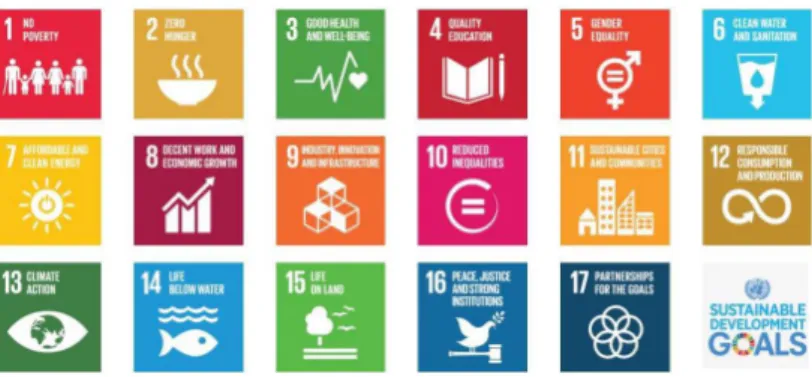
Figure 1. UN-Sustainable development goals (adopted from ref.1)

of products and resources. To achieve this goal, there are two basic important targets; the efficient management of natural resources and way of dis- posal of toxic waste and pollutants. Here is the brief image of UNESCO 17 sustainable goals

1

published by UNESCO (Figure 1).

Municipal solid waste measures, including separa- tion and treatment of biodegradable waste, can also support the targets through prevention, reduction, recycling and reuse. Supporting industries, busi- nesses and end customers to recycle and reduce waste is identically important, as is promoting developing countries to shift towards more susta- inable markings of consumption by 2030. Among those, the most serious problem is water shortage and water pollution.

1.1. UNFCC Time line

The solutions to the adverse effects of climate change are also the roadway to a safer, cleaner, healthier, and wealthier future for all. However, for the bright future of peoples in all countries, all countries governments, private organizations, societies,

and enterprisers required to understand the problems and be involved. All national governments around the world recognizing this, and agreed to enhance their efforts to educate, licensed and secure all collaborators and major groups to find and imple- ment permanent solutions for climate change

2

(Fig.2).

2. Detailed Information of 17 Sustainable Goals

A new 17 sustainable development goals (SDS),

sets forward a bold new framework for growth

collaboration over the next 15 years by the United

Nations 2030 scheme. This is very significant of

UNESCO’s universal endorsement to participate to

the construction of peace, the wipeout of poverty,

sustainable development and multicultural dialogue

through education, communication, information, cul-

ture, and the sciences. The sustainable development

goals served as the most comprehensive, industrious

and compendious agenda ever seen, to leave no one

behind. This is an ideal shift that desires us all to

act in new ways

3

.

(3)

and coastal resources; science, technology and inno- vation; access to ICTs and the media; protection and promotion, of multicultural and of the divergence of cultural feelings. Use science technology innovation (STI) to improve food and water resources

4

.

2.2. Good Health and Well Being, Quality Education

Protect healthy lives and sponsor welfare for all at all ages. Research and training in natural calamity, water quality, climate change, and life sciences. En- sure comprehensive and genius education for all and sponsor permanent learning. Science, technology, engineering and mathematics education (STEM); and education for sustainable development (ESD) as part of quality education

5

.

2.3. Global Priority, Clean Water and Sanitation Obtain gender equal opportunity and privilege women and girls. Support girls’ and women’s edu- cation, the attendance and endorsement of women in the media, science, and culture and cope up acu- teness against women in all its forms. Make secure access to water and sanitation for all in all the nations. Secure water sources through water resear- ch, capacity building, education, water reserves mana- gement, support for an idea and global monitoring

6

. 2.4. Affordable Clean Energy, Decent Work and

Economic Growth

Make sure access to inexpensive, honorable, susta- inable and concurrent energy for all. Better access to clean energy through comprehensive science techno- logy and innovation (STI) systems. Publicize broad and sustainable economic growth, occupation and respectable work for all. Make more powerful ins- titutional and human dimensions in science, tech- nology and innovation to encourage appropriate

Construct a flexible foundation, advance sustai- nable automation and promote, support comprehen- sive Science, Technology and Innovation (STI) sys- tems and build up the capacity of member states to oversees and critically evaluate STI for sustainable development. Wipe out prejudice within and among all the countries. Confined the STI gap between advanced and developing countries to enhance that all countries fully profit from scientific and tech- nological growth and novelty.

2.6. Sustainable Cities and Communities, Re- sponsible Consumption and Production Make sure all cities comprehensive, protected, flexible and sustainable. Construct a sustainable cities that are water sources, conserve environment and are flexible to climate change and natural calamity.

Comprehensive sustainable devouring and manufac- turing designs. UNESCO-designated biosphere resour- ces and UNESCO global geoparks are watchtowers of accountable consumption and production.

2.7. Climate Action, Life below water

There are few issues required take urgent action to combat climate change and its impacts. Enhances flexibility to climate change and natural calamities, by assuming scientific materials and climate infor- mation services. Protect and sustainably use the seas, oceans and coastal reserves. IOC manage capacity development and transfer of coastal technology;

Supply normalizing support and science-based policy advices on all claiming’s of ocean sustainability: aci- dification, coastal livelihoods, fisheries, and pol- lution

7

.

2.8. Life on Land, Peace, Justice and Strong Institutions

Sustainably control forests, encounter desertifica-

(4)

tion, interruption and converse land degradation, interruption biodiversity loss. UNESCO-nominated biosphere resources and UNESCO worldwide geo- parks as education sites for biodiversity and sustai- nable management of natural resources. Encourage fairness, harmonious and comprehensive societies.

Encourage international scientific collaboration and peacebuilding, containing through the executive of transient water resources and transboundary bios- phere stockpiles and UNESCO worldwide geoparks.

2.9. Partnerships for the Goals

Modernize the global cooperation for sustainable development. Stimulate approach to science, techno- logy, and innovation (STI), supports direct capacity building, powerful multistakeholder collaborations and provide data monitoring and summarizing. Each object/goal is significant in itself and they are all connected.

3. Urgent Actions Required by United Nations

3.1. Zero Poverty

Over 800 million people neighboring the world still live on less than $1.25 a day. Now it’s time to construct on what we learned and eradicate poverty collectively.

3.2. Climate Change

Every nation in the world is watching the extreme effects of climate change. The collision of global warming is getting worse. The sustainable develop- ment goals (SDG) expend a roadmap for countries to work collectively to meet this urgent and critical challenge.

3.3. Clean water and ‘Sanitation

Water shortage influences more than 40% of people around the world, and that number is forecast to go even higher as a result of climate change.

Greater international collaboration, safeguard wet-

lands and rivers, distributing water treatment tech- nologies and more that leads to succeed this goal.

3.4. Ocean Acidity

Ocean consumes about 30 % of the carbon dio- xide that humans generates; but we are generating more carbon dioxide than ever before, and that makes the oceans more acidic 26% over, since the start of the industrial drastic transforms.

4. Financial and technical resources to facilitate National ACE Strategy develop- ment and actions

4.1. LIFE Programme for Environment and Climate Action (European Union)

Regulation EU/1293/2013 of the European Parlia- ment and of the Council of 11 December 2013 on the inauguration of a Programme for the Environ- ment and Climate Action (LIFE). This LIFE program- me is the European Union’s (EU) financing device for the environment and climate action. The con- ventional goal of LIFE programme is to subscribe to the exercise, renovate and development of European Union’s (EU) environmental and climate policy and constitution by co-funding projects with European added value. During the years 2014-2020, the life programme has a financial plan of €3.46 billion, containing an €864 million sub-programme for cli- mate action (LIFE Climate Action). The commission recommended to assign EUR 3.2 billion more during the period 2014-2020 to a new LIFE programme for the environment and climate Action. The new recom- mended LIFE policies will construct on the success of the actual LIFE+ programme but will be excel- ling structured, more crucial, clear and more resili- ent. Prominence will also be established on better administration. It targeted on controlling greenhouse gas emissions; enhancing flexibility to climate change;

and enhancing awareness, communication and

conversion of facts on climate actions

8

.

(5)

gies for climate change alleviation and altering in developing countries, in line with their sustainable development preferences. These technologies contain any piece of device, method, realistic knowledge or ability for fulfilling a concern activity that can be used to act on climate change. The CTCN works with stakeholders committed in a expansive range of activities related to climate technologies to assist the progress of south-south, north-south, and triangular partnerships and cooperation

9

.

4.3. REGATTA - Regional Gateway for Tech- nology Transfer and Climate Action Regional Gateway for Technology Transfer and Climate Change Action (REGATTA) established for Latin America and Caribbean. In Latin America and the Caribbean, REGATTA is providing the prevail- ing of climate change adaptation in National De- velopment Plans and empowered the communication for the National Adaptation Plan (NAP) action in compete countries. This local network is also assig- ning to the implementation of the Climate Tech- nology Centre and Network (CTCN) in the provin- ence. Through the societies of proceeding and webi- nars, REGATTA consolidate climate change data, collecting experiences, distributes information and construct network among appropriate stakehol- ders

10-14

.

CONCLUSIONS

UNESCO cumulative assurance to the 17 global goals is our most significant protection system in assuring that the advantages of our urbanizing world are transfer among all countries and people and not just by the favored few. These goals are engaged to provide the interest of every man, woman, and child on our world. And that means that accomplishing

We rely on that UNESCO, through its functional expertise in education, information, communication, the sciences, and culture is unique positioned to support countries in making these global goals a realistic for all.

Acknowledgements

This study was supported by the Energy Techno- logy Development Project [2014101010880] of the Korea Institute of Energy Technology Evaluation and Planning, financed by the Ministry of Trade, Industry and Energy.

References

1. UNESCO moving forward the 2030 Agenda for sustainable development, UNESCO, 2017. 1-22.

2. Action for Climate Empowerment: Guidelines for accelerating solutions through education, training and public awareness, United Nations Educational, Scientific and Cultural Organization (UNESCO), 2016,1-94.

3. Halpaap, A. Horst brink, A. and Abreu, D. 2013.

Guidance note for developing a national climate change learning strategy. United Nations Institute for Training and Research. Retrieved from http://www.uncclearn.org/national-projects/guidanc e-note-developing-national-climate-change-learning -strategy.

4. United Nations Educational, Scientific and Cul- tural Organization (UNESCO), Education for sustai- nable development goals: learning objectives, education 2030, 2017, 1-68.

5. Wiek, A., Withycombe, L., Redman, C.L. 2011.

Key competencies in sustainability: a reference framework for academic program development.

Sustainability Science, 6, 203-218.

(6)

6. Caryn Carver, Everything to know about global goal 6: Clean water & sanitation, 2016, https://www.

globalcitizen.org/en/content/global-goal-6-clean-wa ter-sanitation/.

7. Nic Craig, 2017, Help us discover new solutions that help reach SDG #14 - conserve and sustai- nably use life in the oceans, http://explorer.sus- tainia.me/posts/call-for-solutions-that-protect-life-b elow-water.

8. European Commission: regulation of the Euro- pean Parliament and of the Council, on the esta- blishment of a programme for the Environment and climate action (LIFE), COM(2011) 874 final, 2011/0428 (COD), 2011, 1-65.

9. Climate Technology Centre and Network (CTCN):

Technology accelerating climate action on the ground, 2017, 1-100.

10. Sabelli, A., Spensley, J. 2012. Financing Cli- mate Change Adaptation in Latin America and the Caribbean. United Nations Environment Pro- gramme, Regional Gateway for Technology Trans- fer and Climate Change Action in Latin Ame- rica and the Caribbean (REGATTA), 2012, 1-20.

11. Caravani, A., Nakhooda, S., Bird, N., Schalatek, L. 2011. Climate Finance Fundamentals: Regio- nal Briefing: Latin America. Brief 6. Heinrich Boll Stiftung and the Overseas Development Institute.

12. Torre, A., Fajnzylber, P. and Nash, J. 2009. Low Carbon, High Growth: Latin American Respon- ses to Climate Change. The World Bank: Wa- shington D.C.

13. Sand, I. 2012. Payments for Ecosystem Services in the context of Adaptation to Climate Change.

Ecology and Society, 17 (1), 11.

14. Sabelli, A. 2011. Scale Counts. A Review of

Indicator-based Climate Change Vulnerability

Assessments. United Nations Environment Pro-

gramme, 1-62.

수치

Fig. 2. A more detailed and ongoing chronology of Article 6 is provided by the UNFCCC at (Adopted from the ref.2).

참조

관련 문서