• 검색 결과가 없습니다.

The Effects of Virtual Upper Extremity Training Using the RAPAEL Smart Glove on Physical and Cognitive Function in Stroke Survivors -A Single Group Study-

N/A
N/A
Protected

Academic year: 2021

Share "The Effects of Virtual Upper Extremity Training Using the RAPAEL Smart Glove on Physical and Cognitive Function in Stroke Survivors -A Single Group Study-"

Copied!
8
0
0

로드 중.... (전체 텍스트 보기)

전체 글

(1)

| Abstract |

Purpose: The purpose of this study was to evaluate the effects of a virtual upper extremity training program using the RAPAEL Smart Glove on upper extremity function in stroke survivors with chronic hemiparesis and to focus the training program development using the Smart Glove as a feasibility study.

Methods: This study was conducted using a single group and pre-post test research design in the outpatient departments of local rehabilitation units. Ten chronic hemiparetic stroke survivors with a diagnosis of first stroke received therapeutic rehabilitation at the rehabilitation units. All the participants used a virtual reality program with the RAPAEL Smart Glove for 30 minutes per session 3 days a week over 8 weeks. They also received conventional occupational therapy with functional electrical stimulation for 40 minutes per session 3 days a week for 8 weeks as an additional therapy. To analyze the effects of this therapeutic intervention, four clinical measures, including the box-block test (BBT), the Wolf motor function test (WMFT), the trail-making score, the Jebsen Taylor hand function test (JTHFT), and grip strength, were used.

Results: Upon completion of the intervention in week 8, all the participants demonstrated significant WMFT, JTT, BBT, grip strength, and trail-making score gains compared to the respective baselines at week 0.

Conclusion: This study suggests that virtual upper extremity training using the RAPAEL Smart Glove has a reasonable and beneficial effects on upper extremity function in chronic hemiparetic stroke survivors.

Key Words: Stroke, Virtual reality, Upper extremity

†Corresponding Author : Hye-Sun Lee ([email protected]) PNF and Movement, 2019; 17(2): 199-206

https://doi.org/10.21598/JKPNFA.2019.17.2.199

Print ISSN: 2508-6227 Online ISSN: 2508-6472

Original Article Open Access

1)

The Effects of Virtual Upper Extremity Training Using the RAPAEL Smart Glove on Physical and Cognitive Function in Stroke Survivors

-A Single Group Study-

Chiang-Soon Song⋅Jae-Heon Lim

1

⋅Byeong-Hyeon Jeon

2

⋅Hye-Sun Lee

3†

Department of Occupational Therapy, College of Health Science, Chosun University

1

Department of Physical Therapy, Wonkwang Health Science University

2

Department of Physical Therapy, Graduate School, Honam University

3
Department of Occupational Therapy, Kwangju Women’s University

Received: March 29, 2019 / Revised: May 17, 2019 / Accepted: May 17, 2019

ⓒ 2019 Journal of Korea Proprioceptive Neuromuscular Facilitation Association

This is an Open Access article distributed under the terms of the Creative Commons Attribution Non-Commercial License

(http://creativecommons.org/licenses/by-nc/3.0) which permits unrestricted non-commercial use, distribution, and reproduction

in any medium, provided the original work is properly cited.

(2)

ԺԸԸ ք ՘ՖՎԨթնլԨՕշվխյխնռԨ՞շմԶԨԹԿԴԨՖշԶԨԺ

Ⅰ. Introduction

Stroke is a main cause to affect permanent, significant disorders in adults following the disease, and is one of the leading causes of death in republic of Korea (KOSIS, 2019; O’Sullivan et al., 2014). Stroke survivors may expose sensory, motor and cognitive impairment as well as reduced abilities to perform basic and instrumental activities of daily living and participate in community activities and social roles (O’Sullivan et al., 2014). Stroke survivors may improve on functional activities many months following stroke and involve longer-term disability (Teasell et al., 2014). Especially, approximately 85% of stroke survivors has been reported functional impairment of the upper extremity (Lai et al., 2002). In rehabilitation and clinical settings, stroke rehabilitation focuses on therapeutic approaches for functional activities of the upper extremity such as intensive training, constraint-induced movement therapy, robotic therapy, neuromuscular electrical stimulation, and motor imagery (Ballester et al., 2016; Laver et al., 2015; O’Sullivan et al., 2014; Veerbeek et al., 2017).

Task-oriented approach, repetitive experience training incorporating the more-affected extremity, improves functional activities of the extremity (Almhdawi et al., 2016; Shimodozono et al., 2013). Almhdawi et al.(2016) reported the task-oriented approach as an effective upper extremity post-stroke rehabilitation approach inducing clinically meaningful functional improvements.

Shimodozono et al.(2013) reported the beneficial effects of repetitive facilitative exercise, a combination of high repetition rate and neurofacilitation, for subacute stroke patients. There are difficult to maintain the motivation of participants and their immersion during many repetitions by their more-affected extremity.

One of the effective training methods used to overcome these shortcomings is virtual reality (Maier et al., 2019).

The virtual reality has been used to treat not only phobias, post-traumatic stress disorders and body image disorders but also therapeutic rehabilitation programs (Laver et al., 2015). Ilbali Afsar and colleagues was to evaluate the effect of the virtual reality in upper extremity rehabilitation for subacute stroke. They used the Microsoft Xbox 360 Kinect video game system for 4 weeks and reported evidence that Kinect-based game system in addition to conventional therapy may have supplemental benefit for stroke patients (Afsar et al., 2018). Kiper et al.(2018) was to evaluate the effectiveness of reinforced feedback in virtual environment treatment combined with conventional rehabilitation and to study whether changes are related to stroke etiology. They reported the reinforced feedback in virtual environment treatment combined with conventional rehabilitation promotes better outcomes for upper limb than only conventional rehabilitation.

Previous researchers have begun to use wearable

devices in video environment for virtual reality training

and one of them is RAPAEL smart glove (Jung et

al., 2017; Park et al., 2018). RAPAEL smart glove

consists of smart glove, as a 9-axis movement and

position sensor, and rehab solution that provides

various kinds of motion tasks such as activities of daily

living-related tasks entertainment while considering

both clinical effectiveness and fun factors. The purpose

of this study was to evaluate the effects of virtual upper

extremity training program used a RAPAEL smart

glove on upper extremity function for stroke survivors

with chronic hemiparesis and was to focus training

program development using a smart glove as a

feasibility study.

(3)

՜հխԨՍծծխիռջԨշծԨ՞ձպռսթմԨ՝ոոխպԨՍրռպխյձռցԨ՜պթձնձնկԨ՝ջձնկԨռհխԨ՚Չ՘ՉՍՔԨ՛յթպռԨՏմշվխԨշնԨ՘հցջձիթմԨթնլԨՋշկնձռձվխԨغ ք ԺԸԹ

Ⅱ. Methods 1. Participants

Ten participants who had a diagnosis of first stroke conducted in this study. Inclusion criteria of the participants included first-ever clinical stroke confirmed on neuroimaging, duration >6 months following stroke, mini-mental state examination score >18, pain assessed by visual analog scale score <4/10, no severe spasticity assessed by modified Ashworth scale <2 in any shoulder, elbow, or wrist/finger muscles, no severe depression, no severe visuospatial impairment, and no unilateral neglect (Crum et al., 1993). Participants were also excluded if they had severe motor aphasia, inattention, recurrent stroke, severe cognitive impairment, and any psychiatric disorders.

2. Procedures and therapeutic equipment

This study was a single group, pre-test and post-test research design to testify to feasible effects of Rafael’s smart glove as a virtual therapeutic training on upper extremity function for stroke. This study was conducted over∼10 weeks period from 10 October 2018 to 31 December 2018 at two outpatient rehabilitation facility.

Ethics Committee approval was obtained from the Institution’s Domain Specific Review Board, Gwangju Women University (IRB No. 1041485-201809- HR-001-34). Informed consent was obtained prior to study enrollment from the participants. Outcome assessments for this study was performed by two occupational therapists who blinded to research program.

This study used the RAPAEL smart rehab solution (NEOFECT Co., Yung-in) as a virtual therapeutic program to improve upper extremity function. The RAPAEL smart rehab solution consisted of smart glove

as a wireless, real-time biofeedback device and smart rehab platform involved game-like exercises and data visualization. The RAPAEL smart rehabilitation solution is designed to induce neuroplasticity for hand function of patient with brain damage. The RAPAEL smart rehabilitation solution applied the “Learning schedule algorithm” to game-like exercises so that patients can remain motivated and can find the exercises gradually challenging.

Learning schedule algorithm is designed to enhance learning multiple functional tasks by proposing an optimal task in proper challenging difficulty. Based on patient’s data such as training progress, prescription, personal interest, motor function scores, and etc, it computationally selects which game to play in which level of difficulty.

The tool has several strengths to maintain participants’

motivation even though goal-oriented, task-specific tasks repetitively. RAPAEL smart glove is a wireless connection unit with five bending sensors on thumb and fingers and 9-axis IMU sensor (3 acceleration channels, 3 angular rate channels, and 3 magnetic field channels) on hand palm, and is a design for various joint moving and easy wearing even for stiff hand. This study used functional electrical stimulation (FES, Cyber Medic, Korea) applied with conventional rehabilitation to activate the upper extremity muscles.

3. Intervention

All participants had conducted 24 sessions of virtual

reality program with RAPAEL smart glove for a total

of 12 hours over 8 weeks, 3 times per week, 30 min

per session. The RAPAEL smart glove is designed to

enable to customize a personalized exercise by selecting

the game and constraining the degree of freedom in the

handle to induce targeted movements in therapeutically

more desirable movements. RAPAEL training protocol

(4)

ԺԸԺ ք ՘ՖՎԨթնլԨՕշվխյխնռԨ՞շմԶԨԹԿԴԨՖշԶԨԺ

consists of simple training mode and session training mode. Simple training mode involves active range of motion (AROM) exercise, coordination exercise, cognition (calculation, memory, visual tracking, visual discrimination) training, timing training, and attention training. Session training mode is a patient-selected, several exercises based on simple training mode to improve several functions. The participant had chosen his/her protocol in simple training mode and session training mode of virtual therapeutic training games with his/her therapist. The therapist instructs his/her patients in order to maximize the effectiveness of the treatment and patient engagement. The training protocol was progressively increased by one week to control the difficulty of training.

4. Outcome measures 1) Physical function

Four outcome assessments, box-and-block test (BBT), Jebsen-Taylor hand function test (JTT), grip strength, and Wolf motor function test (WMFT) were measured in this study (Allgower & Hermsdorfer, 2017; Bae et al., 2015;

Chen et al., 2009; Hodics et al., 2012). The BBT is a clinical tool to examine unilateral gross manual dexterity and is a quick and simple test to measure upper extremity function. The JTT is a standardized test for assessing a person’s overall hand function using seven subtests that simulate activities of daily living. JAMAR hand dynamometer (Sammons preston, Canada) is a standard grip strength data collection. Wolf motor function test (WMFT) was designed to assess the upper extremity motor ability of participants. The WMFT has been found to be useful for characterizing the motor status of chronic patients from a population of higher functioning individuals with stroke and traumatic brain injury, in terms

of severity and upper extremity motor deficit.

2) Cognitive function

One outcome assessments, trail making test (TMT), was measured to evaluate the cognitive function in this study (Muir et al., 2015). Trail making test (TMT) is a neuropsychological test of visual attention and task switching. It is used primarily to examine cognitive processing speed and executive functioning.

5. Statistics analysis

Descriptive statistics, including frequency, mean, standard deviation, were performed to analyze the common and clinical characteristics of participants.

Differences between single variable measurements in participants were evaluated with paired t-tests at the end of the virtual reality program. The statistical analysis of the data was collected using SPSS version 21.0 (IBM, Co., NY, USA). The level of significance was set at 5%.

Statistically significant differences were considered at p<0.05.

Ⅲ. Results 1. Participants

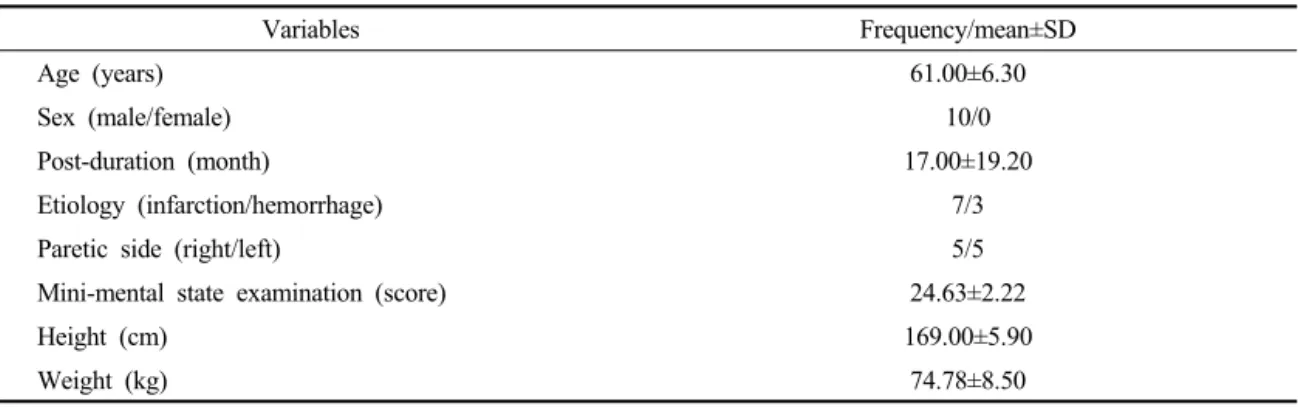
Table 1 shows the demographic of the 10 participants who completed the study by virtual reality program.

Altogether, there were 10 men (mean age 61.00 years

(51-69)), mean stroke duration, 17.00 month (6-59), right

hemiparesis 5 and left hemiparesis 5, infarction 7 and

hemorrhage 3, mean height 169.00cm (162-182), and

mean weight 74.78kg (63-92kg).

(5)

՜հխԨՍծծխիռջԨշծԨ՞ձպռսթմԨ՝ոոխպԨՍրռպխյձռցԨ՜պթձնձնկԨ՝ջձնկԨռհխԨ՚Չ՘ՉՍՔԨ՛յթպռԨՏմշվխԨշնԨ՘հցջձիթմԨթնլԨՋշկնձռձվխԨغ ք ԺԸԻ

2. Physical and cognitive function after training compared with before training

At week 8, upon completion of virtual therapeutic intervention, all participants demonstrated significant different WMFT, JTT, BBT, grip strength, and trail-making score gains compared to baseline WMFT, JTT, BBT, grip strength, and trail-making score at week 0 and week 8.

Ⅳ. Discussion

This study investigated the effects of virtual reality training using a RAPAEL smart board on upper extremity function for stroke patients. Summarizing the results of this study was that the manual dexterity, functional activities, grip strength and cognitive speed improved after

virtual reality program with RAPAEL smart board compared to before the training. The results show the feasibility of therapeutic intervention on upper extremity function but also cognitive function for stroke survivors.

Therapeutic principles of the virtual reality include exposing repetitive experience based on daily and functional activities, providing various sensory feedback, and having fun and enjoy (Laver et al., 2015). Several virtual rehabilitative approaches provide the participant with sensory feedback which may be presented though a hand-mounted device, haptic glove and so etc. to improve his/her immersion upon the training surroundings (Demain et al., 2013; Weisse et al., 2006). The RAPAEL smart board as a game-based wearable glove with 9-axis bending sensors induces the targeted movements of paretic wrists and finger based on sensations on wrist and finger movements. The participant conducted in a variety of functional activities on the RAPAEL smart board such

Variables Frequency/mean±SD

Age (years) 61.00±6.30

Sex (male/female) 10/0

Post-duration (month) 17.00±19.20

Etiology (infarction/hemorrhage) 7/3

Paretic side (right/left) 5/5

Mini-mental state examination (score) 24.63±2.22

Height (cm) 169.00±5.90

Weight (kg) 74.78±8.50

Table 1. Demographic of the participants (N=10)

Variables Week 0 Week 8 t p

Box-block test (score) 24.41±10.22 28.45±10.51 -4.13 <0.01

Grip strength (kg) 18.61±8.13 22.83±8.22 -4.18 <0.01

JTT (score) 39.89±31.72 51.79±34.57 -2.95 0.02

Trail-making (sec) 63.77±37.54 54.88±36.23 4.92 <0.01

WMFT (score) 69.21±11.01 77.41±9.29 -2.72 0.02

JTT: Jebsen-Talyor hand function test

Table 2. Efficacy measures by clinical measurements for the participants (N=10)

(6)

ԺԸԼ ք ՘ՖՎԨթնլԨՕշվխյխնռԨ՞շմԶԨԹԿԴԨՖշԶԨԺ

as cooking and fishing in a virtual reality environment.

The participant performed functional activities upon RAPAEL smart board to maintain motivation and passion on his/her rehabilitation surroundings in this study. After the training, the participant showed improvement functional activities on upper extremity as well as cognitive function in this study.

Park and colleagues had been assessed the effectiveness of using the RAPAEL smart board as an assistive tool for therapists in clinical rehabilitation therapy settings and motor recovery rate of stroke survivors after the training (Park et al., 2018). They reported using the RAPAEL smart board, in combination with traditional treatment, significantly improves motor recovery when compared to traditional treatments alone for stroke survivors (Park et al., 2018). In addition, Jung and colleagues had been examined the feasibility of using the RAPAEL smart glove as an assistive tool for therapists in clinical rehabilitation therapy settings (Jung et al., 2017). They also reported the wearable sensors and therapeutic games make motor recovery rate improved for stroke survivors (Jung et al., 2017). The results of this study show the improvement of upper extremity physical function as well as cognitive speed. Trail-making test provide information about visual search speed, scanning, speed of processing, mental flexibility, as well as executive functioning. After the training, the participant showed significantly improved the trail-making test compared to before the training.

Therefore, the results of this study suggest the feasibility of using the RAPAEL smart glove as a therapeutic tool for improving the upper extremity physical function as well as for improving cognitive function for stroke survivors.

This study evaluated the effects of virtual upper extremity training used a RAPAEL smart board on upper extremity function for stroke survivors. The results of this study show a feasible and beneficial effectiveness

on upper extremity function and cognitive function for stroke. This study shows virtual reality new feasibility towards improving the upper extremity function following stroke but has some shortcomings. This study was a single-group pretest-posttest research design. The study used blinded assessment to control the causal validity, but conventional therapeutic effects, history, test effects and regression effects couldn’t be controlled. Future studies suggest pre-test and post-test control research design with randomized controlled trials.

Ⅴ. Conclusion

The purpose of this study was to evaluate the effects of virtual upper extremity training program used a RAPAEL smart board on upper extremity function for stroke survivors with chronic hemiparesis and was to focus training program development using a smart glove as a feasibility study. At week 8, upon completion of the intervention, all participants demonstrated significant WMFT, JTT, BBT, grip strength, and trail-making score gains compared to baseline WMFT, JTT, BBT, grip strength, and trail-making score at week 0. This study suggests that the virtual upper extremity training using the RAPAEL smart board has a reasonable and beneficial effects on upper extremity function for chronic hemiparetic stroke survivors.

References

Allgower K, Hermsdorfer J. Fine motor skills predict performance in the Jebsen Taylor hand function test after stroke. Clinical Neurophysiology. 2017;

128(10):1858-1871.

Almhdawi KA, Mathiowetz VG, White M, et al. Efficacy

(7)

՜հխԨՍծծխիռջԨշծԨ՞ձպռսթմԨ՝ոոխպԨՍրռպխյձռցԨ՜պթձնձնկԨ՝ջձնկԨռհխԨ՚Չ՘ՉՍՔԨ՛յթպռԨՏմշվխԨշնԨ՘հցջձիթմԨթնլԨՋշկնձռձվխԨغ ք ԺԸԽ

of occupational therapy task-oriented approach in upper extremity post-stroke rehabilitation.

Occupational Therapy International. 2016;23(4):

444-456.

Bae JH, Kang SH, Seo KM, et al. Relationship between grip and pinch strength and activities of daily living in stroke patients. Annals of Rehabilitation Medicine.

2015;39(5):752-762.

Ballester BR, Maier M, San Segundo Mozo RM, et al.

Counteracting learned non-use in chronic stroke patients with reinforcement-induced movement therapy. Journal of Neuroengineering and Rehabilitation. 2016;13(1):74.

Chen HM, Chen CC, Hsueh IP, et al. Test-retest reproducibility and smallest real difference of 5 hand function tests in patients with stroke. Neurorehabilitation Neural Repair. 2009;23(5):435-440.

Crum RM, Anthony JC, Bassett SS, et al. Population-based norms for the mini-mental status examination by age and educational level. JAMA. 1993;269(18): 2386- 2391.

Demain S, Burridge J, Ellis-Hill C. Assistive technologies after stroke: self-management or fending for yourself?

A focus group study. BMC Health Services Research.

2013;13:334.

Hodics TM, Nakatsuka K, Upreti B, et al. Wolf motor function test for characterizing moderate to severe hemiparesis in stroke patients. Achieved Physical Medicine and Rehabilitation. 2012;93(11):1963-1967.

Ikbali Afsar S, Mirzayev I, Umit Yemisci O, et al. Virtual reality in upper extremity rehabilitation of stroke patients: a randomized controlled trial. Journal of Stroke Cerebrovascular Diseases. 2018;27(12):

3473-3478.

Jung HT, Kim H, Jeong J, et al. Feasibility of using the RAPAEL smart glove in upper limb physical therapy for patients after stroke: a randomized controlled trial. Conference

Proceedings: Annual International Conference of the IEEE Engineering in Medicine and Biology Society.

2017;2017:3856-3859.

Kiper P, Szczudlik A, Agostini M, et al. Virtual reality for upper limb rehabilitation in subacute and chronic stroke: a randomized controlled trial. Achieved Physical Medicine and Rehabilitation. 2018;99(5):

834-842.

KOSIS, Korean Statistical Information Service.

http://kosis.kr/eng/, searched data 1 February, 2019.

Lai SM, Studenski S, Duncan PW, et al. Persisting consequences of stroke measured by the stroke impact scale. Stroke.

2002;33(7):1840-1844.

Laver KE, George S, Thomas S, et al. Virtual reality for stroke rehabilitation. Cochrane Database System Review.

2015;12(2):CD008349.

Maier M, Rubio Ballester B, Duff A, et al. Effect of specific over nonspecific VR-based rehabilitation on poststroke motor recovery: a systematic meta-analysis.

Neurorehabilitation Neural Repair. 2019;Jan 30:

1545968318820169.

Muir RT, Lam B, Honjo K, et al., Trail making test elucidates neural substrates of specific poststroke executive dysfunctions. Stroke. 2015;46(10):2755-2761.

O’Sullivan SB, Schmitz TJ, Fulk GD. Physical rehabilitation, 6th ed. Philadelphia. F.A. Davis Co. 2014.

Park J, Jung HT, Daneault JF, et al. Effectiveness of the RAPAEL smart board for upper limb therapy in stroke survivors:

a pilot controlled trial. Conference Proceedings:

Annual International Conference of the IEEE Engineering in Medicine and Biology Society.

2018;2018:2466-2469.

Shimodozono M, Noma T, Nomoto Y, et al. Benefits of a repetitive facilitative exercise program for the upper paretic extremity after subacute stroke: a randomized controlled trial. Neurorehabilitation Neural Repair.

2013;27(4):296-305.

(8)

ԺԸԾ ք ՘ՖՎԨթնլԨՕշվխյխնռԨ՞շմԶԨԹԿԴԨՖշԶԨԺ

Teasell RW, Fernandz MM, McIntyre A, et al. Rethinking the continuum of stroke rehabilitation. Achieved Physical Medicine and Rehabilitation. 2014;95(4):

595-596.

Veerbeek JM, Langbroek-Amersfoort AC, van Wegen EE, et al. Effects of robot-assisted therapy for the upper limb after stroke. Neurorehabilitation Neural Repair.

2017;31(2):107-121.

Weiss P, Kizony R, Feintuch U, et al. Virtual reality in

neurorehabilitation. In: Selzer M, Cohen L, Gage

F, et al., editor(s). Textbook of neural repair and

rehabilitation. Cambridge. Cambridge University

Press. 2006.

수치

Table 1. Demographic of the participants   (N=10)

참조

관련 문서

Abstract This study investigated the effects of dual task training on balance, upper extremity motor function and activities of daily living in patients with chronic

Therefore, the purpose of this study was to ex- amine upper extremity strength, AROM, and function using virtual reality training combined with sensory stimulation in patients

Conclusion: The study’s results indicate that action observation physical training based on the mirror neuron system improves chronic stroke patients’ upper extremity

Conclusion: The breast cancer survivors experienced pain, upper extremity function disorder and anxiety.. This study indicates that nursing interventions for the breast

Objective : The purpose of present study was to determine effects of task oriented action observation training on dexterity of upper limb function after

The aim of this study was to determine the effect of action observational physical training on upper extremity function and activities of daily living in

The Effect of Trunk Control Training Using Virtual Reality Game-based Training Program on Balance and Upper Extremity Function of Subacute Stroke

Effects of Simultaneous Application of Focal Vibration Stimulation and Task-Oriented Training in the Improvement of Upper Extremity Motor Function after Stroke.. Kim Sunho,