Kor. J. Hort. Sci. Technol. 28(5):802-809, 2010
Evaluation of Resistance in Hot Pepper Germplasm to Phytophthora Blight on Biological Assay
Jeong-Soon Kim
1, Won-Il Kim
2, Hyeong-Jin Jee
3, Jae-Gyun Gwang
1, Chung-Kon Kim
1, and Chang-Ki Shim
1*1
National Agrobiodiversity Center, National Academy of Agricultural Science, Suwon 441-100, Korea
2
Microbial Safety Division, National Academy of Agricultural Science, Suwon 441-707, Korea
3
Organic Farming Technology Division, National Academy of Agricultural Science, Suwon 441-707, Korea
Abstract. Phytophthora blight of pepper is the most economically important disease in the world cultivation regions. We investigated the phytophthora blight resistance of 300 accessions of Korean landrace of hot pepper germplasms collected from 83 local regions. The disease incidence rate was checked from 7 days to 28 days at an interval of 7 days after inoculation under greenhouse conditions. Among 300 accessions, the disease incidence rate of phytophthora blight of 67 accessions of pepper germplasm was more than 60.1%, while no disease was observed in 37 accessions at 7 days after inoculation. At 28 days after inoculation, five and eleven accessions of pepper germplasm were resistance and moderate resistance to P. capsici, respectively.
Two hundred forty four susceptible accessions (81.3%) of pepper were scored as having more than 60.1%
of disease incidence of phytophthora blight. This result suggests that five candidate pepper germplasm might be used as breeding resources for the phytophthora blight resistance breeding program. Also, further genetic studies should be carried out to verify this result, with the overall focus of providing information on important characteristics of pepper germplasm.
Additional key words: Capsicum, Korean landrace, Phytophthora capsici
*Corresponding author: [email protected]
※ Received 28 April 2010; Accepted 1 June 2010. This work was supported by a grant program funded by Rural Development Administration (PJ007506201009) and the National Research Foundation of Korea Grant funded by the Korean Government (NRF-2009-351-F00030), Republic Korea in 2009.
Introduction
The genus Capsicum belongs to the Solanaceae family which includes 20-30 species. This genus contains five economic species, i. e., Capsicum annuum, Capsicum frutescens, Capsicum baccatum, Capsicum pubescens and Capsicum chinense, C. annuum is known as pepper, sweet pepper or paprika, and is cultivated globally for use as vegetable species (Heiser, 1976; IBPGR, 1983; Tong and Bosland, 1999; Yoon et al., 2004).
Chili pepper is usually grown as an herbaceous annual in temperate areas and is a commonly grown dicotyledonous flowering plant (Bosland, 1996). Members of the genus Capsicum, 25 species, have been cultivated extensively, initially in the Americas and, subsequently throughout the world (Eshbaugh, 1993; Heiser, 1976). Capsicum is used as a food flavoring, as a coloring agent, as a pharmaceutical ingredient, and in other innovative ways (Bosland, 1994;
Cronin, 2002; Krishna De, 2003; Wall and Bosland, 1993;
Woodbury, 1980).
Among oomycetes, Phytophthora species cause the most serious pathogen in plants worldwide and cause the economi- cally important soil-borne disease of pepper in Korea (Kamoun, 2001; Kim, 1993). Intensive studies have concentrated on the biology of Phytophthora capsici, evaluation of pepper germplasm for disease resistance, yield-loss assessment, and the testing of chemical, biological, and cultural measures of control (Chae et al., 2003; Hwang and Kim, 1995; Yoon et al., 2004)
Phytophthora blight, caused by Phytophthora capsici as a soil infection, is one of the most destructive and yield decreasing fact in the cultivating area of pepper crops (Barksdale et al., 1984; Kim et al., 1974; Leonian, 1992).
It is estimated that the Capsicum agribusiness is worth about 100 million dollars per year. The main problems faced by growers are disease and a few insects (Kim and Park, 1988;
SAGARPA, 2002; Um, 1998).
Although numerous attempts have been made to control
the disease by chemicals (Hausbeck and Lamour, 2004; Jee
et al., 1988; Oelke et al., 2003) and biological control (Ahn
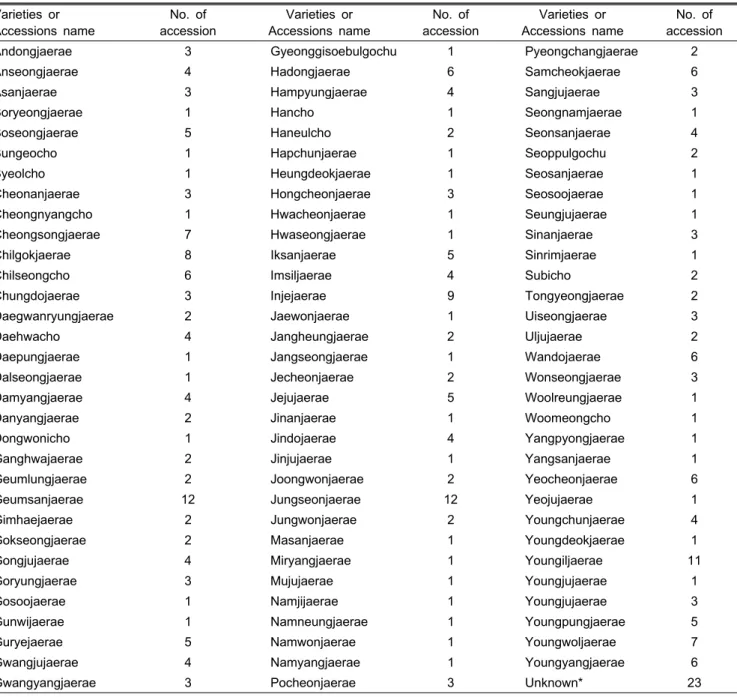
Table 1. Three hundred accessions of Korean landrace Capsicum germplasms were collected from 83 local regions in the Republic of Korea for the evaluation of Phytophthora blight resistance in this study.
Varieties or Accessions name
No. of accession
Varieties or Accessions name
No. of accession
Varieties or Accessions name
No. of accession
Andongjaerae 3 Gyeonggisoebulgochu 1 Pyeongchangjaerae 2
Anseongjaerae 4 Hadongjaerae 6 Samcheokjaerae 6
Asanjaerae 3 Hampyungjaerae 4 Sangjujaerae 3
Boryeongjaerae 1 Hancho 1 Seongnamjaerae 1
Boseongjaerae 5 Haneulcho 2 Seonsanjaerae 4
Bungeocho 1 Hapchunjaerae 1 Seoppulgochu 2
Byeolcho 1 Heungdeokjaerae 1 Seosanjaerae 1
Cheonanjaerae 3 Hongcheonjaerae 3 Seosoojaerae 1
Cheongnyangcho 1 Hwacheonjaerae 1 Seungjujaerae 1
Cheongsongjaerae 7 Hwaseongjaerae 1 Sinanjaerae 3
Chilgokjaerae 8 Iksanjaerae 5 Sinrimjaerae 1
Chilseongcho 6 Imsiljaerae 4 Subicho 2
Chungdojaerae 3 Injejaerae 9 Tongyeongjaerae 2
Daegwanryungjaerae 2 Jaewonjaerae 1 Uiseongjaerae 3
Daehwacho 4 Jangheungjaerae 2 Uljujaerae 2
Daepungjaerae 1 Jangseongjaerae 1 Wandojaerae 6
Dalseongjaerae 1 Jecheonjaerae 2 Wonseongjaerae 3
Damyangjaerae 4 Jejujaerae 5 Woolreungjaerae 1
Danyangjaerae 2 Jinanjaerae 1 Woomeongcho 1
Dongwonicho 1 Jindojaerae 4 Yangpyongjaerae 1
Ganghwajaerae 2 Jinjujaerae 1 Yangsanjaerae 1
Geumlungjaerae 2 Joongwonjaerae 2 Yeocheonjaerae 6
Geumsanjaerae 12 Jungseonjaerae 12 Yeojujaerae 1
Gimhaejaerae 2 Jungwonjaerae 2 Youngchunjaerae 4
Gokseongjaerae 2 Masanjaerae 1 Youngdeokjaerae 1
Gongjujaerae 4 Miryangjaerae 1 Youngiljaerae 11
Goryungjaerae 3 Mujujaerae 1 Youngjujaerae 1
Gosoojaerae 1 Namjijaerae 1 Youngjujaerae 3
Gunwijaerae 1 Namneungjaerae 1 Youngpungjaerae 5
Guryejaerae 5 Namwonjaerae 1 Youngwoljaerae 7
Gwangjujaerae 4 Namyangjaerae 1 Youngyangjaerae 6
Gwangyangjaerae 3 Pocheonjaerae 3 Unknown* 23
*Unknown: These accessions do not know the collection area.
and Hwang, 1992; Oelke et al., 2003; Shen et al., 2002), these attempts often fail to control the disease under field conditions and may not persist long enough to affect the target pathogen. Because of the difficulty in controlling this pathogen, development of stable and sustainable red pepper cultivars resistant to the root rot is strongly required to achieve sustainable yields of red pepper (Gerhardson, 2002;
Jee et al., 1988).
A number of studies have examined the mycological cha- racteristics of P. capsici, and evaluated pepper germplasm for disease resistance. Some pepper accessions, such as AC2258 and CM334, have been reported to display high levels of
resistance to P. capsici (Ogundiwin et al., 2005; Redondo, 1979; Smith et al., 1967; Yamakawa et al., 1979).
This study was carried out to evaluate hot pepper germplasm resistance against phytophthora blight in order to provide useful genetic resources for improving pepper breeding efficiency.
Materials and Methods
Plant materials
Capsicum annuum var. annuum comprised of 300 accessions
of Capsicum originating from the Korean domestic landrace
pepper were collected from 83 local regions and conserved
Fig. 1. Photographs showing the preparation of sporangia from Phytophthora capsici (A). Incubation of 45 day-old pepper seedlings inoculated with 10
5zoosporangia/mL (B). The occurrence of Phytophthora blight at 28 days after inoculation (C) .
in the National Agrobiodiversity Center of Rural Development Administration, Korea. The varieties name of Korean landrace was described as the collected 83 regions that included 12 varieties of Korean landrace, Bungeocho (1 accession), Byeolcho (1 accession), Cheongnyangcho (1 accession), Chilseongcho (6 accession), Daehwacho (4 accessions), Dongwonicho (1 accession), Hancho (1 accession), Haneulcho (2 accessions), Gyeonggiseoppulgochu (1 accession), Seoppulgoch -u (2 accessions), Subicho (2 accessions), and Woomeongcho (1 accession) (Table 1).
Five resistance varieties of commercial pepper, Yeogkang- hongjanggun, Buja, Umchungna, Powerspeed, and PR-Daechon and two susceptible varieties of commercial pepper, Hongboseg, and Gumdang, were used as control plants. Twenty seeds of each tested accession were replicated and disinfected with 2% NaOCl for 2 hrs. Disinfected seeds were washed with tap water three times before pre-germinating on moist filter paper in Petri-dishes at 30℃ for one-week in light condition.
Eighteen seeds of pre-germinated pepper germplasms were sowed into 120 holes pots filled with peat moss as an artificial soil. The pepper seedlings were grown for 70 days in the green-house and watered every other day. None of the pepper germplasms were sprayed with any types of fungicides.
Preparation and inoculation of pathogen
The phytophthora blight pathogens, Phytophthora capsici (KACC 44716) were obtained from the Korea Agricultural Culture Collection (KACC) of Rural Development Administ- rations, Korea. We modified the production method of phyto- phthora sporangia reported by Jee et al. (1998). To induce zoosporangia production, the pathogen was grown on 10%
V-8 agar for a week. The agar plate with fungal hyphae was then placed under florescent light. After one week, the sporangia were cold shocked (1 h at 4-8℃), followed by a one hr equilibration at room temperature. The sporangia were separated from the mycelia with a paint brush, and concentration was adjusted to the 10
5zoosporangia/mL by a hemacytometer.
Disease evaluation on biological assay
Evaluation of phytopththora blight symptoms such as lesion appearance, lesion size and the severity of infection were carried out from 7 to 28 days after inoculation. We measured the lesion length occurring from the root crown (Fig. 1).
The visible symptoms that appeared sequentially were crown rot, stem lesions, plant wilt, leaf defoliation, and damping-off.
We determined the disease incidence of each tested accession of hot pepper germplasm using the following formula:
Disease Incidence (%)
= Total number of infected plants
× 100 Total number of examined plants
Results
Phythophthora blight resistance level was graded with the disease incidence; resistance scored 0% of disease incidence, moderate resistance scored less than 20% of disease incidence, susceptible scored from 20.1% to 90% of disease incidence, and highly susceptible scored more than 90.1% of disease incidence (Fig. 2).
In susceptible and highly susceptible accessions, brownish lesions occurred on the pepper stems and extended rapidly into the upper parts of pepper plants; this was accompanied by a plant wilt, leaf defoliation, and damping-off (Figs. 2 and 3).
At 7 days after inoculation of P. capsici, the disease symptoms in stem and root of Phytophthora blight began to appear in the highly susceptible pepper germplasm, including the two susceptible varieties of commercial pepper, Hongboseg, and Gumdang (Fig. 1). Among the 300 accessions of pepper germplasm, 12 accessions were shown to be highly susceptible scored more than 90.1% of disease incidence in stem of phytophthora blight, while 37 accessions of pepper germplasm were scored as no disease symptoms (Table 2 and Fig. 1).
At 14 days after inoculation, 23 and 23 accessions of
Fig. 2. Grade of the lesion length of Phytophthora blight of pepper seedlings caused by Phytophthora capsici with a concentration of 10
5zoosporangia/mL at 28 days after inoculation.
Fig. 3. Selection of the resistant accessions among the 300 accessions of the hot pepper germplasm, at 28days after inoculation with a concentration of 10
5zoosporangia/mL of Phytophthora capsici. A, Resistance (0% disease incidence); B, Moderate resistance (1-20% disease incidence); C, Susceptible (20.1-90% disease incidence); D, Highly susceptible (more than 90.1%).
Table 2. Evaluation of 300 accessions of hot pepper germplasm for the disease incidence of Phytophthora blight caused by Phytophthora capsici lesion length of stem rot of pepper seedlings was measured from the root crown at 7-days intervals for 28 days.
Disease Incidence (%) Accession number of hot pepper germplasm
7dyas 14dyas 21days 28days
Resistant (0) 37 23 11 5
Moderate Resistant (0.1-20) 53 23 21 11
Susceptible (20.1-90) 198 234 176 113
Highly Susceptible (90.1-100) 12 20 92 171
pepper germplasm showed resistance and moderate resistance (scored less than 20% of disease incidence), respectively.
234 susceptible accessions of pepper germplasm were scored as having more than 20.1% of disease incidence. 20 accessions of pepper germplasm were shown to be highly susceptible
symptoms as brownish lesions, plant wilt, and leaf defoliation and scored more than 90.1% of disease incidence (Table 2 and Fig. 3).
At 21 days after inoculation, 11 and 21 accessions of pepper
germplasm showed resistance and moderate resistance, res-
pectively. 176 susceptible accessions of pepper germplasm scored as having more than 20.1% of disease incidence. 92 accessions of pepper germplasm were shown to be highly susceptible, scored more than 90.1% of disease incidence (Table 2 and Fig. 3).
At 28 days after inoculation, only 5 accessions of pepper germplasm, Anseongjaerae (IT032469), Injejaerae (IT135643), Jungseonjaerae (IT032492), Seosoojaerae (IT113605), and Youngjujaerae (IT032490), were resistant to phytophthora blight. Also, 11 accessions of pepper germplasm, Cheong- songjaerae (IT113636), Goryungjaerae (IT032438), Guryejaerae (IT032442), Imsiljaerae (IT032477), Damyangjaerae (IT032448), Yangsanjaerae (IT032470), Youngiljaerae (IT032468, 032479), Youngjujaerae (IT032446), and Youngyangjaerae (IT032485), were moderate resistance (scored less than 20% of disease incidence) to P. capsici. 113 susceptible accessions (37.7%) of pepper scored from 20.1% to 90% of disease incidence.
171 accessions showed highly susceptible symptoms as brownish lesions, leaf defoliation, and damping-off and scored more than 90.1% of disease incidence (Table 2 and Fig. 3).
Discussion
Hot and sweet pepper is the most economically important crops in China, Indonesia, Korea, Mexico, and Southeast Asia (Kim and Park, 1988; Kim et al., 1974; Pae et al., 2003; SAGARPA, 2002). In Korea, the total annual production of pepper is approximately US 1.4 billion dollars (Ministry of Food, Agriculture, Forestry and Fisheries, 2008; Pae et al., 2003). In this study, 300 accessions of red pepper germ- plasm were inoculated with zoosporangia of Phytophthora capsici at seedling stages in a greenhouse to evaluate their resistance to phytophthora stem blight.
The five domesticated species are C. annuum, C. frutescens, C. chinense, C. baccatum, and C. pubescens, Capsicum annuum, C. frutescens, and C. chinense are grouped in a taxonomic complex that has conventionally three, or perhaps two or one species (Pickersgill, 1988), with the three clusters of domesticated plants appearing to be more divergent than their wild progenitors (Baral and Bosland, 2004; Bosland and Votava, 2000; Eshbaugh, 1993; Idu and Ogbe, 1997;
Jarret and Dang, 2004; Prince et al., 1995; Ryzlova and Kochieva, 2004). Horticultural, agricultural and biological diversity of the species, C. annuum have helped to make Capsicum a globally important crop as a fresh and cooked vegetable, as an ingredient for sauces and powders, and as a colorant, which is also used in cosmetics (Andrews, 1995, 1999; Bosland, 1994; Bosland and Votava, 2000).
Phytophthora blight of pepper caused by P. capsici is considered an important limiting factor that is causing de-
creasing yields in the cultivating areas (Barksdale et al., 1984;
Hwang and Kim, 1995; Leonian, 1992; Ristaino and Johnston, 1999). The typical symptoms of P. capsici in pepper included foliar blight, fruit rot and a very characteristic stem rot at the root crown of the plant (Barksdale et al., 1984; Erwin and Ribeiro, 1996; Thabuis et al., 2003; Weber, 1932). Based on a survey of Phytophthora diseases in Korea from 1996 to 1999, 999 isolates were isolated from 66 host plants and classified into 17 species in order to study the genetic diversities of Phtophthora (Hong et al., 2000; Jee, 1998, 1999).
In this study, the symptoms of Phytopththora blight began to appear on pepper seedlings 6 days after inoculation of P. capsici in the highly susceptible accessions, including the two susceptible varieties of commercial pepper Hongboseg and Gumdang.
The pathogen can infect all parts of a pepper plant, including the roots, stems, leaves and fruit at any stage of growth and can be seedborne, surviving in the soil and on host debris for months (Biles et al., 1995; Black et al., 1991; Hwang and Kim, 1995; Oelke et al., 2003).
We found 5 accessions to be resistant, 11 accessions to have moderate resistance, 113 accessions that were susceptible and 171 accessions that were highly susceptible at 28 days after inoculation. The candidate 5 pepper germplasms resistant against P. capsici from the Korean domestic landrace pepper had a high population density of inoculums (10
5zoosporangium/
ml).
Numerous attempts have been made to control the disease by chemicals (Hausbeck and Lamour, 2004; Jee et al., 1988;
Oelke et al., 2003) and biological control (Ahn and Hwang, 1992; Oelke et al., 2003; Shen et al., 2002; Strobel et al., 1999), but no effective management programs have been developed to control phytopthora blight caused by P. capsici in pepper crops.
Recently urgent attention has been focused on the develop- ment of phytophthora-resistant pepper varieties (Kim and Park, 1995; Oleke et al., 2003; Pflieger et al., 2001), and many studies have reported the inheritance of resistance to P. capsici in pepper. Single-, two-, and multiple-gene systems have been reported (Lefebvre and Palloix, 1996; Mozzeti et al., 1995; Oelke et al., 2003; Pflieger et al., 2001; Pochard et al., 1983; Thabuis et al., 2003, 2004).
Capsicum baccatum and C. pubescens are placed in other taxonomic complexes of the genus and are little used beyond Latin America, although C. baccatum var. pendulum (wild).
Eshbaugh that has been extensively used as domesticated
chili peppers. Therefore, when reviewing the literature, it
is essential to determine whether the plants discussed are
actually C. annuum, C. frutescens or another species (Heiser
and Pickersgill, 1969).
In Korea, Capsicum annuum has been restricted to a very narrow genetic diversity due to consumer preferences. With the exemption of a few cultivars grown for fresh fruit, almost all cultivars are cultivated for their dried red fruits, with varying degrees of pungency (Chae et al., 2003; Pae et al., 2003).
The United States National Plant Germplasm System pre- serves an extensive Capsicum germplasm collection at the Southern Plant Introduction Station located in Experiment, Georgia. This collection contains approximately 3000 Capsicum accessions that include lines from all over the world (Bosland, 1996). In addition, Chae et al. (2003) characterized 225 accessions from 8 Capsicum species preserved at the Asian Vegetable Research and Development Center using 37 mor- phological traits, and these have been utilized as a useful genetic resources in the breeding of improved pepper cultivars adapted to subtropical and temperate regions. Since 1980, Embrapa’s National Research Center for Vegetable Crops has conducted a pepper breeding program aimed at demands from different market niches. The program traditionally empha- sizes the development of hot and source-specific sweet pepper populations, lines, cultivars, and hybrids with multiple disease resistance and high-quality fruits benefits from a large gene bank of genotypes native to Brazil and also introduced from abroad (Ribeiro et al., 2008).
The five candidate pepper germplasm might be used as breeding resources for the phytophthora blight resistance breeding program. Further genetic study should be carried out to verify our results with the overall focus of providing information on important characteristics of pepper germplasms.
Literature Cited
Ahn, S.J. and B.K. Hwang. 1992. Isolation of antibiotic producing actinomycetes antagonistic to Phytophthora capsici from pepper-growing soils. Kor. J. Mycol. 20:259-268.
Andrews, J. 1999. The pepper trail: History and recipes from around the world. University of North Texas Press, Denta, Texas.
Andrews, J. 1995. Peppers: The domesticated Capsicums, University of Texas Press. Austin.
Barksdale, T., G. Papavizas, and S. Jonhnston. 1984. Resistance to foliar blight and crown rot of pepper caused by Phytophthora capsici. Plant Dis. 68:506-509.
Barla, J.B. and P.W. Bosland. 2004. Unraveling the species dilemma in Capsicum frutescens and C. Chinense (Solanaceae):
A multiple evidence approach using morphology. Molecular analysis and sexual compatibility. J. Amer. Soc. Hor. Sci.
129:826-832.
Biles, C.L., B.D. Brunton, M.M. Wall, and M. Rivas. 1995.
Phytophthora capsici zoospore infection of pepper fruit in various physical environments. Proc. Okla Acad. Sci. 75:1-5.
Black, L.L., S.K. Green, G.L. Hartman, and J.M. Poulos. 1991.
Pepper diseases: a field guide. Asian Vegetable Research and Development Center (AVRDC). Shanhua, Taiwan.
Bosland, P.W. 1994. Chiles: history, cultivation, and uses. p.
347-366. In: G. Charalambous, (Eds.), Spices, herbs, and edible fungi. Elsevier Publ., New York.
Bosland, P.W. 1996. Capsicums: Innovative uses of an ancient crop. p. 479-487. In: J. Janick, (Eds.), Spices, herbs, and edible fungi. Elsevier Publ., New York.
Bosland, P.W. and E.J. Votava. 2000. Peppers: Vegetable and spice capsicums. CABI Publishing, Oxon, UK and New York.
Chae, Y., J.C. Shieh, J.B. Park, and L.M. Engle. 2003. Mor- phological evaluation of Capsicum germplasm using statistic analysis. Kor. J. Hort. Sci. Technol. 21(Suppl. II):63. (Abstr.) Cronin, J.R. 2002. The Chili peppers pungent principle: Capsaicin
delivers diverse health benefits. Alternative and Complementary Therapies 8:110-113.
Erwin, D.C. and O.K. Ribeiro. 1996. Phytophthora disease worldwide. APS press. p. 323-325.
Eshbaugh, W.H. 1993. Peppers: History and exploitation of a serendipitous new crop discovery. In: J. Jack, and J. E. Simon, (Eds.), New Crops, p. 132-139. John Wiley & Sons, New York, USA.
Gerhardson, B. 2002. Biological substitutes for pesticides. Trends Biotech. 20:338-343.
Hausbeck, M.K. and K.H. Lamour. 2004. Phytophthora capsici on vegetable crops: research progress and management challenges.
Plant Dis. 88:1292-1303.
Heiser, Jr. C.B. 1976. Peppers: Capsicum (Solanaceae). In N.
W. Simmonds, ed., Evolution of Crop plants, p. 265-268.
Longman, London, UK.
Heiser, Jr. C.B. and B. Pickersgill. 1969. Names for the cultivated Capsicum species (Solanaceae). Taxon 18:277-283.
Hong, S.B., H.J. Jee, S.H. Kim, and S.J. Go. 2000. Phylogeny of Korean isolates of Phytophthora species based on sequence analysis of internal transcribed spacer of ribosomal RNA.
Plant Pathol. J. 16:29-35.
Hwang, B.K. and C.H. Kim. 1995. Phytophthora blight of pepper and its control in Korea. Plant Dis. 79:221-227.
IBPGR, 1983. Genetic resources of Capsicum. Int. Board for Plant Genetic Resources, Rome.
Idu, M. and T.M. Ogbe. 1997. Studies on the morphology of Capsicum species. J. Plant Anatomy and Morphology 7:114-123.
Jarret, R.L. and P. Dang. 2004. Revisiting the waxy locus and the Capsicum annuum L. complex. Georgia J. Sci. 62:117-133.
Jee, H.J. 1999. The genus Phytophthora in Korea. Proceeding of Fall Meeting, Korean Society of Plant Pathology. Oct.
1999. Andong, Korea.
Jee, H.J., W.D. Cho, and Y.C. Choi. 1998. Utilization of domestic vegetable juice as a medium for growth and reproduction of Phytophthora species. Kor. J. Plant Pathol. 14:299-302. (in Korean)
Jee, H.J., C.G. Nam, and C.H. Kim. 1988. Studies on biological control of Phytophthora blight of red-pepper I. Isolation of antagonists and evaluation of antagonistic activity in vitro and in greenhouse. Kor. J. Plant Pathol. 4:305-312.
Jee, H.J. 1998. Key to the Korean species of Phytophthora and their morphological characteristics. Plant Dis. and Agri.
4:30-35. (in Korean)
Kamoun, S. 2001. Nonhost resistance to Phytoiphthora: novel prospects for a classical problem. Curr. Opin. Plant Biol.
4:295-300.
Kim, B.S., B.J. Chung, and W.S. Lee. 1974. Studies on the seasonal changes in occurrence of Phytophthora blight and varietal resistance in peppers. J. Kor. Soc. Hort. Sci. 16:214-219.
Kim, C.H. 1993. Current status of fungal and bacterial disease of hot pepper and their control measures. J. Kor. Capsicum Res. Coop. 2:1-11.
Kim, C.H. and K.S. Park. 1988. A predictive model of disease progression of red-pepper anthracnose. Kor. J. Plant Pathol.
4:325-331.
Kim, D.H. and H.G. Park. 1995. Screening for resistance to phytophthora blight among hot pepper accessions (Capsicum annuum L.). Proc. Kor. Soc. Hort. Sci. 13:136-137.
Krishna De, A. 2003. Capsicum: The genus Capsicum. Medicinal and aromatic plants-industrial profiles Vol. 33. Taylor &
Francis, London and New York.
Lefebvre, V. and A. Palloix. 1996. Both epistatic and additive effects of QTLs are involved in polygenic induced resistance to disease a case study, the interaction pepper-Phytophthora capsici Leonian. Theor. Appl. Genet. 93:503-511.
Leonian, L. 1992. Stem and fruit blight of peppers caused by Phytophthora capsici sp. Nov. Phytopath. 12:401-408.
Ministry of Food, Agriculture, Forestry and Fisheries. 2008.
Agricultural and Forestry Statistical Yearbook.
Mozzetti, C., L. Ferraris, G. Tamietti, and A. Matta. 1995. Variation in enzyme activities in leaves and cell suspension as markers of incompatibility in different Phytophthora-pepper interactions.
Physiol. Mol. Plant Pathol. 46:95-107.
Oelke, L.M., P.W. Bosland, and R. Steiner. 2003. Differentiation of race specific resistance to Phytophthora root rot and foliar blight in Capsicum annuum. J. Amer. Soc. Hort. Sci. 128:213-218.
Ogundiwin, E.A., T.F. Berke, M. Massoudi, L.L. Black, G.
Huestis, D. Choi, S. Lee, and J.P. Prince. 2005. Construction of 2 intraspecific linkage maps and identification of resistance QYL for Phytophthora capsici root-rot and foliar-blight diseases of pepper (Capsicum annuum L.). Genome 48:698-711.
Pae, D.H., Y.T. Chae, C. Wang, and L.M. Engle. 2003. Selection of new breeding materials with resistant to anthracnose in Capsicum annuum. Kor. J. Hort. Sci. Technol. 21(Suppl. II):63.
(Abstr.)
Pflieger, S., A. Palloix, C. Caranta, A. Blattes, and V. Lefebvre.
2001. Defense response genes co-localize with quantitative disease resistance loci in pepper. Theor. Appl. Genet. 103:920-929.
Pickersgill, B. 1988. The genus Capsicum: A multidisciplinary approach to the taxonomy of cultivated and wild plants.
Biologisches Zentralblant 107:381-389.
Pochard, E., P.M. Molot, and G. Dominguez. 1983. Etude de deux nouvelles sources de resistances a Phytophthora capsici Leon. Chez le piment: confirmation de l’exixtence de trios composantes distinctes dans la resistance. Agronomie 3:333-342.
Prince, J.P., V.K. Lackney, C. Angeles, J.R. Blauth, and M.M.
Kyle. 1995. A survey of DNA polymorphism within the genus Capsicum and the fingerprinting of Pepper cultivars.
Genome 38:224-231.
Redondo, J.E. 1979. Busqueda de genotipos de chile resistance al hange Phytophthora capsici Leonion. Proc. Tropical Region.
A. S. H. S. 23:220-224.
Ribeiro, C.S. da C., L.S. Boiteux, G.B. Amaro, and F.J.B.
Reifschneider. 2008. Capsicum breeding at Embrapa vegetable crops, Brasilia, Brazil. In: Proceedings of the 19th International Pepper Conference, Sep 7-10, Atlantic City, NJ.
Ristaino, J.B. and S.A. Johnston. 1999. Ecological based approaches to management of Phytophthora blight on bell pepper. Plant Dis. 83:1080-1089.
Ryzhova, N.N. and E.Z. Kochieva. 2004. Analysis of microsatellite loci of the chloroplast genome in the genus Capsicum (pepper).
Russian J. Genet. 40:892-896.
SAGARPA, 2002. Programa agrícola de los ciclos 0.1. 2001/2002.
pv. 2002/2003.
Shen, S.S., O.H. Choi, S.M. Lee, and C.S. Park. 2002. In vitro and In vivo activity of a biocontrol agent, Serratia plymurhica A21-4, against Phytophthora capsici. Plant Pathol. J. 18:
221-224.
Smith, P.G., K.A. Kimbel, R.G. Grogan, and A.H. Millett. 1967.
Inheritance of resistance in peppers to Phytophthora root rot.
Phytopathology 57:377-379.
Strobel, G.A., J.Y. Li, F. Sugawara, H. Koshino, J. Harper, and W.M. Hess. 1999. Oocydin A, a chlorinated macrocyclic lactone with potent anti-oomycete activity from Serratia marcescens.
Microbiology 145:3557-3564.
Thabuis, A., V. Lefebvre, G. Bernard, A.M. Daubeze, T. Phaly, E. Pochard, and A. Palloix. 2004. Phenotypic and molecular evaluation of a recurrent selection program for a polygenic resistance to Phytophthora capsici in pepper. Theor. Appl.
Genet. 109:342-351.
Thabuis, A., A. Palloix, S. Pflieger, A.M. Daubeze, C. Caramta, and V. Lefebve. 2003. Comparative mapping of Phytophthora resistance loci in pepper germplasm: evidence for conserved resistance loci across Solanceae and for a large genetic diversity. Theor. Appl. Genet. 106:1473-1485.
Tong, N. and P.W. Bosland. 1999. Capsicum tovarii, a new member of the Capsicum baccatum complex. Euphytica 109:71-77.
Um, K.H. 1998. Conidia germination and appressorium formation of Colletotrichum spp. isolate pepper fruits. MS Diss., Seoul Natl. Univ.
Wall, M.M. and P.W. Bosland. 1993. The shelf-life of chiles and chile containing products. p. 487-500. In: G. Charalambous, (Eds.), Shelf life studies of foods and beverages, chemical, biological, and nutritional aspects. Elsevier Publishing, New York.
Weber, G.F. 1932. Blight of peppers in Florida caused by Phytophthora capsici. Phytopathology 22:775-780.
Woodbury, J.E. 1980. Determination of Capsicum pungency by high pressure liquid chromatography and spectrofluorometric detection. J. Assn. Offic. Anal. Chem. 63:556-558.
Yamakawa, K., T. Mochizuki and H. Yasui. 1979. Screening of cultivated and wild peppers for Phytophthora capsici resistance and its inheritance. Bull. Natl. Inst. Veg. Tea. Sci. A. 6:29-37.
(in Japanese with English summary)
Yoon, J.B., J.W. Do, D.C. Yang, and H.G. Park. 2004. Interspecific
cross compatibility among five domesticated species of Capsicum
genus. J. Kor. Soc. Hort. Sci. 45:324-329.
생물검정을 통한 고추 유전자원의 역병저항성 평가
김정순
1ㆍ김원일
2ㆍ지형진
3ㆍ곽재균
1ㆍ김정곤
1ㆍ심창기
11국립농업과학원 농업유전자원센터, 2국립농업과학원 유해생물과, 3국립농업과학원 유기농업과 (*교신저자)