• 검색 결과가 없습니다.

Overview of coal-fired power plant ash situation and cement industry in Vietnam

N/A
N/A
Protected

Academic year: 2021

Share "Overview of coal-fired power plant ash situation and cement industry in Vietnam"

Copied!
6
0
0

로드 중.... (전체 텍스트 보기)

전체 글

(1)

To whom corresponding should be addressed.

Tel : +82-42-868-3573, E-mail: [email protected]

https://doi.org/10.5855/ENERGY.2018.27.3.057

Overview of coal-fired power plant ash situation and cement industry in Vietnam

Hong Ha Thi Vu

1

, and Ji Whan Ahn

1

*

1

Center for Carbon Mineralization, Climate Change Mitigation and Sustainability Division, Korea Institute of Geoscience and Mineral Resources (KIGAM), 124 Gwahak-ro, Gajeong-dong, Yuseong-gu,

Daejeon, 34132, South Korea

(Received 15 August 2018, Revised 14 September 2018, Accepted 17 September 2018) Abstract

The development of coal-fired power plants to ensure energy security and electricity consumption is a matter for the Vietnam economy. However, the huge amount of ash discharged is a major environmental challenge. It is estimated that by the end of 2017, the amount of ash in the country is about 40 million tons and annually emitted over 16.4 million tons. While the quantity of coal-fired power plant is rising, the ash content will increase year by year if the ash doesn’t treat well. The ash will be increased from 61 million tons in 2018 to 109 million tons in 2020, 248 million tons in 2025 and 422 million tons in 2030. The difficulties of coal-fired power plants are the problem of ash handling, some plants are at risk of closure because there are not enough dump capacity to storage. Therefore, Vietnam is in need of urgent measures to treat a large amount of waste from coal-fired power plants. The specific objectives of this study were as follows: (1) provide an overview of coal ash situation produced by coal-fired power plants in Vietnam; (2) study about regulations related to coal ash treatment; (3) comprehend the literature review of the cement sector status.

Key words : coal ash, cement industry, Vietnam, coal-fired power plant

1. Introduction

Vietnam currently has 26 coal-fired power plants in operation with the total capacity of 13,810 MW, consuming about 47.8 million tons of coal per year, with ash residue and gypsum are discharged about 16.4 million tons/year [1]. But most of the factories have no measures to re-use, ash treatment thor- oughly and ash, slag is mainly dumped into the landfill of factories. It is expected that 15 coal-fired power plants will be operational (currently under construction) by 2020. The total install capacity will be increased to 24,370 MW and consume about 60 million tons of coal annually. By 2020, the total number of the coal-fired power plant to be opera- tional will be 31 plants, with 47 plants by 2025 and

64 plants by 2030.

The developed countries in the world always en-

courage the use of coal ash from coal-fired power

plants if they meet the standards used in con-

struction materials as an additive in the production

of cement and concrete, ground filling and building

road... In Vietnam, at present, the most of coal-fired

power plants haven’t measures to re-use coal ash

and ash treatment yet. Only a negligible quantity of

ash meets the input standards for use as cement,

concrete, and non-baked construction materials. Most

ashes do not meet the standards of construction ma-

terials or standards of other industries are discharged

directly to the dumping site. They occupy a large

area for storage causing environmental pollution

(soil, water). While the ash and slag are rising day

by day but the storage capacity is limited. At the

same time, the dust is arising during storage and

transportation from the coal-fired power plants to the

(2)

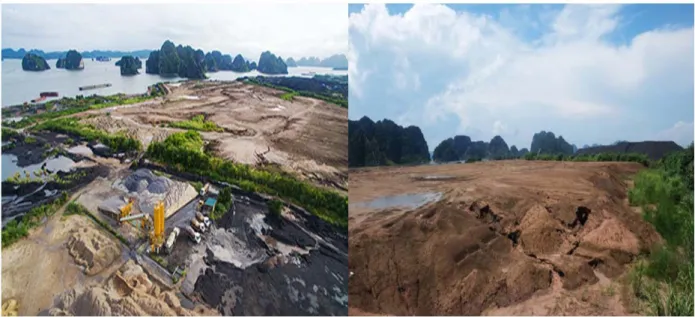
Figure 1. A dumping site just besides Ha Long bay, a UNESCO World Heritage.

dumping site by truck or at the dump. Many facto- ries have not completed the transportation system, storage areas for ash, slag and gypsum, and have not met the requirements of environmental pro- tection, polluting the environment around the plant and cause prolonged complaints. At present, ash, slag residue is lack of technical guidelines, standards and technical regulations on the use of ash, slag, gypsum as building materials, ground filling, etc.

Many enterprises and localities need to use large amounts of ash, slag, and gypsum to make con- struction materials but there are no standards and technical regulations that cannot be implemented [2].

2. Coal ash from coal-fired power plants

Coal ash consists of bottom and fly ashes; it also contains heavy metals which can be damaged for land quality. For instance, the burst of streams ash dump in Cam Pha and the broken wall of ash pond in Quang Ninh leaked the thousands of m

3

of coal waste to the residential areas. As the result, the soil was polluted with Arsenic ranging from 17-21 mg/kg, exceed 1.13-1.4 times of QCVN 03: 2008 /BTNMT standards.

In Quang Ninh province, Ha Long bay, an UNESCO World Heritage Site inscription in 1994, and Bai Tu Long bay are suffering from the 7 mil- lion tons of ash produced by the coal-fired power plants, as shown in Figure 1. There are 7 coal-fired

power plants in Quang Ninh with total capacity of 4,150 MW electricity (16% of the country’s total electricity). There are 2 more coal-fired power plants will be setup by 2020 as the plan. The dumping ground for coal ash is currently overloading. For ex- ample, the Cam Pha’s Power Plant has two elec- tricity generation units with total capacity of 600 MW and spends 34 hectares dumping ground with the coal ash of 1 million tons/year. After 7 years of operation, the dumping ground has become nearly occupied [3].

Mong Duong 1 thermal power plant, operation at the end of 2015, is facing possible closure, wasting

$1.6 billion of state investment due to overload of the coal ash problems. The 1,080MW-capacity plant consumes about 3 million tons of coal a year and releases 1 million m

3

of coal ash and boiler slag. At the present, the plant could sale 400,000 tons per year of the bottom ash for cement manufacturing and concrete mixing, while the fly ash remain of 600,000 tons is difficult to find buyers [4]. The dumping site of the plant has a total volume of 2.25 million m

3

but it has already spent 1.8 million m

3

.

Currently, only 31% (5 million tons) of the total

coal ash and boiler slag of the all coal power plants

each year discharged by the coal power plants is

treated. The remained coal ash and boiler slag cur-

rently is big problems such as: spending large

dumping space, overloading the current dumping

space leading to the closure of the plants, threat-

(3)

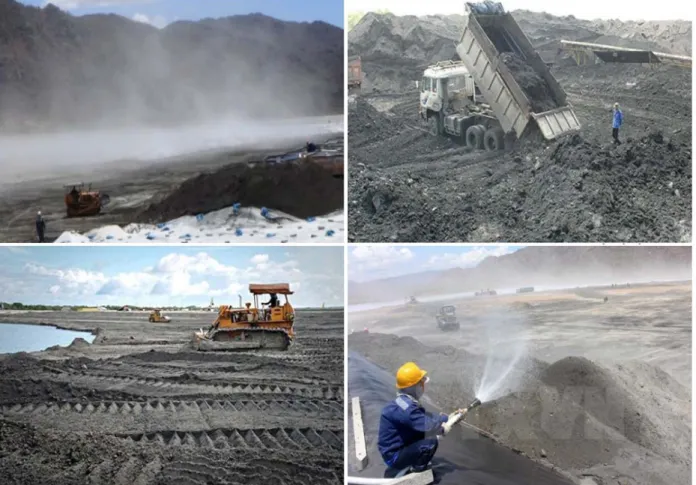
Figure 2. The dumping ground has become nearly full

Figure 3. The plan of coal ash will be discharged from coal-fired power plants ening to environment and people. Most of the coal

ash from the thermal power plants is covered with tarpaulins, sprayed with water and compacted back- fill in a dumping site to minimize environmental pollution (Figure 2) [5, 6,7].

Vietnam government launched a program to use coal combustion residuals (CCR), a waste product from thermal power plants to make building mate- rials. The program demanded that at least 25% of CCR must be recycled by 2015. However, only 18%

of CCR was recycled at the end of 2015, as a sur- vey of the Building Materials Institute. If there are no effective treatment methods, the current 21 coal- fired power plants will produce 61 million tons by 2018, rises to 109 million tons by 2020, and 442 million tons by 2030 of the CCR (Figure 3).

Some of coal-fired power plants have managed selling theirs CCR to companies producing cement and non-fired bricks such as Hai Phong Thermal Power Plant and Cam Pha Power Plant. However, the amount of CCR for selling is still small. Most

the coal-fired power plants have not yet to find buy-

ers for their CCR even for free. The coal ash in-

cludes 20% of fly ash and 80% of bottom ash

(4)

which has bigger sizes. The fly ash has similar com- ponents as cements and can be reused in the pro- duction of cement. However, 20% of the fly ash has not burned yet and must be reduced to 5% before reuses. The coal ash contains heavy and noxious metals such as Mn, Ni, As, Ca and Pb. Thus, the buyer needs to remove these harmful components before using. The major difficulty is that there is no technical standard for handling and reuse of CCR in the construction sectors. The deficiency regulations and technology to reutilize coal ash are main rea- sons that coal ash treatment and reuse in Vietnam are under development. It will become a big chal- lenge if the ash doesn’t treat well while the dis- charged ash is increasing day by day [8].

3. Regulations related to coal ash treatment

In order to deal with coal ash pollution status, the Prime Minister has given decisions on measuring the treat ash, slag and gypsum from thermal power plants in the production of construction materials in 2014. The Decision indicates that coal-fired power plants are required to invest in installing equipment to treat ash, slag and gypsum that meets technical regulations and standards to become materials used for building material production, minimize environ- ment pollution, save space for landfill sites, make contribution towards reducing exploitation of natural resources for building materials, ensure the sustain- able development. The amount of domestic gypsum used as materials for building material production will be increased in order to gradually reduce and restrict imported gypsum. By 2020, space used for landfill sites shall be only allocated to thermal pow- er, chemical or fertilizer plant projects with the max- imum capacity that can meet treatment requirements in conformity with the project size and output [9].

At April 2017, Prime Minister signed Decision No. 452/QD-TTg on treating and reusing CCR for use in the production of construction materials. The objectives of decision indicates that by 2020, the amount of ash, slag and gypsum deposited in stor- age yards of each thermal power plant, chemical and fertilizer plant must be treated and consumed so that such amount is less than total volume thereof dis- charged within 2 years of production. Specifically, by 2020, the amount of ash, slag, gypsum obtained

from furnace fumes emitted from thermal power plants, abbreviated as FGD (Flue Gas Desulfuriza- tion) gypsum) and gypsum discharged from chem- ical and fertilizer plants, abbreviated as PG (Pho- sphogypsum) gypsum treated and used as raw mate- rials for production of building materials and in con- struction projects will be expected to account for 52% of total accumulated volume thereof (approxi- mately 75 million tons, including 56 million tons of ash from coal-fired power plants; 2.5 million tons of FGD gypsum; 16.5 million tons of PG gypsum) with the following estimates: (1) the cement manufactur- ing process will additionally use about 14 million tons of ash and slag from coal-fired power plants with about 7 million tons thereof will be used as partial replacement of clay in the baked clay brick manufacturing process, 2 million tons thereof will be used as mineral additives for manufacturing of con- crete and unbaked bricks, and 5 million tons thereof will be used as materials for leveling work at con- struction sites, mine backfilling and road construc- tion projects, (2) About 1.5 million tons of FGD gypsum will be used as additives to adjust the set- ting time of hydraulic cement mortar, with about 1 million tons will be used as materials for manu- facturing of construction plasterboards, (3) About 3 million tons of PG gypsum will be used as additives to adjust the setting time of hydraulic cement mor- tar, with 1.5 million tons will be used as materials for manufacturing of construction plasterboards and about 12 million tons will be used as materials for leveling work at construction sites, mine backfilling and road construction projects [10].

Vietnam government encourages and funds re-

search and development on using of coal ash, boiler

slag, and gypsum for production of building ma-

terials. Basically improve the treatment technologies

and bring these technologies into operation ahead of

June 2019. Owners of waste-discharging facilities

and stakeholders of construction and investment pro-

jects, and host entities of thermal power plants,

chemical and fertilizer plants, shall be held respon-

sible for submitting their proposals for treatment and

consumption of ash, slag and gypsum to the Mini-

stry of Industry and Trade. By 2020, ensure that an

area of each dumping ground will not exceed the

amount of wastes released within two years of mean

production. This regulation shall be specifically ap-

plied to (1) active plants from which proposals for

(5)

treatment and use of ash, slag and gypsum produced have been submitted before December 31, 2018; (2) projects that are under construction, require modified proposals and submission of the accepted proposals before officially being put into operation; (3) proj- ects that are at the stage of pre-investment arrange- ment, proposal formulation and submission of the request for approval of the proposal and the invest- ment project. State-funded investment and con- struction projects must prefer to use ash, slag and gypsum or building materials made from ash, slag, FGD and PG gypsum provided these materials or products have the same economic and technical effi- ciency as other ones [10].

4. Vietnam cement industry situation

Vietnam's cement industry has a history of over 100 years, from 1991 to nowaday is the strongest development stage of Vietnam cement. According to StoxPlus, currently, Vietnam has 107 cement facili- ties with total volume of 120.9 million tons/yr han- dled by 93 companies [11].

In August 2018, the total cement export volume of Vietnam reached 20 million tons, far exceeding the cement year target. Specifically, the export Vietnam cement products target is from 18 to 19 million tons in 2018. According to data of Construc- tion Materials Department (Ministry of Construc- tion), by the end of August, the export output of ce- ment products has exceeded 20 million tons, exceed- ing the target of the year plan in the cement in- dustry. In particular, the consumption of cement in the first eight months of 2018 reached about 63.85 million tons reached nearly 76% of the plan for the year. On the export market, results were more im- pressive as output in August was slightly down 0.09 million tons compared to July, but still up 44% over the same period in 2017. The cement consumption in both domestic and export markets was estimated at 63.85 million tons, up 30% from the same period last year and reached 76% of the year plan [12].

In 2017, La Hien Cement plant produced and consumed over 720 thousand tons of cement and clinker, surpassing 9.09% of the year plan, total rev- enue reached nearly 640 billion, exceeding 11.56%

of the year plan, contributing 35 billion VND to the state budget, exceeding 36.92% of the year plan [13]. La Hien Cement has joined with Cao Ngan

coal-fired power plant (115 MW) to use coal ash in cement production. Each year, Cao Ngan coal-fired power plant discharges about 200,000 tons/year. As a report, 17,945 tons of fly ash of Cao Ngan Power Plant has been used in La Hien Cement production within 8 months (2015). The company is planning to reuse 70,000 tons of fly as per year for the cement production. And, they can save about 2 ha (20,000 m

2

) dumping area each year. However, most of the coal-fired power plants are currently cannot find a solution for solving the coal ash problems [14].

5. Conclusion

The Vietnam electricity has grown rapidly, reflect- ing the country’s economic development. It is sup- posed to increase two to three times over the next two decades. The electricity peak requires growing from 4.9 GW to 25.8 GW, on an average of 12%

annually, between 2000 and 2015. Latest plants are for continuing rises with peak request reaching 42 GW by 2020, 63.5 GW by 2025 and over 90 GW by 2030. Currently, Vietnam’s power industry is to be more heavily weighted toward coal-fired thermal plants as indigenous hydro resources become more limited. But the coal-fired power generation is ac- companied by environmental protection challenges that are primarily caused by emissions and ash.

There are 26 coal-fired power plants in the country.

Annually, they consume about 47.8 million tons of coal, discharge 16.4 million tons of ash, and it is es- timated that the discharge will increase to nearly 23 million tones within the next three years. If there are no plans to solve the problem, the coal fired power plants will be at risk of closure due to insufficient dump. Therefore, the use of coal ash from coal-fired power plants as construction materials is one of the active solutions, bringing high efficiency to solve this problem.

Acknowledgments

This study was supported by the Energy Technol-

ogy Development Project [2014101010880] of the

Korea Institute of Energy Technology Evaluation

and Planning, financed by the Ministry of Trade

Industry and Energy.

(6)

References

1. Protect environment from coal-fired power plants, http://nhandan.com.vn/khoahoc/item/34331802-bao -ve-moi-truong-tai-cac-nha-may-nhiet-dien-than.ht ml

2. Management solutions, using ash, coal slag in our country's thermal power system,

http://hoivlxdvn.org.vn/news/giai-phap-quan-ly-su- dung-tro-xi-than-trong-he-thong-nha-may-nhiet-die n-nuoc-ta-40902.html

3. Ash & slag from thermal power plants threatens Ha Long Bay,

http://english.vietnamnet.vn/fms/environment/1877 12/ash---slag-from-thermal-power-plants-threatens- ha-long-bay.html

4. $1.6-billion thermal power plant faces possible closure over ash problems,

http://www.vir.com.vn/16-billion-thermal-power-pl ant-faces-possible-closure-over-ash-problems.html 5. Waste treatment problem hinders coal power

plant development,

http://vietnamnews.vn/society/393587/waste-treatm ent-problem-hinders-coal-power-plant-development .html#Ulc7W5DCW5slGpTd.97

6. Vinh Tan’s coal-fired power plants in Binh Thuan: Problems with millions ton of ash, https://www.thiennhien.net/2018/09/12/cac-nha-ma y-nhiet-dien-vinh-tan-o-binh-thuan-dau-dau-voi-ha ng-trieu-met-khoi-tro-xi-than/

7. High pollution risk from ash & slag from coal-fired power plants,

http://moitruong.net.vn/nguy-co-o-nhiem-cao-tu-tro -xi-nha-may-nhiet-dien/

8. As coal rises, waste remains an issue,

http://www.vir.com.vn/as-coal-rises-waste-remains- an-issue.html

9. Taking measures to treat ash, slag and gypsum from thermal power, chemical or fertilizer plants for the production of building materials,

https://thuvienphapluat.vn/van-ban/Doanh-nghiep/

Quyet-dinh-1696-QD-TTg-nam-2014-xu-ly-tro-xi-t hach-cao-lam-nguyen-lieu-san-xuat-vat-lieu-xay-du ng-250176.aspx

10. Approving the proposal to boost treatment and use of ash, slag and gypsum discharged from thermal power plants, chemical and fertilizer plants for production of building materials and for use in construction projects,

https://thuvienphapluat.vn/van-ban/Xay-dung-Do- thi/Quyet-dinh-452-QD-TTg-su-dung-tro-xi-thach -cao-nha-may-nhiet-dien-nha-may-hoa-chat-phan- bon-2017-346283.aspx

11. Vietnam cement industry recovers thanks to robust export activities,

http://stoxplus.com/ News/Detail/1639405 12. The cement industry exceeds its export target in

2018,

http://kinhtedothi.vn/nganh-xi-mang-vuot-muc-tie u-xuat-khau-nam-2018-324421.html

13. La Hien Cement - VVMI: State budget payment exceeded 36.92% compared to the plan, http://www.vinacomin.vn/tin-tuc-vinacomin/xi-ma ng-la-hien-vvmi-nop-ngan-sach-nha-nuoc-vuot-36 92-so-voi-ke-hoach-201801101540482237.htm 14. Is there a for the ash slag of coal-fired power

plants?

http://www.vinacomin.com.vn/da-co-dau-ra-cho-tr

o-xi-thai-nha-may-nhiet-dien/da-co-dau-ra-cho-tro

-xi-thai-nha-may-nhiet-dien-20160111161534869

6.htm

수치

Figure 1. A dumping site just  besides Ha Long  bay, a UNESCO World Heritage.
Figure 2. The dumping ground has become nearly full

참조

관련 문서