
Vol. 24, No. 7, pp. 953-959, December 31, 2018, ISSN 1229-3431(Print) / ISSN 2287-3341(Online) https://doi.org/10.7837/kosomes.2018.24.7.953
1
1. Introduction
Controlling the mooring vessel system including single-point and multi-point mooring systems is crucial for the safety of vessel operation in harsh circumstances. When the mooring vessel system
First Author: [email protected]
Corresponding Author: [email protected], 051-410-4366
in case of two-point is harmonically excited, it exhibits the duffing oscillations. It is known that the system responses describe complex dynamical behaviors, including limit cycles and chaotic oscillations (Lee and You, 2018). Few efforts have been made to control the dynamic responses of the duffing system. Using a PID-based controller, Loria et al. (1998) studied the stabilization of duffing equation with uncertainty in all parameters. By employing Sliding Mode Control (SMC) scheme, Kuo et al. (2008)
Sliding Mode Control with Super-Twisting Algorithm for Surge Oscillation of Mooring Vessel System
Sang-Do Lee Bo-Kyeong Lee Sam-Sang You
* Graduate School of Korea Maritime and Ocean University, Busan, Korea
** Korea e-Navi Information Technology Co. LTd., Busan, Korea
*** Division of Mechanical Engineering, Korea Maritime and Ocean University, Busan, Korea
슈퍼트위스팅 슬라이딩모드를 이용한 선박계류시스템의 동적제어
이상도 이보경 유삼상
한국해양대학교 대학원 한국이네비정보기술 주 한국해양대학교 기계공학부
* , ** ( ), ***
Abstract : This paper deals with controlling surge oscillations of a mooring vessel system under large external disturbances such as wind, waves and currents. A control synthesis based on Sliding Mode Control (SMC) with a Super-Twisting Algorithm (STA) has been applied to suppress nonlinear surge oscillations of a two-point mooring system. Despite the advantages of robustness against parameter uncertainties and disturbances for SMC, chattering is the main drawback for implementing sliding mode controllers. First-order SMC shows convergence within the desired level of accuracy, in which chattering is the main obstacle related to the destructive phenomenon. Alternatively, STA completely eliminates chattering phenomenon with high accuracy even for large disturbances. SMC based on STA is an effective tool for the motion control of a nonlinear mooring system because it avoids the chattering problems of a first-order sliding mode controller. In addition, the error trajectories of controlled mooring systems implemented by means of STA form in the bounded region. Finally, the control gain effect of STA can be observed in sliding surface and position trajectory errors.
Key Words : Mooring vessel system, Sliding Mode Control (SMC), Super-Twisting Algorithm (STA), Chattering, Robustness, Disturbances
요 약 : 본 논문에서는 바람 파도 조류 등의 큰 외란조건에서 선박계류시스템의 계류안정성 확보를 위한 동적제어기 설계를 연구하, , 였다 선박계류시스템의 비선형 동요를 억제하기 위해 슈퍼트위스팅 알고리즘. (STA)을 포함한 슬라이딩 모드 제어(SMC) 기법이 적용되었 다 외란이나 파라미터의 불확실성에 대한 강인성의 장점에도 불구하고 채터링은 슬라이딩 모드 제어기를 적용하는데 주요 단점이 되고 . , 있다. 1차계 SMC는 정확히 제어 목표치에 수렴 하도록 정밀한 제어는 가능하나 채터링과 같은 파괴적인 현상과 연계되어 적용에 주요한 , 장애가 된다 대신에. , STA는 큰 외란에도 불구하고 비교적 높은 정확도를 보이며 채터링 현상을 완전히 제거한다. 1차계 슬라이딩 모드 제어기의 채터링 문제를 피할 수 있는 STA기반의 SMC는 비선형 계류시스템의 동적제어를 위한 아주 효과적인 수단으로 판단된다 아울. 러, STA로 제어된 선박계류시스템의 위치오차 궤적은 경계 구역 내에서 형성된다 끝으로 슬라이딩 표면과 위치궤적의 오차결과를 통해 . ,
의 이득제어 효과도 관측할 수 있다
STA .
핵심용어 : 선박계류시스템 슬라이딩 모드 제어 슈퍼트위스팅 알고리즘 채터링 강인성 외란, , , , ,
investigated the motion suppression of duffing-holmes chaotic system. Their results show the reduction of input chattering which is actually undesirable oscillations with finite amplitude with frequency. Khadra (2016) solved stabilization in a duffing-holmes system with a modified Super-Twisting Algorithm (STA). More recently, Mitra et al. (2017) controlled the primary and sub-harmonic responses of a two-point mooring system using a time-delay state feedback.
In this paper, SMC is applied to control the responses of a two-point mooring vessel system. For decades, SMC has been broadly applied in many engineering fields. The main strengths of SMC are invariability to external disturbances and its robustness to parameter uncertainty (Bigdeli and Ziazi, 2017). Along with the active employment of SMC, the inherent property of SMC so-called chattering effect became the main motivation of emerging second-order sliding mode.
For one thing, the STA development in various fields has provided chattering attenuation. It is a second-order Sliding Mode Control (2-SMC), since it drives
(sliding surface),
0 in finite time. Levant (1993) introduced the twisting and super-twisting method featuring a bounded control continuously depending on time. The twisting algorithm needs an additional differentiator, whereas STA does not need it (Utkin, 2013). Lee and Utkin (2007) dealt with the chattering problem in the system with unmodeled dynamics. They designed the controllers with state-dependent or equivalent-control-dependent gain method.Davila et al. (2010) proposed a variable gain STA to ensure the global finite time convergence to the desired sliding surface and chattering suppression. Rivera et al. (2011) investigated the chattering problem of output tracking signals in the under-actuated robotic system. In order to reduce chattering effect and tracking errors, Heng et al. (2017) designed STA with the optimum gain parameters in recent years. It was found that STA was effective in alleviating chattering effect compared to pseudo-SMC.
This paper deals with controlling surge oscillations of a two-point mooring vessel system using SMC. First-order SMC with STA is taken into account for comparing the control performance.
The contribution of this work is to present the perfect elimination of chattering even large disturbances by utilizing STA.
2. Mathematical Formulation
2.1 System Description
The mooring model is introduced by Gottlieb and Yim (1992)
and is further modeled as a single degree of freedom (surge) nonlinear system under external excitations. As depicted in Fig. 1, we assume that the vessel is constrained to move in one dimension (surge). For this system, the control input is the force
that moves the system horizontally and the output is the displacement
of the vehicle system.Fig. 1. Two-point mooring system under surge excitations.
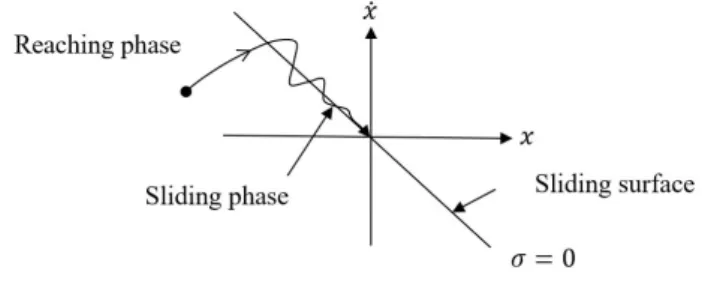
Fig. 2 illustrates the phase plane of sliding mode control. The sliding surface (
) is in a line in the phase plane. Starting from an initial condition, the state trajectory reaches the time-varying sliding surface in the finite time (Slotine and Li, 1991). An active controller is designed to stay the state trajectories on the sliding surface (
). However, control switching may lead to chattering which is a harmful phenomenon of oscillations having finite frequency and amplitude. It is the motion of states oscillating in the neighborhood of a sliding manifold. Despite the advantages of robustness against parameter variations and disturbances in SMC, chattering is the main obstacle in implementing sliding mode controllers.Fig. 2. Phase portrait of SMC.
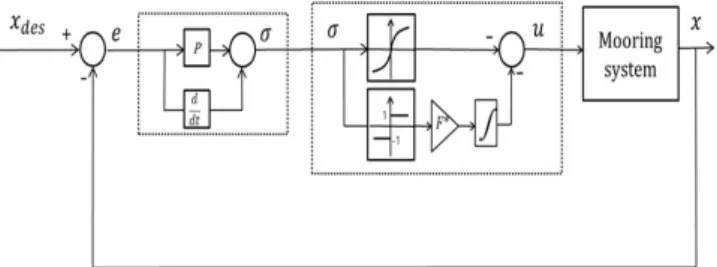
Fig. 3 shows a block diagram of the mooring system control problem considered in this paper using SMC.
describes the desired trajectory,
is the trajectory error,
is the sliding variable,
is the control input and
denotes output variable. In addition, the block diagram describes the detailed structure of STA.Fig. 3. Block diagram of the SMC with STA scheme.
A general dynamical model for variable structure systems (VSS) is described by
(1)where
∈
is the state vector, ∈
is the control input, and
is the vector of continuous nonlinear functions in the mooring system. The VSS controller is intended to achieve tracking of the desired trajectory
by the actual response
of the mooring system. The controller design problem consists of choosing the input
with
-dimensional vector ∈
(Utkin, 1977).
if
if
(2) Thus, the variable structure system technique is a form of discontinuous nonlinear control.The nonlinear mooring system given in equation (1) is further considered as follows:
(3)
(4)where
,
, and
represent the continuous nonlinear functions in the system.It is noted that the control variable
is determined by (2) and
denote the output variable. A typical form for the sliding surface (
) is the following, which depends on just a single parameter (
);
(5)
,
(6)
,
(7)(1) First-order SMC
For the application of variable structure control in equation (2), the control action is discontinuous across the sliding manifold
,
(8)where
is a sufficiently large positive constant which represents the amplitude of the discontinuous control input. that is
(9)Since the control input in SMC scheme in equation (8) basically includes the sign function, it induces undesirable chattering signals.
This approach causes high oscillation of mechanical parts and heat loss in power electrical circuit involving high control activity.
(2) SMC with a STA
The algorithm of super-twisting is based on the second-order SMC. This algorithm can be utilized to reduce chattering considerably. Note that the chattering problem is of great importance when exploiting VSS. This approach is very robust since it does not use any information of the time derivatives. The mooring control
is computed by integration of the discontinuous control generated by a sliding controller. In this paper, STA is described by
(10)
(11)
,
(12)where
and
are the control gains to be designed,
describes the leakage term of STA; it is a second-order sliding mode algorithm, and
is a positive constant to be taken sufficiently large to ensure good tracking performance. This control schemeguarantees the appearance of a 2-sliding mode
, which attracts the trajectories in finite time (Shtessel et al., 2017).(3) Control synthesis for a two-point mooring system As illustrated in Figure 1, the dynamical system is a simplified model of mooring vessel for surge motion. The dynamical model with a unit mass of vessel is described based on the equilibrium of the small motion under external excitations (Lee and You, 2018).
By introducing the time form of
, the equation of motion is now transformed to the non-dimensional model, in which ∈
is the excitation angular frequency (rad/s) and
is the time in seconds (s). The nonlinear behavior of two-point mooring system with an time-varying external disturbance
can be explained as
(13) where
and
.The model parameters in the equation (13) are:
controls the amount of damping,
represents the linear stiffness;
controls the amount of nonlinearity in the restoring force (Banik and Datta, 2010). The state variables are defined as
and
. The governing equation (13) can be rewritten into the state-space representation given in the equations (14) and (15) as follows:
(14)
(15)
(16)A control synthesis based on SMC can be categorized into two phases. At the first step, according to the equation (6), the tracking error vector is defined with
where
is the state vector of surge displacements, and
for the desired state vector. The sliding surface is expressed as
(17)where
is a positive constant which defines the convergence rate of the vessel system. Once the sliding surface is designed, thecontrol law
is can be taken as
(18)where the continuous control law
is constituted by two terms.In order to eliminate chattering problem, STA can be used as follows:
(19)
(20)This control approach is utilized to solve the chattering problem with improving control accuracy simultaneously.
3. Simulation tests
The proposed SMC with super-twisting has been applied to suppress surge oscillations. The parameter values for the vessel model are listed in Table 1.
When no control action is employed or
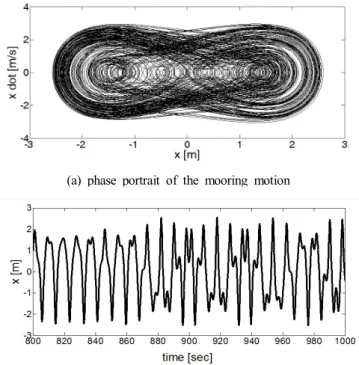
in equation (13), the mooring system exhibits a periodic motion and aperiodic motion depending on the initial conditions. In this case, the periodic excitation is given by
, where
is the amplitude of the external disturbance. For the case of chaotic behavior, the phase portrait and time series curve for
=0.7 (rad/s) and
=1.1 are illustrated in Fig. 4. The chaotic solutions reveal wandering solutions of irregularly oscillating types without a uniform pattern (Lee and You, 2018). In order to achieve the oscillation suppression under large disturbances, the sliding mode controllers are applied to this system. The external disturbances
such as the waves, wind, and currents are given as sin cos [ ] or [ ] (21)
Fig. 5 depicts the control activity using the first-order SMC.
This algorithm can be utilized to the autopilot controller for some kinds of actuators to steer or to propel vessel (e.g., rudder or propeller). However, the actuators will be broken since the control input is chattering back and forth with the full range. Compared to this controller, STA provides a smoother curve without excessive control activity, as illustrated in Fig. 6. Instead of the discontinuous control, STA gets rid of chattering with a smoother
transition.
The dynamic responses of state variables are shown in Fig. 7 for comparison between two controllers. As a result of the two controllers, it is known that STA achieves the desired level of accuracy without chattering. It can be seen that the mooring system needs 15 seconds to come back to the desired level by means of STA. Even if the first-order SMC control law provides good dynamic responses, chattering occurs for control activity and system responses. In general, the proposed STA still provides good responses against large external disturbances while retaining continuity of control activity.
Figs. 8 and 9 represent the comparison between two controllers for the state variables and sliding surface. In contrast with first-order SMC, STA provides that the surge oscillations converge towards the desired level and the maximum peak points drop sharply. The sliding surface
is driven to zero within a finite time by the continuous STA. It can be clearly observed that chattering phenomenon is indeed eliminated by STA.Fig. 10 illustrates the position and velocity errors of the controlled mooring system. The starting and ending point can be seen in the phase plane and the error trajectories are forming in the bounded manifold. It is known that the duffing system exhibits complex nonlinear behavior depending on the initial condition. The controlled the mooring system shows insensitive to that because the surge motion is subject to the surface equation itself. Figs. 11 and 12 illustrate the effect of the gain
of the super-twisting controller. When
is increased, the dynamic responses of the mooring system reaches the desired level faster. Finally, it should be noted that the chattering elimination is of great importance when exploiting the benefits of a sliding mode controller to a wide range of applications including oscillation suppression.Parameters Values
Structure type Vessel
Mass of moored vessel 1.2
×
105
Specific gravity of concrete 2.4 Number of anchored mooring lines 2
Young’s modulus of mooring lines 20.595
×
109
0.01
0.0213
0.319
Table 1. Specifications of mooring system (Shah et al., 2005)
(a) phase portrait of the mooring motion
(b) time series for frequency ratio
=0.7 rad/s and
=1.1 Fig. 4. Phase portrait for surge oscillations (a) and time historycurve (b) for
=0.7 rad/s and
=1.1 (without controller).Fig. 5. Control input using first-order SMC.
Fig. 6. Control input using STA.
Fig. 7. Comparison of surge oscillation with displacement.
0 5 10 15 20 25
-0.5 0 0.5 1 1.5 2 2.5
time [sec]
x dot [m/s]
First-order SMC Super-twisting
Fig. 8. Comparison of surge oscillations with velocity.
0 5 10 15 20 25
-0.5 0 0.5 1 1.5 2 2.5
time [sec]
s
First-order SMC Super-twisting
Fig. 9. Comparison of sliding surface.
-0.2 0 0.2 0.4 0.6 0.8
-1 0 1 2 3
e [m]
e dot [m/s]
Fig. 10. Phase plane of the controlled motion using STA.
0 5 10 15 20 25
-0.5 0 0.5 1 1.5 2
time [sec]
e [m]
F* = 10 F* = 15 F* = 25
Fig. 11. Control gain effect of position errors using STA.
0 5 10 15 20 25
-2 -1 0 1 2 3 4
time [sec]
s
F* = 10 F* = 15 F* = 25
Fig. 12. Control gain effect of sliding surface using STA.
4. Conclusions
The robust SMC with STA has been presented for controlling surge oscillations of a two-point mooring system under large external disturbances. In common with the strengths of SMC, the control system provides good dynamic results guaranteeing accuracy, robustness and simple implementation.
Even though the state variables of first-order SMC converge towards the desired level, this control algorithm usually cannot prevent chattering due to the discontinuous structure. However, the super-twisting controller provides the desired level of accuracy and it eliminates chattering phenomenon successfully. Even the large external disturbances are excited, the super-twisting controller still compensates it. Super-twisting controller is an effective method for the oscillation suppression of nonlinear mooring system since it solves chattering of first-order SMC. In addition, this paper describes the phase plane of the controlled mooring system and the control gain effect of the super-twisting controller. The error trajectories are forming in the bounded region by means of STA.
Future work will be extended to the adaptive gain of STA for controlling surge oscillations of mooring motion.
References
[1] Banik, A. K. and T. K. Datta(2010), Stability Analysis of Two-Point Mooring System in Surge Oscillation, Journal of Computational and Nonlinear Dynamics, Vol. 5, pp. 1-8 (021005).
[2] Bigdeli, N. and H. A. Ziazi(2017), Finitetime Fractional-order Adaptive Intelligent Backstepping Sliding Mode Control of Uncertain Fractional-order Chaotic Systems, Journal of the Franklin Institute, Vol. 354, pp. 160-183.
[3] Davila, A., J. Moreno and L. Fridman(2010), Variable Gains Super-Twisting Algorithm: A Lyapunov Based Design, Proceedings of American Control Conference, Baltimore, MD, USA, pp. 968-973.
[4] Gottlieb, O. and S. C. S. Yim(1992), Nonlinear Oscillations, Bifurcations and Chaos in a Multi-Point Mooring System with a Geometric Nonlinearity, Applied Ocean Research, Vol. 14, pp. 241-257.
[5] Heng, C. T., Z. Jamaludin, A. Y. B. Hashim, L. Abdullah, and N. A. Rafan(2017), Design of Super Twisting Algorithm for Chattering Suppression in Machine Tools, International of Journal of Control, Automation and Systems, Vol. 15, No. 3, pp. 1259-1266.
[6] Khadra, F. A.(2016), Super-Twisting Control of the Duffing-Holmes Chaotic System, International Journal of Modern Nonlinear Theory and Application, Vol. 5, pp.
160-170.
[7] Kuo, T. C., Y. J. Huang, C. H. Chang and C. Y. Chen(2008), Robust Suppression Sliding Mode Control for Uncertain Duffing-Holmes Chaotic Systems, Engineering Letters, Vol.
16, No. 3, pp. 316-320.
[8] Lee, H. and V. I. Utkin(2007), Chattering Suppression Methods in Sliding Mode Control Systems, Annual Reviews in Control, Vol. 31, pp. 179-185.
[9] Lee, S. D. and S. S. You(2018), Dynamical Analysis of the Moored Vessel System under Surge Excitations, Journal of the Korean Society of Marine Environment & Safety, Vol.
24, No. 2. pp. 140-145.
[10] Levant, A.(1993), Sliding Order and Sliding Accuracy in Sliding Mode Control, International Journal of Control, Vol.
58, pp. 1247-1263.
[11] Loria, A., E. Panteley and H. Nijmeijer(1998), Control of the Chaotic Duffing Equation with Uncertainty in All Parameters, IEEE Transactions on Circuits and Systems I: Fundamental
Theory and Applications, Vol. 45 , No. 12, pp. 1252-1255.
[12] Mitra, R. K., A. K. Banik and S. Chatterjee(2017), State Feedback Control of Surge Oscillations of Two-Point Mooring System, Journal of Sound and Vibration, Vol. 386, pp. 1-20.
[13] Rivera, J., L. Garcia, C. Mora, J. J. Raygoza and S.
Ortega(2011), Super-twisting Sliding Mode in Motion Control Systems, In: Bartoszewicz, A. Sliding Mode Control, Chapter 13, InTech, pp. 237-254
[14] Shah, A. A., A. Umar and N. A. Siddiqui(2005), A Methodology for Assessing the Reliability of Taut and Slack Mooring Systems against Instability, Ocean Engineering, Vol.
32, pp. 1216-1234.
[15] Shtessel, Y. B., J. A. Moreno and L. M. Fridman(2017), Twisting Sliding Mode Control with Adaptation: Lyapunov Design, Methodology and Application, Automatica, Vol. 75, pp. 229-235.
[16] Slotine, J. J. E. and W. Li(1991), Applied Nonlinear Control, 1st Edition, Prentice-Hall, Englewood Cliffs, NJ, USA, pp.
276-303.
[17] Utkin, V. I.(1977), Variable Structure Systems with Sliding Modes, IEEE Transaction on Automatic Control, Vol. 22, No.
2, pp. 212-222.
[18] Utkin, V. I.(2013), On Convergence Time and Disturbance Rejection of Super-Twisting Control, IEEE Transactions on Automatic Control, Vol. 58, No. 8, pp. 2013-2017.
Received : 2018. 10. 05.
Revised : 2018. 12. 18.
Accepted : 2018. 12. 28.
![Fig. 7. Comparison of surge oscillation with displacement. 0 5 10 15 20 25-0.500.511.522.5 time [sec]x dot [m/s] First-order SMC Super-twisting](https://thumb-ap.123doks.com/thumbv2/123dokinfo/5073747.317086/6.892.78.432.163.329/fig-comparison-surge-oscillation-displacement-order-super-twisting.webp)
