• 검색 결과가 없습니다.

Evaluation of Application of Possibility of Visual Surveillance System for Cow Heat Detection

N/A
N/A
Protected

Academic year: 2021

Share "Evaluation of Application of Possibility of Visual Surveillance System for Cow Heat Detection"

Copied!
7
0
0

로드 중.... (전체 텍스트 보기)

전체 글

(1)

http://dx.doi.org/10.12750/JET.2016.31.2.137

Introduction

It is needed to make an efficient estrus detection system to obtain good fertility in time in cows(Bruyere et al. 2012). In USA $ 116 net loss per cow due to infertility. In the US dairy industry(Peralta et al. 2005) were total loosed $ 1.3 billion. Additionally, 37% were loosed for herd replacements and calves because of infertile cows were culled(Peralta et al.

2005). By improving the estrus detection rates and conception rates decreased the losses(Peralta et al. 2005). During last 30 yr(Bruyere et al. 2012) many system were changed such as cow genetics, hard management and milk yield. Duration and intensity of estrus expression were also decreased(Dransfield et al. 1998). From 1970s to recent heat standing duration were reported 15 h vs<9 h(At-Taras and Spahr 2001;

Esslemont and Bryant 1976; Lopez et al. 2004; Peralta et al.

2005; Roelofs et al. 2005b). Also reported, in recent and 1970s standing events per estrus period were less than 9 vs 50(At-Taras and Spahr 2001; Lopez et al. 2004; Peralta et al.

2005; Roelofs et al. 2005b). Estrus detection failure and misdiagnosis were loosed annually $300 million in USA and by direct visual observation efficiency of detection of estrus

recently < 50%(Senger 1994). In dairy farm for removing the problem used different aids of estrus detection(Bruyere et al.

2012). It has been reported that physical activity were increased with used of pedometers or electronic activity tags whereas estrus detection efficiency 37% to 90%(At-Taras and Spahr 2001; Lovendahl and Chagunda 2010; Lyimo et al.

2000; Peralta et al. 2005; Roelofs et al. 2005a). Detection of the standing mount position with efficiencies were 65% to 72%, from 26% to 98%, and from 37% to 92%, respectively(Bruyere et al. 2012) by mechanical heat mount detectors(Williamson et al. 1972), tail painting(Palmer et al.

2010; Xu et al. 1998), or electronic pressure-sensing systems(At-Taras and Spahr 2001; Dransfield et al. 1998;

Lopez et al. 2004; Palmer et al. 2010; Peralta et al. 2005; Xu et al. 1998).

In this situation, many kinds of estrus detection systems were reported. Activity meter system, developed in Sweden, tried to detect estrus. But the detect rate was low and the equipment were expensive. The Heat Watch II from the Unites States detect mounting behavior by radio frequency. Estrus detection was measured with a pressure-sensing system by Heat watch(Xu et al. 1998). For continuous mounting

Evaluation of Application of Possibility of Visual Surveillance System for Cow Heat Detection

Heesu Park

1

, Pantu Kumar Roy

1

, Youngju Noh

1

, Hyuk Park

2

, Joongho Lee

3

, Sangtae Shin

1

, Jongki Cho

1,*

1

College of Veterinary Medicine, Chungnam National University, Daejeon, 34134, Republic of Korea

2

EZfarm Co. Ltd, Anyang-si, Gyeonggi-do, 13929, Republic of Korea.

3
CPS global, Seoul, Republic of Korea.

ABSTRACT

This study was conducted to evaluate a visual surveillance system. The advancement of recording technology and network service make it easy to record and transfer the videos. Moreover, progressed recognition technology help to make a distinction each other. Cows show distinguishing behaviors during their estrus period. The mounting is one of the behaviors. The result was different depending on the breed of the cows and the size of the farm. In the case of Korean native cattle, the estrus detection rate was 71.15%, however, dairy cows, the estrus detection rate was 39.38%. At the farms having below 6 modules, the estrus detection rate was 87.41%. On the other hand, at the farms having over 6 modules, the estrus detection rate was 77.78%. With the proper progress, the visual surveillance system can be used to detect heat detection.

(Key words : Cow, Heat, Detection, Visual Surveillance)

* Correspondence: Jongki Cho

Tel: +82-42-821-6788

E-mail: [email protected]

(2)

activities, it’s was very helpful with visual observation(Xu et al. 1998). However, it also has low detect rate and expensive equipment. Heatime from the United Kingdom and Gyuho Saas from Japan are other heat detect systems, but they need high-priced equipment. Heatime sensed amount of cow activity to detect heat period, and Gyuho Saas counted steps of cows because of the increase of steps during their estrus period. In Korea, a heat detection system with estrus detector was developed to detect estrus. This system detect the shock originated from the mounting. But this system showed false positive. Because cows can press ground without estrus, and sometimes the detector is bothering cows and it makes them move their legs.

An estrus detecting system using video tracking systems is selected for this study because any devices are not needed to be attached to the cattle. In this system, a visual surveillance system is used to detect the mounting behavior of cows, and the video is sent to the owner of a stock farm by an application. In this system, any kind of detector is not attached to cows and the owner accept only mounting video through their smartphones. In laboratory mice(Noldus et al.

2001; Steele et al. 2007) and small animals(Endo et al. 2016) 1970s, have been studying animals behaviors with automated video tracking systems. It was reliable and sensible for detection of zebrafish behavior with exposure of repercussions toxicants(Oliva Teles et al. 2015). In pairs of rats(Peters et al.

2016), reported that it was sophisticated analysis system and social quantifying interaction by continuous video tracking.

Now a days many specialized computer software system for animal tracking were developed by digital image processing technology with time series data which were coordinated target positions(Endo et al. 2016). Movement distance and speed of movement were calculated by vector analysis of trajectory data. By using statistical models some complex behavior such as social interaction in male and female mice were identified(Arakawa et al. 2014; Takahashi et al. 2010).

The aim of this study were to establish in Korean native cattle and dairy cows for heat detection by visual surveillance.

As a result for mounting behavior detection and recorded mounting behavior were evaluated by height. In previous mounting images were used compared with recorded video.

Materials and Methods

1. Selection of the farm

A farm of Korean native cattle and a farm of dairy cows are chose to develop visual surveillance system. Then, cameras were located in 7 farms of Korean native cattle and 3 farms of dairy cows to test the possibility of visual surveillance system for cow heat detection.

2. Development of camera system

To detect the mounting behavior, one of the estrus behavior, in the cattle shed sized 300m

2

4 cameras were located in 4 corners of the cattle shed 2.5~3.5 feet in height. Among the PTZ (PAN, Tilt, and Zoom) functions, PT function was excepted because the observation area can be changed. Zoom function and AF (Auto Focus) function were used to make it possible to adjust the downsizing, upsizing, and focus of the observation area. Thus, specifications of the lens, among the camera hardware specifications, were variable focus lens for 15m, 3.3~10mm and IR lamp, for detecting all day long mounting behavior using infrared rays. The lamp was turned on and off automatically by the intensity of light. Resolution of the cameras were 200 million pixels and 1920x1080 (1080P), and the resolution tried to take 1280x720 (720P).

Input and output of the data were through the TCP/IP because of the easiness of using.

For the system, any communication method of the system was designed to use class C IP. For building the class C TCP/IP system, a router independence from outside was installed to make class C routing system, then the IP cameras were assigned appropriate IP address. The video data acquired from the IP cameras in the cattle shed were accepted by 2 device, general video storage device and program driving device, through the cameras’ fixed IP addresses. NVR was used for general storage device and it was used to save regular recorded videos for comparison analysis in 2T HDD. The program driving device also were used 2T HDD for saving the files after driving the program. The device driving the program was set up Intel 4790K, 16G RAM, NVIDIA GeForce 960 or above.

The first method for detecting the mounting behavior was making a decision by the height of the video. A behavior of above the specific height was judged to the mounting behavior.

However, the setup of specific height was difficult because of

(3)

the systemic problem of the cattle sheds not built in standard size. Furthermore, in the cattle sheds in standard, any objects above the specific height including agricultural machines and even breeders can be detected. These problems make the system have many errors. Impossible of separating the detecting part and the general part leads the program driving devices to need much highly recommended specifications.

In these reasons, the modified program was based on the first

method for detecting the mounting behavior, and, input recorded mounting behaviors of cattle. The mounting behaviors were searched by the comparison of the images of previously recorded and the images of recently recorded. The data were collected by recording mounting behaviors of cattle, to be compared by the program. The side cameras need wide angle, infrared ray function of over 30 meters, and 802.11n or later of wireless standard. The upside cameras need PTZb (pan, tilt, and zoom)

Table 1. Standard of cameras used in visual surveillance system

Standard Side Cameras Upside Cameras

Pixels 5M PIXELS 5M PIXELS

Charge Coupled Device 1/2.5” Aptina CMOS Sony 700TVL 1/3 CCD

Angle Over 120◦ PTZ(pan/tilt/zoom) function

Distance of Infrared Ray Function

Recording 40m 130m

ZOOM Not needed Optical zoom 27X, digital zoom 10X,

totally 270X

Network standard 802.11 b/g/n

10/100 RJ45

802.11 b/g/n 10/100 RJ45

Note Wiper

Contamination(dust/humidity) considered

Wiper

Contamination(dust/humidity) considered

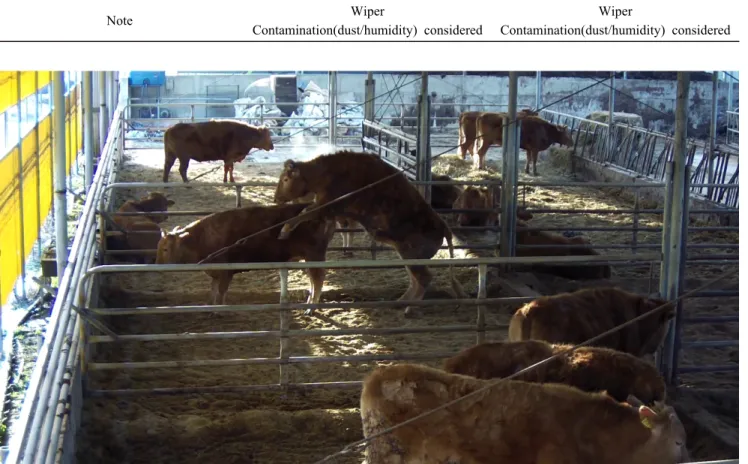
Figure 2. A photo captured in the video recorded by visual surveillance system. Cameras record videos for cow heat detection.

(4)

function, infrared ray function of over 100 meters, and 802.11n or later of wireless standard. All cameras are developed considering the condition of farms, for example, dust or humidity. More information of the cameras are in Table 1.

3. Algorithm of camera system and save & transfer of recorded video An algorithm called ‘edge detection algorithm’ allows the cameras to identify each cow (Figure 1). This algorithm has relationship with image segment. Image segmentation is a necessary step for object recognition and understanding (Somkantha et al. 2011). The videos recorded by the cameras (Figure 2) are sent to video control system, then to video DB through video DB transfer module. After of all, the videos are sent to central server communication module and mobile service process module through the video process server system by video process algorithm.

Results

From the July 2015 to January 2016, 981 videos were recorded by the cameras located in 8 Korean native cattle farms and 160 videos in 4 dairy cows farms (Table 2). Of these videos, number of estrus videos were 698 and 63, and, the estrus detection rate were 71.15% and 39.38%.

Depending on the size of the farm, the estrus detection rate showed different percentage (Table 3). At the farms having below 6 modules, the number of videos was 135 and the number of estrus videos was 118. The estrus detection rate was 87.41%. On the other hand, at the farms having over 6 modules, the number of video was 18 and the number of estrus video was 14. The estrus detection rate was 77.78%.

Two farms tried artificial fertilization. The sum of the days of estrus of the two farms was 100 days, and the number of artificial fertilization was 29. The fertilization rate was 29%.

Discussion

Many kinds of methods can be used to detect estrus in cow, such as visual observation, changes in body temperature, changes in vaginal mucus resistance, and recording of mounting activity(Talukder et al. 2014). Among this, recording of mounting activity have become an efficiency way to detect estrus, due to the development of camera system, identifying algorithm, and network service. The visual surveillance system was more effective than the direct visual method for detection of standing mount positions(Bruyere et al. 2012).

In this study, the breed of the cow and the size of the farms

Korean Native Cattle Dairy Cows

Number of Videos 981 160

Number of Estrus Videos 698 63

Estrus Detection Rate(%) 71.15 39.38

Table 2. The comparison between the estrus detection rate of Korean native cattle and dairy cows

Size of the Farm(module) ≤6 >6

Number of Videos 135 18

Number of Estrus Videos 118 14

Estrus Detection Rate(%) 87.41 77.78

Table 3. Number of videos, number of estrus videos and estrus detection rate of each size of the farm

Days of Estrus(Days) Artificial fertilization Fertilization rate(%)

100 29 29

Table 4. Fertilization rate of the cows

(5)

affected the estrus detection rate. The estrus detection rate of Korean native cattle (71.15%) was higher than that of dairy cows (39.38%). It seems color or pattern of an individual can make an effect to recognize each one. A Korean native cattle is brown and solid color, however, a dairy cow has black and white color and pied pattern. Seeing that the color of ground of the cattle sheds in this study is brown, same with the color of Korean native cattle, the camera system were seemed to be able to recognize each objects in same color. However, the camera system looks having difficult to recognize objects in the mixed color. Additionally, to the fact that dairy cows have pied pattern of black and white color, the irregularity of their patterns makes it more difficult to recognize them and their estrus behaviors.

It seems that the size of the farm also can affect the estrus detection rate. The estrus detection rate of farms having below 6 modules was 87.41%, on the other hand, the estrus detection rate of the farms having over 6 modules was 77.78%. It seems that there is a correlation between the area recorded by the cameras and the estrus detection rate. The estrus detection rates of the farms having 10 modules were 75% and the estrus detection rates of the farms having 13 modules were 33%. We concluded that the best size of the farms for detecting estrus behaviors efficiently were 6 modules. If a farm had more than 6 modules, it would be better to divide the farm into several sections so the size of each section become the size of 6 modules.

The fertilization rates were 29%. The behavior mounting other cows were not always meaning estrus(At-Taras and Spahr 2001). The cows in estrus period, show many times of mounting behaviors, leaking of vaginal mucous, swollen and increased temperatures in vulva and muzzle(Talukder et al. 2014). Less prominent behaviors were licking, flehmen, resting with the chin on the back of another cow, restlessness, mounted without standing, sniffing the vulva of another cow, rubbing and aggressiveness(Kerbrat and Disenhaus 2004; Roelofs et al. 2010;

Roelofs et al. 2005b; Saint-Dizier and Chastant-Maillard 2012), resting with the chin on another cow(Kerbrat and Disenhaus 2004; Roelofs et al. 2010; Roelofs et al. 2005b; Saint-Dizier and Chastant-Maillard 2012). Vulvar and muzzle temperatures 48 h were significantly decreased ovulation because of CL regression and during timing of estrus increased temperature 24 h before coincided ovulation(Talukder et al. 2014). For accurate estrus detection more information were required. For estrus

detection 20% of the cows were expressed by licking and rubbing(Peralta et al. 2005). Also the artificial fertilization in accurate time can affect to the fertilization rate.

For low intensity and short-duration estruses would be detected by video system(Bruyere et al. 2012). Low intensity (< 2.7 standing events per h) and short in duration were most important in 24% to 53% of the estruses in dairy cows(Dransfield et al. 1998; Lopez et al. 2004). It have been reported that at night camera were detected estrus because of 70% of standing mounts took place between 19:00 and 7:00(Dransfield et al. 1998). Similarly in another reporter were also discussed(Peralta et al. 2005). By using time-lapse video recording reported in cows from 18:01 to 06:00(Peralta et al.

2005) first estrus signs were shown 56% during estrus time interval(Peralta et al. 2005). In this consideration, visual surveillance system for cow heat detection can provide accurate information to the owners of the farm. It can increase the reproduction rate and the profit of the farms.

Conclusions

In conclusion, color or pattern of an individual and the size of the farm make an effect to recognize estrus behaviors. It would improve performance and effectiveness of the estrus detect system to develop more accurate system to detect estrus behaviors of several types of cows and install cameras economically.

Video survey system were more effective than direct visual detection of estrus(Bruyere et al. 2012). Otherwise video survey system were more efficient than camera because of many things needed to fixing such as camera disposition, resolution and motion sensor(Bruyere et al. 2012). Due to low expensive of video camera, computers and internet calving surveys were comparatively easier than direct visual(Bruyere et al. 2012). From the above discussion, for accurate detection of estrus video survey system is more effective and widely use in future(Bruyere et al. 2012).

Acknowledgements

This work was supported by Korea Institute of Planning and

Evaluation for Technology in Food, Agriculture, Forestry and

(6)

Fisheries(IPET) through Advanced Production Technology Development Program, funded by Ministry of Agriculture, Food and Rural Affairs (MAFRA)(314038-02-1-HD030)

References

Arakawa T, Tanave A, Ikeuchi S, Takahashi A, Kakihara S, Kimura S, Sugimoto H, Asada N, Shiroishi T, Tomihara K, Tsuchiya T, Koide T. 2014. A male-specific QTL for social interaction behavior in mice mapped with automated pattern detection by a hidden Markov model incorporated into newly developed freeware. J Neurosci Methods 234:127-134.

At-Taras EE, Spahr SL. 2001. Detection and characterization of estrus in dairy cattle with an electronic heatmount detector and an electronic activity tag. J Dairy Sci 84(4):792-798.

Bruyere P, Hetreau T, Ponsart C, Gatien J, Buff S, Disenhaus C, Giroud O, Guerin P. 2012. Can video cameras replace visual estrus detection in dairy cows? Theriogenology 77(3):525-530.

Dransfield MB, Nebel RL, Pearson RE, Warnick LD. 1998.

Timing of insemination for dairy cows identified in estrus by a radiotelemetric estrus detection system. J Dairy Sci 81(7):1874-1882.

Endo N, Rahayu LP, Arakawa T, Tanaka T. 2016. Video tracking analysis of behavioral patterns during estrus in goats. J Reprod Dev 62(1):115-119.

Esslemont RJ, Bryant MJ. 1976. Oestrous behaviour in a herd of dairy cows. Vet Rec 99(24):472-475.

Kerbrat S, Disenhaus C. 2004. A proposition for an updated behavioural characterisation of the oestrus period in dairy cows. Appl Anim Behav Sci 87(3-4):223-238.

Lopez H, Satter LD, Wiltbank MC. 2004. Relationship between level of milk production and estrous behavior of lactating dairy cows. Anim Reprod Sci 81(3-4):209-223.

Lovendahl P, Chagunda MG. 2010. On the use of physical activity monitoring for estrus detection in dairy cows. J Dairy Sci 93(1):249-259.

Lyimo ZC, Nielen M, Ouweltjes W, Kruip TA, van Eerdenburg FJ. 2000. Relationship among estradiol, cortisol and intensity of estrous behavior in dairy cattle. Theriogenology 53(9):1783-1795.

Noldus LP, Spink AJ, Tegelenbosch RA. 2001. EthoVision: a

versatile video tracking system for automation of behavioral experiments. Behav Res Methods Instrum Comput 33(3):398-414.

Oliva Teles L, Fernandes M, Amorim J, Vasconcelos V. 2015.

Video-tracking of zebrafish (Danio rerio) as a biological early warning system using two distinct artificial neural networks: Probabilistic neural network (PNN) and self-organizing map (SOM). Aquat Toxicol 165:241-248.

Palmer MA, Olmos G, Boyle LA, Mee JF. 2010. Estrus detection and estrus characteristics in housed and pastured Holstein-Friesian cows. Theriogenology 74(2):255-264.

Peralta OA, Pearson RE, Nebel RL. 2005. Comparison of three estrus detection systems during summer in a large commercial dairy herd. Anim Reprod Sci 87(1-2):59-72.

Peters SM, Pinter IJ, Pothuizen HH, de Heer RC, van der Harst JE, Spruijt BM. 2016. Novel approach to automatically classify rat social behavior using a video tracking system. J Neurosci Methods.

Roelofs J, Lopez-Gatius F, Hunter RHF, van Eerdenburg FJCM, Hanzen C. 2010. When is a cow in estrus? Clinical and practical aspects. Theriogenology 74(3):327-344.

Roelofs JB, van Eerdenburg FJ, Soede NM, Kemp B. 2005a.

Pedometer readings for estrous detection and as predictor for time of ovulation in dairy cattle. Theriogenology 64(8):1690-1703.

Roelofs JB, van Eerdenburg FJ, Soede NM, Kemp B. 2005b.

Various behavioral signs of estrous and their relationship with time of ovulation in dairy cattle. Theriogenology 63(5):1366-1377.

Saint-Dizier M, Chastant-Maillard S. 2012. Towards an Automated Detection of Oestrus in Dairy Cattle. Reprod Domest Anim 47(6):1056-1061.

Senger PL. 1994. The estrus detection problem: new concepts, technologies, and possibilities. J Dairy Sci 77(9):2745-2753.

Somkantha K, Theera-Umpon N, Auephanwiriyakul S. 2011.

Boundary detection in medical images using edge following algorithm based on intensity gradient and texture gradient features. IEEE Trans Biomed Eng 58(3):567-573.

Steele AD, Jackson WS, King OD, Lindquist S. 2007. The power of automated high-resolution behavior analysis revealed by its application to mouse models of Huntington's and prion diseases. Proc Natl Acad Sci U S A 104(6):1983-1988.

Takahashi A, Tomihara K, Shiroishi T, Koide T. 2010.

Genetic mapping of social interaction behavior in B6/MSM

(7)

consomic mouse strains. Behav Genet 40(3):366-376.

Talukder S, Kerrisk KL, Ingenhoff L, Thomson PC, Garcia SC, Celi P. 2014. Infrared technology for estrus detection and as a predictor of time of ovulation in dairy cows in a pasture-based system. Theriogenology 81(7):925-935.

Williamson NB, Morris RS, Blood DC, Cannon CM. 1972. A study of oestrous behaviour and oestrus detection methods in a large commercial dairy herd. I. The relative efficiency of methods of oestrus detection. Vet Rec 91(3):50-58.

Xu ZZ, McKnight DJ, Vishwanath R, Pitt CJ, Burton LJ.

1998. Estrus detection using radiotelemetry or visual observation and tail painting for dairy cows on pasture. J Dairy Sci 81(11):2890-2896.

Received June 24, 2016, Revised June 30, 2016,

Accepted June 30, 2016

수치

Figure 2. A  photo captured in the video recorded by visual surveillance system. Cameras record videos for cow heat detection.
Table 3. Number of videos, number of estrus videos and estrus detection rate of each size of the farm

참조

관련 문서