Effect of Cholesterol Supplementation in Freezing Medium on the Survival and Integrity of Human
Sperm after Cryopreservation
Jung Jin Lim
1,2, Su Ye Sung
1, Kye-Seong Kim
2, Seung-Hon Song
1, Woo Sik Lee
1, Tae Ki Yoon
1, Dong Ryul Lee
1*1
Fertility Center of CHA General Hospital, CHA Research Institute, Pochon CHA University, Seoul, 135-081, Korea,
2
Department of Anatomy and Cell Biology, College of Medicine, Hanyang University, Seoul, 133-791, Korea
콜레스테롤이 동결-해동 후 인간정자의 생존과 기능보존에 미치는 영향 임정진1,2·성수예
1·김계성
2·송승훈
1·이우식
1·윤태기
1·이동률
1*
강남 차병원 여성의학연구소 불임의학연구실1, 한양대학교 해부·세포 생물학교실2
목 적: 정자의 동결 과정에서 생길 수 있는 급격한 온도 차에 의한 동결 충격이나 동결 상해등에 의한 세포막 의 손상, 세포의 기능 장애 등은 정자의 수정능에 영향을 미칠 수 있다. 본 연구에서는 인간 정자를 동결 보존하 는 과정에서 콜레스테롤 전처리가 정자의 운동성 및 기능보존에 미치는 영향을 알아보고자 하였다.
연구방법: 본원을 내원한 14명 남성의 정자를 대상으로 콜레스테롤을 첨가하지 않은 대조군 (control)과 여러 농도
의 콜레스테롤을 동결보존액에 첨가한 실험군에서 정자의 동결-융해 후 상태를 다음 3가지 방법으로 비교, 분석 하였다. 1) 정자 분석, 2) calcium ionophore로 유도된 첨체 반응 검사, 3) 정자 염색질 구조 분석 (sperm chromatin structure assay).
결 과: 첫째로 인간 정자의 운동성은 0.5 μg 농도의 콜레스테롤을 첨가한 동결보존액에서 동결-해동하였을 경 우, 콜레스테롤을 첨가하지 않은 군에 비해 유의적 차이를 보이며 증가하는 것을 확인하였다 (33.46±1.48% vs.
30.10±1.07%, p<0.05). 다음으로 동된 정자의 첨체 반응 검사에서도 콜레스테롤을 첨가한 동결보존액에서의 첨체 반응이 일어나는 정자의 비율이 첨가하지 않은 군에 비해 유의하게 높게 관찰되었다 (53.60±1.60% vs. 47.40±
1.86%, p<0.05). 마지막으로 정자 염색질 구조 분석에서는 콜레스테롤을 첨가한 군이 첨가하지 않은 군에 비해 정 자의 DNA손상이 적게 나타남을 확인하였다.
결 론: 본 실험은 동결보존액을 통한 정자 원형질막 내 콜레스테롤 함유량의 증가가 동결-융해 후 정자의 운 동성과 수정능(capacitation status)을 증가시키고 DNA 손상을 방지하는 역할을 한다는 결과를 보여주었다. 이러한 결과를 통해 동결보존액 내 콜레스테롤의 첨가는 인간 정자의 동결보존 동안 발생할 수 있는 동결 상해를 줄여 줄 수 있는 유용한 방법으로 사료된다. [Korean. J. Reprod. Med. 2008; 35(3): 203-212.]
중심단어: 콜레스테롤, 인간 정자, 유리화 동결, 첨체 반응, 정자 염색질 구조 분석
Sperm cryopreservation, a valuable adjunct technology for various assisted conception method,
1can induce
partially damages that result in reduced fertility compared to fresh or cooled sperm. Part of this damage occurs to sperm membranes when the cells are cooled from room temperature to 1℃. As sperm are cooled below 18℃, the membrane phospholipids undergo a phase transition
주관책임자: 이동률, 우) 135-081 서울특별시 강남구 역삼동 605, 강남 차병원 여성의학연구소 불임의학연구실
Tel: (02) 3468-3421, Fax: (02) 501-8704 e-mail: [email protected]
from a liquid to gel-state. During this phase transition, phospholipids are lost from the plasma membrane leading to increased membrane permeability, membrane disrup- tion, and cell death.
2Hence, variation in susceptibility to cold shock among species appears to be correlated with membrane phospholipids composition. Generally species with a greater cold shock resistance for sperm are characterized by a high ratio of cholesterol to phos- pholipid in sperm membrane.
3,4Cholesterol is universally present in large amounts in eukaryotic plasma membranes and has a unique ability to increase lipid order in fluid membranes while maintaining the fluidity and diffusion rates. Cholesterol imparts low permeability barriers to lipid membranes and provides for large mechanical coherence.
5However, cholesterol can easily be incorporated into or extracted from the plasma membranes of cells using cyclodextrins. In fact, the level of cholesterol associating with the sperm increased linearly with the increasing concentration of cholesterol-loaded cyclodextrins (CLCs) incubated with the sperm. It should subsequently double the cholesterol to phospholipid ratio and increase membrane fluidity at low temperature.
6,7Also, Purdy et al. indicated that the cholesterol/phospholipid ratio of the plasma membrane is a major determinant in plasma membrane fluidity and stability during cryopreservation. When CLCs were added to bovine sperm prior to cryopreservation, higher percentages of motile and membrane intact sperm were recovered after thawing compared to untreated sperm.
8Similar results have also been reported for stallion sperm treated with CLCs.
2However, in human sperm that posses very high cholesterol/phospholipid ratios, it was suggested that cholesterol content does not protect cryo- damage.
9But, by brief exposure before freezing, the effect of transient altering of cholesterol content on human sperm cryopreservation did not evaluated yet.
In human assisted reproduction program (ART), a proper freezing method extends the availability of sperm
to be used for intrauterine insemination (IUI) or in vitro fertilization-embryo transfer (IVF-ET) programs. But fertility of frozen-thawed sperm is poorer than that of fresh sperm due to its non-optimized protocols or media for cryopreservation. In this report, we have focused on the effect of CLCs in freezing medium on structural and functional integrity of sperm, as well as survival rate after freezing/thawing of human sperm.
MATERIALS AND METHODS 1. Preparation and analysis of human sperm
Sperm samples obtained from male patients under- taking infertility treatment (n=9) and healthy donors (n=5) were studied. All samples were collected by masturbation after 3~5 days of sexual abstinence. All participants gave their informed consent for the utilization of a fraction of their sperm for research purposes. The institutional review board of CHA General Hospital, Seoul, Korea, approved this clinical study. After the liquefaction of sperm at 37℃ for 10 minutes, the samples were examined for concentration and motility according to the WHO guidelines on a Mackler
®counting chamber (Sefi Medical Instruments Ltd., Haifa, Israel). Sperm viability was studied by a dye exclusion method, follo- wing WHO guidelines, using eosin (Sigma, St. Louis, MO).
10Then, the sperm was standardized to 50 million/
ml to provide enough sperm for all experiments by centrifugation (5 min at 1,500 rpm).
2. Freezing and thawing of sperm
Two cryoprotectant media were used in the experi- ments. Cryopreservation medium for this research was prepared using the Sperm Freezing Medium (SFM, Medi-Cult, Jyllinsge, Denmark) containing glycerol.
Freezing media were prepared by using SFM treated
with 0.1, 0.5, and 1.0 μg CLC (Sigma)/10
6sperm (desig-
nated as SFM+0.1 Ch, SFM+0.5 Ch, and SFM+1.0 Ch).
Dehydration of sperm samples was performed by slow addition of SFMs with continuous shaking. After a short incubation at room temperature (10 min), the aliquot sperm samples were transferred into cryovials and cooled in nitrogen vapors for 30 min. When sperm was totally frozen, the aliquots were immersed in liquid nitrogen at -196℃ until thawing and analysis. Aliquots of the samples were thawed by immersion into running water for 10 min at room temperature, following incubation for 10 min at 37℃. Then, sperm concentration, motility, and viability of thawed sperm were re-analyzed as described above and recorded. All the determinations were done blindly by two different experts, and the results are the mean of the different observations when they presented less than 5% of discordance. And the incorporated concentration of cholesterol in sperm just after thawing and removal after washing for 6 hours were determined using cholesterol liquicolor enzymatic assay (Stanbio Laboratory, Boerne, TX). Sperm samples were diluted 1:1 (v:v) with lysate buffer (0.4% Triton X-100 in DPBS) for 1hour to solubilize the plasma membranes. Samples were diluted 1 : 7.5 : 2.5 (v:v:v) with regent ENZ (buffer, pH 7.0, 100 mmol/l, cholesterol esterase 600 U/l, cholesterol oxidase 380 U/L, catalase 600 U/ml and HDAOS 0.42 mmol/l) and SUB (peroxi- dase 1000 U/l, 4-aminoantipyrin 1.00 mmol/l, buffer, pH 7.0, 100 mmol/l, sodium azide 0.005%, detergents
>1%) and allowed to incubate for 10 min at 37℃.
Samples were than centrifuged to remove the cells and the supernatant was analyzed for cholesterol content in spectrophotometer with wavelength set to 550 nm.
Cholesterol concentrations of the sperm samples were compared to kit contained known amounts of cholesterol.
3. Induction and evaluation of the acrosome reaction (AR)
As an assay to assess capacitation for fertilization, the spontaneous and calcium ionophore-induced AR was
analyzed. Prepared sperm from fresh or thawed sperm were treated with 10 μM A23187 (Sigma) for 1 hour and then were stained with 10 mg/ml tetramethylrhodamine isothiocyanate (TRITC)-conjugated Peanut Agglutinin from Arachis hypogea (PNA, Sigma) for 30 min to assess acrosomal status.
11The stained sperm were re-stained using 1 μg/ml 4', 6'-diamidino 2-phenyindiol (DAPI, Sigma) for 10 min as counter staining, and then centrifuged at 400 x g and washed once again in PBS.
After centrifugation, the supernatant was discarded and the sperm were resuspended in the small amount of PBS remaining in the tube (~20 μl). The suspension (10 μl) was then allowed to dry on each well of a 2-well coated slide (Cel-Line Associates, NJ, USA), which was then mounted with Vectashield mounting medium. Fluo- rescence was observed using a Zeiss Photomicroscope III equipped with epifluorescence at ×400, and the acrosome reaction was evaluated with a total of 200 sperm per slide. Sperm demonstrating fluorescence over the sperm head were considered to be non-acrosome reacted and only sperm showing fluorescence on equato- rial portion were considered to be acrosome reacted.
The spermermatozoa were re-analyzed by flow cyto-
metry after staining with TRITC-PNA and 10 μg/ml
Hoechst 33258 (Sigma) for 10 min. The sample was
aspirated into a flow cytometer (Becton Dickinson FACS
IV, San Jose, CA, USA) and excited with Green (576
nm) and UV light (488 nm) sources. For instrument
set-up and calibration, we used aliquots from a normal
human ejaculate sample retrieved from our laboratory
repository. Calibration aliquots were thawed and meas-
ured at each start-up of the flow cytometer and after
every 10 samples to ensure stability of the instrument
from sample to sample. Scattergram analysis on raw data,
with each point representing the coordinate of red and
green fluorescence intensity values for every individual
spermatozoon, was carried out using Becton Dickinson
standard software (CELL Quest software).
4. Determination of DNA integrity using sperm chromatin structure assay (SCSA)
The method for SCSA of sperm followed the two-step procedures of Evenson et al..
12,13Sperm obtained as described above were thawed and centrifuged for 10 min at 500 g, and the pellet was resuspended in 0.5 ml TNE buffer to 2×10
6/ml sperm and held in ice until staining. The suspension (200 μl) was subjected to brief acid denaturation by mixing with 400 μl of chilled (0℃) lysis solution [0.1% (v:v) Triton X-100, 0.15 M NaCl, 0.08 M HCl, pH 1.4], held for 30s and mixed with 1.2 ml acridine orange solution (AO, 6 mg/ml AO (Fluka AG, Switzerland)) in buffer (pH 6) containing 0.1 M citric acid, 0.2 M Na
2HPO
4, 1 mM EDTA, and 0.15 M NaCl). After 3 min the chilled sample was aspirated into a flow cytometer. When excited with a blue light source, AO intercalated to double-stranded DNA fluorescence green (530 nm) and AO associated with single-stranded DNA fluoresces red (>630 nm). The ratio of red to green fluorescence reflects the presence of single versus double-stranded DNA. All measurements began 3 min after AO staining with a flow rate of ~200 cells/sec.
5. Statistical Analysis
Unless otherwise specified, data were expressed as mean ± SEM. For statistical comparisons, clinical out-
comes were analyzed using Student's t-test. P<0.05 was considered statistically significant.
RESULTS
1. Effect of cholesterol on post-thaw sperm motility and viability
Before cryopreservation, the motility and viability of sperm (n=14) used for this study were 48.57±5.98 and 61.00±6.34 (Table 1). Freshly ejaculated human sperm was divided 4 groups, and then pre-incubated in SFM, SFM+0.1Ch, SFM+0.5Ch, and SFM+1.0Ch before Table 1. Basic sperm parameters (after liquefaction) of
14 semen samples
Sperm parameter Fresh sperm
Age (year) 35.21±5.54
Sperm count (10
6/ml) 145.92±51.62 Sperm motility (%) 48.57±5.98
Volume (ml) 3.37±0.91
Sperm viability (%) 61.00±6.34
pH 7.51±0.24
A
B
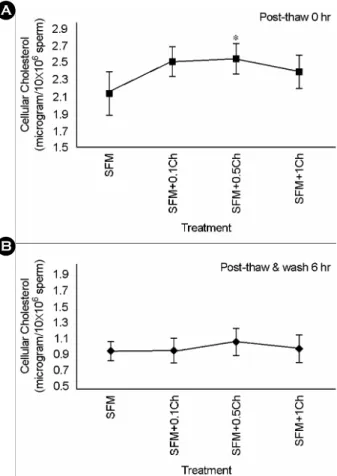
Figure 1. The relative concentration of cellular choles-
terol in frozen/thawed sperm based on the pre-treatment
with (0.1, 0.5, and 1.0 μg/10
6sperm) or untreated choles-
terol before cryopreservation. A) Just after thawing. B)
Washing and incubation for 6 hours. SFM, pre-treatment
using sperm freezing medium only. SFM+Ch, sperm
freezing medium containing various concentration of
cholesterol.
freezing. The relative concentration of cholesterol per 10
6sperm just after thawing were 2.13±0.26 μg, 2.51±
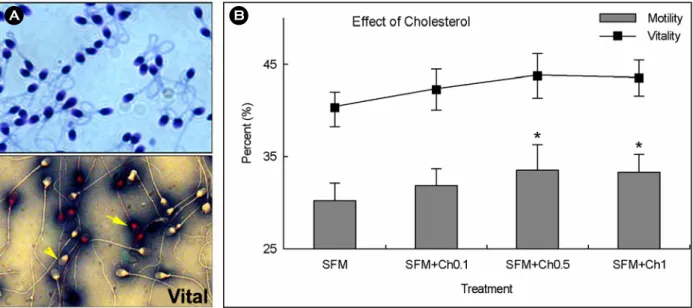
0.18 μg, 2.53±0.18 μg, and 2.38±0.19 μg in SFM, SFM +0.1Ch, SFM+0.5Ch, and SFM+1.0Ch groups (Figure 1A). In SFM+0.5Ch group, the content of cholesterol was increased by incorporation of CLC when compared to those in SFM. Cholesterol of sperm membrane was easily removed by washing and incubation (0.95±0.12 μg, 0.95±0.15 μg, 1.07±0.17 μg, and 0.98±0.17 μg in SFM, SFM+0.1Ch, SFM+0.5Ch, and SFM+1.0Ch groups, Figure 1B). And, sperm motility after thawing of SFM+0.5Ch and SFM+1.0Ch were higher than that of SFM (33.46±1.48%, 33.14±1.09% vs. 30.10±1.07%, p<0.05, Figure 2B). No significant difference of post- thawing motility was found between SFM and SFM+
0.1Ch (30.10±1.07% vs. 31.80±0.92%). Viability was also slightly increased in SFMs with cholesterol com- pared to SFM, but was not significantly different (42.13
±1.11%, 43.68±1.80%, 43.40±1.58% vs. 40.08±0.99%, Figure 2B).
2. Effect of cholesterol on the AR induction
The calcium ionophore A23187 induces the AR by incorporating into the sperm cell plasma membrane and transporting calcium across the plasma membrane. In the sperm samples treated with various concentrations of cholesterol before freezing, the AR rate of thawed sperm was assessed before and after induction by TRITC-PSA staining and microscopic observation. AR rate of sperm was low when freezing and induction of calcium ionophore were not applied (13.17±2.52%).
And there was no difference in AR rates among all groups just after thawing without induction (28.17±
2.62%, 29.00±4.01%, 30.83±3.08%, and 28.17±3.38%
in SFM, SFM+0.1Ch, SFM+0.5Ch, and SFM+1.0Ch groups). However, after washing with fresh media and inducing of calcium ionophore, the AR rates in SFM groups with cholesterol (0.1~1 μg cholesterol treated) were higher than that of SFM (51.00±2.02%, 53.60±
1.60%, 52.40±2.75% vs. 47.40±1.86%). Especially,
A B
Figure 2. Analysis of sperm motility and viability. A) Upper panel: count and morphology analysis using 0.75%
haematoxylin staining, lower panel: viability analysis using eosin staining. Viable (arrow head) and dead sperm (arrow).
B) Analysis of sperm motility and vitality in frozen/thawed sperm based on the pre-treatment with (0.1, 0.5, and 1.0
μg /10
6sperm) or untreated cholesterol before cryopreservation. SFM, pre-treatment using sperm freezing medium
only. SFM+Ch, sperm freezing medium containing various concentration of cholesterol.
Figure 3. Analysis of induction rate for acrosome reaction by calcium ionophore treatment. A) Detection of acrosome reaction in sperm by TRITC-PNA staining (middle panel). Acrosome reacted (arrow) and intact sperm (arrow head).
B) Analysis of acrosome reacted sperm in frozen/thawed sperm based on the pre-treatment with (0.1, 0.5, and 1.0 μg /10
6sperm) or untreated cholesterol before cryopreservation. SFM(N), sperm freezing medium only and no freezing.
SFM, pre-treatment using sperm freezing medium only and freezing/thawing. SFM+Ch, sperm freezing medium containing various concentration of cholesterol and freezing/thawing. C) Flow cytometry of acrosome-reacted sperm in frozen/thawed sperm based on the treatment or untreated cholesterol before cryopreservation. n: untreated antibody (TRITC-PNA) a: untreated cholesterol; b: 0.1 μg /10
6sperm; c: 0.5 μg /10
6sperm; d: 1.0 μg /10
6sperm.
A B
C
A23187 induced-AR was significantly increased in SFM +0.5Ch group compared to SFM (Figure 3B). Absence or presence of TRITC-PNA labeling was also analyzed by flow cytometry and the result data presented in X-axis of the Figure 3C shows TRITC-fluorescence. Sperm in all groups treated with cholesterols exhibited a lower frequency of the TRITC-PNA staining dot compared with controls (25.37±1.30%, 24.36±0.98%, 26.23±2.47%
vs. 22.37±1.30%, p<0.05). However, there were no significant differences in the AR rate among cholesterol- treated groups (Figure 3C).
3. Effect of cholesterol on the DNA integrity
Sperm in all groups treated with cholesterols exhibited a higher frequency of double strand DNA compared with control (SFM). On the other hand, the highest level of DNA damage (ss DNA, ss DNA+ds DNA fraction) was detected in control untreated cholesterol (1.92±
0.53%, 2.20±0.58%, 1.92±0.47% vs. 3.62±1.02%; p<
0.05). Within cholesterols-treated samples, DNA damage was more pronounced in SFM+0.5Ch (adding 0.5 μg cholesterols/10
6sperm) rather than in SFM+0.1Ch and SFM+1.0 Ch (0.1 and 1.0 μg cholesterols/10
6sperm).
However, there were no significant differences in all cholesterol treated groups (Figure 4).
DISCUSSION
Membrane fluidity of cell is affected by membrane lipid and protein composition as well as temperature.
Altering the cholesterol content of a membrane can change membrane fluidity at different temperatures and this may affect cell survival during cryopreservation.
Purdy and Graham
19reported that cholesterol-loaded into
methyl-cyclodextrin improves both the percentages of
motile and membrane-intact sperm after cryopreservation
in bull sperm. The cholesterol treatment had been applied
in order to overcome the poor quality of stallion sperm
Figure 4. Flow cytometry of sperm DNA integrity in frozen/thawed sperm based on the pre-treatment with (0.1, 0.5,
and 1.0 μg/10
6sperm) or untreated cholesterol before cryopreservation. n: untreated antibody (TRITC-PNA); a: SFM,
pre-treatment using sperm freezing medium only and freezing/thawing; b-d: SFM+Ch, sperm freezing medium
containing various concentration of cholesterol and freezing/thawing.
after freezing/thawing. It increased the concentration- dependent in the percentage of motile sperm after cryo- preservation.
2But, in human, other group reported that higher cholesterol sperm content does not appear to protect against cryo-damage, as it revealed by the lack of correlation.
9However, in the present study, we have determined the effect of added cholesterol on cryopreser- vation of human sperm. In fact, the addition of specific concentration (0.5~1.0 μg/10
6sperm) of cholesterol increased motility and viability after thawing. However, the motility of sperm after thawing was decreased in the group treated with more than 1 μg cholesterols/10
6sperm (data not shown). It is theoretically believed that human sperm must have a better endurance to cryopre- servation when compared with other mammals because of their high cholesterol contents. The optimal level of cholesterol for cryopreservation of human sperm would be 0.5 μg cholesterols/10
6sperm.
Capacitation of mammalian sperm is a complex process that is characterized by increased intracellular calcium, and an activation of protein phosphorylation cascades, all ultimately leading to the acrosome reaction.
14The calcium ionophore A23187 induces the acrosome reaction by incorporating into plasma membrane of the sperm and transporting calcium across the plasma membrane,
15and this test was usually used as an indicator of sperm function for fertilization. In the preliminary study, the cholesterol treatment in fresh sperm had shown the low percentages of acrosome-reacted sperm (Figure 2). These results are similar to data reported previously.
16It was anticipated that increasing the cholesterol content of the plasma membrane would retard sperm capacitation and the acrosome reaction. However, cholesterol can easily be extracted from the plasma membranes during washing after thawing and it could be explained that the number of the sperms which did not affect from cryo- injury and acrosome reacted were increased. In addition, cyclodextrins, cyclic heptasaccharides consisting of β
(1~4) glucopyranose units, are water soluble but have hydrophobic center and can transport cholesterol into or out of membranes down a concentration gradient.
20So, when cholesterol is loaded into cyclodextrins (CLC), cholesterol can easily be incorporated into or extracted from the plasma membranes.
The packaging of chromatin in its final form into the sperm nucleus is a long and complex process starting in the very early stages of the spermiogenesis when histones are replaced firstly by transition proteins and finally by protamines.
17,18The SCSA is a flow cytometric technique which exploits the metachromatic properties of AO to monitor the susceptibility of sperm chromatin DNA to in situ acid denaturation. AO is a flat planar molecular that intercalates between bases of double-strand DNA and stacks on single-strand DNA and then causes a metachromatic shift from green fluorescence of double strand DNA to red fluorescence of single strand DNA when exposed to 488 nm laser light of the flow cytometer.
13SCSA was used to study the DNA damage variations of human sperm after cryopreservation. In this study, the adding cholesterol into sperm before freezing increases the number of sperm with ds DNA.
Therefore, cholesterol carries out the function which protects nucleus of a sperm from ice crystallization during cryopreservation.
Although there is significant increase of survival, motility, function, and integrity of sperm in statistical analysis, further consideration is remained for the clinical implication as there is little benefit on these char- acteristics of sperm after thawing that had shown in the present study. This seems to be caused by using sperm from normal patients and healthy donor. Therefore further research in patients with poor quality sperm will be needed for more clinical application.
In summary, supplementation of cholesterol into
human sperm prior to cryopreservation increases the
cryosurvival rates of human sperm. This is a simple
procedure for protection from the cold shock and cryo- injury by altering the cholesterol/phospholipid ratio of human sperm membrane and could be a useful tool for preservation of human fertility.
Acknowledgements
The authors thank Professor John E. Parks, Ph.D., (Department of Animal Science, Cornell University, Ithaca, NY) for his technical comment and reviewing the manuscript. This work was supported by a grant from the National R&D Program (2006-04127) of the Ministry of Science & Technology, Republic of Korea and the Korea Science and Engineering Foundation.
REFERENCES
1.Morshedi M, Gosden RG. Cryopreservation of sperm. In:
Tulandi T, Gosden RG, editor. Preservation of fertility. London:
Taylor and Francis; 2004. p.111-24.
2. Moore AI, Squires EL, Graham JK. Adding cholesterol to the stallion sperm plasma membrane improves cryosurvival.
Cryobiology 2005; 51: 241-9.
3. Darin-Bennett A, Poulos A, White IG. The effect of cold shock and freeze-thawing on release of phospholipids by ram, bull, and boar sperm. Aust J Biol Sci 1973; 26: 1409-20.
4. Parks JE, Lynch DV. Lipid composition and thermotropic phase behavior of boar, bull, stallion and rooster sperm mem- branes. Cryobiology 1992; 29: 255-66.
5. Mouritsen OG, Zuckermann MJ. What's so special about cholesterol? Lipid 2004; 39: 1101-13.
6. Combes GB, Varner DD, Schroeder F, Burghardt RC, Blanchard TL. Effect of cholesterol on the motility and plasma membrane integrity of frozen equine sperm after thawing. J Reprod Fertil Suppl 2000; 56: 127-32.
7. Purdy PH, Graham JK. Effect of cholesterol-loaded cyclo- dextrin on the cryosurvival of bull sperm. Cryobiology 2004a;
48: 36-45.
8. Purdy PH, Graham JK. Effect of adding cholesterol to bull sperm membranes on sperm capacitation, the acrosome reaction, and fertility. Biol Reprod 2004b; 71: 522-7.
9. Meseguer M, Garrido N, Martinez-Conejero MA, Simon C, Pellicer A, Remohi J. Role of cholesterol, calcium, and
mitochondrial activity in the susceptibility for cryodamage after a cycle of freezing and thawing. Fertil Steril 2004; 81:
588-94.
10. Garner DL, Thomas CA, Joerg HW, DeJarnette JM, Marshall CE. Fluorometric assessments of mitochondrial function and viability in cryopreserved bovine sperm. Biol Reprod 1997;
57: 1401-6.
11. Lee DR, Lee JE, Yoon HS, Roh SI. Induction of acrosome reaction in human sperm accelerates the time of pronucleus formation of hamster oocytes after intracytoplasmic sperm injection. Fertil Steril 1997; 67: 315-20.
12. Evenson DP, Higgins PJ, Grueneberg D, Ballachey BE. Flow cytometric analysis of mouse spermatogenic function following exposure to ethylnitrosourea. Cytometry 1985; 6: 238-53.
13. Evenson DP, Jost LK, Baer RK, Turner TW, Schrader SM.
Individuality of DNA denaturation patterns in human sperm as measured by the sperm chromatin structure assay. Reprod Toxicol 1991; 5: 115-25.
14.Visconti PE, Ning XP, Fornes MW, Alvarez JG, Stein P, Connors SA, et al. Cholesterol efflux mediated signal trans- duction in mammalian sperm: cholesterol release signals an increase in protein tyrosine phosphorylation during mouse sperm capacitation. Dev Biol 1999; 214: 429-43.
15. Talbot P, Summers RG, Hylander BL, Keough EM, Franklin LE. The role of calcium in the acrosome reaction: an analysis using ionophore A23187. J Exp Zool 1976; 198: 383-92.
16. Nolan JP, Graham JK, Hammerstedt RH. Artificial induction of exocytosis in bull sperm. Arch Biochem Biophys 1992;
292: 311-22.
17. Kramer RY, Garner DL, Bruns ES, Ericsson SA, Prins GS.
Comparison of motility and flow cytometric assessments of seminal quality in fresh, 24-hour extended and cryopreserved human sperm. J Androl 1993; 14: 374-84.
18. Meistrich ML. Nuclear morphogenesis during spermiogenesis.
In: de Kretser D, editor. Molecular Biology of the Male Reproductive System. San Diego: Academic Press; 1993. p.67 -97.
19.Purdy PH, Fox MH, Graham JK. The fluidity of Chinese hamster ovary cell and bull sperm membranes after cholesterol addition. Cryobiology 2005; 51: 102-12.
20. Ladbrooke BD, Williams RM, Chapman D. Studies on lecithin- cholesterol-water interactions by differential scanning calo- rimetry and X-ray diffraction. Biochim Biophys Acta 1968;
150: 333-40.
= Abstract =
Objective: During cryopreservation process, cold shock and cryo-injury affect the fertilizing capacity of the sperm by damaging cell membranes with loss of functional integrity. A longstanding concept for preventing the cryo-damage is to stabilize the plasma membrane by incorporating cholesterol. This study was to determine the effects of cholesterol in freezing media on the motility and functional integrity of human sperm after cryopreservation.
Methods: Control group (non-cholesterol treated) and different concentrations of cholesterol-treated sperm (14 healthy males) were frozen and thawed. After freezing and thawing of sperm, the quality of sperm was evaluated by sperm analysis, acrosome reaction test and sperm chromatin structure assay.
Results: When human sperm were incubated in sperm freezing medium (SFM) containing 0.5 μg cholesterol and then freezing/
thawing, the motility of sperm have significantly improved compared to those untreated cholesterol (33.46±1.48% vs. 30.10±
1.07%, p<0.05). The rate of calcium ionophore-induced acrosome reactions in post-thawed sperm was significantly higher than that (53.60±1.60% vs. 47.40±1.86%, p<0.05) in SFM containing cholesterol. Sperm chromatin structure assay revealed that DNA damage to the sperm in the cholesterol-treated group was lower than that of non-treated group.
Conclusion: These results suggest that increased cholesterol content of sperm plasma membrane by supplementation of cholesterol in SFM improves sperm motility, capacitation status, and DNA integrity. Therefore, addition of cholesterol into SFM could be a useful for protecting human sperm from cold shock and cryo-injury during cryopreservation.
Key Words: Cholesterol, Human sperm, Cryopreservation, Acrosome reaction, Sperm chromatin structure assay