Abstract
The Study on Anti-obesity Effects of Gamiygin-tang Extract and Ferment
Chang Sung Jin․Min Deul Le․Park Eun Jung
Department of Pediatrics, College of Oriental Medicine, Wonkwang University
Objective
This study was designed to investigate the effects of Gamiygin-tang (GY) extract (GYE) and fermented solution (GYF) on body weight, serum lipid level and adipocyte differentiation in high fat diet-fed obese mice.
Materials and Methods
High fat diet-fed obese mice and 3T3-L1 adipocytes mice were treated with GYE and GYF and obesity related markers were assessed.
A cytotoxicity assay was carried out by MTS assay. Inhibitory effects of GYE and GYF on adipocyte differentiation were carried out by Oil Red O staining. The effects of GYE and GYF on the expression of adipocyte differentiation regulatory factors, peroxisome proliferator-activated receptor gamma (PPARγ) and CCAAT/enhancer binding protein alpha (CEBP-α) were measured by real-time reverse transcriptase-polymerase chain reaction. The effects of GYE and GYF on the expression of adipocyte differentiation regulatory factors were also determined in relation to protein production/protein levels by western blotting. The anti obesity effects of GYE and GYF were measured in high fat-diet induced obese mice. Various factors were measured from the serum of the high fat-diet mice.
Results
Though GYE did not show toxicity at the concentration of 1㎎/ml, GYF showed toxicity at the concentration of 1mg/ml. The GYE at 0.1 and 1mg/ml inhibited the differentiation of 3T3-L1 cells, and the GYF also inhibited the differentiation of 3T3-L1 cells. The effect of GYE on adipocyte differentiation factors including PPAR-γ and CEBP-α was investigated and compared to the corresponding concentration levels of GYF. GYE and GYF both suppressed the RNA and protein levels of adipocyte differentiation factors. In the animal test both GYE and GYF reduced weight gain. GYE and GYF reduced blood cholesterol, TG and LDL levels. GYF better reduced blood cholesterol levels.
Conclusions
These results demonstrate that GYE and GYF exerts anti-obesity effect in 3T3-L1 cells and obese mice induced by high-fat diet.
Key words : Gamiygin-tang (GY), Gamiygin-tang extract (GYE), Gamiygin-tang ferment (GYF), Obesity, Serum lipid, 3T3-L1 cell, Adipocyte differentiation, PPAR-γ, C/EBP-α
加味二陳湯 전탕액과 발효액이 抗肥滿효과에 미치는 연구
장성진․민들레․박은정
원광대학교 한의과대학 소아과교실
Received: October 25, 2013 ∙ Revised: November 11, 2013 ∙ Accepted: November 14, 2013 Corresponding Author: Park Eun Jung
Department of Pediatrics, Wonkwang University Jeonju Oriental Medicine Hospital 99 Garyeonsan-ro, Deokjin-gu, Jeonju, Jeollabuk-do, Republic of Korea.
Tel: +82-63-270-1066 Fax: +82-63-270-1594 E-mail: [email protected]
ⓒ The Association of Pediatrics of Korean Medicine. All rights reserved. This is an open-access article distributed under the tenus of the Creative Commons Attribution Non-Commercial License (http://creativecommons.org/licenses/by-nc/3.0/), which permits unrestricted non-commercial use, distribution, and reproduction in any medium, provided the original work is properly cited.
ISSN 1226-8038(Print), 2287-9463(Online), http://dx.doi.org/10.7778/jpkm.2013.27.4.108
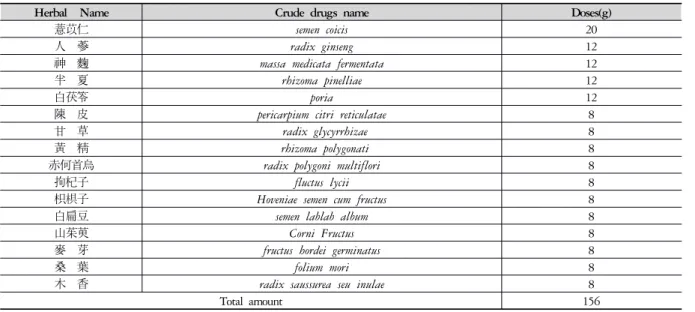
Herbal Name Crude drugs name Doses(g)
薏苡仁 semen coicis 20
人 蔘 radix ginseng 12
神 麴 massa medicata fermentata 12
半 夏 rhizoma pinelliae 12
白茯笭 poria 12
陳 皮 pericarpium citri reticulatae 8
甘 草 radix glycyrrhizae 8
黃 精 rhizoma polygonati 8
赤何首烏 radix polygoni multiflori 8
拘杞子 fluctus lycii 8
枳椇子 Hoveniae semen cum fructus 8
白扁豆 semen lablab album 8
山茱萸 Corni Fructus 8
麥 芽 fructus hordei germinatus 8
桑 葉 folium mori 8
木 香 radix saussurea seu inulae 8
Total amount 156
Table 1. The Composition of Gamiygin-tang
Ⅰ. Introduction
비만이란 과잉체중의 상태를 말하는 것이 아니라 대사 장애로 인해 지방이 과잉 축적된 상태를 말한다1). 세계보건기구 (WHO)에서는 1996년에 향후 비만인구 가 5년마다 두 배씩 증가할 것으로 보고하였으며, 비만 을 사회적 질병으로 규정하였다2). 우리나라에서도 2005년 국민건강영양조사에 의하면 비만 유병율이 2001년 29.6%에서 2005년 31.7%로 증가한 것으로 나 타났고, 소아청소년 비만 유병율은 1997년 5.8%에서 2005년 9.7%로 증가하였으며 여아보다 남아에서 더 현저하게 증가한 것으로 나타났다3). 이로 인한 사회적 비용도 증가 추세인데 국민건강보험공단에서는 2008 년 국내에서 비만 치료에 쓰인 사회 경제적 비용을 총 1조 7923억 원으로 추정하였고 매년 증가할 것으로 예 상하였다4).
한의학에서는 ≪素問․通評虛實論≫에 “肥貴人 卽 膏粱之疾也”, ≪素問․奇病論≫에 “人必數食甘味而 多肥也”라 하여 비만의 원인을 膏粱과 甘味라 처음으 로 인식하였다5). 비만의 원인은 痰濕內蓄, 氣虛, 脾虛 濕阻, 肝氣鬱結, 氣滯血瘀 등으로 분류하였고, 治法은 祛痰化濕, 疏肝理氣, 健脾利濕 이라 하였으며6) 治方은 治痰之劑인 二陳湯을 활용하였다7).
二陳湯은 宋代 ≪太平惠民和劑局方≫ 痰飮門에
“二陳湯 治痰飮爲患”8) 이라 기재된 이래 化痰之劑의 基本方으로서9) 담음으로 인한 일체의 질환에 널리 활 용되어 왔다10). 加味二陳湯 (GY)은 淸代 ≪傅靑主男科
≫ 痰嗽門에 “治痰之法 不可徒去其濕 必以補氣爲先
而佐以化痰之品 乃克有效”11)로 立方된 二陳湯 加味方
12)에 黃精, 赤何首烏, 拘杞子, 枳椇子, 白扁豆, 山茱萸, 麥芽, 桑葉, 木香을 가한 처방이다.
醱酵는 식품에서 널리 사용되고 있는 친환경 가공 기술로 한의학에서는 한약의 효능을 변화시키거나 높 이는 포제법의 하나로 이용되고 있다. 醱酵法이란 ‘일 정한 온도에서 霉菌을 이용해서 발효토록 함으로써 약 성의 변화 및 새로운 발효의 생성과 더불어 약효를 증 강시키는 방법’이라고 정의하고 있다13). 醱酵韓藥이란 한약재를 우수한 종균으로 발효시켜 원래 한약이 가지 는 약효를 증가시키거나 새로운 기능을 추가한 약재를 말한다14).
최근 전탕액과 발효액을 비교한 연구로는 귀비탕에 비해 탁월한 안지오텐신 전환효소 억제능을 보인 발효 귀비탕연구15), 쌍화탕에 비해 항산화 활성이 증가한 발 효쌍화탕연구16), 발효시 항산화효과는 증가하였으나 항염증, 비만 예방 효과는 감소한 발효소청룡탕연구17), 발효 금은화 및 황련의 유해균 억제 효과연구18), 지황 과 발효 지황의 생리활성 비교 연구19) 등이 있었다.
二陳湯과 二陳湯加味方에 대한 연구로 항비만효과 실험연구20)와 소화불량21), 독성시험22) 및 위장관 기능 에 미치는 영향에 관한 연구23)가 있었으나 加味二陳湯 (GY)의 전탕액 (GYE)과 발효액 (GYF)의 항비만효과에 관한 비교연구는 없었다.
이에 저자는 GYE와 GYF가 고지방 식이의 비만 쥐 에 미치는 세포독성 여부, 체중 변화, 혈중지질농도의 변화, 지방세포 분화와 지방세포 분화 주요 조절 인자 인 peroxisome proliferator-activated receptor gamma
composition Con HFD* composition Con HFD*
Casein 200.0 265.0 Cellulose 50.0 65.5
L-Cystine 3.0 4.0 Mineral Mixa 35.0 48.0
Corn Starch 397.486 - Calcium Phasphate, dibasic - 3.4
Maltodextrin 132.0 160.0 Vitamin Mixb 10.0 21.0
Sucrose 100.0 90.0 Choline Bitartrate 2.5 3.0
Lard - 310.0 TBHQ, antioxidantc 0.014 -
Soybean Oil 70.0 30.0 Blue Food Color - 0.1
a : Mineral Mix, AIN-93G-MX (94046) containing (g/kg) : calcium phosphate dibasic 500, sodium chloride 74, potassium citrate 220, potassium sulfate 52, magnesium oxide 24, manganous carbonate 3.5, ferric citrate 6, zinc carbonate 1.6, cupric carbonate 0.3, potassium iodate 0.0.1, sodium selenite 0.01, chromium potassium sulfate 0.55
b : Vitamin Mix, AIN-93-VX (94047) containing (g/kg) : thiamin HCl 0.6, riboflavin 0.6, pyridoxine HCl 0.7, niacin 3, calcium pantothenate 1.6, folic acid 0.2, biotin 0.02, vitamin B12 (0.1 % trituration in mannitol) 1, dry vitamin A palmitate (500,00 U/g) 0.25, manadione sodium bisulfite complex 0.15
c : TBHQ : tertiary butylhydroquinone
* 60 % of total calories come from fat.
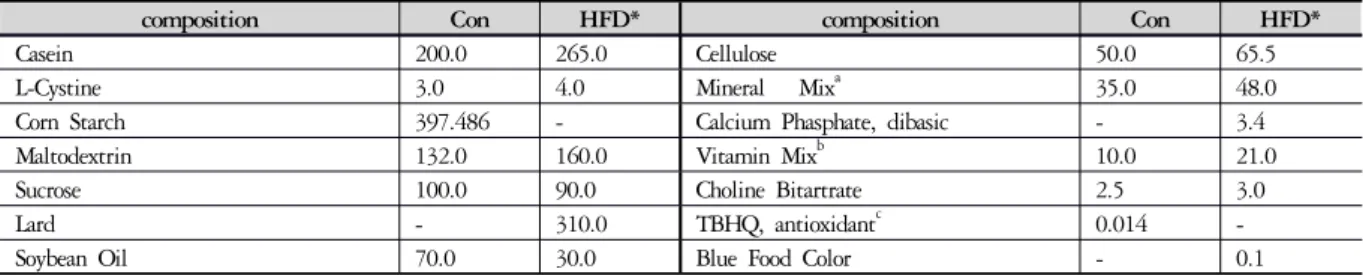
Table 2. Composition of Experimental Diets (g/kg)
(PPARγ)와 CCAAT/enhancer binding protein alpha (C/EBPα)의 발현에 미치는 영향에 대하여 실험한 바 유 의한 결과를 얻었기에 보고하는 바이다.
Ⅱ. Materials and methods
1. 재료 1.1 약재
본 실험에 사용된 加味二陳湯 전탕액 (GYE)과 加味 二陳湯 발효액 (GYF)은 원광대학교 부속 전주 한방병 원에서 구입하여 사용하였고, GYF는 GYE를 다음과 같은 방법으로 발효하여 사용하였다. 처방 1첩의 내용 과 용량은 다음과 같다 (Table 1).
1.1.1 加味二陳湯의 발효방법
加味二陳湯 2첩에 물 2500ml를 넣어서 발효기 (서 울 우성금속 제작)에서 100° C 로 끓여서 85° C 로 온 도를 낮추어 약 10시간 달인 후 50° C 로 식힌 상태에 서 복합 발효균 (청주 중앙미생물 연구소 제품: 바실러 스 효모 유산균 포함)을 넣어서 스위치를 끄고 48시간 발효 숙성하여 나온 발효액 960ml를 얻었다.
1.1.2 검액의 조제
加味二陳湯 2첩에 물 2500ml를 넣어서 2시간 동안 가열한 960ml 전탕액과 加味二陳湯 2첩에 물 2500ml 를 넣어서 발효시킨 960ml 발효액을 동결건조해서 각 각 22g의 분말을 얻었다. 수득율은 22g ÷ (156g × 2첩) =
0.0705 로 7%였다.
1.2 동물
실험동물은 식이로 비만이 유도되는 형질을 가진 C57/BL6종의 4주령 된 생쥐 30마리를 대한 바이오 링 크로부터 구입하여 사용하였다. 실험시작 전 1주일 동 안 일반 고형사료와 물을 충분히 공급하면서 실험실 환경 (23 ± 2℃, 습도 55 ± 5%)으로 유지하고 12시간씩 명암을 자동 조절하여 적응시켰다.
1.3 실험군의 식이와 검액의 투여 방법
실험 시작부터 5마리는 일반 식이를 급여하고, 10마 리는 고지방 식이를 4주간 급여하여 비만을 유도하고, 5주째부터 비만식이에 약재를 섞어서 16주간 급여하 였다.
동물군은 총 4군 즉 1) 일반 식이, 2) 고지방 식이, 3) 고지방 식이+GYE 4) 고지방 식이+GYF를 투여한 군으로 설정하였다.
마우스에 4주간 60% 고지방 식이를 통해 비만 유도 후 5주째부터 20주까지 각 약재를 100mg/kg/day 용량 (성인 60kg일 때 하루 섭취량 (≃8g/60kg/day)을 기준 으로 산정)으로 투여한 약물 투여군과 고지방 사료만 투여한 대조군에서 몸무게 변화를 측정하였다. 일반 식이와 고지방 식이의 kg 당 조성의 내용과 분량은 다 음과 같다 (Table 2).
1.4 지방세포 배양
3T3-L1 세포를 배양액을 이용하여 5%로 이산화탄 소가 공급되는 배양기에서 온도는 37℃로 배양하였다.
세포 배양액은 10% fetal bovine serum (FBS)과 항생제 (antibiotics)가 포함된 Dulbecco's modified Eagle's media (DMEM)을 사용하였다. 3-4 일 간격으로 배양세포에 0.25% 트립신 (trypsin)을 넣고 처리하여 세포를 탈착 시켜 계대 배양하였다.
1.5 분화유도 과정
전지방세포는 분화유도물질인 인슐린 (1 ㎍/㎖), dexamethasone (DEX, 1μM), 1-methyl-3-methylxanthine (IBMX, 0.5mM) 이 함유된 분화유도 배양액으로 교환 하여 2일간 배양하여 지방세포로 분화를 유도하고, 배 양 2일 후 인슐린만 함유하는 배지로 교환하고 약물을 처리하여 2일간 배양하였다. 다시 인슐린만 함유한 배 지로 교환한 후 2일간 배양하였다.
Scheme 1. Adipocyte differentiation process
2. 방법
2.1 Oil-Red-O 염색법
지방세포로 분화된 세포내의 지방축적은 Oil-Red-O 염색법을 이용하여 측정되었다. 세포를 10 % 포름알데 하이드 (formaldehyde)로 1시간동안 고정시킨 후 60%
이소프로판올 (isopropylalcohol) 액으로 세척하였다. 세 포를 60% Oil-Red-O로 30분간 염색하였다. 세포질 내 붉은색 과립이 있는 세포를 분화된 지방세포로 간주하 고, 염색된 Oil-Red-O를 100% 이소프로판올로 녹여내 어 500 nm에서 흡광도를 측정하여 지방세포의 분화정 도를 측정하였다.
2.2 real-time RT-PCR
지방세포를 분화시켜 약물을 농도별로 처리한 후, QIA Zol Lysis reagent를 사용하여 RNA를 추출하였다.
추출한 RNA를 template로 power cDNA synthesis kit (Intron)를 이용하여 single stranded cDNA를 제조하였 다. 발현정도는 DNA에 유전자를 특이적으로 증폭하 는 PPARγ, C/EBPα primers를 넣어 Real-time PCR 방 법을 이용하여 측정하였다.
2.3 Western blotting
지방세포를 분화시켜 약물을 농도별로 처리한 후, 3T3-L1 세포를 RIPA buffer (50 mM Tris-HCl (pH7.5), 0.1% SDS (sodium dodecyl sulphate), 0.1% Triton X-100, 1% Nonidet P-40, 0.5% sodium deoxycholate, 150 mM NaCl, 1 mM phenylmethylsulphonyl fluoride)로 용해시킨 후 8% SDS-polyacrylamide gel 전기 영동한 다음 nitrocellulose membrane에 transfer 하였다. 5%
skim milk로 blocking한 후 여러 가지 1차 항체 (PPAR γ, CEB/Pα) 및 horseradish peroxidase (Jackson Lab.) 가 부착된 2차 항체로 반응시키고 ECL 용액 (Amersham Bioscience, Piscataway, NJ)을 사용하여 목적 단백질을 확인하였다.
2.4 체중 측정
동물군은 총 4군 즉 1) 일반 식이, 2) 고지방 식이, 3) 고지방 식이+GYE, 4) 고지방 식이+GYF를 투여한 군으로 설정하였다. 마우스에 4주간 60% 고지방 식이를 통해 비만 유도 후 5주째부터 20주까지 100mg/kg/day 용량 (성인 60kg일 때 하루 섭취량 (8g/60kg/day)을 기준 으로 산정)으로 투여한 약물 투여 군과 고지방 사료만 투여한 대조군에서 몸무게 변화를 측정하였다.
2.5 혈중 지질 측정
동물군은 총 4군 즉 1) 일반 식이, 2) 고지방 식이, 3) 고지방 식이+GYE, 4) 고지방 식이+GYF를 투여한 군으로 설정하였다. 마우스에 4주간 60% 고지방 식이 를 통해 비만 유도 후 5주째부터 20주까지 100mg/kg/day 용량으로 약물이 섞인 고지방 식이를 자 유롭게 섭취하게 한 후, 20주째에 동물의 혈청에서 총 콜레스테롤, HDL, LDL, Triglyceride, BUN, Creatin, Glucose를 측정하였다.
2.6 통계분석
실험 결과는 각 실험에 대한 평균값 ± S. E. M. 로 표기 하였고, 각 그룹간의 차이를 결정하기 위한 통계 분석은 Independent t-Test를 이용하였다. 모든 통계분 석은 SPSS v14.0 statistical analysis software를 이용해서 수행하였다. P < 0.05인 값을 통계적 유의성이 있는 것으로 판단하였다.
1 2 3 4 0
20 40 60 80 100 120
Cell Viability (%)
Fig. 1. Effect of GYE on cell viability in 3T3-L1 preadipocytes Cells were incubated with GYE at the indicated concentration (0.01-1mg/ml) for 24h and the growth rate was assessed by MTT assay.
All values are mean ±SD. *P < 0.05 compared with control.
1: control; 2: GYE 0.01mg/ml; 3: GYE 0.1mg/ml; 4: GYE 1mg/ml
1 2 3 4
0 20 40 60 80 100
Cell Viability (%)
*
Fig. 2. Effect of GYF on cell viability in 3T3-L1 preadipocytes Cells were incubated with GYF at the indicated concentration (0.01-1mg/ml) for 24h and the growth rate was assessed by MTS assay. All values are mean ±SD. *P <0.05 compared with control.
1: control; 2: GYF 0.01mg/ml; 3: GYF 0.1mg/ml; 4: GYF 1mg/ml
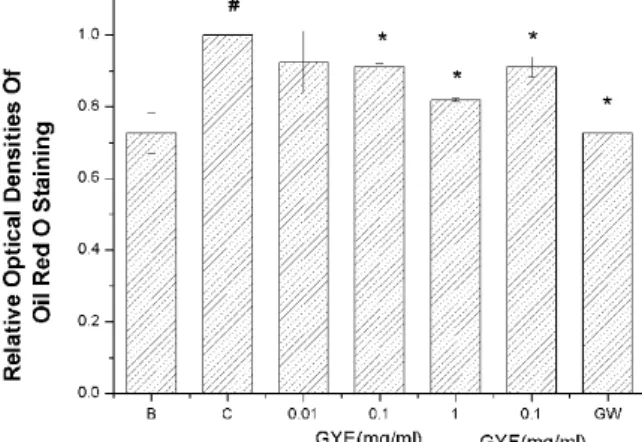
Fig. 3. Effects of GYE and GYF on lipid accumulation in 3T3-L1 adipocytes
3T3-L1 preadipocytes were incubated with MDI differentiation medium for 2 days with the indicated concentrations (0.01-1mg/ml) of GYE or GYF. At day 6, the cells were fixed and stained with Oil Red O. The cellular lipid content was assessed by Oil Red O staining. GW (GW96621)).
All values are mean ±SD. *P < 0.05 compared with control. B, blank;
C, control; GW, positive control.
Ⅲ. Results
1. 세포독성 시험
실험에 사용된 각 약물이 지방세포의 생존율에 미 치는 영향을 관찰하기 위해 MTS assay를 진행하였다.
그 결과, GYE는 0.01mg/ml에서 1mg/ml까지 세포독성 이 없음을 확인하였고, GYF는 1mg/ml에서 세포독성 이 있음을 확인하였다 (Fig. 1, 2).
2. 지방세포 분화 억제 효과
GYE와 GYF를 3T3-L1 지방세포에 처리 후 지방세 포 분화 억제 정도를 측정하였다. 분화 억제 정도는 Oil-Red-O측정법을 통하여 확인하였고, 지방세포 분화 인자발현 정도는 Real-time RT-PCR과 Western blot으 로 확인하였다.
2.1 지방축적 억제 효과
Oil red O 실험을 통해서 각 약물 농도별 분화 억제 정도를 알아보았다.
3T3-L1 adipocyte에 약물을 처리하여 분화 억제 정 도를 측정한 결과, GYE는 0.1mg/ml과 1mg/ml 에서 GYF는 0.1g/ml에서 지방세포 분화 억제 효과를 나타 냄을 확인하였다 (Fig. 3).
2.2 지방세포 분화조절인자 유전자 발현 억제 효과 2.2.1. GYE
3T3-L1 adipocyte에 GYE를 처리하여 지방세포 분화 조절인자인 PPAR-γ, C/EBP-α 정도를 측정한 결과, GYE 0.01mg/ml에서부터 농도 의존적으로 PPAR-γ, C/EBP-α 발현 억제 효과를 나타냄을 확인할 수 있었다 (Fig. 4, 5). 1)
2.2.2. GYF와 GYE비교
전탕액과 발효액의 효과비교를 위하여 3T3-L1 adipo- cyte에 GYE 또는 GYF를 처리하여 지방세포 분화조절
1) 3T3 쥐 배아의 섬유아세포로부터 유래된 지방전구 세포주로 지방세포의 대사과정을 연구하는데 널리 이용.
Fig. 4. GYE inhibited gene expression of PPAR-γ in 3T3-L1 cells
The PPAR-γ mRNA levels on day 6 of differentiation were determined by the Real-time RT-PCR. All values are mean ±SD. *P < 0.05 compared with control.
Fig. 5. GYE inhibited gene expression of C/EBP-α in 3T3-L1 cells
The C/EBP-α mRNA levels on day 6 of differentiation were determined by the Real-time RT-PCR. All values are mean ±SD. *P < 0.05 compared with control.
Fig. 6. Comparison of PPAR-γ gene expression between GYE and GYF
The PPAR-γ mRNA levels on day 6 of differentiation were determined by the Real-time RT-PCR. EG (EGCG2)). All values are mean ±SD.
*P< 0.05 compared with control. B, blank; C, control; GW and EG, positive control.
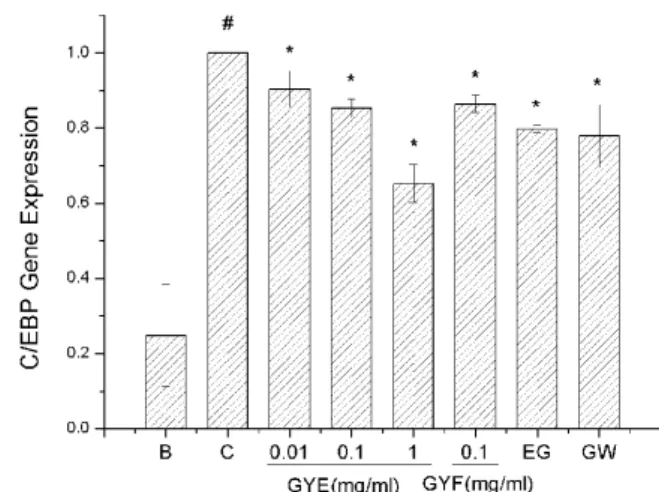
# means that adipocyte differentiation increased significantly in C compared to B.
Fig. 7. Comparison of C/EBP-α gene expression between GYE and GYF
The C/EBP-α mRNA levels on day 6 of differentiation were determined by the Real-time RT-PCR. All values are mean ±SD. *P< 0.05 compared with control. B, blank; C, control; GW and EG, positive control.
# means that adipocyte differentiation increased significantly in C compared to B.
인자인 PPAR-γ, C/EBP-α정도를 측정하여 비교한 결과, PPAR-γ와 C/EBP-α 모두 0.1mg/ml의 같은 농도에서 GYE와 GYF가 유사한 억제 효과를 나타냄을 확인하였 다. 즉, 0.1mg/ml의 GYE는 PPAR-γ 유전자 발현을 대조 군에 비해 16.96% 억제하였고, 0.1mg/ml의 GYF 는 18.18% 억제하였다. 또한 C/EBP-α 유전자 발현의 경우 역시 0.1mg/ml의 GYE와 GYF가 각각 14.68%와 13.6%
2) EGCG; 녹차에서 추출한 성분. 여러 논문에서 3T3-L1에 대한 억제 효과가 확인되어 신물질의 항비만 효과의 비교, 검증의 지표로 사용 됨.
의 억제율을 보여 전탕액과 발효액의 효과 차이는 관찰 되지 않았다 (Fig 6, 7 and Table 3, 4).
2.3 지방세포 분화조절인자 단백질 발현 억제 효과 3T3-L1 adipocyte에 GYE, GYF를 처리하여 지방세 포 분화조절인자인 PPAR-γ와 C/EBP-α 발현 정도를 western blot analysis를 통해 측정한 결과, 단백질 level 에서도 역시 GYE, GYF 모두 PPAR-γ 뿐만 아니라 C/EBP-α 발현 억제 효과를 나타냄을 확인할 수 있었다.
Groups C/EBPα Gene Expression Decrease in C/EBPα Gene Expression from control (%)
Blank 0.25
Control 1 —
GYE 0.01mg/ml 0.9 9.64
GYE 0.1mg/ml 0.85 14.68
GYE 1mg/ml 0.65 34.76
GYF 0.1mg/ml 0.86 13.6
EG 10μM 0.8 20.22
Table 4. Inhibition Rate of GYE and GYF on Gene Expression of C/EBP-α
Groups PPARγ Gene Expression Decrease in PPARγ Gene Expression from control (%)
Blank 0.39
Control 1 —
GYE 0.01mg/ml 0.92 7.79
GYE 0.1mg/ml 0.83 16.96
GYE 1mg/ml 0.66 34.14
GYF 0.1mg/ml 0.82 18.18
EG 10μM 0.68 32.27
Table 3. Inhibition Rate of GYE and GYF on Gene Expression of PPAR-γ
(A)
(B)
Fig. 8. Effects of GYE and GYF on the expressions of adipogenic proteins including PPAR-γ and C/EBP-α The expression levels of master regulators of adipocyte differentiation; PPAR-γ (A), C/EBP-α (B) after induction were measured by western blotting.
(Fig. 8 (A) and (B)).
3. 체중감소 효과
동물군은 총 4군 즉 1) 일반 식이, 2) 고지방 식이, 3) 고지방 식이+GYE 4) 고지방 식이+GYF를 투여한 군으로 설정하였다. 마우스에 4주간 60% 고지방 식이를
통해 비만 유도 후 5주째부터 20주까지 100 mg/Kg/day 용량 (성인 60 kg일 때 하루 섭취량 (8g/60kg/day)을 기준 으로 산정)으로 투여한 약물 투여 군과 고지방 사료만 투여한 대조군에서 몸무게 변화를 측정하였다.
3.1 체중 변화
Fig. 9. The anti-obesity effect of GYE and GYF in high-fat diet-induced obese mice
Effect of GYE and GYF on body weight gain after 20 weeks of experimental diet feeding.
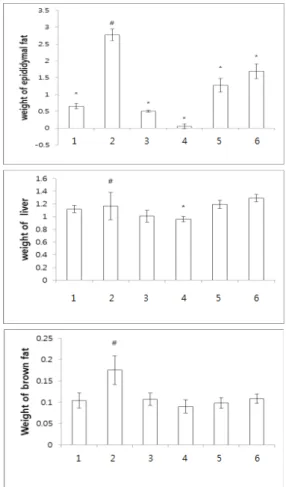
Fig. 10. Effects of GYE and GYF on epididymal fat pad, brown fat and liver fat in mice
1: Blank; 2: HFD; 3: GYF ; 4: GYE ; 5: HFD+GYF ; 6: HFD+GYE
# shows that obesity was induced properly
고지방 식이로 마우스에서 비만을 유도한 후 GYE 와 GYF 투여군의 체중변화를 측정한 결과, GYE와 GYF 투여군 모두에서 비만 억제 효과를 확인하였다.
그러나 GYE와 GYF투여군 간에는 큰 차이를 보이지는 않았다 (Fig. 9).
3.2 갈색 지방, 간 지방 및 부고환 지방 무게 비교 고지방 식이로 비만 유도 후 GYF와 GYE 투여군과 고지방 식이만 유지한 군, 일반 식이만 준 대조군의 각 각 갈색지방의 무게, 간 무게, 부고환 지방 무게를 비교 한 결과, 고지방 식이+GYE, 고지방 식이+GYF 그룹에 서 부고환지방량이 유의하게 감소함을 확인하였다 (Fig. 10).
4. 혈중지질농도 감소 효과
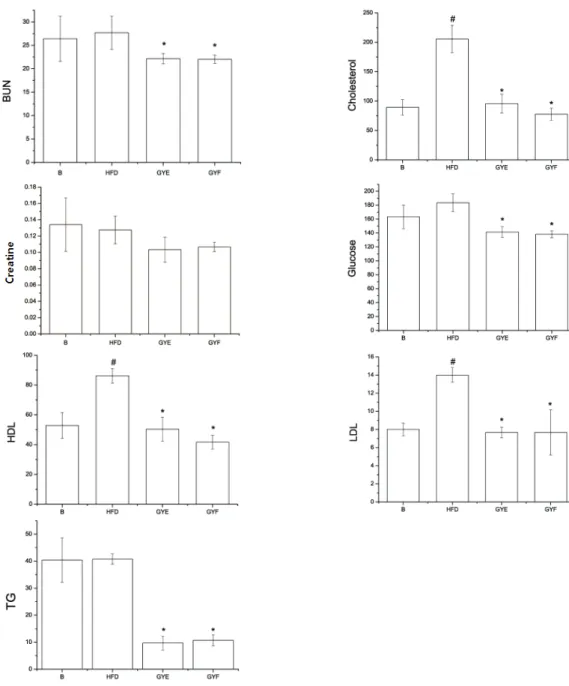
동물군은 총 4군 즉 1) 일반 식이, 2) 고지방 식이, 3) 고지방 식이+GYE, 4) 고지방 식이+GYF로 설정하 였다. 4주간 60% 고지방 식이를 통해 비만 유도 후 5주 째부터 20주까지 100mg/Kg/day 용량으로 각 약재를 섞 은 고지방 식이를 자유롭게 섭취하게 한 후, 20주째에 동물의 혈청에서 총 콜레스테롤, HDL, LDL, Triglyceride (TG), BUN, Creatin, Glucose를 측정하였다.
그 결과, 고지방 식이+GYE 고지방 식이+GYF 투여 군에서 통계적으로 유의하게 혈중 콜레스테롤, TG, LDL 등을 감소시켰고, 특히 혈중 콜레스테롤에서는 GYF의 경우 GYE보다 더 높은 억제 효과를 보였다 (Fig. 11).
Ⅳ. Discussion
비만은 대사 장애로 인해 열량 섭취가 신체 활동으 로 소모되는 열량보다 과다하여 체내에 지방이 과잉 축적된 상태를 말한다24).
경제생산 활동의 증가와 식생활 문화의 변화로 체 내 축적되는 칼로리 양이 많아지는 반면에 산업의 발 달로 신체활동량은 오히려 적어짐에 따라 비만의 유병 율은 증가하는 추세에 있다25). 비만은 그 자체로도 문 제를 초래할 뿐만 아니라 당뇨병, 고혈압, 관상동맥경 화증, 고지혈증, 지방간, 통풍, 관절질환, 월경이상 등 의 합병증을 유발하고 있다26). 이 외에도 사회적 편견 및 우울증, 정신불안, 월경이상, 불임, 동맥경화, 중풍 지방간, 등을 유발하고 있어 4대 성인병의 하나로 인식 되고 있다27).
韓醫學에서는 비만의 원인을 氣虛, 濕, 痰, 熱 등으 로 보았으며, 이로 인해 水濕, 痰濁, 氣滯 및 瘀血등이
Fig. 11. Effect of the extract on blood serum level in high fat diet-induced obese mice All values are mean ±SD. *P <0.05 compared with control. B, blank; HFD, high fat diet group;
肌膚나 腹膜, 腸腑 등에 유착되어 형성되는 것으로 인 식하고 있다28). 비만의 辨證은 痰濕內蓄, 氣虛, 肝氣鬱 結, 氣滯血瘀 등으로 분류하였고, 治法은 祛痰化濕, 疏 肝理氣, 健脾利濕 등의 治法을 사용하였다29).
비만의 치료는 특별한 질환을 앓는 경우를 제외하 고는 원인이 되는 소인들을 제거하며 식사조절, 운동 요법, 행동수정요법 등과 더불어 한약 투여 및 침, 구, 부항, 이침 등의 병행요법을 통해 신체 내적인 요인을 교정하여 치료하고 있다30). 현재까지 鍼灸療法31), 耳針 療法32), 氣功療法33), 手技34), 附缸療法35), 電氣脂肪分 解針療法36) 등 다양한 방법으로 연구가 진행되고 있다.
비만의 서의학적 치료에는 식이요법, 운동요법, 행 동수정요법, 약물요법, 수술치료 등이 있다37). 일반적 으로 비만치료에 사용되는 약물들은 부작용과 중독성 이 밝혀져 장기간 사용이 불가하고, FDA에서 장기간 사용이 인정된 치료제인 Xenical (orlistat), Reductil (sibutramine) 등도 지방 축적을 억제하는 작용과 체중 을 감소시키는 효과가 있으나 부작용으로 기름이 섞인 변, 복부팽만감, 절박성 대변, 두통, 변비, 구갈, 구역, 현기증 및 불면증 등이 보고되고 있다38,39).
세계보건기구에서는 1996년 5월 향후 비만인구가 5 년마다 그 수의 두 배씩 증가할 것으로 보고하였으며
1997년에는 비만을 사회적 질병으로 규정하였다2). 비 만으로 인한 사회적 비용도 증가추세인데 2008년 국민 건강보험공단에서는 한 해 동안 국내에서 비만 치료에 쓰인 사회 경제적 비용을 직접비용 1조771억 원, 간접 비용 7152억 원 총 1조 7923억 원으로 추정하였고 또 한 매년 점차 증가할 것으로 예상하였다4).
이처럼 비만으로 인한 사회적 비용의 증가와 양방 비만치료에 사용되는 약물들이 가지는 독성 때문에 장 기간 복용하여도 부작용이 없이 비만을 치료하거나 합 병증을 개선시킬 수 있으며 더 나아가 비만을 예방할 수 있는 안전하고 경제적인 한약의 개발이 필요하다.
韓醫學에서 비만에 관한 연구는 1990년부터 시작되 어 1999년 이후 급증하였는데 太陰調胃湯 , 淸肺瀉肝 湯, 葛根解肌湯 등의 四象處方과40), 補氣減肥湯41), 疎 風順氣丸42), 體減薏苡仁湯43) 등의 後世方複合處方 그 리고 山査44), 麻黃45), 松葉46) 등의 單味劑에 관한 연구 가 있다.
二陳湯은 化痰 (祛痰)之劑의 기본방10)으로 宋代 ≪ 太平惠民和劑局方≫ 痰飮門에 “二陳湯 治痰飮爲患 或嘔吐惡心 或頭眩驚悸 或中脘不快 或發爲寒熱 或因 食生冷 脾胃不和”8)라 하여 가장 먼저 기록된 이래, 淸 代 ≪醫方集解≫에 “二陳湯痰飮局方 治一切痰飮爲病 治痰通用二陳”47)라 기록되었고, 동시대 ≪醫宗金鑑≫
에 “二陳湯燥痰湯 諸痰 謂一切痰 皆宣二陳湯治之”48) 라 기록되어 있다.
二陳湯은 半夏 陳皮 白茯笭 甘草炙 薑三으로 구성 된 처방이다. 半夏는 “辛溫性燥 行水利痰 爲君 ”이라 하였고, 陳皮는 “理氣和痰 爲臣” 이라 하였고, 白茯笭 은 “滲濕利水 爲佐” 라 하였고, 甘草는 “和中補土 健 脾” 라 하였고, 生薑은 “去半夏毒 緩和開胃 爲使也”
라 하였다10).
본 연구에 사용된 加味二陳湯 (GY)은 淸代 ≪傅靑 主男科≫ 痰嗽門에 “治痰하는 법은 그 濕을 거하면 안 되고 반드시 補氣를 먼저 하고 化痰之藥을 佐로 하면 이것을 克하여 효과가 있을 것이다”11)란 점에서 착안 하여 이에 사용된 薏苡仁, 人蔘, 神麴, 半夏, 茯笭, 陳 皮, 甘草로 구성된 二陳湯 加味方12)에 지질대사 개선 을 위해 拘杞子49)를, 고지혈증 개선을 위해 麥芽50)를, 항비만 활성을 위해 木香51)을, 혈당조절을 위해 桑葉52) 을, 혈청내 중성지방 감소를 위해 赤何首烏53)를, 지질 과산화 억제를 위해 枳椇子54)를, 지방합성 억제를 위해 黃精55) 등을 가한 처방이다.
二陳湯이 痰飮을 제거하고, 人蔘이 大補元氣 補脾
益氣하고, 神麴이 消食 健胃하고, 薏苡仁이 利水滲濕 淸熱排膿하고, 黃精이 滋陰潤肺 生津止渴하고, 赤何 首烏는 補肝腎 益精血하고, 拘杞子는 滋補肝腎 潤肺 하고, 白扁豆는 消暑化濕 補脾止瀉하고, 山茱萸는 補 益肝腎 斂汗하고, 麥芽는 消食和中하고, 桑葉은 疏散 風熱 凉血止血하고, 木香은 行氣止痛 健脾消食하고56), 枳椇子는 解酒毒, 止渴除煩, 止嘔, 利大小한다57).
加味二陳湯에 포함된 黃精의 세포내 지방축적 억제 효과55), 拘杞子의 지방축적을 억제 및 인슐린 저항성 억제 효과58), 何首烏의 혈중 total cholesterol 감소 효과 가59) 보고되어 있다. 또한 白茯笭은 3T3-L1세포의 증 식 및 분화에서 지방전환을 억제하는 효과가 보고되었 고60), 麥芽는 베타글루칸을 함유하여 지방합성을 방해 하고 고지방 식이에 의해 저하된 탄수화물과 단백질 식이 소화력을 돕는 것으로 보고되었다61,62).
본 연구에서는 GYE와 GYF가 비만에 미치는 영향 을 알아보고자 3T3-L1 지방전구세포가 분화하는 단계 에 처리하여 지방 분화 억제 효과와 그 기전을 확인하 였고, 동물 실험을 통해 고지방 식이 비만 쥐의 체중변 화와 혈중 지질농도의 변화를 확인하였다.
검증 물질을 처리하여 분화된 3T3-L1 adipocytes가 in vivo adipocytes의 생화학적 형태학적 성질들과 사실 상 동일하다는 보고63)에 따라 3T3-L1 세포주가 분화에 비례하여 지방이 축적되는 성질을 역이용하여 GYE와 GYF를 3T3-L1에 처리한 후에 세포분화 정도를 관찰하 여 항비만 효과를 검증하였다. 세포독성평가는 MTT assay를 이용해 GYE, GYF를 각각 농도별 (0.01, 0.1, 1
㎎/㎖)로 3T3-L1 세포에 24시간동안 처리하여 실험을 진행하였다. 그 결과 GYE는 모든 농도에서 대조군에 비해 세포 독성이 나타나지 않았으나, GYF는 1㎎/㎖
농도에서 세포 독성이 나타났다.
Oil red O를 통해 분화된 세포 내의 중성지방의 양 을 측정하여 지방세포의 분화 억제 효과를 관찰한 결 과, 대조군에 비해 GYE와 GYF 처리시 지방세포 분화 를 유의성 있게 억제하였다.
지방전구세포에서 형태학적, 생화학적으로 완전히 성 숙된 지방세포로 분화되는 지방세포형성 (adipogenesis) 과정은 호르몬, cytokine 그리고 transcription factor 등의 여러 인자들의 상호 조절을 통해 이루진다64). 그 중에서 도 가장 중요한 활성인자로는 PPAR-γ와 C/EBP-α를 들 수 있다65).
전구지방세포가 adipogenetic signal을 받으면 전사 인자 C/EBP-α, C/EBP-β 및 C/EBP-δ의 발현이 유도되
고, 이들이 adipogenesis의 주요 조절자인 PPARγ의 발 현을 유도하여 분화를 진행시키는 것으로 알려져 있 다66).
실험을 통해 GYE, GYF가 PPARγ, C/EBPα의 adipo- genic transcription factor들의 발현에 어떠한 영향을 미 치는지 mRNA 및 단백질 발현 양을 통해서 확인하였 다. 먼저 3T3-L1 세포 분화를 유도하면서 GYE, GYF을 농도별 (0.01, 0.1mg/ml)로 처리하였고 지방세포 분화 6일 후 PPAR-γ, C/EBP-α를 측정하는 Real-Time PCR 을 실시하여 PPARγ의 발현 정도를 측정한 결과, GYE, GYF에서 유의성 있게 PPARγ의 mRNA 발현을 억제 하였고 PPARγ 전사 활성을 감소시키는 것을 확인하였 다. 단백질 발현 양의 변화는 3T3-L1 세포 분화를 유도 하면서 GYE, GYF을 농도별 (0.01, 0.1mg/ml)로 처리하 고 단백질 level에서의 Western blot analysis를 시행하여 PPARγ과 C/EBPα의 발현 억제 효과를 확인할 수 있었 다. 이는 GYE, GYF가 지방의 합성 과정을 억제하여 지방세포 분화 억제 효과를 나타내는 것으로 사료된다.
본 연구에서는 고지방 식이 마우스에서 비만을 유 도한 후 체중 변화를 관찰하여 GYE GYF의 비만 억제 효과를 비교한 결과, GYE와 GYF 사이에 큰 차이는 보 이지 않았다.
인체에서 콜레스테롤의 기능은 담즙산의 전구체가 되기도 하고 여러 가지 스테로이드 호르몬 및 비타민 D의 전구체가 되기도 하며 인지질과 함께 세포막의 성 분이 되기도 한다67). 혈청 중 총 콜레스테롤 함량은 비 만지수가 높을수록 높게 측정되므로 비만측정의 지표 가 될 수 있다. 역학적으로 비만지수가 높아질수록 혈 청 중 HDL-콜레스테롤의 함량이 감소되고, LDL-콜레 스테롤의 함량이 상승되는 것으로 알려져 있으므로 두 지표도 비만의 척도가 된다68). Triglyceride (TG)는 전신 의 각종 지방조직을 구성하는 주요 성분으로 지질 대 사 이상의 설명에 매우 중요한 역할을 하고 있는 것으 로 알려져 있다69). BUN (Blood Urea Nitrogen)은 단백 질의 대사산물로 생긴 혈액 속 요소질소의 농도로 요 소는 신장을 통해 배출되므로 단백질의 섭취와 신장 기능이상을 감지하는 지표로 사용된다70,71).
동물실험에서 GYE와 GYF는 모두 유의성 있게 혈 중 콜레스테롤 (HDL, LDL), TG, Glucose등을 낮추는 효과를 보였고, 특히 콜레스테롤에서는 GYF의 경우 GYE보다 더 높은 억제 효과를 보였다.
이상의 연구 결과로 보아 GYE와 GYF는 고지방 식 이 비만 쥐의 체중증가 억제와 함께 지방세포 분화 억
제, PPARγ와 C/EBPα의 발현 억제를 시켰으며, 혈중 LDL-콜레스테롤 농도의 감소 등 지방대사에 관련된 지 표를 유의성 있게 감소시켰다. 이로써 GYE와 GYF에 생체 내의 지방축적을 억제하는 성분이 함유되어 있음 을 규명하였다.
향후 이를 바탕으로 加味二陳湯 전탕액 (GYE)과 발 효액 (GYF)의 비만 억제 효과에 대한 임상적 연구와 가미된 개별 약물의 비만 억제 효과에 대한 지속적인 연구가 필요할 것으로 사료된다.
Ⅴ. Conclusion
加味二陳湯 전탕액 (GYE)과 발효액 (GYF)을 이용 하여 고지방 식이 비만 쥐의 지방세포 분화 억제 정도 와 체중변화, 혈중지질 농도의 변화를 비교 분석한 결 과 다음과 같은 결론을 얻었다.
1. GYE와 GYF 0.01mg/ml, 0.1mg/ml, 1mg/ml의 농도에 서 세포독성검사를 시행한 결과, GYE는 1mg/ml까 지 독성이 없었으나 GYF는 1mg/ml에서 세포 독성 이 있었다.
2. GYE와 GYF는 지방세포의 지방축적을 유의성 있게 억제하였고, 지방세포 분화조절인자인 PPAR-γ와 CEBPα의 발현역시 RNA level과 단백질 level에서 억 제하였다. 또한 고지방 식이로 유도한 비만 동물모 델에서 GYE와 GYF 모두 비만마우스의 체중증가를 억제하였다. 그러나 GYF는 GYE에 비하여 탁월한 효과를 나타내지는 않았다.
3. 고지방 식이로 유도한 비만 동물모델에서 GYE와 GYF는 모두 혈중 콜레스테롤 (HDL, LDL), TG, Glucose 등을 유의성 있게 억제하였고, 특히 콜레스 테롤에서는 GYF가 GYE보다 더 높은 억제 효과를 보였다.
이러한 결과로 加味二陳湯 전탕액 (GYE)과 발효액 (GYF)은 고지방식으로 인한 비만에 유효하게 활용 가 능할 것으로 사료된다.
References
1. Kim YS. Definition and diagnosis classification of obesity.
The Journal of Korean Medical Association. 1994;37(9):
1108-14.
2. WHO. “Obesity Prevention and the Global Epidemic- Report of WHO Consolation on Obesity”. 1997.
3. Korea Health Industry Development Institute(KHIDI).
Public Health Nutrition Survey. Seoul:KHIDI. 2005:
38-44.
4. National Health Insurance Service Autumn Issue. National Health Insurance Service. 2008.
5. Wang Bing Bian Zhu. Huangdi Neijing Su Wen Publishing Co:Dae Sung Publishing Co. 1994:200, 287.
6. Ko SC, Jung KM. East-West Medical Study on Infantile Obesity. Journal Pediatrics of Korean Medicine. 1989;
3(1):57-61.
7. Zhang Jie Bin. Jing Yue Quan Shu. Seoul:Dae Sung Publishing Co. 1992:211-2.
8. Liu Jing Yuan Dian Xiao. Taiping Huimin He Ji Ju Bian. Taiping Huimin He Ji Ju Fang. Beijing: Ren Min Wei Sheng Publishing Co. 1983:141.
9. Yun YG. Eastern Medicine Prescriptions and Analysis.
Seoul: Eui Sung Dang Publishing Co. 1998:233-4.
10. Yun YG. Prescriptional Study on the Application of Ijintang. The Korean Journal of Oriental Medical Prescription. 1999;7(1):11-35.
11. Chuan Jing Zhu. Chuan Jing Zhu Nan Ke[Shang].
Kyughee University HanJuk Library. 고619.3부52ㅂ (300119859).
12. Chen Shi Duo, Translated by No YK. Ben Cao Bi Lu Bian Zheng Yu Han. Mun won Publishing Co.
2005:691.
13. Shin DW. Korean Medicine SermonⅡ. Shinilbooks Publishing Co. 2010:327.
14. Kim KY, Song HJ . Korean Herbology Drug Processing.
Seoul:Shinilbooks Publishing Co. 2002:547.
15. Liang C, Yun NY, Jung SW, Kim DS, Lee YJ, Ma JY. Analysis of the Components of Guibitang and Fermented Guibi-tang and their Ability to Inhibit Angiotensin-converting Enzyme. Natural Product Sciences. 2011;17(4):363-6.
16. Kim DS, Um YR, Yang YR, Yun NY, Ma JY.
PolyphenolContents and Antioxidant Activities of Fractions from Ssanhwa-tang and Fermented SSanghwa- tang. Korean Journal of Oriental Medicine. 2010;16(3):
175-8.
17. Han JH, LEE SY. Comparing Medical Efficacy of Socheongyong-tang with Lactic Acid Bacteria Fermented Socheongyong-tang. Korean journal of Oriental Physiology and Pathology.
18. Lee SJ, Lee MJ, Joeng JE, Kim HJ. Antimicrobial Effects of Fermented Coptidis rhizoma and Lonicerae Flos against pathogen. Journal of Korean Oriental Association for Study of Obesty. 2011;11(1): 35-46.
19. Kim EH, Kim KS, Chae SK, Kim BS, Kang JS. Comparison of Biological Activities on Rehmanniae Radix and Fermented Rehmanniae Radix. Korean Journal of Oriental Physiology and Pathology. 2012;26(3):306-13.
20. Choi JE, Cho JH, Jang JB, Lee KS. The effects of Yi-jin on Body Weight and Ovarian Reaction in Obesity Mice. The Journal of Oriental Obstetrics & Gynecology.
2003;16(2):68-75.
21. Oh JH, Kim BS, Lim HY, Kim DW, Choi BH, Hur JI, Kim DJ, Cho CK, Byun JS. Three Cases Report of Functional Dyspepsia Patients Who were Administered by LJTG(Ljintang-Gamibang(二陳湯 加味方). The journal of Korean Oriental Internal Medicine. 2005;26(3):
641-51.
22. Kim DJ. Single Oral Dose Toxicity Test of Iijintanggami-bang a Polyherbal Formula in ICR Mice.
Korean Journal of Oriental Physiology and Pathology.
2010;24(6):1019-26.
23. Ok MJ, Byun JS, Park SD, Lee HI. Effect of Yijin- tang(Erchen-tang) and Gamiyijin-tang(Jiaweierchen-tang) on the Gastrointestinal Functions of the Rats. The journal of Korean Oriental Medicine. 2002;23(3):11-25.
24. The Korean Society for Oriental Rehabilitation Medicine.
Oriental Rehabilitation Medicine. Seoul:Kun Ja Publishing Co. 2005:349-62, 384-96.
25. Jung SH. A Study on Methods to Obtain Obesity Related Information. Journal of Korean Medicine Rehabilitation.
1998;8(2):1-15.
26. Department of Rehabilitation Medicine, National Oriental Medicine Universities. Korean Medicine Rehabilitation.
Seoul:Seo Won Publishing Co.1995:570-6.
27. Lee GY, Park TJ. The Influence of Obesity on Health in Adults at or over forty years. Korean J Fam Med.
1997;18(3):284-94.
28. Song MY, Jeong WS, Shin HD. Clinical Trial of Herbal fomula(slim-diet) on Weight Loss in Obese Pre- menopausal Korean Females. Journal of Korean Oriental Association for Study of Obesity. 2003;3(1):1-6.
29. Go SC, Jeong KM. East-West Medical Study on Infantile Obesity. The Journal of Korean Oriental Pediatrics.
1989;3(1):57-61.
30. Cha YY. A Clinical Study for the Influence of Bigiheo Herbal Acupuncture Therapy on Abdominal Obesity.
Journal of Korean Oriental Association for Study of Obesity. 2004;4(1):61-5.
31. Shin HD, Kim SS, Lee ES. A Comparative Study on Clinical Treatment of Obesity. The Journal of Korean Medical Association. 1992;13(2):63.
32. Department of Acupuncture and Moxibustion, National Oriental Medicine Universities. Acupuncture and Moxibustion. Seoul:Jib Moon Dang Publishing Co. 1988.
33. Kim KO. Medical QigongⅡ. Seoul:Dan Bi Publishing Co. 1994:68.
34. Oh JH. Manual Acupressure. Seoul:Han Sung Sa Publishing Co. 1990:331-2.
35. Ki JS. Eastern Medicine Negative Cupping Treatment.
Seoul:Tae Woong Publishing Co. 1993:145.
36. Kim SM , Kim GS. Effect of Chegamuiyin-tang and Electro-lipolysis Acupuncture on the Reduction of Body Fat(Effect of Oriental Medicine on Localized Obesity).
Journal of Korean Oriental Association for Study of Obesity. 2002;2(1):12-23.
37. Korean Oriental Association for Study of Obesity. Clinical Obesity Treatment. Seoul:Korea Medicine Publishing Co.
2001.
38. Park YW. Evidence Based Formulas Composed of Health/Functional Foods to Control Weight. Korean J Fam Med. 2003;24(5):409-15.
39. Park CY. The Update of Anti-Obesity Drug. Kyung Hee Medicine Publishing Co. 2002;18(2):77-85.
40. Jin KS. Analysis of Obesity Research Trends. Dajeon University Graduate School. 2004.
41. Choi JS, Oh MS. Inhibitory Effects of Bogigambi-tang on the Obese-mouse Induced by High Fat Diet. Korean
Journal of Oriental Physiology and Pathology. 2007;
21(3):634-41.
42. Park JS, Lee BC, Doo HK, Ahn YM, Ahn SY. The Effects of Supungsunki-hwan on High Fat, High Carbohydrate Diet-induced Obese Type 2 Diabetic Mouse Model. The Journal of Korean Oriental Internal Medicine.
2009;30(2):257-69.
43. Park TY, Shin BC, Gong JC, Song MY, Kim EK, Seo EA, Ryu DG, Kwon KB. Study on Anti-obesity Effect of Chegameuiin-tang. Korean Journal of Oriental Physiology and Pathology. 2008;22(3):642-8.
44. Ban SS, Yoon HD, Shin OC, Shin YJ, Park JS, Park JH, Seo BI. The Effects of Artemisiae Capillaris, Ponciri Fructus and Cataegi Fructus in Obese Rats Induced by High Fat Diet. The Korea Journal of Herbology.
2006;21(3):55-67.
45. Shin YJ, Kim HJ, Lee MJ, Keum DH. The Effect of Fermented Ephedrae Herba on Rats Fed High Diet. Journal of Korean Medicine Rehabilitation. 2009;19(4):37-57.
46. Shin YJ, Kim HJ, Lee MJ. The Effect of Pinus densiflora on induced by High Fat Diets in Rats. Journal of Korean Medicine Rehabilitation. 2007;17(1):43-60.
47. Wang Ren An. Yifang Ji Jie. Seoul:Sung Bo Sa Publishing Co. 1983:314-6.
48. Wu Qian and 79 others. Yi Zong Jin Jian. Seoul:Dae Sung Publishing Co. 1983:368.
49. Han SH, Park SH. Effect of Lycii Fructus Powder on Lipid Metabolism in 1% Cholesterol Fed Rats. Korean Journal of Food Culture. 2008;23(4):521-8.
50. Park HS, Yang KM, Jung JW. Effect of Water Extract from Hordeum vulgare L. with Medicinal Herb on Plasma Lipid Status and Glucose in Rats Fed High Fat Diet.
The Korea Journal of Herbology. 2009;24(1):15-21.
51. Yoon TS, Sung YY, Jang JY, Yang WK, Ji YU, Kim HK. Anti-obesity Activity of Extract from Saussurea Iappa.
Korean Journal of Medicinal Crop Science. 2010;18(3):
151-6.
52. Kim OG, Joeng JC. Effects of the Mori folium Extract in Streptozotocin-Induced Diabetic Rats. The journal of Korean Oriental Internal Medicine. 2006;27(4):811-21.
53. Choi JH, Lee HS, Kim YE, Kim BM, Kim IH, Lee CH. Effect of Polygonum multiflorum Thunberg Extract on Lipid Metabolism in Rats Fed High-Cholesterol Diet.
The Korean Society of Food Science and Nutrition.
2012;41(7):957-62.
54. Park YW, Yang SY, Lee MK, Jin JY, Cho JH. Kim KY. Water Extract of Hovenia dulcis Suppressed Lipid Peroxidation and Improved Renal Function in CCl4
Intoxicated Rats. Korean Journal of Oriental Physiology and Pathology. 2004;18(3):868-73.
55. Jang JS, Joeng JC. Anti-adipogenic Effecf of Kaempferol, a Component of Polygonati Rhizoma. The Journal of Korean Medical Association. 2010;31(2):158-66.
56. Shin MK. Clinical Traditional Herbalogy. Seoul:Young Lim Sa Publishing Co. 1997:188, 196, 245, 255, 260, 274, 464, 584, 587, 654, 806.
57. Guojia Zhongyiyaoguanliju Zhonghua Ben Cao Bianweihui.
Zhonghua Ben Cao. Shanghai : Shanghai Kexuejishu chuban. 1999;5:238-41.
58. Hwang EY, Hong JH, Choi JH, Lee EJ, Lee IS. Study on Anti-obesity and Hypoglycemic Effects of Lycium chinense Mill Extracts. The Korean Society of Food Science and Nutrition. 2009;38(11):1528-34.
59. Cho HJ, Kim DG, Cho KS. Effects of sargassum Extract and Polygoni multiflori radix Extract on the Obese SD Rats induced by 1% Cholesterol Diet. 2001;15(2):1-13.
60. Eun JS, Hong JS, So JN. Effects of the Extracts from Hoelen alba, Alismatis Rhizoma and Atractylodes Rhizoma on Proliferation and Differentiation of 3T3-L1 Cells.
Korean Journal of Pharmacognosy. 1996;24(2):131-9.
61. Korean Pharmacology Publishing Committee. Korean Pharmacology 2nd edition. Seoul:Shinilbooks Publishing Co. 2007:561.
62. Kang SA, Jang KH, Hong KH, Choi WA, Jung KH, Lee IY. Effect of Dietary β-Glucan on Adiposity and Serum Lipids in Obese Rats Induced by High Fat Diet.
The Korean Society of Food Science and Nutrition.
2002;31(6):1052-7.
63. MacDougald OA, Hwang C, Fan H, Lane MD. Regulated expression of the obese gene product (leptin) in white adipose tissue and 3T3-L1 adipocytes. Preceedings of the National Academy of Sciences. 1995;92(20):9034-7.
64. Gregoire FM, S.C., Sul HS, Understanding adipocyte differentiation. Physiol Rev. 1998;78: 783-809 65. Cornelius P, MacDougald OA, Lane MD. Regulation
of adipocyte development. Annu Rev Nutr. 1994;14:
99-129.
66. Camp HS, Ren D, Leff T. Adipogenesis and fat-cell function in obesity and diabetes. Trends in Molecular Medicine. 2002;8(9):442-7.
67. Lee GN, Lee JS. Clinical Pathology Files. Seoul: Medical Culture Publishing Co. 1996:122-6, 150-4.
68. Chae YH. A Study on Health Examinees' Test Results in Relation to their Obesity Index. Inje University Graduate School of Public Health. 1993.
69. Kim JC, Kim JJK. Summary of Clinical Examination Methods[revised third edition]. Seoul:Go Mun Publishing Co. 1993:103, 337-45, 420-8, 449-52, 467, 564-7.
70. Seoul National University College of Medicine. Urology.
Seoul:Seoul National University Press. 2008:9-17.
71. Shin KT. Stepstointernalmedicine. Seoul: Joeng Dam Publishing Co. 2002:49.