OPEN ACCESS Journal of Korean Tunnelling and Underground Space Association 22(3)249-259(2020)
https://doi.org/10.9711/KTAJ.2020.22.3.249 eISSN: 2287-4747
pISSN: 2233-8292
Received February 18, 2020 Revised March 27, 2020 Accepted April 2, 2020
This is an Open Access article distributed under the terms of the Creative Commons Attribution Non-Commercial License (http://creativecommons.org/
licenses/by-nc/4.0/) which permits unrestricted non- commercial use, distribution, and reproduction in any medium, provided the original work is properly cited.
Copyright ⓒ2020, Korean Tunnelling and Underground Space Association
위한 신뢰성해석
박영빈
1ㆍ김 도
2ㆍ변요셉
3ㆍ이규필
3*1
정회원, 우성디앤씨 부사장
2
비회원, 우성디앤씨 이사
3
정회원, 한국건설기술연구원 인프라안전연구본부 수석연구원
Reliability analysis for design of shield tunnel segment lining under earthquake load
Young-Bin Park
1ㆍDo Kim
2ㆍYosep Byun
3ㆍGyu-Phil Lee
3*1
Vice President, Woosung D&C
2
Director, Woosung D&C
3
Senior Researcher, Department of Infrastructure Safety Research, KICT
*Corresponding Author: Gyu-Phil Lee, [email protected]
Abstract
Design criteria for limit state design of underground structures have already been published overseas, and research has been conducted to revise the design method in Korea. In order to estimate the probability of failure under seismic load, the probability variable should be considered in the reliability analysis. In this study, the failure probability of the existing shield tunnel segment lining design was calculated by applying the coefficient of variation (COV) for the earth pressure and the seismic load effect in consideration of the statistical characteristics of the domestic ground properties. Based on the results of calculating the reliability index (β) from the calculated probability of failure and analyzing the reliability index according to the change in the load factor and the results of domestic and foreign research, the target reliability index (β
T) during earthquakes of shield tunnel segment lining is analyzed to be “2.3”, it was proposed as the target reliability index for the design of the limit state under seismic load.
Keywords: Shield tunnel, Segment lining, Seismic condition, Failure probability, Target reliability index
초 록
지중 구조물의 한계상태설계를 위한 설계 기준이 해외에서는 이미 발표된 바 있고 국내
에서도 설계법 개정을 위한 연구가 수행되고 있다. 지진 시 파괴확률을 추정하기 위해서
는 신뢰성 분석에서 확률변수를 고려해야 한다. 본 연구에서는 국내 지반 확률 특성치를
고려한 토압에 대한 변동계수와 지진하중 효과에 대한 변동계수를 적용하여 기존 쉴드
터널 설계 단면에 대한 지진 시 파괴확률을 계산하였다. 산정된 파괴확률로부터 신뢰도지수(β)를 산정하고 하중 계수의 변화에 따른 신뢰도지수를 분석한 결과와 국내외 연구결과를 토대로 쉴드 터널 세그먼트 라이닝의 지진 시 목표 신뢰도 지수(β
T)는 2.3이 합리적인 것으로 분석되어, 지진 시 한계상태설계를 위한 목표 신뢰도 지수로 제안하였다.
주요어: 쉴드 터널, 세그먼트 라이닝, 지진하중, 파괴확률, 목표 신뢰도지수
1. 서 론
최근 지중 구조물의 한계상태설계를 위한 설계 기준을 마련하기 위해 해외에서는 미국 AASHTO (2017)의
“LRFD 2017 Road tunnel design and construction guide specifications”과 영국 British Standards Institution (2015) “PAS8810 - Design of concrete segmental tunnel linings - code of practice”가 발표되었다. 국내에서도 지중 구조물에 대한 한계상태설계 기준을 개발하기 위하여 설계변수의 확률특성을 분석하고 목표 신뢰도지수를 확립하기 위한 연구를 수행하고 있다.
지반공학 분야에서 신뢰성해석에 관한 연구는 Han and Cho (2016)는 쉴드 TBM 터널 굴착 시 지표 침하에 대 하여 지반물성치의 불확실성을 평가하고 신뢰성해석을 수행하였다. Lee et al. (2018)은 지중 구조물 한계상태설 계를 위한 설계변수의 확률 특성에 대한 연구를 통해 지중 구조물의 한계상태설계법 적용을 위한 기초연구로 하 중 계수와 재료계수의 변화에 따른 신뢰도지수 산정과 신뢰도지수에 따른 설계 요구성능의 변화에 대해 검토하 여 최적 설계를 위한 기초자료를 제시하였다. 또한, Byun et al. (2019)은 쉴드 터널 세그먼트 라이닝의 신뢰성 설 계를 위한 변수의 변동계수 결정에 대한 연구를 통해 기존에 조사된 도심지의 지반조사 자료를 기초로 풍화토 및 풍화암에 대한 통계특성치를 산정하였으며, 국내 지반 물성치의 확률특성치를 고려한 이완 하중과 전체 하중의 변동계수를 제안하였다.
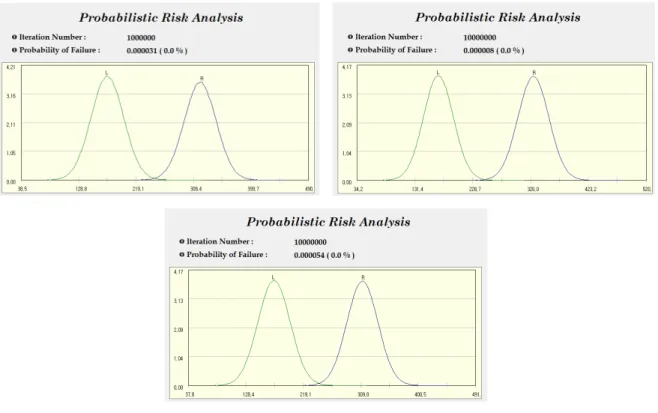
본 연구에서는 지진 시 쉴드 터널 세그먼트 라이닝의 신뢰성해석 및 신뢰도지수 산정을 위해 중첩의 원리가 적
용되지 않는 지중 구조물의 해석적 특성상, 개별하중별 해석에 대한 하중조합이 아닌 모든 하중을 동시에 적용한
비선형 경계조건의 2D 프레임 모델에 대한 상시 및 지진 시 구조해석을 수행하였으며, 신뢰성 분석을 위한 저항
(R) 및 하중(L)의 확률변수를 얻기 위해 기존 연구자료와 사전 연구된 데이터를 적용하였다. 또한 MCS (Monte-
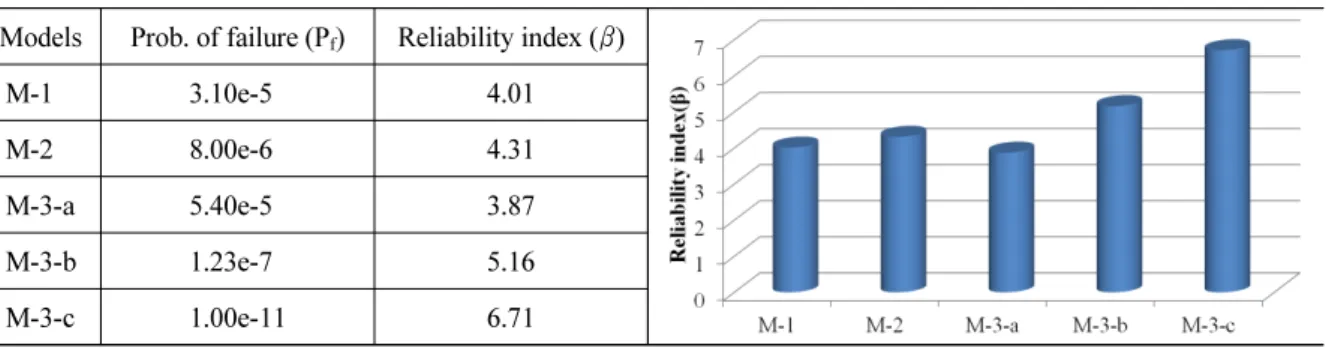
Carlo Simulation) 기법을 적용하여 한계상태함수의 파괴확률을 산정하고, Nowak and Collins (2013)에 설명된
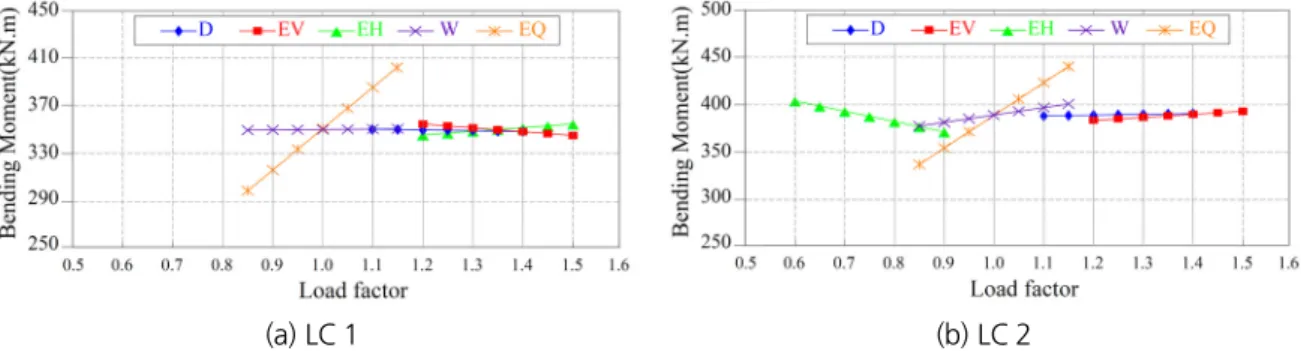
함수를 이용하여 파괴확률을 신뢰도지수로 변환하였다. 하중 계수 변화에 따른 신뢰도지수 분석을 통한 검토 결
과와 해외 목표 신뢰도지수에 대한 연구자료의 비교 분석을 통해 쉴드 터널 세그먼트 라이닝의 지진 시 목표 신뢰
도지수를 제안하였다.
2. 대상모델
2.1 해석모델링 및 경계조건
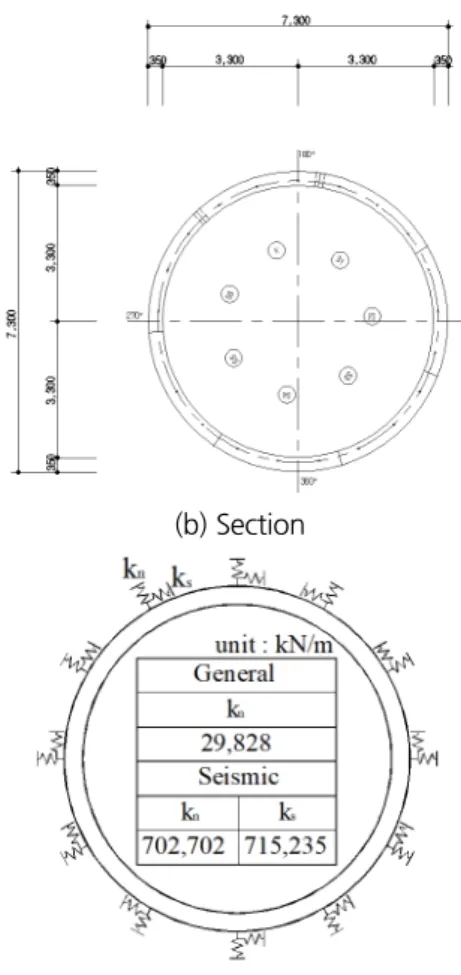
본 연구에서 적용한 대상 모델 및 해석모델링과 경계 조건을 Fig. 1에 나타내었다. 해석모델은 2D Frame 모델 로 구조 해석 시 적용하는 지반물성치는 지진력의 영향이 크게 작용하도록 풍화토 지반으로 가정하였으며 경계 조건은 비선형 스프링 경계 조건을 적용하였다.
(a) Review condition (b) Section
(c) Analysis model (d) Boundary conditions
Fig. 1. Analysis model of underground structure
2.2 재하하중
쉴드 터널 세그먼트 라이닝의 주요 재하하중은 자중, 수평토압, 연직토압, 수압 및 지진하중으로 Fig. 2에 하중
재하도를 나타내었으며, 지중구조물의 해석적 특성상 중첩의 원리가 적용되지 않으므로 모든 하중을 동시에 재
하하여 구조검토를 수행하였다.
Fig. 2. Loads applied on underground structure
2.3 구조해석 결과
2.3.1 상시 해석 결과
쉴드 터널 세그먼트 라이닝의 상시조건에서의 해석결과는 Fig. 3과 같다. 상시 휨모멘트 최대는 189.69 kN ‧ m 로 측벽부에서 발생하였으며, 축력은 하부에서 2568.457 kN 발생하였다.
(a) Bending moments (b) Axial forces
Fig. 3. Member forces in the general condition
2.3.2 지진 시 해석결과
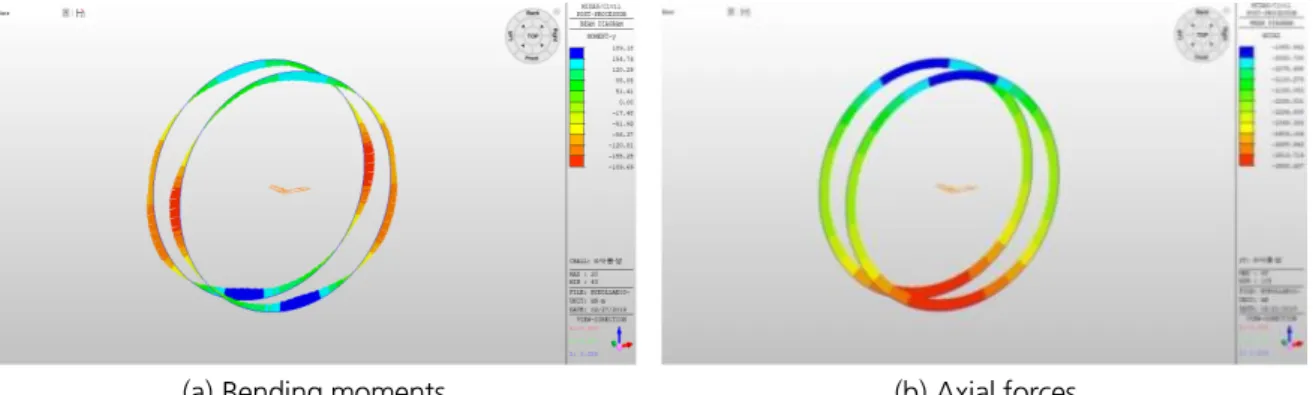
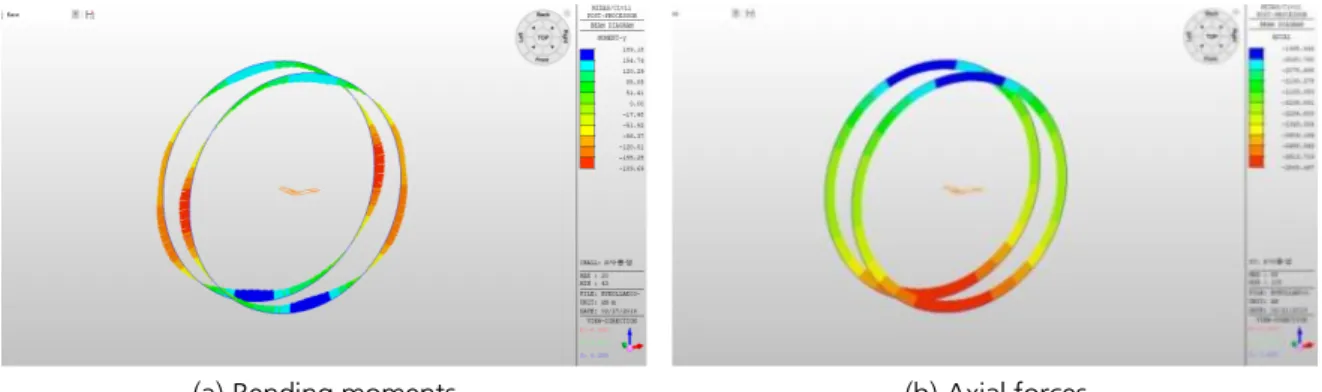
지진 시 지중구조물에 재하되는 지진하중은 구체관성력, 지반변위하중 및 주면전단력이다. 관성력과 지반변
위하중에 대한 해석결과는 Fig. 4, 주면전단력에 의한 해석결과는 Fig. 5에 나타냈다.
(a) Bending moments (b) Axial forces Fig. 4. Member forces by inertia force and ground displacement
(a) Bending moments (b) Axial forces
Fig. 5. Member forces generated by seismic shear stress
3. 신뢰성 해석
3.1 하중 및 저항 확률변수
상시 하중 조건에서 작용하는 하중에서 수평 및 연직 토압을 제외한 자중, 수압에 대한 확률변수는 Nowak에
의해 제안된 값을 적용하였으며, 수평 및 연직 토압에 대한 확률변수는 Byun et al. (2019)이 국내지반물성 특성
치를 고려하여 제안한 변동계수를 적용하였다. 교량 구조물과 같은 지상구조물과는 달리 쉴드 터널 세그먼트 라
이닝은 지중구조물의 특성상 비선형 경계조건으로 구조물에 작용하는 외력은 개개의 외력을 별도로 고려하여 합
하는 중첩의 원리가 성립하지 않기 때문에 본 연구에서는 Byun et al. (2019)이 제안한 총 하중에 대한 변동계수를
적용하였다. 지진조건에서의 하중효과에 대한 확률변수는 국내지반물성치의 확률특성을 이용하여 Penzien and
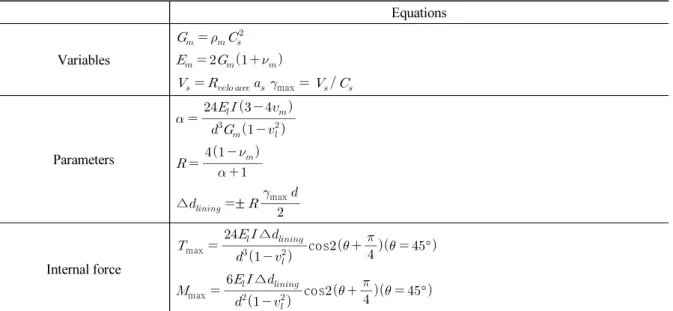
Wu (1998)의 closed-form식을 이용하여 MCS기법으로 산정된 COV값을 적용하였다. Fig. 6에 지진하중 효과에
대한 변동계수 산정방법을 나타내었으며, Table 1에 지진 시 하중효과 산정식을 나타내었다.
Fig. 6. MCS process for calculation of COV of seismic load effect
Table 1. Equations used in closed-form solution (Penzien and Wu, 1998) Equations
Variables
max
Parameters
∆
±
max
Internal force
max
∆
cos °
max
∆
cos °
,
,
: density, shear modulus, elastic modulus of ground
: apparent velocity of S-wave propagation
: the peak particle acceleration associated with S-wave
: the ratio of the peak velocity to the peak acceleration at the surface
m ax: maximum free-field shear strain
d, t, I and E
l: diameter, thickness, inertia moment and elastic modulus of the tunnel lining
m ax,
m ax: maximum thrust force and bending moment for no-slip conditions
본 논문에서 적용한 하중의 확률분포 특성치는 Table 2와 같다.
Table 2. Probability variables of loads
Loads Bias factors Variations (COV) Note.
L1 Dead load 1.05 0.10 Nowak
L2 Horizontal earth pressure 0.95 0.14 Byun
L3 Vertical earth pressure 1.00 0.14 Byun
L4 Water pressure 0.90 0.15 Nowak
L5 Seismic load 0.95 0.15
L
combCombined load (general) 1.00 0.37 Byun
저항에 대한 확률특성은 프리캐스트 콘크리트 휨모멘트에 대한 COV값은 Nowak과 Rakoczy에 의해 제안된 0.08을 적용하였다.
3.2 MCS (Monte Carlo Simulation)