www.earticle.net
사료단백질과 반추위 분해단백질 수준이 면양의 영양소 소화율과 질소대사에 미치는 영향
이윤희1⋅ 이면1⋅Farhad Ahmadi1⋅곽완섭2*
건국대학교 의료생명과학대학 식품생명과학부 대학원생1, 교수2
Effect of Diets Differing in Crude Protein and Undegraded Intake Protein Level on Total-Tract Nutrient Digestibility and Nitrogen Metabolism in Sheep
Youn Hee Lee1, Myun Lee1, Farhad Ahmadi1 and Wan Sup Kwak2*
1Graduate Student, 2Professor, Food Bio-science Major, College of Medical Life Sciences, Konkuk University, Chungju 27478, Korea
ABSTRACT1)
Diets different in crude protein (CP) and undegraded intake protein (UIP) contents were offered to sheep in a metabolism study to describe their effects on nutrient digestibility and nitrogen (N) metabolism. Six Corriedale sheep (body weight=56.2±2.3 kg) were divided in random within a Latin square design (replicated) to 1 of 3 diets: 1) a low-CP diet (LP; 12.2% CP with 35.1% UIP), 2) high CP with low UIP diet (HPLU; 14.9% CP with 33.7% UIP), and 3) high CP with high UIP diet (HPHU; 15.5% CP with 45.8% UIP).
High-protein dried distillers grain and soybean meal were the main CP sources for the adjustment of UIP:DIP in the diets. No significant differences were found in feed consumption and nutrient digestibility;
however, a greater proportion of CP was digested in sheep fed the HPLU diet (69.4%; P=0.04). Although N intake was greater in sheep receiving HPLU and HPHU diets, loss of N through fecal or urinary route was not different among sheep, which resulted in the highest (12.7 g/d) and lowest N retention (7.40 g/d) in HPHU- and LP-fed sheep, respectively. In conclusion, although CP or UIP content had marginal effects on feed consumption and whole-tract digestibility of the majority of nutrients, with the increased CP and UIP levels in the diet, the efficiency of N utilization was improved with regard to increased N retention with minimal differences in N excretion, which is important from an economic and environmental standpoint.
(Key words: Crude protein, Digestibility, N metabolism, Sheep, Undegradable intake protein)
*
Corresponding author: Wan Sup Kwak, Food Bio-science Major, College of Medical Life Sciences, Konkuk University, Chungju 27478, Korea . Tel: +82-4384-03521, E-mail: [email protected]
This is an Open Access article distributed under the terms of the Creative Commons Attribution Non-Commercial License (http://creativecommons.org/licenses/by-nc-nd/3.0/deed.ko), which permits unrestricted non-commercial use, distribution, and reproduction in any medium, provided the original work is properly cited. The moral rights of the named author(s) have been asserted.
I. INTRODUCTION
The performance response of ruminant animals to increased crude protein (CP) levels varies depending on the ruminal CP degradability (Huntington et al., 2001), necessitating the consideration of the quality of dietary
protein. Degraded intake protein (DIP) is mainly utilized in the rumen to enable microbial protein synthesis, and excess amounts are wasted as ammonia nitrogen. After entering into blood circulation, ammonia nitrogen-to-urea conversion occurs in the liver, which is then excreted in urine (Savari et al., 2018). Conversely, a DIP-deficient diet
[Provider:earticle] Download by IP 118.70.52.165 at Monday, December 20, 2021 7:45 PM
www.earticle.net
may restrict the synthesis of microbial protein, disturb ruminal fermentation activity, and thus
reduce the digestibility of nutrients (Davies et al., 2013).Undegraded intake protein (UIP) is needed in appropriate amounts to maximize the amino acids absorption at intestinal level.
Atkinson et al. (2007a,b) suggested that the
decrease inCP degradation in the rumen (through additional supply of UIP) would contribute to the provision of 1) a partial N source for sustained endogenous recycling and 2) moderation of ruminal ammonia production, thereby potentially improving total-tract digestion of nutrients. Therefore, both DIP and UIP are required in appropriate proportions to maximize ruminant productivity and minimize N wastage to the environment.
Recently, we conducted a long-term feeding experiment using Hanwoo steers with diets differing in CP and UIP levels and reported marginal differences in steer productivity (Lee et al., 2020). However, a diet supplying greater CP and UIP concentrations resulted in the improvement of carcass quality, thus, economic returns.
However, additional studies are essential to describe the effect of the differences in dietary CP and UIP levels on nutrient digestibility and N metabolism, especially in species other than beef and dairy cattle, which have received more attention. Few reports are available in sheep that have considered both quantity and quality (ruminal degradability) of CP beyond the recommended levels. Determining the optimal dietary protein based on UIP:DIP may increase profit margins and enable sheep to more efficiently utilize N (less N excretion), which decrease metabolic energy for N removal. Consequently, animal will spend less metabolic energy for N removal, and instead have more energy available for productive purposes (Ishler, 2004).Therefore, our primary focus was to describe how diets differing in CP and UIP contents would affect nutrient digestibility and N metabolism in sheep.
Ⅱ . MATERIALS AND METHODS
1. Animal management and diets
Animal-related procedures were pre-reviewed and officially permitted by Institutional Animal Care and Use Committee of Konkuk University (IACUC approval number: KU20184).
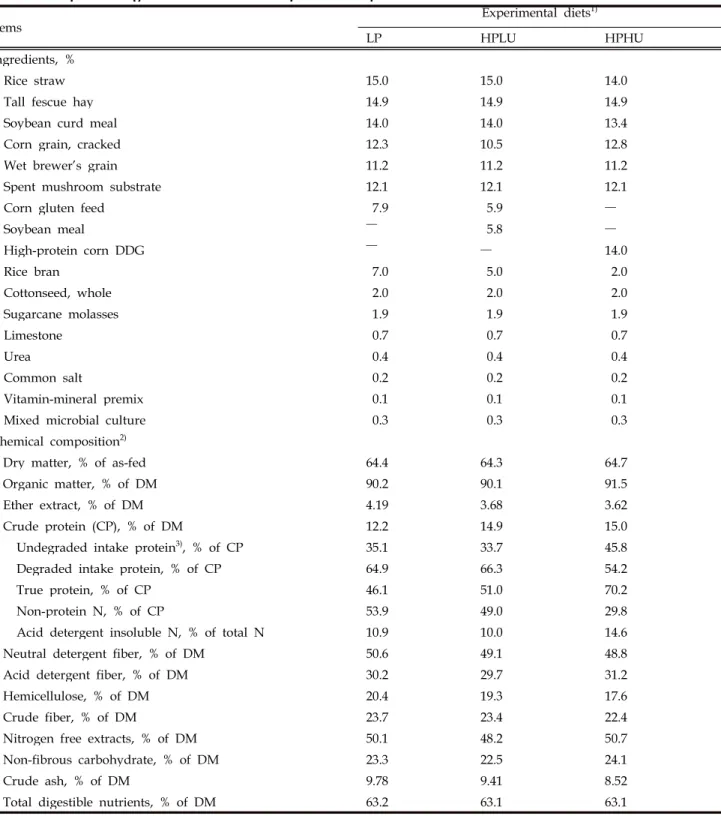
Six 13-month-old sheep (body weight=56.2±2.3 kg) were housed in individual metabolic crates (0.80×1.40 m) and offered three diets that differed only in the amount of CP and UIP. The dietary effects were minimized through the formulation of diets with similar levels of forage (rice straw and tall fescue), total digestible nutrients, non-fibrous carbohydrates (NFC), and crude fiber. The design of experiment was a 3×3 Latin square design (duplicated) with each period lasting 21 d (7 d of data collection).The diets (DM basis) were: 1) a low CP diet (LP;
CP=12.2%; UIP=35.1%), 2) a high CP with a low UIP diet (HPLU; CP=14.9%; UIP=33.7%), and 3) a high CP with a high UIP diet (HPHU; CP=15.0%; UIP=45.8%).
Experimental diets were formulated to meet/exceed the nutrient requirements of sheep according to NRC (2007).
For an accurate estimation of UIP levels in the diets, an in situ sub-trial was conducted before diet formulation to estimate the UIP contents of high-protein DDG and soybean meal, which were found to be 61.0% and 15.0% CP, respectively (Lee et al., 2016). The LP diet met but HPLU and HPHU diets exceeded the NRC recommendation of CP requirement for mature sheep.
Experimental diets were prepared as a total mixed ration (Table 1) and offered ad libitum at 06:00 and 18:00 h. Fresh clean water was available freely during the course of the experiment. Energy level was similar among diets (total digestible nutrients=63.1%), which was achieved mainly through the adjustment of corn grain and corn gluten feed. The difference in CP and UIP levels among diets was mainly achieved through soybean meal (high DIP source) and high-protein corn dried distillers grain (DDG; high UIP source).
2. Analytical methods
AOAC methods (2012) were used for quantification of dry matter (DM), ether extract (EE), CP, ash, neutral detergent fiber (NDF) and acid detergent fiber (ADF;
[Provider:earticle] Download by IP 118.70.52.165 at Monday, December 20, 2021 7:45 PM
www.earticle.net
Table 1. Description of ingredients and nutrient composition of experimental diets
Items Experimental diets
1)LP HPLU HPHU
Ingredients, %
Rice straw 15.0 15.0 14.0
Tall fescue hay 14.9 14.9 14.9
Soybean curd meal 14.0 14.0 13.4
Corn grain, cracked 12.3 10.5 12.8
Wet brewer’s grain 11.2 11.2 11.2
Spent mushroom substrate 12.1 12.1 12.1
Corn gluten feed 7.9 5.9 —
Soybean meal — 5.8 —
High-protein corn DDG — — 14.0
Rice bran 7.0 5.0 2.0
Cottonseed, whole 2.0 2.0 2.0
Sugarcane molasses 1.9 1.9 1.9
Limestone 0.7 0.7 0.7
Urea 0.4 0.4 0.4
Common salt 0.2 0.2 0.2
Vitamin-mineral premix 0.1 0.1 0.1
Mixed microbial culture 0.3 0.3 0.3
Chemical composition
2)Dry matter, % of as-fed 64.4 64.3 64.7
Organic matter, % of DM 90.2 90.1 91.5
Ether extract, % of DM 4.19 3.68 3.62
Crude protein (CP), % of DM 12.2 14.9 15.0
Undegraded intake protein
3), % of CP 35.1 33.7 45.8
Degraded intake protein, % of CP 64.9 66.3 54.2
True protein, % of CP 46.1 51.0 70.2
Non-protein N, % of CP 53.9 49.0 29.8
Acid detergent insoluble N, % of total N 10.9 10.0 14.6
Neutral detergent fiber, % of DM 50.6 49.1 48.8
Acid detergent fiber, % of DM 30.2 29.7 31.2
Hemicellulose, % of DM 20.4 19.3 17.6
Crude fiber, % of DM 23.7 23.4 22.4
Nitrogen free extracts, % of DM 50.1 48.2 50.7
Non-fibrous carbohydrate, % of DM 23.3 22.5 24.1
Crude ash, % of DM 9.78 9.41 8.52
Total digestible nutrients, % of DM 63.2 63.1 63.1
1)
LP=low-CP diet; HPLU=high CP with low UIP diet; HPHU=high CP with high UIP diet.
2)
Determined using the analyzed chemical composition of individual feed ingredients as reported in our previous study (Lee et al., 2020).
NFC=100 – [NDF + CP + ether extract + ash]. DDG=dried distillers grains
3)
UIP content of high-protein DDG and soybean meal was estimated in an in situ trial (Lee et al., 2016). The UIP values of other feed ingredients were collected from KFSEC (2007).
[Provider:earticle] Download by IP 118.70.52.165 at Monday, December 20, 2021 7:45 PM
www.earticle.net
exclusive of ash). True protein was quantified as the amount of N precipitated in a 5% trichloroacetic acid solution (Licitra et al., 1996). Nitrogen (N) associated with ADF residue, termed acid-detergent insoluble N (ADIN), was quantified using the Kjeldahl method (AOAC, 2012). The NFC content was calculated as 100–
(CP+EE+NDF+ash). Apparently-digested nutrient in total tract was calculated using the total fecal collection method as the amount of intake minus the corresponding amount excreted in feces (Ahmadi et al., 2020). Total feces excretions were collected from individual sheep on a daily basis during the collection period, and approximately 20% (w/w) of total feces were kept at –20℃ for future analysis. Later, the overnight-thawed fecal samples were dried at 55℃.
Plastic bottles containing sulfuric acid (15 mL; 13.5 N) were used for daily urine collection, to maintain a pH below 3 and minimize ammonia evaporation. Then, 10%
of the total urine was sampled and kept at –20℃.
Nitrogen content in urine samples was measured using the Macro-Kjeldahl method (AOAC, 2012).
3. Statistical analysis
The data were arranged within a duplicated 3×3 Latin square design, and analysis was made using the PROC MIXED of SAS (SAS Institute, 2003). Treatments, squares, and periods were considered as the main (fixed) factors. Sheep within square was a random effect. The model for analysis was as follows:
Yijmk = μ + Si + Pj+ Tm + Rk(i) + εijmk
where μ=mean, S=effect of square, P=effect of period, T=effect of treatment, R=random effect of sheep within square, and ε=residual error. Separation of least-square means was accomplished using Tukey’s test, and significance level was P<0.05.
Ⅲ . RESULTS AND DISCUSSION
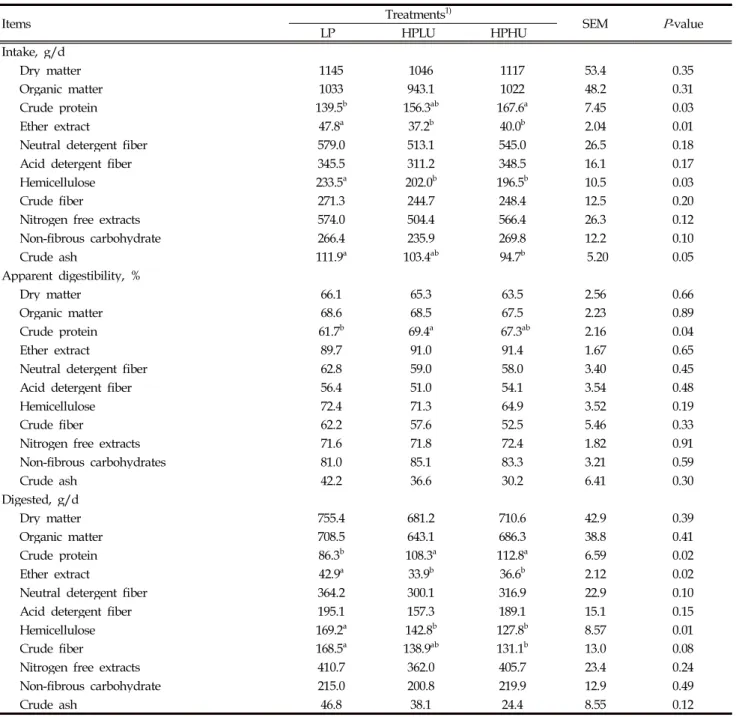
The effect of treatment on nutrient intake and apparent digestibility is reported in Table 2. The intake of DM, OM, NDF, ADF, NFE, and NFC did not differ between experimental sheep fed ad libitum; however, consumption of CP and EE was greatest in sheep fed HPHU and LP, respectively. Neither CP nor UIP level had any effect on the digestion of the majority of nutrients, indicating that the rumen-to-the small intestine shift in protein degradation minimally affected nutrient digestion in sheep (Atkinson et al., 2007b).
However, feeding the HPLU diet resulted in the highest CP digestibility among treatments; 7.70% compared with the LP diet. Although insignificant, a numerical decrease of 2.1% was observed in total-tract CP digestibility when sheep were fed HPHU vs. HPLU diet, which might possibly be justified by the negative association between N digestibility and ADIN (Nakamura et al., 1994). Heat damage in protein sources is usually indicated by ADIN level, and is presumed to be entirely unavailable to ruminants (Licitra et al., 1996;
Van Soest and Sniffen, 1984). During the drying process of DDG, heat damage may occur, which potentially promotes the binding of N compounds to the fiber fraction, thereby elevating ADIN levels (Böttger and Südekum, 2018). The inclusion of high-protein DDG in the HPHU diet led to an increase in ADIN content (14.6% of total N; Table 1), which possibly contributed to the decline of CP digestibility.
Contrary to the observation that treatments had minor effect on feed consumption, Arroquy et al. (2004) suggested that DIP increases fiber digestion and passage rate, which promotes greater intake by stimulating the motility of the gastrointestinal tract (Egan and Moir, 1965). In contrast, Ma et al. (2014) reported that the reduction in UIP level encouraged lambs to consume a greater amount of DM and OM. Similarly, a study involving growing lambs reported that DM intake increased by increasing dietary DIP levels from 60% to 70% CP (Kiran and Mutsvangwa, 2007). In agreement with our findings that neither CP nor UIP levels had an effect on total-tract NDF or ADF digestibility, previous studies have identified marginal differences by increasing UIP levels on total-tract NDF digestion in
[Provider:earticle] Download by IP 118.70.52.165 at Monday, December 20, 2021 7:45 PM
www.earticle.net
ewes or lambs (Swanson et al., 2000; Atkinson et al., 2007a), wethers (Salisbury et al., 2004), or steers (Bandyk et al., 2001). In contrast, Ludden et al. (2002) described that total-tract NDF and ADF digestibility increased linearly with increasing dietary protein concentrations. The increase in endogenous N recycling or CP increases CP degradation rate in the rumen,
possibly enabling the greater N being available for fiber fermentation. Contrary to previous studies (Mathis et al., 2000; Ludden et al., 2002) reporting a DIP at the suggested level of 9.6% of diet DM supports maximal forage digestion, this study found that the DIP level in the three diets (7.92%, 9.88%, and 8.13% of
Table 2. Treatment effects on nutrient consumption, apparent digestibility, and digested nutrients.
Items Treatments
1)SEM P -value
LP HPLU HPHU
Intake, g/d
Dry matter 1145 1046 1117 53.4 0.35
Organic matter 1033 943.1 1022 48.2 0.31
Crude protein 139.5
b156.3
ab167.6
a7.45 0.03
Ether extract 47.8
a37.2
b40.0
b2.04 0.01
Neutral detergent fiber 579.0 513.1 545.0 26.5 0.18
Acid detergent fiber 345.5 311.2 348.5 16.1 0.17
Hemicellulose 233.5
a202.0
b196.5
b10.5 0.03
Crude fiber 271.3 244.7 248.4 12.5 0.20
Nitrogen free extracts 574.0 504.4 566.4 26.3 0.12
Non-fibrous carbohydrate 266.4 235.9 269.8 12.2 0.10
Crude ash 111.9
a103.4
ab94.7
b5.20 0.05
Apparent digestibility, %
Dry matter 66.1 65.3 63.5 2.56 0.66
Organic matter 68.6 68.5 67.5 2.23 0.89
Crude protein 61.7
b69.4
a67.3
ab2.16 0.04
Ether extract 89.7 91.0 91.4 1.67 0.65
Neutral detergent fiber 62.8 59.0 58.0 3.40 0.45
Acid detergent fiber 56.4 51.0 54.1 3.54 0.48
Hemicellulose 72.4 71.3 64.9 3.52 0.19
Crude fiber 62.2 57.6 52.5 5.46 0.33
Nitrogen free extracts 71.6 71.8 72.4 1.82 0.91
Non-fibrous carbohydrates 81.0 85.1 83.3 3.21 0.59
Crude ash 42.2 36.6 30.2 6.41 0.30
Digested, g/d
Dry matter 755.4 681.2 710.6 42.9 0.39
Organic matter 708.5 643.1 686.3 38.8 0.41
Crude protein 86.3
b108.3
a112.8
a6.59 0.02
Ether extract 42.9
a33.9
b36.6
b2.12 0.02
Neutral detergent fiber 364.2 300.1 316.9 22.9 0.10
Acid detergent fiber 195.1 157.3 189.1 15.1 0.15
Hemicellulose 169.2
a142.8
b127.8
b8.57 0.01
Crude fiber 168.5
a138.9
ab131.1
b13.0 0.08
Nitrogen free extracts 410.7 362.0 405.7 23.4 0.24
Non-fibrous carbohydrate 215.0 200.8 219.9 12.9 0.49
Crude ash 46.8 38.1 24.4 8.55 0.12
1)
LP=12.2% CP with 35.1% UIP; HPLU=14.9% CP with 33.7% UIP; HPHU=15.0% CP with 45.8% UIP.
SEM=standard error of mean.
[Provider:earticle] Download by IP 118.70.52.165 at Monday, December 20, 2021 7:45 PM
www.earticle.net
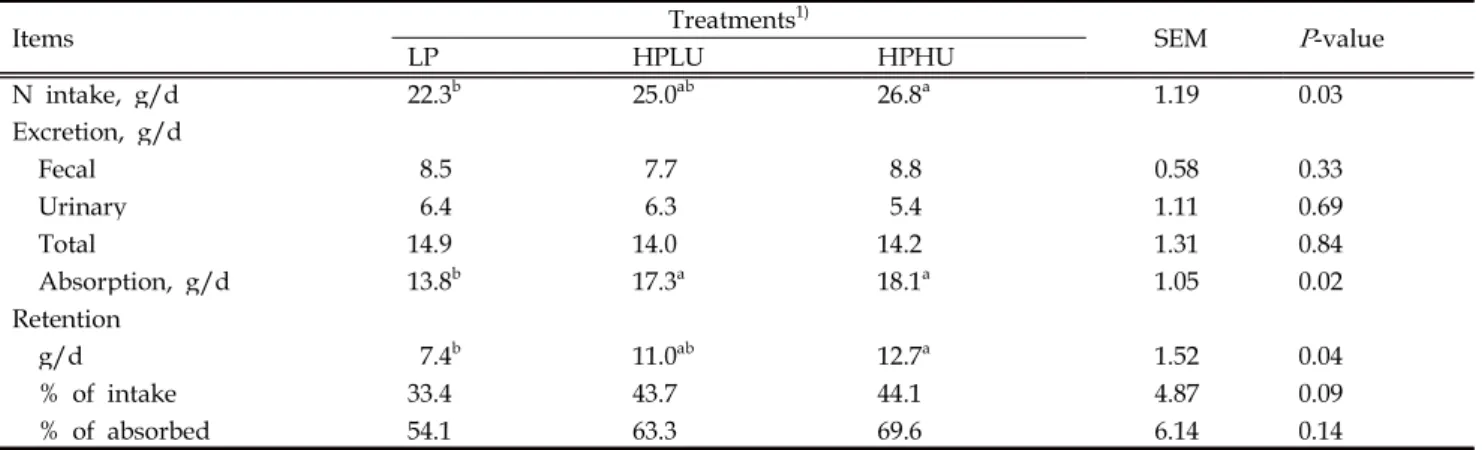
Table 3. Treatment effects on N metabolism.
Items Treatments
1)SEM P -value
LP HPLU HPHU
N intake, g/d 22.3
b25.0
ab26.8
a1.19 0.03
Excretion, g/d
Fecal 8.5 7.7 8.8 0.58 0.33
Urinary 6.4 6.3 5.4 1.11 0.69
Total 14.9 14.0 14.2 1.31 0.84
Absorption, g/d 13.8
b17.3
a18.1
a1.05 0.02
Retention
g/d 7.4
b11.0
ab12.7
a1.52 0.04
% of intake 33.4 43.7 44.1 4.87 0.09
% of absorbed 54.1 63.3 69.6 6.14 0.14
1)
LP=12.2% CP with 35.1% UIP; HPLU=14.9% CP with 33.7% UIP; HPHU=15.0% CP with 45.8% UIP.
SEM=standard error of mean.
ration DM) did not affect NDF or ADF digestibility.
Yulistiani et al. (2015) examined the nutrient digestibility of different breeds of sheep fed a concentrated mix formulated to provide two levels of UIP (4.5% vs. 7.5% of ration DM). In their study, feed consumption and DM and ADF digestibility were not affected by UIP level, but NDF digestibility was greater in sheep fed a concentrate containing less UIP.
Data of N metabolism are reported in Table 3. As expected, N intake was greater in sheep fed high-CP diets; however, no effect was observed in urinary or fecal N excretion, which accounted for 24.7% and 33.9%
of the total N intake, respectively. Ludden and coworkers (2002) observed that increasing CP content of sheep diets from 13% to 17% increased N intake (from 21.4 to 29.9 g/d), N digestibility, urinary N excretion (from 10.4 to 17.1 g/d), and N retention (from 12.4 to 20.9 g/d). In another study, Salisbury et al. (2004) investigating the effects of supplementing ruminal DIP or UIP sources in wethers did not find any significant effects on N metabolism and nutrient digestion when UIP constituted 35% to 53% of supplemental CP. More recently, Paengkoum et al. (2019) reported that N intake and retention increased linearly in Thai indigenous beef cattle fed increasing UIP levels (from 15% to 35% of CP).
Nitrogen intake and UIP level are the predominant determinants of urinary N excretion in ruminants
(Marini and Van Amburgh, 2005; Nennich et al., 2006).
However, in the current experiment, CP degradability had no effect on urinary N excretion. Contrarily, previous studies reported a positive relationship between N intake and N retention and urinary N excretion (Swanson et al., 2000; Marini et al., 2004;
Kiran and Mutsvangwa, 2007). Swanson et al. (2000) reported that the provision of additional UIP with constant DIP levels increased N digestibility, absorption, and retention. Consistent with our data on fecal N excretion, there is a general agreement that fecal N excretion remains constant regardless of dietary N levels, as long as feed intake is not reduced (Swanson et al., 2000; Marini et al., 2004). The productive state of the animal is critically involved in their biological N requirements, necessitating more experimentation with growing animals with high N demand for their rapid growth.
Overall, increasing CP and UIP levels had no significant effects on the digestibility of the majority of nutrients as well as fecal and urinary N excretion.
However, higher CP level (15.0% vs. 12.2% of DM) resulted in increased N retention. In addition, feeding a diet supplying higher UIP (45.8% vs. 33.7% of CP) resulted in the highest N retention, which indicates that the additional UIP in the form of high-protein DDG was readily digested and metabolized by sheep.
[Provider:earticle] Download by IP 118.70.52.165 at Monday, December 20, 2021 7:45 PM
www.earticle.net
ACKNOWLEDGMENTS
Konkuk University supported this study in 2019.
COMPETING INTERESTS
None.
Ⅳ . REFERENCES
1. Ahmadi, F., Lee, W. H., Oh, Y. K., Park, K. and Kwak, W. S. 2020. Fruit and vegetable discards preserved with sodium metabisulfite as a high-moisture ingredient in total mixed ration for ruminants: effect on in vitro ruminal fermentation and in vivo metabolism. Asian-Australas. J. Anim. Sci.
33:446–455.
2. AOAC International, 2012. Official Methods of Analysis, nineteenth ed. AOAC Int., Arlington, VA, USA.
3. Arroquy, J. I., Cochran, R. C., Villarreal, M., Wickersham, T. A., Llewellyn, D. A., Titgemeyer, E.
C., Nagaraja, T. G., Johnson, D. E. and Gnad, D.
2004. Effect of level of rumen degradable protein and type of supplemental non-fiber carbohydrate on intake and digestion of low-quality grass hay by beef cattle. Anim. Feed Sci. Technol. 115:83–99.
4. Atkinson, R., Toone, C., Robinson, T., Harmon, D.
and Ludden, P. 2007a. Effects of supplemental ruminally degradable protein versus increasing amounts of supplemental ruminally undegradable protein on nitrogen retention, apparent digestibility, and nutrient flux across visceral tissues in lambs fed low-quality forage. J. Anim. Sci. 85:3331–3339.
5. Atkinson, R. L., Toone, C. D. and Ludden, P. A.
2007b. Effects of supplemental ruminally degradable protein versus increasing amounts of supplemental ruminally undegradable protein on site and extent of digestion and ruminal characteristics in lambs fed
low-quality forage. J. Anim. Sci. 85:3322–3330.
6. Bandyk, C. A., Cochran, R. C., Wickersham, T. A., Titgemeyer, E. C., Farmer, C. G. and Higgins, J. J.
2001. Effect of ruminal vs postruminal administration of degradable protein on utilization of low-quality forage by beef steers. J. Anim. Sci. 79:225–231.
7. Böttger, C. and Südekum, K. H. 2018. Review:
protein value of distillers dried grains with solubles (DDGS) in animal nutrition as affected by the ethanol production process. Anim. Feed Sci. Technol. 244:11–
17.
8. Davies, K., McKinnon, J. and Mutsvangwa, T. 2013.
Effects of dietary ruminally degradable starch and ruminally degradable protein levels on urea recycling, microbial protein production, nitrogen balance, and duodenal nutrient flow in beef heifers fed low crude protein diets. Can. J. Anim. Sci. 93:123–136.
9. Egan, A. and Moir, R. 1965. Nutritional status and intake regulation in sheep. I. Effects of duodenally infused single doses of casein, urea, and propionate upon voluntary intake of a low-protein roughage by sheep. Crop Pasture Sci. 16:437–449.
10. Huntington, G., Poore, M., Hopkins, B. and Spears, J. 2001. Effect of ruminal protein degradability on growth and N metabolism in growing beef steers. J.
Anim. Sci. 79:533–41.
11. Ishler, V. 2004. Nitrogen, ammonia emissions and the dairy cow. Extension Associate, Pennsylvania State University, Mid-Atlantic CSREES Regional Water Quality Project.
12. Kiran, D. and Mutsvangwa, T. 2007. Effects of barley grain processing and dietary ruminally degradable protein on urea nitrogen recycling and nitrogen metabolism in growing lambs. J. Anim. Sci.
85:3391–3399.
13. Korean Feeding Standard Establishment Council.
2007. Korean Feeding Standard for Korean Cattle (Hanwoo). National Livestock Research Institute, RDA, Ministry of Agriculture and Forestry, Sejong, Korea.
14. Lee, Y. H., Ahmadi, F., Choi, D. Y. and Kwak, W.
S. 2016. In situ ruminal degradation characteristics of
[Provider:earticle] Download by IP 118.70.52.165 at Monday, December 20, 2021 7:45 PM
www.earticle.net
dry matter and crude protein from dried corn, high-protein corn, and wheat distillers grains. J.
Anim. Sci. Technol. 58:33−39.
15. Lee, Y. H., Ahmadi, F., Lee, M., Oh, Y. K. and Kwak, W. S. 2020. Effect of crude protein content and undegraded intake protein level on productivity, blood metabolites, carcass characteristics, and production economics of Hanwoo steer. Asian- Australas. J. Anim. Sci. 33:1599−1609.
16. Licitra, G., Hernandez, T. M. and Van Soest, P. J.
1996. Standardization of procedures for nitrogen fractionation of ruminant feeds. Anim. Feed Sci.
Technol. 57:347−358.
17. Ludden, P. A., Wechter, T. L. and Hess, B. W. 2002.
Effects of oscillating dietary protein on nutrient digestibility, nitrogen metabolism, and gastrointestinal organ mass in sheep. J. Anim. Sci. 80:3021–3026.
18. Ma, T., Deng, K. D., Tu, Y., Jiang, C. G., Zhang, N.
F., Li, Y. L., Si, B. W., Lou, C. and Diao, Q. Y. 2014.
Effect of dietary concentrate: forage ratios and undegraded dietary protein on nitrogen balance and urinary excretion of purine derivatives in Dorper × Thin-tailed Han crossbred lambs. Asian-Australas. J.
Anim. Sci. 27:161–168.
19. Marini, J. and Van Amburgh, M. 2005. Partition of nitrogen excretion in urine and the feces of Holstein replacement heifers. J. Dairy Sci. 88:1778–1784.
20. Marini, J. C., Klein, J. D., Sands, J. M. and Van Amburgh, M. E. 2004. Effect of nitrogen intake on nitrogen recycling and urea transporter abundance in lambs. J. Anim. Sci. 82:1157–1164.
21. Mathis, C. P., Cochran, R. C., Heldt, J. S., Woods, B.
C., Abdelgadir, I. O., Olson, K. C., Titgemeyer, E. C.
and Vanzant, E. S. 2000. Effects of supplemental degradable intake protein on utilization of medium-to low-quality forages. J. Anim. Sci. 78:224–
232.
22. Nakamura, T., Klopfenstein, T. J. and Britton, R. A.
1994. Evaluation of acid detergent insoluble nitrogen as an indicator of protein quality in nonforage proteins. J. Anim. Sci. 72:1043–1048.
23. Nennich, T. D., Harrison, J. H., VanWieringen, L.
M., St-Pierre, N. R., Kincaid, R. L., Wattiaux, M. A., Davidson, D. L. and Block, E. 2006. Prediction and evaluation of urine and urinary nitrogen and mineral excretion from dairy cattle. J. Dairy Sci.
89:353–364.
24. National Research Council. 2007. Nutrient Requirements of Small Ruminants. 7th ed. Natl.
Acad. Press, Washington, DC.
25. Paengkoum, P., Chen, S. and Paengkoum, S. 2019.
Effects of crude protein and undegradable intake protein on growth performance, nutrient utilization, and rumen fermentation in growing Thai-indigenous beef cattle. Trop. Anim. Health. Pro. 51:1151–1159.
26. Salisbury, M. W., Krehbiel, C. R., Ross, T. T., Schultz, C. L. and Melton, L.L . 2004. Effects of supplemental protein type on intake, nitrogen balance, and site, and extent of digestion in whiteface wethers consuming low-quality grass hay.
J. Anim. Sci. 82:3567–3576.
27. Savari, M., Khorvash, M., Amanlou, H., Ghorbani, G.R., Ghasemi, E. and Mirzaei, M. 2018. Effects of rumen-degradable protein: rumen-undegradable protein ratio and corn processing on production performance, nitrogen efficiency, and feeding behavior of Holstein dairy cows. J. Dairy Sci.
101:1111–1122.
28. Swanson, K. C., Caton, J. S., Redmer, D. A., Burke, V. I. and Reynolds, L. P. 2000. Influence of undegraded intake protein on intake, digestion, serum hormones and metabolites, and nitrogen balance in sheep. Small Rumin. Res. 35:225–233.
29. Van Soest, P. J. and Sniffen, C. J. 1984. Nitrogen fractions in NDF and ADF. Proc. 39th Distillers Feed Conf. p. 72. Cincinnati, OH.
30. Yulistiani, D., Naufaliah, N. and Kardaya. D. 2015.
Nutrient digestibility and growth of five breeds of sheep under different levels of undegradable protein. JITV. 20:23–30.
(Received 20 March 2021, Revised 30 April 2021, Accepted 30 April 2021)
[Provider:earticle] Download by IP 118.70.52.165 at Monday, December 20, 2021 7:45 PM