Review https://doi.org/10.14478/ace.2020.1043
1. Introduction
1)Since X-rays were discovered by Wiilhelm Roentgen in 1895, the interaction of radiation and matter has been a long-standing research subject and challenge for mankind. In the 1950s, we began to produce electricity through nuclear power and became aware that neutron irradi- ation can make metallic material more brittle. People have noticed that radiation changes the properties of a material. Because in many cases it makes the properties of the material worse, people have referred to radiation-material interactions as radiation damage for a long time.
† Corresponding Author: Kyung Hee University, Department of Nuclear Engineering, Yongin 17104, Korea Tel: +82-31-201-2782 e-mail: [email protected]
pISSN: 1225-0112eISSN: 2288-4505 @ 2020 The Korean Society of Industrial and Engineering Chemistry. All rights reserved.
In neutron transport theory, the time-independent diffusion of neu- tron flux () can be calculated with:
∇ (1)
where is a diffusion coefficient is the macroscopic absorption cross-section, and is a source term[1]. In the case of neutron irradi- ation, a neutron-material interaction is described by , which is tabu- lated in ENDF (evaluated nuclear data file)/B-VII. In ENDF/B-VII, the interaction term is described using the input of element type and kinetic energy of the neutrons. Once we obtain the flux and fluence of the neu- trons at a specific position in the irradiated materials with the energy information, we can estimate the atomic displacement and replacement, which can be converted to the initial concentration of Frenkel pairs[2].
중성자 조사재의 미세구조 설계와 모델링
장근옥†
경희대학교 원자력공학과
(2020년 6월 27일 접수, 2020년 7월 13일 수정, 2020년 7월 16일 채택)
A Microstructural Design and Modeling of Neutron-Irradiated Materials
Kunok Chang†
Department of Nuclear Engineering, Kyung Hee University, Yongin 17104, Korea (Received June 27, 2020; Revised July 13, 2020; Accepted July 16, 2020)
초 록
재료는 방사선과 상호작용을 통해 그 물리적, 화학적 특성이 변화하며 여러 방사선 중에서 전하를 띄고 있지 않아 침투깊이가 깊은 중성자 조사에 의한 금속소재의 조사손상은 원자력발전소의 안전과 관련해서 오랜 기간 동안 집중 적인 연구대상이었다. 중성자 조사에 의한 조사손상은 초반 피코 초 스케일에서 벌어지는 원자단위의 점결함의 생성 으로 시작되며 그 이후의 전개 양상은 전위 고리나 공극과 같은 미세구조상 결함으로 확인될 수 있다. 이러한 미세구 조 상 결함의 형상과 분포에 따라 소재의 특성에 미치는 효과는 상이하게 된다. 그러므로 중성자 조건에 따른 미세구 조를 예측하는 것은 매우 중요한 일로, 본 논문에서는 중성자 조사에 의한 재료 내의 미세구조 발달에 대해 리뷰한 뒤 조사된 소재의 미세구조 변화 예측에 널리 사용될 수 있는 상장 모델에 대해 간략히 소개하였다.
Abstract
A material changes its physical and chemical properties through the interaction with radiation and also the neutrons, which is electronically neutral so that the penetration depth is relatively deeper than that of other radioactive way including alpha or beta ray. Therefore, the radiation damage by neutron irradiation has been intensively investigated for a long time with respect to the safety of nuclear power plants. The damage induced by neutron irradiation begins with the creation of point defects in atomic scale in the unit of picoseconds, and their progress pattern can be characterized by microstructural defects, such as dislocation loops and voids. Their morphological characteristics affect the properties of neutron-irradiated materials, therefore, it is very important to predict the microstructure at a given neutron irradiation condition. This paper briefly reviews the evolution of radiation damage induced by neutron irradiation and introduces a phase-field model that can be widely used in predicting the microstructure evolution of irradiated materials.
Keywords: Neutron irradiation, Radiation damage, Material design, Phase-field model
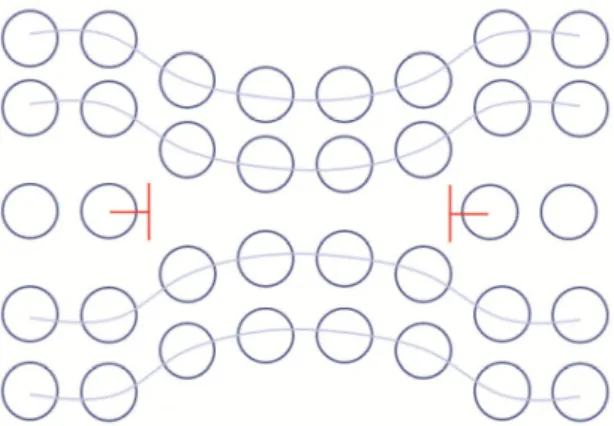
Figure 1. Prismatic loop formed by clusters of vacancies.
Collisions with projectile neutrons knock many atoms off the lattice site in a phenomenon called the many-body collisions (cascade). The number of Frenkel pairs generally peaks approximately 1 ps after pri- mary collision occurs[3], after which time it decreases and eventually approaches the thermodynamic equilibrium value[4] due to the re- combination or clustering of point defects. Recombination occurs when a single vacancy and a single interstitial encounter each other; then, there will be one lattice site with an atom, and, consequently, a de- crease in the number of Frenkel pairs. There are two main types of clustering of point defects. First, there is clustering of vacancies at the atomistic scale, for instance, a vacancy dumbbell[5]. On the mesoscale, some well-known clusters of vacancies are the void/bubble[5] and pris- matic dislocation (Frank) loop[6]. In a glissile dislocation loop, the Burgers vector is within the plane of the loop, whereas the Burgers vector of a prismatic dislocation loop is not within the plane of the loop. Another type of clustered vacancy in a neutron-irradiated material is the void of bubble, which is relatively spherical compared to the dis- location loop.
A prismatic loop can be considered as an anisotropically compressed void. The properties of voids and Frank loops are quite different. There is a significant need to systematically predict and evaluate micro- structural characteristics of vacancy clusters.
2. Microstructural Evolution Prediction of Neutron-Irradiated Materials
The reaction rate theory[7] and cluster dynamics[8] (advanced ver- sion of the reaction rate theory) have been utilized to predict the mi- crostructural evolution of irradiated materials. The reaction rate theory is efficient in terms of computational cost, however it yields do- main-averaged values at given times. Therefore, we cannot estimate the spatial distribution of microstructural inhomogeneities, such as voids or vacancy loops. The cluster dynamics method is expanded to achieve spatial resolution, however, it still deals with microstrucutral dis- tributions and, therefore, the microstructural properties obtained from the reaction rate theory or cluster dynamics cannot be directly con- nected to the mechanical properties of a material.
Whether a defect is a dislocation loop or a void/bubble can be
Figure 2. Schematic drawing of formation energy of void and loop with respect to number of vacancies per defect
predicted through energy balance. With the assumption of spherical void of bubble, the formation energy of the void/bubble can be determined by
(2)
(3)where is the interfacial energy between the bubble/void and the matrix, is the number of vacancies per void or dislocation loop, is the atomic volume, is the internal pressure of the bubble (which is 0 for a void), is the line tension of the dislocation loop, and
is the stacking fault energy.
In Eqs. (2) and (3), there are three main factors to consider that de- termine the morphology of the defect state of the irradiated materials:
1) Chemical element; 2) Material factors (crystal structure, grain boun- daries, etc.); and 3) Nuclear reaction (fission gas production). Factors 1 and 2 determine the atomic volume (), interfacial energy between the bubble/void and the matrix (), number of vacancies per defect (), and stacking fault energy. Additionally, the pressure of the bubble () is determined by nuclear reactions initiated by the neutrons (factors 1, 3). For example, for the case of austenitic steels, nickel has a sig- nificant cross-section compared to iron or chromium, and
reaction of nickel releases He gas, enhancing void nucleation[9].
3. Phase-Field Modeling for Evolution of Defect Structure of the Irradiated Materials
Phase-field modeling is a simulation methodology that is applicable to various types of microstructural evolution based on the diffused in- terface description[10]. The defect evolution of several irradiated mate- rials has been simulated by the phase-field method, and the range of applications is expanding[11,12]. The free energy function of a system with defects generated by irradiation is given by:
∇∇ (4)where
(5)
the free energy density within the matrix phase is , that within the defect state is , and is a non-conserved order parameter which distinguishes a solid ( ) from a defect ( ).
We generally use the form which satisfies the conditions
(6)
′ ′ (7)
such as and varies continuously from 0 to 1 when evolves from 0 to 1.
Assuming a system that contains a dislocation loop and void,
is given by the combination of and . Among the vari- ous types of microstructures, such as voids and dislocation loops, which defect structure a particular system contains is determined by thermodynamic parameters such as the concentration and temperature of the defect.
in Eq. (4) is typically the defect concentration of point defects such as vacancies and interstitials[13] and the chemical free energy of Frenkel defects are typically represented by the regular solution mod- el[12]. So far, most published phase-field work on defect structural evolution of irradiated materials has assumed a single sublattice mod- el[11-13]. Another assumption of the phase-field modeling of point de- fect evolution is that the number of lattice sites is conserved. For a substitutional diffusion case with a fixed volume frame, this assump- tion is generally valid.
is the additional energy term, except chemical and inter- facial energy, which can be elastic or electrostatic energy, especially for ionic compounds.
Relaxation of parameter is governed by the Allen-Cahn equation for structural order parameter and the Cahn-Hilliard equation for concentration of point defects, .
According to the diffused-interface description, we assume that the free energy of a system is a function of the parameter values and their gradients.
∇ (8)According to the 2nd law of thermodynamics, the equilibrium state occurs when is minimized. To find the minimized free energy state,
→
∇
Take the variational derivative of Eq. (8) for the 1-D case, then we have
(9)Through trivial development of Eq. (9)
(10)Integrate by parts,
∞
∞
(11)From Eqs. (10) and (11), we have
Therefore,
at equilibrium.
The interfacial energy in the equilibrium state is given by
, and it determines in Eq. (2). To consider interfacial energy anisotropy, one must consider a variable gradient coefficient to incorporate it.For conserved order parameter we can modify Eq. (8) into
∇ we have
∇
where is the generalized chemical potential. Assume that flux is linearly proportional to gradient for diffusion potential
∇
∇
∇
Apply the continuity equation with respect to the flux,
∇ ⋅
Finally we have,
(Allen-Cahn equation) (12)
For a conserved field, we use the notation c instead of
∇ ∙ ∇
(Cahn-Hilliard equation) (13)
We generally assume that the defect state is a kind of different phase based on the thermodynamic description. In the phase-field method, there are three ways to deal with multi-phase multi-component microstructural evolution. At equilibrium, all kinds of potentials, such as enthalpy, temperature, concentration, etc., must be homogeneous within the phase, and the chemical potential of the specific solute at different phases have to be the same. If the system is entirely under equilibrium, the chemical potentials of each element at different phases are the same, so substitutional diffusion does not occur.
Generally, we assume that other types of potential are homogeneous during the diffusion process. In the WBM (Wheeler-Boettinger-Mcffaden) model, it is assumed that the concentration and enthalpy of each ele- ment are constant across different phases[14]. This can be applied to simulate the defect structure of irradiated materials, and we do not need to calculate the defects within the matrix and defect separately.
However, adjustment of the interface thickness will vary the interfacial energy, therefore, it is very challenging to incorporate a realistic inter- face width once we apply the WBM model. In another model, the KKS (Kim-Kim-Suzuki) model, diffusion potential and temperature are con- stant in different phases[15]. For example, if there is a matrix phase and a defect phase, then the vacancy concentration is given by
(14)
Given , we have to apply the condition to determine and
(15)
Since the interfacial energy does not depend on the gradient co- efficient, it is convenient to apply the KKS model to simulate defect structural evolution; however, solving Eqs. (14) and (15) for every time step and every position is quite time-consuming. Also, in the reg- ular solution model, there is a logarithmic term in free energy.
Therefore, it is extremely challenging to apply Eq. (15) when →. Therefore, the polynomial approximation is generally ap- plied[11,13].
If the concentration of Frenkel defects due to irradiation damage does not deviate significantly from the equilibrium point, quadratic approx- imation is valid. However, in a high burnup structure, the assumption is problematic, and in this case, it is likely that the original function should be used. Dealing with the concentration of defects directly us- ing the KKS model is numerically expensive, so an alternative model is proposed, the grand potential model[11]. In the grand potential mod- el, one solves for the chemical potential of each element instead of the concentration field. More details on phase-field modeling to deal with defect state can be found in Ref. [11].
in Eq. (4) of a neutron-irradiated material is composed of elastic energy and fission gas energy under the assumption that the struc-
tural material does not undergo plastic deformation with applied stress.
The Legendre transformation of the Gibbs free energy is given by
(13)
Therefore, at a given temperature , as the fission gas pressure of the bubble increases, the free energy of the bubble increases. If we as- sume that the volume of the bubble is constant, we can obtain the ex- pression by
(14)
The elastic effect has been considered in phase-field modeling of ir- radiated materials[11-13,16]. The fission gas pressure effect has also been considered under the assumption that the pressure of the fission gas is homogeneous within the system[16]. In reality, fission gas gen- eration/transport is a crucial problem for nuclear safety[17]. Therefore, we need to simulate fission gas generation and fission gas transport us- ing Monte Carlo modeling or the Boltzmann transport equation to per- form multiphysics modeling of the microstructural evolution of irradi- ated materials.
Finally, the gradient energy ∇∇ term in Eq. (4) also has a significant effect in determining the morphology of the defects in ir- radiated materials. A void in an HCP metal with six-fold symmetry is observed along the [0001] direction due to the interfacial energy aniso- tropy between the void and the matrix metal[18].
4. Summary and Future Work
To predict the morphology of defects caused by neutron irradiation without any a priori assumptions, the phase-field method can be used.
Much research has yet to be done as to how Frenkel defects generated above the equilibrium concentration by neutron irradiation interact and form clusters. According to experimental observations and advanced analytical theory, two types of defects are created: void/bubble and Frenkel loop. The exact conditions necessary for creation of voids and Frenkel loops have not yet been explicitly presented, but we believe that they will be determined in a complex manner by the interactions between chemical composition, crystal structure of the material, and the properties of the incident neutrons. According to the theory of phase transformation of conventional metal materials, the shape of a vacancy cluster is determined by the Wulff construction that minimizes the total amount of interfacial energy[4]. However, for the case of neu- tron-irradiated materials, the elasticity effect due to the Frenkel defect above the equilibrium concentration and the effect due to fission gas have to be considered at the same time. To consider the fission gas transport effect, we have to combine the phase-field method with gas transport simulation with microstructural inhomogeneities such as grain boundaries and dislocations.
As we mentioned in the previous section, the phase-field model itself has to be improved for more accurate prediction. First of all, the
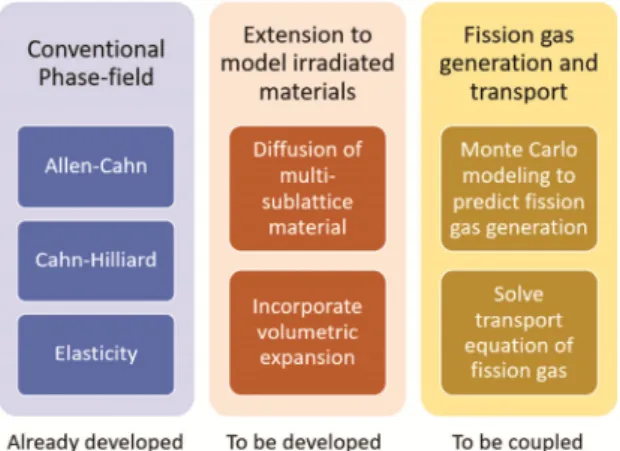
Figure 3. What we already have and what have to be developed and what do we need to couple, which is already developed in related area to simulate defect structure evolution of neutron-irradiated materials.
model must be extended to describe the diffusion process in a material system with more than one sublattice. Also, neutron irradiation can cause volumetric expansion, or swelling, so the number of lattice sites is not necessarily conserved.
We categorized the modules into three categories which we need to simulate microstructural evolution of the defects induced by the neu- tron irradiation. First, we have the modules which are used in conven- tional phase-field modeling, such as the Allen-Cahn and Cahn-Hilliard equation solvers and elasticity solver based on mechanical equilibrium conditions (blue box in Figure 3). Next, we need to extend conven- tional phase-field modeling to simulate more complex and realistic sys- tems, such as a multi-sublattice system with volumetric expansion (red box in Figure 3). Finally, we need to incorporate nuclear reactions to simulate the microstructural evolution of irradiated materials. To this end, fission gas generation/transport must be coupled with simulation of microstructural evolution. However, there are various physical/nu- merical problems to be solved before we can perform complete multi- scale simulation because solid-state microstructural changes and fission gas transport take place on different time and space scales.
Acknowledgement
This work was supported by a National Research Foundation of Korea (NRF) grant funded by the Korean government (MSIT) (NRF- 2018R1C1B5040669). This work was also supported by the “Human Resources Program in Energy Technology” of the Korea Institute of Energy Technology Evaluation and Planning (KETEP), with financial resources from the Ministry of Trade, Industry & Energy, Republic of Korea (No. 20184030202170).
References
1. J. R. Lamarsh and A. J. Baratta, Introduction to Nuclear Engineering, 4th ed., 244-245, Pearson, USA (2017).
2. K. Nordlund, S. J. Zinkle, A. E. Sand, F. Granberg, R. S. Averback,
R. Stoller, T. Suzudo, L. Malerba, F. Banhart, and W. J. Weber, Improving atomic displacement and replacement calculations with physically realistic damage models, Nat. Commun., 9, 1-8 (2018).
3. K. Vortler, C. Bjorkas, D. Terentyev, L. Malerba, and K. Nordlund, The effect of Cr concentration on radiation damage in Fe-Cr al- loys, J. Nucl. Mater., 382, 24-30 (2008).
4. D. A. Porter and E. Easterling, Phase Transformations in Metals and Alloys, 3rd ed., 244-245, CRC press, USA (2009).
5. C. H. Woo and W. Frank, The influence of temperature on void-lat- tice formation and swelling, J. Nucl. Mater., 148, 121-135 (1987).
6. T. Nuroga, H. Watanabe, and N. Yoshida, Correlation of fast neu- tron, fusion neutron and electron irradiations based on the dis- location loop density, J. Nucl. Mater., 174, 282-288 (1990).
7. A. D. Brasilsford and R. Bull, The influence of temperature on void-lattice formation and swelling, J. Nucl. Mater., 44, 121-135 (1972).
8. M. Li, M. A. Kirk, P. M. Baldo, D. Xu, and B. D. Wirth, Study of defect evolution by TEM with in situ ion irradiation and coordi- nated modeling, Philos. Mag., 92, 2048-2078 (2012).
9. P. J. Maziasz, R. L. Klueh, and J. M. Vitek, Helium effects on void formation in 9Cr-1MoVNb and 12Cr-1MoVW irradiated in HFIR, J. Nucl. Mater., 141, 929-937 (1986).
10. L. Q. Chen, Phase-field models for microstructure evolution, Annu.
Rev. Mater. Res., 32, 113-140 (2002).
11. M. R. Tonks, A. Cheniour, and L. Aagesen, How to apply the phase field method to model radiation damage, Comput. Mater. Sci., 147, 353-362 (2018).
12. Y. Li, S. Hu, X. Sun, and M. Stan, A review: Applications of the phase field method in predicting microstructure and property evo- lution of irradiated nuclear materials, Npj Comput. Mater., 3, 1-17 (2017).
13. K. Chang, G. G. Lee, and J. Kwon, A phase-field modeling of void swelling in the Austenitic stainless steel, Radiat. Eff. Defects Solids, 171, 242-251 (2016).
14. A. A. Wheele, W. J. Boettinger, and G. B. McFadden, Phase-field model for isothermal phase transitions in binary alloys, Phys. Rev.
A, 45, 7424-7440 (1992).
15. S. G. Kim, W. T. Kim, and T. Suzuki, Phase-field model for binary alloys, Phys. Rev. E, 60, 7186-7197 (1999).
16. S. Hu, D. E. Burkes, C. A. Lavender, D. J. Senor, W. Setyawan, and Z. Xu, Formation mechanism of gas bubble superlattice in UMo metal fuels: Phase-field modeling investigation, J. Nucl. Mater., 479, 202-215 (2016).
17. M. S. Veshchunov, V. D. Ozrin, V. E. Shestak, V. I. Tarasov, R.
Dubourg, and G. Nicaise, Development of the mechanistic code MFPR for modelling fission-product release from irradiated UO2
fuel, Nucl. Eng. Des., 236, 179-200 (2006).
18. W. Xu, Y. Zhang, G. Cheng, W. Jian, P. C. Millett, C. C. Koch, S. N. Mathaudhu, and Y. Zhu, In-situ atomic-scale observation of irradiation-induced void formation, Nat. Commun., 4, 2288 (2013).
Authors
Kunok Chang; Ph.D., Professor, Department of Nuclear Engineering, Kyung Hee University, Yongin 17104, Korea; kunok.chang@khu.
ac.kr