• 검색 결과가 없습니다.

Association between Abdominal Obesity and Cardiovascular Risk Factors in Adults with Normal Body Mass Index: Based on the Sixth Korea National Health and Nutrition Examination Survey

N/A
N/A
Protected

Academic year: 2021

Share "Association between Abdominal Obesity and Cardiovascular Risk Factors in Adults with Normal Body Mass Index: Based on the Sixth Korea National Health and Nutrition Examination Survey"

Copied!
9
0
0

로드 중.... (전체 텍스트 보기)

전체 글

(1)

Association between Abdominal Obesity and

Cardiovascular Risk Factors in Adults with Normal Body Mass Index: Based on the Sixth Korea National Health and Nutrition Examination Survey

Hye Yun Kim

1

, Jae Kyung Kim

1

, Gook Gyeon Shin

1

, Jin Ah Han

1

, Jin Wook Kim

1,2,

*

1

Department of Family Medicine, Obesity and Metabolic Disease Center, Seongnam Central Hospital, Seongnam;

2

Department of Family Medicine, Korea University College of Medicine, Seoul, Korea

Background: Abdominal obesity predisposes individuals to cardiovascular disease, but the data in adults with normal body mass index (BMI) are relatively rare. This study aimed to evaluate the characteristics of subjects with normal BMI and abdominal obesity and to identify the relationship between central obesity and cardiovas- cular risk factors in normal BMI adults in Korea.

Methods: Ten thousands six hundred thirty-four adults with BMI between 18.5 to 24.9 kg/m

2

who participated in the sixth Korea National Health and Nutrition Examination Survey were included. Abdominal obesity was de- fined as a waist circumference of ≥90 cm in males and ≥85 cm in females. Through logistic regression, we ana- lyzed the factors influencing abdominal obesity and the relationship between abdominal obesity and cardio- vascular risk factors.

Results: The prevalence of abdominal obesity in adults with normal BMI was 6.9% for males and 7.7% for fe- males, and this prevalence tended to increase with age. When adjusted for age and BMI, daily excessive alcohol consumption increased the risk of abdominal obesity in adults of normal weight. Women with lower socioeco- nomic status and men in need of walking exercise also had a higher risk of abdominal obesity. In the model ad- justed for age and BMI, abdominal obesity was associated with fasting glucose intolerance and diabetes in men and hypertriglyceridemia and low high-density lipoprotein cholesterol in women.

Conclusion: Cardiovascular risk factors were associated with abdominal obesity in Korean adults with normal BMI. These results suggest that more careful management of abdominal obesity in those with normal weight is necessary.

Key words: Normal body weight, Abdominal obesity, Cardiovascular disease risk factors

Received June 28, 2019 Reviewed August 7, 2019 Accepted October 25, 2019

* Corresponding author Jin Wook Kim

https://orcid.org/0000-0001-9584-0974 Department of Family Medicine, Obesity and Metabolic Disease Center, Seongnam Central Hospital, 12 Sanseong-daero 476beon-gil, Jungwon-gu, Seongnam 13161, Korea Tel: +82-31-799-5541

Fax: +82-31-744-8994 E-mail: [email protected]

INTRODUCTION

Obesity is defined as a state of abnormal or excessive accumula- tion of adipose tissue that leads to health risks. Body mass index (BMI) was used to define the criteria for obesity.

1

However, studies have reported that BMI may not accurately predict actual fat mass

if the value is below 30.0 kg/m

2

.

2

Moreover, recent studies have shown that abdominal obesity, rather than obesity simply defined by BMI, is more highly correlated with cardiovascular and meta- bolic diseases. According to studies in the United States and Canada, individuals with normal BMI and abdominal obesity showed high- er risks of cardiovascular diseases compared to individuals classi-

Copyright © 2019 Korean Society for the Study of Obesity

This is an Open Access article distributed under the terms of the Creative Commons Attribution Non-Commercial License (http://creativecommons.org/licenses/by-nc/4.0/) which permits unrestricted non-commercial use, distribution, and reproduction in any medium, provided the original work is properly cited.

2017-03-16 https://crossmark-cdn.crossref.org/widget/v2.0/logos/CROSSMARK_Color_square.svg

(2)

Association between Abdominal Obesity and

Cardiovascular Risk Factors in Adults with Normal Body Mass Index: Based on the Sixth Korea National Health and Nutrition Examination Survey

Hye Yun Kim

1

, Jae Kyung Kim

1

, Gook Gyeon Shin

1

, Jin Ah Han

1

, Jin Wook Kim

1,2,

*

1

Department of Family Medicine, Obesity and Metabolic Disease Center, Seongnam Central Hospital, Seongnam;

2

Department of Family Medicine, Korea University College of Medicine, Seoul, Korea

Background: Abdominal obesity predisposes individuals to cardiovascular disease, but the data in adults with normal body mass index (BMI) are relatively rare. This study aimed to evaluate the characteristics of subjects with normal BMI and abdominal obesity and to identify the relationship between central obesity and cardiovas- cular risk factors in normal BMI adults in Korea.

Methods: Ten thousands six hundred thirty-four adults with BMI between 18.5 to 24.9 kg/m

2

who participated in the sixth Korea National Health and Nutrition Examination Survey were included. Abdominal obesity was de- fined as a waist circumference of ≥90 cm in males and ≥85 cm in females. Through logistic regression, we ana- lyzed the factors influencing abdominal obesity and the relationship between abdominal obesity and cardio- vascular risk factors.

Results: The prevalence of abdominal obesity in adults with normal BMI was 6.9% for males and 7.7% for fe- males, and this prevalence tended to increase with age. When adjusted for age and BMI, daily excessive alcohol consumption increased the risk of abdominal obesity in adults of normal weight. Women with lower socioeco- nomic status and men in need of walking exercise also had a higher risk of abdominal obesity. In the model ad- justed for age and BMI, abdominal obesity was associated with fasting glucose intolerance and diabetes in men and hypertriglyceridemia and low high-density lipoprotein cholesterol in women.

Conclusion: Cardiovascular risk factors were associated with abdominal obesity in Korean adults with normal BMI. These results suggest that more careful management of abdominal obesity in those with normal weight is necessary.

Key words: Normal body weight, Abdominal obesity, Cardiovascular disease risk factors

Received June 28, 2019 Reviewed August 7, 2019 Accepted October 25, 2019

* Corresponding author Jin Wook Kim

https://orcid.org/0000-0001-9584-0974 Department of Family Medicine, Obesity and Metabolic Disease Center, Seongnam Central Hospital, 12 Sanseong-daero 476beon-gil, Jungwon-gu, Seongnam 13161, Korea Tel: +82-31-799-5541

Fax: +82-31-744-8994 E-mail: [email protected]

fied as obese according to BMI without abdominal obesity.

3-6

Mor- tality from coronary artery disease was also found to be higher in individuals with normal BMI and abdominal obesity.

7,8

Although quantifying visceral and subcutaneous fat by computed tomography (CT) is the most accurate diagnostic method for abdominal obesity, CT use is limited because of high cost and risk of radiation exposure.

Because waist circumference is highly correlated with visceral fat and is easy to measure and interpret, this is used as the basic clinical tool for evaluating abdominal obesity.

9

Asians are known to have more severe abdominal obesity than Caucasians with identical BMIs leading to the suggestion that different diagnostic criteria should be applied to different races. In 2009, the American Heart Association/

National Heart, Lung, and Blood Institute and International Asso- ciation for the Study of Obesity defined abdominal obesity in Asians as a waist circumference of ≥ 90 cm for males and ≥ 80 cm for fe- males.

10

Currently in South Korea, slightly different criteria, waist circumference of ≥ 90 cm for males and ≥ 85 cm for females, have been suggested by the Korean Society for the Study of Obesity based on the Korea National Health and Nutrition Examination Survey (KNHANES) data from 1998.

11

Individuals classified as having a normal body weight based on BMI despite the presence of abdominal obesity are often not rec- ognized as obese in the primary care setting and may not acknowl- edge their obesity. As a result, these individuals may not receive management for abdominal obesity or participate in programs to prevent future cardiovascular or metabolic diseases.

12

In a study conducted in 9,447 individuals in Jilin Province of China, 55.6% of individuals with normal body weight and abdominal obesity did not acknowledge their obesity, and only 12.7% were attempting to lose weight.

13

Therefore, we should pay more attention to the indi- vidual with abdominal obesity and normal body weight.

Few studies have examined abdominal obesity in adults with normal body weight in South Korea. According to a South Korean study based on the KNHANES of 2009–2010, 32% of adults with normal BMI were found to have body fat percentages that were greater than or equal to obesity cutoffs when measured by dual en- ergy X-ray absorptiometry. Individuals who were abdominally obese with normal body weight showed an increased prevalence of cardiovascular diseases.

14

A 2001 study on 678 adults who sought health examinations and who had a BMI less than 23.0 kg/m

2

, de-

termined that a higher body fat percentage measured by bioelectri- cal impedance analysis was associated with higher risks of cardio- vascular diseases, especially in males.

15

Although these studies in- creased the interest in obesity with normal body weight in South Korea, the influence of fat distribution was not clearly determined.

A previous study showed that visceral adiposity measured by dual energy X-ray absorptiometry was associated with triglycerides in 156 adults with normal body weight who participated in the 2011 KNHANES.

16

However, the study had a small sample size and no further studies have been conducted using more recent South Ko- rean data. Therefore, this study was conducted to identify the fac- tors that increase the risks of abdominal obesity in Korean adults with normal body weight and to investigate the relationship be- tween abdominal obesity and cardiovascular risk factors, such as hypertension, diabetes, and dyslipidemia, based on the sixth KNHANES (2013–2015).

METHODS Participants

Among adults aged 19 years or more who participated in the sixth KNHANES (2013–2015), data from 10,634 (4,336 males and 6,298 females) individuals with BMI between 18.5 and 24.9 kg/m

2

were analyzed.

Ethics statement and data access

This study used the database from the sixth KNHANES (2013–

2015). Access to the KNHANES data was acquired after receiving approval by the Institutional Review Board (IRB) of the Korea Centers for Disease Control and Prevention (2013-07CON-03- 4C, 2013-12EXP-03-5C). This study was a cross-sectional study that used and analyzed the data from the sixth KNHANES survey.

The dataset did not include personal information and participants gave consent to the KNHANES. Therefore, further ethical approv- al for the use of open KNHANES data was exempted by the IRB.

Clinical variables

Among the items assessed in the KNHANES, health question-

naire and physical exam data were used. An individual was consid-

ered to be normal weight if the BMI was 18.5 to 24.9 kg/m

2

ac-

(3)

cording to the classification established by the World Health Orga- nization.

1

Abdominal obesity was defined as a waist circumference of ≥ 90 cm in males and ≥ 85 cm in females in accordance with the criteria suggested by the Korean Society for the Study of Obesity.

The mean age was calculated for each group classified based on sex and abdominal obesity, and age in years was categorized as 19–44, 45–64, and 65 years or older.

For sociodemographic indices, variables included the area of resi- dence (region), family income, and education level attained. For area of residence, the subject’s address was used to classify those living in “dong” as urban residents and those living in “eup” or “my- eon” as rural residents. Family income was classified into four groups based on an equalized average monthly income; and educa- tion level was also classified into four groups: elementary school graduation or lower, middle school graduation, high school gradua- tion, and college graduation or higher. For health-related behaviors, smoking, excessive alcohol consumption frequency, and walking exercise frequency were analyzed. Smoking was classified into life- time non-smoker, ex-smoker, and current smoker. Harmful alcohol consumption was analyzed as a weekly frequency and defined as seven standardized glasses or more per drinking event for males and five standardized glasses or more for females in accordance with KNHANES criteria. Frequency of walking exercise was cate- gorized as 0–2, 3–5, and 6–7 days per week.

Risk factors for cardiovascular diseases were defined as described below. Systolic blood pressure of 120–140 mmHg or diastolic blood pressure of 80–90 mmHg was defined as pre-hypertension. A sys- tolic blood pressure of ≥ 140 mmHg, diastolic blood pressure of

≥ 90 mmHg, or administration of antihypertensive medications was defined as having hypertension. Fasting glucose levels of 100–

125 mg/dL was defined as impaired fasting glucose; and fasting glucose levels of ≥ 126 mg/dL, doctor’s diagnosis of diabetes, or administration of anti-hypoglycemic agents or insulin was defined as having diabetes. Dyslipidemia was classified into hypercholester- olemia when the total cholesterol level was ≥ 240 mg/dL or when individuals were being administered cholesterol medications, hy- pertriglyceridemia when triglyceride was 200 mg/dL or higher upon fasting for ≥ 12 hours, and hypo-high-density lipoprotein (HDL) cholesterolemia when HDL was < 40 mg/dL after ≥ 8 hours of fasting.

Data analysis

The complex sample analysis was conducted for the KNHANES data for weighing all values. For each variable, missing values were treat as valid. The prevalence of cardiovascular risk factors was ana- lyzed according to the general characteristics and waist circumfer- ence of the participants by chi-square tests and t-tests. Variables showing significant differences between the normal waist circum- ference and abdominal obesity groups were further analyzed by lo- gistic regression analysis. Moreover, the relative risks of cardiovas- cular risk factors according to abdominal obesity were analyzed by logistic regression analysis. All values were considered significant when the P-value was <0.05 for the 95% confidence interval (CI).

Analyses were conducted using IBM SPSS version 22.0 (IBM Corp., Armonk, NY, USA).

RESULTS

Differences in general characteristics in adults with normal body weight according to the presence of abdominal obesity

Participants with normal BMI were classified into the normal waist circumference and abdominal obesity groups; their general characteristics are shown in Table 1. The prevalence of abdominal obesity in adults with normal body weight was 6.9% in males and 7.7% in females. This difference was significantly higher in females (P=0.020). The mean BMI in the group without abdominal obe- sity was 22.34± 1.64 kg/m

2

in males and 21.86± 1.69 kg/m

2

in fe- males. The mean BMI in the group with abdominal obesity was 24.1±0.81 kg/m

2

in males and 23.79±0.69 kg/m

2

in females; thus, the mean BMI was significantly higher in the group with abdomi- nal obesity than in the control group without abdominal obesity (P<0.001). For both males and females, the mean age was higher in the groups with abdominal obesity, and the prevalence of abdom- inal obesity tended to increase with increased age (P<0.001).

In both men and women with normal BMI and abdominal obe-

sity, family income, education levels, and walking exercise frequency

were lower and excessive alcohol consumption frequency was high-

er than the control group. Moreover, the abdominal obesity group

and control group showed significant differences in smoking histo-

ry in men (P=0.022) and area of residence in women (P=0.047).

(4)

Association between sociodemographic indices, health- related behavior, and abdominal obesity in adults with normal body weight

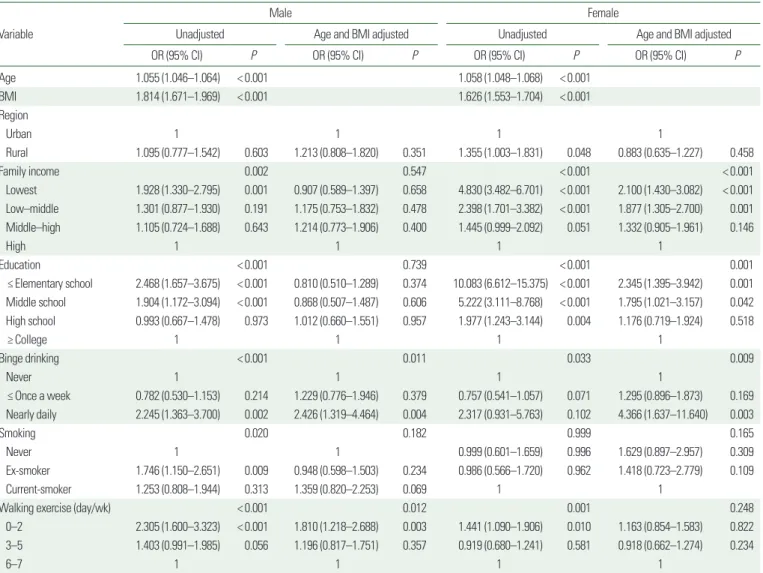
Table 2 shows the results of logistic regression analysis conduct- ed to investigate the association between sociodemographic indi- ces, health-related behaviors, and abdominal obesity in adults with normal body weight. The odds ratio for abdominal obesity based on age was 1.055 (95% CI, 1.046–1.064) for males and 1.058 (95%

CI, 1.048–1.068) for females. The results remained significant after

adjusting for BMI (male: 1.066 [95% CI, 1.055–1.077]; female:

1.051 [95% CI, 1.039–1.062]).

When adjusted for age and BMI, the odds ratio was 2.426 (95%

CI, 1.319–4.464) in males who consumed alcohol excessively ev- ery day and 1.810 (95% CI, 1.218–2.688) in males who performed walking exercise 2 or fewer days per week. Although the odds ratios were decreased in this model compared to the unadjusted model, the results remained significant. In females, the odds ratio was 4.366 (95% CI, 1.637–11.640) for participants who consumed al- Table 1. Differences in general characteristics according to the presence of abdominal obesity in adults with normal BMI

Variable

Male (n= 4,336) Female (n= 6,298)

WC < 90 cm (n= 4,036, 93.1%)

WC ≥ 90 cm

(n= 300, 6.9%) P WC < 85 cm

(n= 5,809, 92.3%)

WC ≥ 85 cm

(n= 489, 7.7%) P

WC (cm) 80.19± 5.45 92.43± 42.39 74.33± 5.59 87.99± 2.62

BMI (kg/m

2

) 22.34± 1.64 24.1± 0.81 < 0.001 21.86± 1.69 23.79± 0.69 < 0.001

Age (yr) 50.80± 17.28 63.27± 12.63 < 0.001 48.90± 16.25 63.831± 4.48 < 0.001

Age group (yr) < 0.001 < 0.001

19–44 1,553 (50.6) 29 (15.3) 2,464 (50.6) 63 (20.4)

45–64 1,422 (35.9) 115 (49.1) 2,205 (36.1) 142 (29.8)

≥ 65 yr 1,061 (13.5) 156 (35.6) 1,140 (13.4) 284 (49.8)

Region 0.603 0.047

Urban 3,210 (81.9) 234 (80.5) 4,813 (84.6) 377 (80.2)

Rural 826 (18.1) 66 (19.5) 996 (15.4) 112 (19.8)

Family income 0.010 < 0.001

Lowest 733 (13.6) 85 (21.3) 1,005 (14.5) 192 (34.8)

Low–middle 1,019 (24.9) 75 (26.3) 1,390 (23.6) 134 (28.1)

Middle–high 1,083 (29.7) 76 (26.7) 1,597 (29.3) 88 (21.0)

High 1,172 (31.8) 61 (25.8) 1,777 (32.5) 70 (16.1)

Education < 0.001 < 0.001

≤ Elementary school 615 (11.2) 75 (22.2) 1,172 (16.3) 262 (51.4)

Middle school 405 (8.9) 38 (13.6) 501 (8.1) 55 (13.3)

High school 1,345 (41.7) 82 (33.4) 1,851 (37.8) 87 (23.4)

≥ College 1,248 (38.2) 68 (30.8) 1,823 (37.8) 40 (11.8)

Smoking 0.022 0.999

Never 863 (25.7) 48 (19.0) 4,958 (89.0) 400 (89.0)

Ex-smoker 1,461 (33.8) 134 (43.5) 277 (5.6) 21 (5.6)

Current smoker 1,411 (40.6) 96 (37.5) 272 (5.5) 21 (5.4)

Binge drinking < 0.001 0.020

Never 726 (20.5) 55 (21.5) 1,696 (44.2) 116 (49.4)

≤ Once a week 2,088 (70.9) 122 (58.2) 1,820 (53.7) 85 (45.3)

Nearly daily 269 (8.6) 38 (20.3) 66 (2.1) 8 (5.3)

Walking exercise (day/wk) < 0.001 0.002

0–2 1,164 (31.0) 111 (47.1) 1,800 (32.3) 188 (41.8)

3–5 1,030 (28.2) 72 (26.1) 1,807 (34.2) 132 (28.2)

6–7 1,412 (40.7) 80 (26.8) 1,735 (33.5) 123 (30.0)

Values are presented as mean± standard deviation or number (%).

BMI, body mass index; WC, waist circumference.

(5)

cohol to excess every day, and the odds ratio was higher compared to that determined using the unadjusted model. Even when adjust- ed for age and BMI, lower family income and education level sig- nificantly increased the odds ratio for abdominal obesity in females with normal body weight.

Association between abdominal obesity and

cardiovascular risk factors in adults with normal body weight

Fig. 1 shows the results of logistic regression analysis that was conducted to analyze the influence of abdominal obesity on car- diovascular risk factors, such as hypertension, diabetes, and dyslip- idemia, in adults with a normal body weight. When unadjusted for

Table 2. Unadjusted and adjusted odds ratio of abdominal obesity in relation to sociodemographic factors and health-related behavior in adults with normal BMI Variable

Male Female

Unadjusted Age and BMI adjusted Unadjusted Age and BMI adjusted

OR (95% CI) P OR (95% CI) P OR (95% CI) P OR (95% CI) P

Age 1.055 (1.046–1.064) < 0.001 1.058 (1.048–1.068) < 0.001

BMI 1.814 (1.671–1.969) < 0.001 1.626 (1.553–1.704) < 0.001

Region

Urban 1 1 1 1

Rural 1.095 (0.777–1.542) 0.603 1.213 (0.808–1.820) 0.351 1.355 (1.003–1.831) 0.048 0.883 (0.635–1.227) 0.458

Family income 0.002 0.547 < 0.001 < 0.001

Lowest 1.928 (1.330–2.795) 0.001 0.907 (0.589–1.397) 0.658 4.830 (3.482–6.701) < 0.001 2.100 (1.430–3.082) < 0.001 Low–middle 1.301 (0.877–1.930) 0.191 1.175 (0.753–1.832) 0.478 2.398 (1.701–3.382) < 0.001 1.877 (1.305–2.700) 0.001 Middle–high 1.105 (0.724–1.688) 0.643 1.214 (0.773–1.906) 0.400 1.445 (0.999–2.092) 0.051 1.332 (0.905–1.961) 0.146

High 1 1 1 1

Education < 0.001 0.739 < 0.001 0.001

≤ Elementary school 2.468 (1.657–3.675) < 0.001 0.810 (0.510–1.289) 0.374 10.083 (6.612–15.375) < 0.001 2.345 (1.395–3.942) 0.001 Middle school 1.904 (1.172–3.094) < 0.001 0.868 (0.507–1.487) 0.606 5.222 (3.111–8.768) < 0.001 1.795 (1.021–3.157) 0.042 High school 0.993 (0.667–1.478) 0.973 1.012 (0.660–1.551) 0.957 1.977 (1.243–3.144) 0.004 1.176 (0.719–1.924) 0.518

≥ College 1 1 1 1

Binge drinking < 0.001 0.011 0.033 0.009

Never 1 1 1 1

≤ Once a week 0.782 (0.530–1.153) 0.214 1.229 (0.776–1.946) 0.379 0.757 (0.541–1.057) 0.071 1.295 (0.896–1.873) 0.169 Nearly daily 2.245 (1.363–3.700) 0.002 2.426 (1.319–4.464) 0.004 2.317 (0.931–5.763) 0.102 4.366 (1.637–11.640) 0.003

Smoking 0.020 0.182 0.999 0.165

Never 1 1 0.999 (0.601–1.659) 0.996 1.629 (0.897–2.957) 0.309

Ex-smoker 1.746 (1.150–2.651) 0.009 0.948 (0.598–1.503) 0.234 0.986 (0.566–1.720) 0.962 1.418 (0.723–2.779) 0.109

Current-smoker 1.253 (0.808–1.944) 0.313 1.359 (0.820–2.253) 0.069 1 1

Walking exercise (day/wk) < 0.001 0.012 0.001 0.248

0–2 2.305 (1.600–3.323) < 0.001 1.810 (1.218–2.688) 0.003 1.441 (1.090–1.906) 0.010 1.163 (0.854–1.583) 0.822

3–5 1.403 (0.991–1.985) 0.056 1.196 (0.817–1.751) 0.357 0.919 (0.680–1.241) 0.581 0.918 (0.662–1.274) 0.234

6–7 1 1 1 1

BMI, body mass index; OR, odds ratio; CI, confidence interval.

any particular variable, abdominal obesity was associated with in- creased risks of prehypertension and hypertension in both males and females. However, when adjusted for both age and BMI, the increase in odds ratio was not significant.

When unadjusted for any particular variable, the risks of im- paired fasting glucose and diabetes increased because of abdominal obesity in both males and females with normal body weight. In the model adjusted for age and BMI, the odds ratio for impaired fasting glucose in males was 1.844 (95% CI, 1.271–2.674) and that for di- abetes in males was 1.716 (95% CI, 1.133–2.598). After adjust- ment, the significance of the increased risks of impaired fasting glu- cose and diabetes remained in males but not in females.

Dyslipidemia was classified as hypertriglyceridemia, hypercho-

(6)

lesterolemia, and hypo-HDL cholesterolemia. For both males and females, the odds ratio for hypertriglyceridemia and hypo-HDL cholesterolemia increased in the unadjusted model. However, in the model adjusted for age and BMI, the increased odds ratio due to abdominal obesity was only significant in females. The odds ra- tio for hypertriglyceridemia in females was 1.544 (95% CI, 1.014–

2.353) and that for hypo-HDL cholesterolemia was 1.508 (95%

CI, 1.074–2.117). In males and females with normal body weight,

the odds ratio for hypercholesterolemia did not increase because of abdominal obesity regardless of the analysis model.

Subjective perception of body habitus and weight loss efforts in the past year in adults with abdominal obesity despite normal body weight

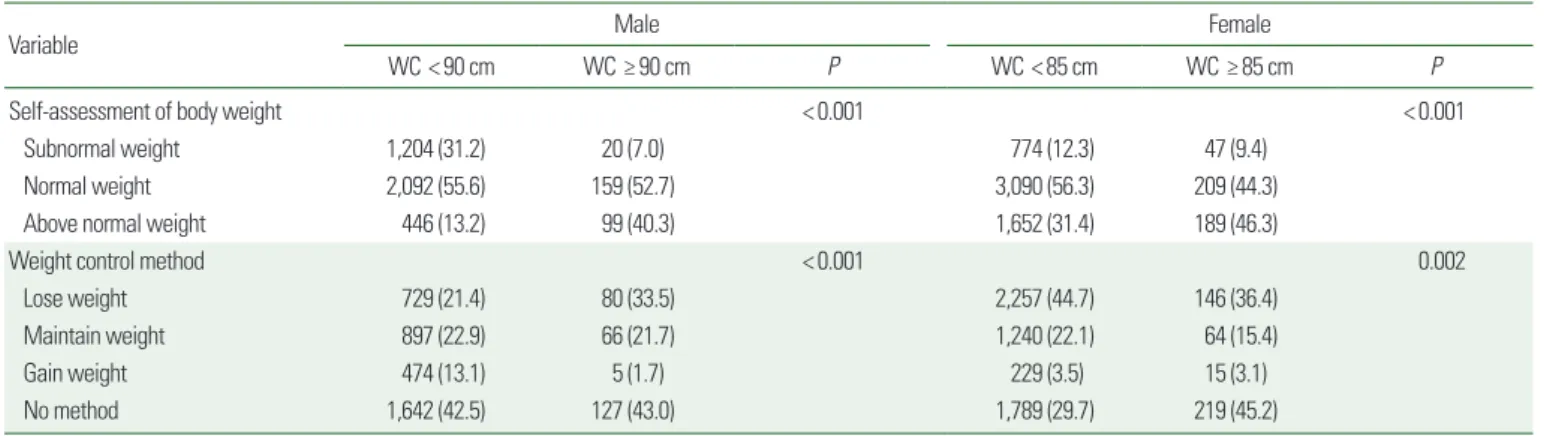
Table 3 shows the subjective perception of body habitus and

weight loss efforts in the past year in adults with abdominal obesity

Figure 1. Unadjusted and adjusted odds ratios of cardiovascular risk factors in relation to the presence of abdominal obesity among adults with normal body mass index

(BMI). OR, odds ratio; CI, confidence interval; HTN, hypertension; IFG, impaired fasting glucose; DM, diabetes mellitus; TG, triglyceride; C, cholesterol; HDL-C, high-density

lipoprotein cholesterol.

(7)

despite having a normal body weight. Of the adults with abdominal obesity despite having a normal body weight, 40.3% of males and 46.3% of females acknowledged their obesity, and 33.5% of males and 36.4% of females had attempted to lose weight in the past year.

Fewer females in this group attempted to lose weight compared to females without abdominal obesity (44.7%).

DISCUSSION

This study was conducted to analyze the factors that increase the risks of abdominal obesity in Korean adults with normal body weight and the relationship between abdominal obesity and car- diovascular risk factors, such as hypertension, diabetes, and dyslip- idemia, based on the sixth KNHANES (2013–2015).

The prevalence of abdominal obesity in Korean adults with nor- mal body weight was higher in females. In contrast, a previous study using the KNHANES between 1998 and 2015 reported that the prevalence of abdominal obesity was higher in males than in fe- males.

17

The mean age of the female and male groups with abdomi- nal obesity was higher than that of the groups without abdominal obesity, and the prevalence of abdominal obesity tended to increase with age. This trend may be attributed to a combination of causes including social activities, cultural characteristics, age-related physi- cal changes, and decreased caloric use.

When the influence of sociodemographic factors on the abdomi- nal obesity of adults with normal body weight was assessed, the in- fluence was not significant in males when adjusted for age and BMI.

In contrast, in females, the risks of abdominal obesity increased sig-

Table 3. Distribution of attitude and behavior toward weight in normal and abdominal obesity participants in adults with normal BMI

Variable Male Female

WC < 90 cm WC ≥ 90 cm P WC < 85 cm WC ≥ 85 cm P

Self-assessment of body weight < 0.001 < 0.001

Subnormal weight 1,204 (31.2) 20 (7.0) 774 (12.3) 47 (9.4)

Normal weight 2,092 (55.6) 159 (52.7) 3,090 (56.3) 209 (44.3)

Above normal weight 446 (13.2) 99 (40.3) 1,652 (31.4) 189 (46.3)

Weight control method < 0.001 0.002

Lose weight 729 (21.4) 80 (33.5) 2,257 (44.7) 146 (36.4)

Maintain weight 897 (22.9) 66 (21.7) 1,240 (22.1) 64 (15.4)

Gain weight 474 (13.1) 5 (1.7) 229 (3.5) 15 (3.1)

No method 1,642 (42.5) 127 (43.0) 1,789 (29.7) 219 (45.2)

Values are presented as number (%).

BMI, body mass index; WC, waist circumference.

nificantly when family income and education level were lower. Pre- vious studies also reported that obesity is influenced by socioeco- nomic factors in females. In a Swedish study of middle-aged females, the prevalence of metabolic syndrome decreased as education level increased; a similar finding was reported in a South Korean study of postmenopausal women. Although some studies suggested that psychosocial stress associated with low socioeconomic status acti- vates the hypothalamus-pituitary-adrenal axis and increases the risks of metabolic diseases such as abdominal obesity,

18

further studies are required to confirm this.

When adjusted for age and BMI, the risks of abdominal obesity were increased in male and female groups who engaged in harmful alcohol consumption every day. Various studies have reported a correlation between harmful alcohol consumption and obesity,

19

and our results confirmed that drinking is an independent risk fac- tor of abdominal obesity in adults with normal body weight.

Exercise has been suggested to be an important factor that de-

creases the prevalence of obesity. In this study, the prevalence of

abdominal obesity increased significantly in males with normal

body weight who performed walking exercise two or fewer times

per week. However, there was no correlation between the number

of days of exercise and abdominal obesity in females. Other studies

using the KNHANES data reported similar findings. For instance,

one study determined that there was no significant correlation be-

tween exercise and waist circumference in females aged 35 years or

older;

20

a similar finding was obtained in a study of post-menopaus-

al females.

21

Because the KNHANES was conducted using a self-

reported questionnaire, errors may have occurred. Additionally, be-

(8)

cause the survey was cross-sectional, difficulties in assessing a caus- al relationship between exercise and waist circumference arose.

Logistic regression analysis of the influence of abdominal obesity on cardiovascular risk factors (i.e., hypertension, diabetes, and dys- lipidemia) in adults with normal body weight, the risks of these in- creased because of abdominal obesity in both males and females when the model was not adjusted for any variables. However, in the model adjusted for age and BMI, only the increased risks of im- paired fasting glucose and diabetes in males and hypertriglyceride- mia and hypo-HDL cholesterolemia in females were statistically significant. One possible explanation for such differences between in sex may be the differences in abdominal fat distribution and metabolic function. The ratio between the area of visceral fat and subcutaneous fat (V/S ratio) measured by CT is used as an index of intra-abdominal fat accumulation; this ratio is reported to be higher in males than in females. Compared to subcutaneous fat, visceral fat is more strongly correlated with blood insulin levels, blood glucose levels, and glucose bioavailability. Fujioka et al.

22

re- ported significantly higher impaired glucose in a visceral obesity group with a V/S ratio of ≥ 0.4 compared to a subcutaneous obesi- ty group with a V/S ratio of < 0.4. However, a recent study showed that the high spontaneous lipolysis activity of subcutaneous adi- pose tissue was associated with elevated triglyceride and low HDL- C concentrations. Therefore, the sex differences in the complica- tions of abdominal obesity in individuals with normal weight may arise because of differences in the abdominal fat distribution.

There were some limitations to this study. Only waist circumfer- ence was used to define abdominal obesity; this may not be an ac- curate evaluation of visceral fat. If CT is used to measure total ab- dominal and visceral fat, more accurate results regarding abdominal obesity can be obtained and the influence of fat distribution may be more clearly determined. Moreover, because this study was cross-sectional, we could not investigate the chronological relation- ship between variables and abdominal obesity so we could not identify any causal relationships. Also, dietary habits, which may also influence waist circumference, were not considered in this study and therefore require further analysis.

Using data from the sixth KNHANES (2013–2015), this study revealed that abdominal obesity increases cardiovascular risk fac- tors in South Korean adults with normal body weight. Among

adults with abdominal obesity despite having a normal body weight, fewer than half acknowledged their obesity; and fewer females with normal body weight and abdominal obesity had attempted to lose weight in the past year compared to females without abdominal obesity. These findings indicate that programs to appropriately identify and manage the risks of “abdominal obesity with normal body weight” should be developed.

CONFLICTS OF INTEREST

The authors declare no conflict of interest.

AUTHOR CONTRIBUTIONS

Study concept and design: HYK; acquisition of data: HYK;

analysis and interpretation of data: HYK, JKK, and JWK; drafting of the manuscript: HYK; critical revision of the manuscript: HYK, JKK, and JWK; statistical analysis: HYK; administrative, technical, or material support: GGS, JAH, and JWK; and study supervision:

JWK.

REFERENCES

1. World Health Organization, Regional Office for the Western Pacific. The Asia-Pacific perspective: redefining obesity and its treatment. Sydney: Health Communications Australia; 2000.

2. Frankenfield DC, Rowe WA, Cooney RN, Smith JS, Becker D.

Limits of body mass index to detect obesity and predict body composition. Nutrition 2001;17:26-30.

3. Folsom AR, Kaye SA, Sellers TA, Hong CP, Cerhan JR, Potter JD, et al. Body fat distribution and 5-year risk of death in older women. JAMA 1993;269:483-7.

4. Després JP, Lemieux I. Abdominal obesity and metabolic syn- drome. Nature 2006;444:881-7.

5. Després JP, Lemieux I, Bergeron J, Pibarot P, Mathieu P, Larose E, et al. Abdominal obesity and the metabolic syndrome: con- tribution to global cardiometabolic risk. Arterioscler Thromb Vasc Biol 2008;28:1039-49.

6. Ghandehari H, Le V, Kamal-Bahl S, Bassin SL, Wong ND. Ab-

dominal obesity and the spectrum of global cardiometabolic

(9)

risks in US adults. Int J Obes (Lond) 2009;33:239-48.

7. Coutinho T, Goel K, Corrêa de Sá D, Carter RE, Hodge DO, Kragelund C, et al. Combining body mass index with measures of central obesity in the assessment of mortality in subjects with coronary disease: role of “normal weight central obesity”. J Am Coll Cardiol 2013;61:553-60.

8. Coutinho T, Goel K, Corrêa de Sá D, Kragelund C, Kanaya AM, Zeller M, et al. Central obesity and survival in subjects with coronary artery disease: a systematic review of the litera- ture and collaborative analysis with individual subject data. J Am Coll Cardiol 2011;57:1877-86.

9. Carr DB, Utzschneider KM, Hull RL, Kodama K, Retzlaff BM, Brunzell JD, et al. Intra-abdominal fat is a major determinant of the National Cholesterol Education Program Adult Treat- ment Panel III criteria for the metabolic syndrome. Diabetes 2004;53:2087-94.

10. Alberti KG, Eckel RH, Grundy SM, Zimmet PZ, Cleeman JI, Donato KA, et al. Harmonizing the metabolic syndrome: a joint interim statement of the International Diabetes Federa- tion Task Force on Epidemiology and Prevention; National Heart, Lung, and Blood Institute; American Heart Association;

World Heart Federation; International Atherosclerosis Society;

and International Association for the Study of Obesity. Circu- lation 2009;120:1640-5.

11. Lee S, Park HS, Kim SM, Kwon HS, Kim DY, Kim DJ, et al.

Cut-off points of waist circumference for defining abdominal obesity in the Korean population. Korean J Obes 2006;15:1-9.

12. Smith SC Jr, Haslam D. Abdominal obesity, waist circumfer- ence and cardio-metabolic risk: awareness among primary care physicians, the general population and patients at risk. The Shape of the Nations survey. Curr Med Res Opin 2007;23:

29-47.

13. Zhang P, Wang R, Gao C, Jiang L, Lv X, Song Y, et al. Preva- lence of central obesity among adults with normal BMI and its association with metabolic diseases in Northeast China.

PLoS One 2016;11:e0160402.

14. Kim MK, Han K, Kwon HS, Song KH, Yim HW, Lee WC, et al. Normal weight obesity in Korean adults. Clin Endocrinol (Oxf) 2014;80:214-20.

15. Han JH, Kim SM. Relationship between percent body fat and cardiovascular risk factors for normal weight adults. J Korean Acad Fam Med 2006;27:352-7.

16. Shin SW, Park SK, Jung MK, Ji HS. Association of regional fat measured by DEXA and cardiovascular risk factors in normal BMI adult. Korean J Fam Pract 2015;5(Suppl 3):S851-5.

17. Oh SW. Recent epidemiological changes in Korean obesity.

Korean J Helicobacter Up Gastrointest Res 2017;17:62-5.

18. Björntorp P. Behavior and metabolic disease. Int J Behav Med 1996;3:285-302.

19. Traversy G, Chaput JP. Alcohol consumption and obesity: an update. Curr Obes Rep 2015;4:122-30.

20. Paek KW, Hong YM. Health behavior factors affecting waist circumference as an indicator of abdominal obesity. J Prev Med Public Health 2006;39:59-66.

21. Kang J, Lee YJ, Choi J, Cho H, Lee E. The factors associated with abdominal obesity in Korean middle-aged postmenopaus- al women: Korean national health and nutrition examination survey 2010-2012. Korean J Fam Pract 2016;6:199-204.

22. Fujioka S, Matsuzawa Y, Tokunaga K, Tarui S. Contribution of intra-abdominal fat accumulation to the impairment of glucose and lipid metabolism in human obesity. Metabolism 1987;36:

54-9.

수치

Table 2 shows the results of logistic regression analysis conduct- conduct-ed to investigate the association between sociodemographic  indi-ces, health-related behaviors, and abdominal obesity in adults with  normal body weight
Fig. 1 shows the results of logistic regression analysis that was  conducted to analyze the influence of abdominal obesity on  car-diovascular risk factors, such as hypertension, diabetes, and  dyslip-idemia, in adults with a normal body weight
Table 3 shows the subjective perception of body habitus and  weight loss efforts in the past year in adults with abdominal obesity Figure 1
Table 3. Distribution of attitude and behavior toward weight in normal and abdominal obesity participants in adults with normal BMI

참조

관련 문서

A study on the relationship between body mass index and the food habits of college students. Keilins respiratory chain concept and its

Age-related changes in the prevalence of osteoporosis according to gender and skeletal site: The Korea National Health and Nutrition Examination Survey 2008-2010..

Objective: The purpose of this study is to investigate the relationship between depression and evening meals for adult women by using the National Health and Nutrition Survey

This study aims to identify whether socioeconomic level of parents affects obesity of adolescents and whether the relations between adolescent's obesity

Prevalence of Undiagnosed Diabetes and Related Factors in Korean Postmenopausal Women:.. The 2011-2012 Korean National Health and

Objective: This study was conducted to identify the association between vitamin D and Sarcopenia among all adults in Korea using data from the National Health and

Objectives: The aim of this study was to study the relationship between smoking, alcohol drinking and vitamin D level among Korean adults using data from the

Objectives: This study was performed to compare food insecurity according to socio-demographic factors and health status and to identify the association