저작자표시-비영리-변경금지 2.0 대한민국 이용자는 아래의 조건을 따르는 경우에 한하여 자유롭게 l 이 저작물을 복제, 배포, 전송, 전시, 공연 및 방송할 수 있습니다. 다음과 같은 조건을 따라야 합니다: l 귀하는, 이 저작물의 재이용이나 배포의 경우, 이 저작물에 적용된 이용허락조건 을 명확하게 나타내어야 합니다. l 저작권자로부터 별도의 허가를 받으면 이러한 조건들은 적용되지 않습니다. 저작권법에 따른 이용자의 권리는 위의 내용에 의하여 영향을 받지 않습니다. 이것은 이용허락규약(Legal Code)을 이해하기 쉽게 요약한 것입니다. Disclaimer 저작자표시. 귀하는 원저작자를 표시하여야 합니다. 비영리. 귀하는 이 저작물을 영리 목적으로 이용할 수 없습니다. 변경금지. 귀하는 이 저작물을 개작, 변형 또는 가공할 수 없습니다.
A Thesis
For the Degree of Master of Science
Effect of Low Protein Levels with L-Valine
Supplemented in Weaning Diet on Growth
Performance, Fecal Score, Blood Profiles,
Nutrients Digestibility, Carcass Characteristics and
Economic Analysis in Weaning to Finishing Pigs
자돈 사료 내 단백질 수준과 발린의 첨가가 자돈
및 육성비육돈의 성장성적
, 분변지수, 혈액성상,
영양소 소화율
, 도체특성 및 경제성에 미치는 영향
February, 2018
By
Han, Young Geol
College of Agriculture and Life Sciences
Seoul National University
Effect of Low Protein Levels with L-Valine
Supplemented in Weaning Diet on Growth Performance,
Fecal Score, Blood Profiles, Nutrients Digestibility,
Carcass Characteristics and Economic Analysis
in Weaning to Finishing Pigs
자돈 사료 내 단백질 수준과 발린의 첨가가 자돈 및
육성비육돈의 성장성적
, 설사지수, 혈액성상, 영양소
소화율
, 돈육품질 및 경제성에 미치는 영향
지도교수
김 유 용
이 논문을 농학석사 학위논문으로 제출함
2018
년 2 월
서울대학교 대학원 농생명공학부
한 영 걸
한영걸의 농학석사 학위논문을 인준함
2018
년 2 월
위 원 장 백 명 기 (인)
부위원장 김 유 용 (인)
위 원 조 철 훈 (인)
Summary
Supplying adequate nutrients to livestock not only can lower production costs, but also reduce the economic losses and environmental burdens caused by excess nutrients. The Korea government has enacted laws to regulate environmental pollution resulted by livestock manure. In this context, NRC (2012) revised and adjusted the protein requirement to a lower level compared to previous NRC requirement (1998). However, there is a lack of verification that it can be applied to the domestic swine industry. So the process of verifying whether changes in the protein requirements suggested by the NRC (2012) is indeed appropriate for domestic situation is needed. Therefore, this study was conducted to evaluate optimal crude protein levels with L-valine supplementation in weaning pig diet considering subsequent growth performance, fecal score, blood profiles, nutrient digestibility, carcass characteristics and economic analysis from weaning to finishing pigs. A total of 160 weaning pigs ([Yorkshire×Landrace]×Duroc), with an average body weight of 7.86±1.05kg, were used for 22 weeks feeding trial. Pigs were allotted into one of five treatments by body weight and sex in 4 replicates with 8 pigs per pen in a randomized complete block (RCB) design. The treatments were included 1) Corn-SBM based diet with L-valine supplementation + protein content suggested by NRC (1998) (HP), 2) Basal diet + protein content suggested by NRC (1998) - 1% (MHP), 3) Basal diet + protein content suggested by NRC (1998) - 1.5%, 4) Basal diet + protein content suggested by NRC (2012) and 5) Corn-SBM based diet without L-valine supplementation + protein content suggested by NRC (2012). In feeding trial, reducing crude protein (CP) level showed negative effect on body weight (BW) and average daily gain (ADG) during early growing phase (P<0.01). However, there was no significant impact of reducing CP level on BW and ADG at the end of experiment. Also, average daily feed intake
(ADFI) decreased as dietary CP level decreased in 7-10 week (linear, P<0.05). On the other hand, L-valine supplementation in weaning diet increased BW in 22 week, ADG in 7-14 week and ADFI 11-14 week (P<0.01, P<0.01 and P<0.05, respectively). There was no significant difference in fecal score, but fecal consistency tended to decrease as dietary CP level decreased (linear, P<0.10). Likewise L-valine supplementation in weaning diet had no significant effect on fecal score. In blood analysis, there was a positive effect of reducing CP level and L-valine supplementation in weaning diet on BUN concentration in both weaning and growing-finishing period (P<0.01; linear, P<0.05). Nutrient digestibility and nitrogen balance was not affected by dietary treatments. In carcass characteristics, pH and water holding capacity (WHC) were decreased linearly as dietary CP level decreased (linear, P<0.05). However, crude fat, Hunter L* and b* value showed linear response as dietary CP level decreased (linear, P<0.05). The fatty acid composition of longissimus muscle was changed by feeding CP diet leading to increased MUFA concentration (linear, P<0.05). When pigs were fed low CP diet, feed cost per weight gain, total feed cost and days to market weight were diminished compared to higher CP treatment groups (P<0.05). Moreover, L-valine supplementation resulted in improving days to market weight. Consequently, lowering dietary CP level did not show any detrimental impact on growth performance and increase amino acids availability, crude fat content and MUFA concentration in muscle. Moreover, decreased dietary CP level reduce BUN concentration, feed cost per weight gain, total feed cost, pH and WHC in muscle. On the other hand, supplementation of L-valine in weaning diet resulted in improved growth performance, BUN concentration and numerically decreased days to market weight during growing and finishing period. Although much lower CP level diet was provided during weaning period compared to NRC (1998), there was no detrimental effect on the whole growth performance of pigs. When pigs
were fed lowered dietary CP treatment diet, it is desirable to consider supplementing L-valine in weaning pigs’ diet.
Key words: Protein level, Nitrogen excretion, Carcass characteristics, Growth
Contents
page Overall Summary ··· i Contents ··· ⅲ List of Tables ··· ⅵ List of Figures ··· ⅶ List of Abbreviations ··· ⅷ Ⅰ. General Introduction ··· 1 Ⅱ. Literature Review 1. Introduction ··· 31.1. Genetic improvement and nutrient requirement for pigs ··· 3
1.2. Scale of livestock industry and Situation of environmental regulation in Korea ··· 6
2. Protein and amino acid requirements for swine diets ··· 8
2.1. Transition of protein and amino acid requirements in NRC ··· 8
2.2. Transition of ideal amino acid profile ··· 9
3. Impact of low protein diet on gastrointestinal tract ··· 12
3.1. Protein fermentation ··· 12
3.2. Microbial population ··· 13
4. Influence of low protein diets on fat deposition ··· 15
4.1. Impact of low protein diet on lipid metabolism ··· 15
4.2. Change of fatty acid profile and pork quality ··· 18
5. Environmental impacts of low protein in diets ··· 19
Ⅲ. Effect of Low Protein Levels with L-Valine Supplemented in Weaning Diet on Growth Performance, Fecal Score, Blood Profiles, Nutrients Digestibility and Carcass Characteristics in Weaning to Finishing Pigs Abstract ··· 21
Introduction ··· 24
Materials and Methods ··· 26
Results and Discussion ··· 33
List of Tables
Ⅱ. Review of literature
Table 1. Phenotypic trends in central test results in the Netherlands from 1930 until 1990 ··· 4 Table 2. Optimum lysine/digestible energy ratios in growing pigs by different genotype ··· 5 Table 3. The number of livestock animals and farms ··· 6 Table 4. The change of effluent standards of purification facility in livestock industry ··· 7 Table 5. Nutrient requirements of growing-finishing pigs ··· 8 Table 6. Amino acid profile (relative to lysine) of ideal protein for 10-20
kg growing pigs ··· 10 Ⅲ. Experiment
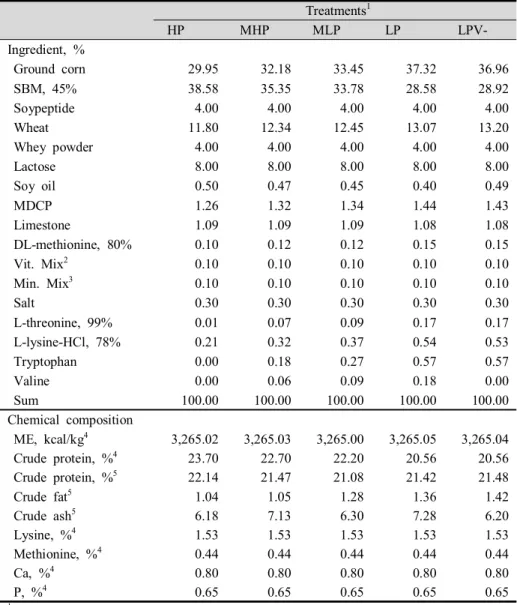
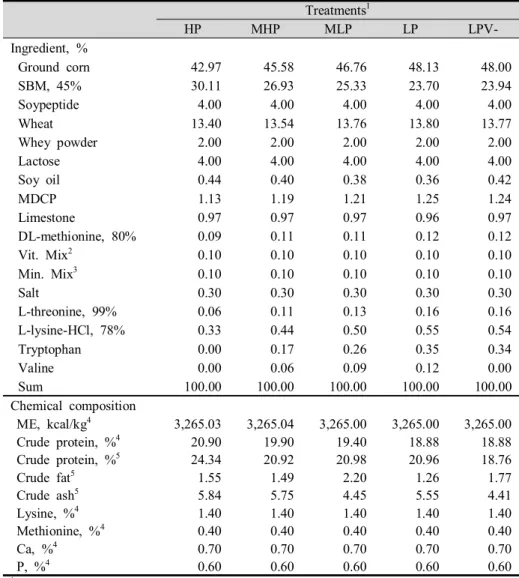
Table 1. Formula and chemical compositions of the experimental diets in phase I (0 to 2 weeks) ··· 46 Table 2. Formula and chemical compositions of the experimental diets in
phase II (3 to 6 weeks) ··· 47 Table 3. Formula and chemical compositions of the experimental diets in
phase III (7 to 10 weeks) ··· 48 Table 4. Formula and chemical compositions of the experimental diets in
phase IV (11 to 14 weeks) ··· 49 Table 5. Formula and chemical compositions of the experimental diets in
Table 6. Formula and chemical compositions of the experimental diets in phase VI (19 to 22 weeks) ··· 51 Table 7. Influences of low crude protein and valine supplementation in
weaning diet on growth performance of weaning to finishing pigs ··· 52 Table 8. Influences of low crude protein and valine supplementation in
weaning diet on fecal consistency of weaning pigs ··· 53 Table 9. Influence of low crude protein and valine supplementation in
weaning diet on blood profiles of weaning pigs ··· 54 Table 10. Influence of low crude protein and valine supplementation in
weaning diet on blood profiles of growing-finishing pigs ··· 55 Table 11. Influence of low crude protein and valine supplementation in
weaning diet on nutrient digestibility in growing pigs ··· 56 Table 12. Influence of low crude protein and valine supplementation in
weaning diet on carcass characteristics of longissimus muscle 57 Table 13. Influences of low crude protein and valine supplementation in
weaning diet on pork pH after slaughter ··· 58 Table 14. Influences of low crude protein and valine supplementation in
weaning diet on pork color after slaughter ··· 59 Table 15. Influences of low crude protein and valine supplementation in
weaning diet on fatty acid composition of pork ··· 60 Table 16. Influences of low crude protein and valine supplementation in
weaning diet on economic benefits of weaning to finishing pigs ··· 61
List of Figures
Ⅰ. Review of Literature
Figure 1. Schematic description of one century of genetic progress in pigs ··· 5 Figure 2. Mechanism for anorexia due to Val-deficiency ··· 11 Figure 3. The impact of low dietary protein on lipid metabolism in porcine muscle tissue ··· 16
AA Amino acid
ACC Acetyl-CoA carboxylase
ADG Average daily gain
ADFI Average daily feed intake
AOAC Association of official analytical chemists
ARC Agricultural research council
BCFA Branched chain fatty acid
BUN Blood urea nitrogen
BW Body weight
CP Crude protein
CPT-1 Carnitine palmitoyltransferase-1
CRD Completely randomized design
DE Digestible energy
DM Dry matter
EAA Essential amino acid
ETEC Enterotoxigenic Escherichia coli
FAME Fatty acid methyl ester
FAS Fatty acid synthase
FFA Free fatty acid
FTA Free trade agreement
H-FABP Heart fatty-acid binding protein
HSL Hormone sensitive lipase
IMF Intramuscular fat
LDL Low-density lipoprotein
ME Metabolizable energy
MUFA Monounsaturated fatty acid
NE Net energy
NRC National research council
PD Protein deposition
PPARg Peroxisome proliferator-activated receptor g
PWD Post weaning diarrhea
PUFA Polyunsaturated fatty acid
RCB Randomized complete block
SAS Statistical analysis system
SBM Soybean meal
SCD Stearoyl-CoA desaturase
SFA Saturated fatty acid
SREBP-1c Sterol regulatory element-binding protein 1c
VFA Volatile fatty acid
I. Introduction
Due to competition between producing animal feed and bio-fuel as ethanol, the world grain price has been soared noticeably. Moreover, severe climate change and abnormal climate such as drought and flood, have influenced on world grain market. Thus for some years ahead, the price of imported feed ingredient will become more costly. In Korea, it is obvious that the feed cost comprise approximately 50~60% of total cost for pig production. Feed cost and pig production cost are much higher than those of other countries because feed industry completely relies on imported feed ingredients. Additionally, shipping charge and storage cost affect negatively on feed cost and pig production cost. Moreover, since FTA with other countries such as EU and USA, the imported pork have been increased dramatically and it occupied more than 30% in total pork market of South Korea. It has led to intense competition between imported pork and domestic pork. Therefore, in order to compete with imported pork, pig producers in South Korea need to reduce production cost as well as to improve feed efficiency or find appropriate nutrient requirement of animals.
The disposal of livestock manure has become a big problem in the South Korea society because of bad smell, the amount and nutrient composition of the manure exceeding the capacity of the land and causing eutrophication. In this context, Korea government have begun to strength regulation of the effluent water standard from livestock manure. According to ministry of agriculture food and rural affairs, they suggested the emission legislation that total nitrogen content in effluent
water from swine farm will be reduced from current 500ppm to 250ppm until 2019 gradually.
Low crude protein (CP) diet would be countermeasure in order to reduce production cost and total nitrogen content in livestock manure. Generally, reduction of CP level in swine diet could save feed cost because protein sources are more expensive than energy sources. Moreover, reduction of CP level could decrease surplus nitrogen source excreted through manure. Consequently, NRC (2012) suggested lower CP level than that of NRC (1998) without retardation of swine growth. However, Korean livestock feeding standard (2012) did not suggest optimal CP levels for Korean swine farms. So the process of verifying whether changes in the protein requirements suggested by the NRC (2012) is indeed appropriate for domestic situation is needed. Therefore, this study was conducted to evaluate optimal crude protein levels with L-valine supplementation in weaning pig diet considering growth performance, fecal score, blood profiles, nutrient digestibility subsequent carcass characteristics and economic analysis of weaning to finishing pigs.
II. Literature Review
1. Introduction
1.1 Genetic improvement and nutrient requirement for pigs
Breeding programmes and improved knowledge of genetics have led to gradually enhanced genetic improvement in pigs. Genetic
improvement by breeding in pigs started early 20th century, specially in
Northern Europe. In the early stage the purpose of these programmes was focussed only on lean mass and feed efficiency. Advance in genotype or phenotype was achieved especially for breed characteristics like type and colour and later also backfat thickness, daily gain and consequently improved feed efficiency.
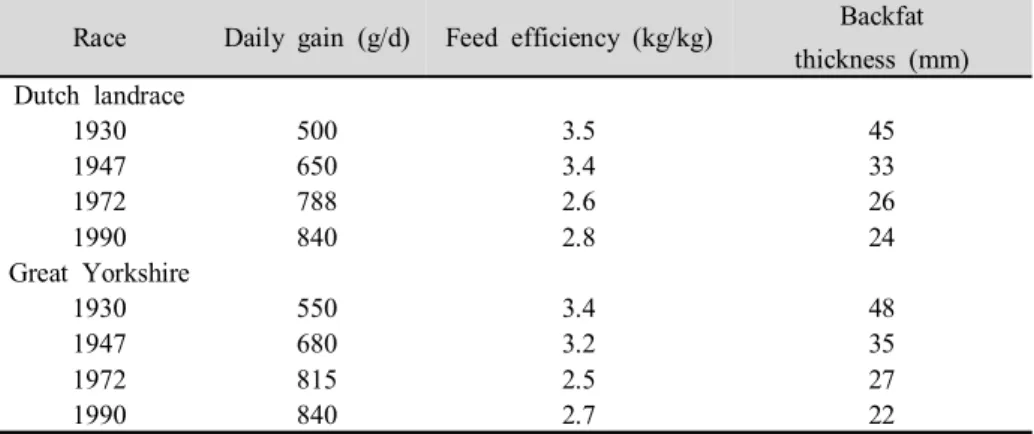
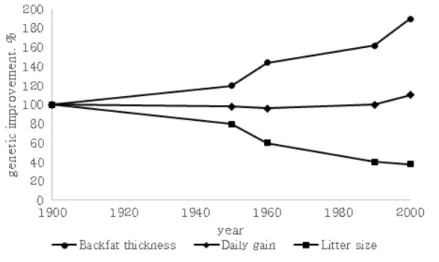
Since mankind began to domesticate farm animals, we have been striving to get progeny from the animals that appeared best fit for the goal we had in mind. In the early stage, docility and breed characteristics like colour and size were favoured. The research of Dickerson (1952, 1974) on crossbreeding in plants and poultry also arouse the attention of pig breeders. In Table 1 the phenotypic trends in central test results from 1930 until 1990 in the Netherlands is presented for Dutch Landrace and Dutch Yorkshire. According to Merks (2000), Daily gain was enhanced by more than 50%, the feed efficiency was improved unusually and backfat thickness was decreased by about 50%. In Figure 1, it schematized the primary genetic trends in the century, including daily gain, backfat thickness and litter size.
Table 1. Phenotypic trends in central test results in the Netherlands from 1930 until 1990 (Merks, 2000)
Race Daily gain (g/d) Feed efficiency (kg/kg) Backfat thickness (mm) Dutch landrace 1930 500 3.5 45 1947 650 3.4 33 1972 788 2.6 26 1990 840 2.8 24 Great Yorkshire 1930 550 3.4 48 1947 680 3.2 35 1972 815 2.5 27 1990 840 2.7 22
In the last decade of 20th century, improved knowledge of
genetics such as molecular genetics led to increased genetic advance in both sire and dam lines for reproduction and production characteristics. Knap (2009) and Torres et al. (2005) also suggested that feed efficiency and growth performance were improved and getting better as time goes. According to Brewer et al. (2001), breeding for leaner genotype has resulted in decreased intramuscular fat (IMF) content.
Breeding goals are now focussed not only on economically lucrative traits like daily gain, feed efficiency and litter size but also increasingly on traits such as meat quality (drip loss, colour) and vitality of piglets (Knol, 1998). Moreover some researchers conducted study to overcome genotype x environment interaction (Andersen et al., 1998;Merks and Hanenberg, 1998) and inbreeding (Meuwissen, 1998).
In the meantime, other researchers were attention to the change of nutrient requirement of pigs. Table 2. showed optimum lysine/digestible energy ratio in growing pigs by genotype. van Lunen
Figure 1. Schematic description of one century of genetic progress in pigs (Merks, 2000)
and Cole (1996) reported that protein deposition and lysine requirements have changed as a result of genetic improvements. Pigs with improved genotype showed higher protein deposition capacity and higher lysine requirement. Therefore, the nutrient requirement of pigs is expected to increase steadily in the future.
Table 2. Optimum lysine/digestible energy ratios in growing pigs by different genotype Genotype PD (g/day) Weight (kg) Lysine/DE ratio
Castrate Gilt Boar
Unimproved 100 <25 0.78 0.80 0.83 25-55 0.73 0.75 0.78 Average 125 <25 0.85 0.85 0.88 25-55 0.78 0.80 0.83 High 150 25-55<25 0.880.83 0.900.85 0.930.88 Hybrid 175 <25 1.20 1.20 1.20 25-55 1.10 1.10 1.10
1.2 Scale of livestock industry and Situation of environmental regulation in Korea
In Korea, the consumption of meat has increased sharply with the improvement of economic growth and national income in the 1970s. Thus the size of the livestock industry has changed into large scale or enterprise-scale with government plan focussing only on development regardless of the environment. In addition, since the Uruguay Round (UR) negotiations, government support for livestock industry has increased due to the market opening pressure of the livestock sector.
The number of livestock breeding livestock in Korea has increased rapidly over all kinds of breeds. On the other hand, the number of farm households is sharply decreasing over all kinds of species. This shows that the scale and concentration of livestock breeding is ongoing.
Table 3. The number of livestock animals and farms (KOSTAT, 2016)
1970 1980 1990 1995 2000 2010 2016 Pig The number of livestock, thousand 1,126 1,784 4,528 6,461 8,214 9,881 10,367 The number of farms, thousand 884 503 133 46 24 7.3 4.6 Average number of
livestock per farm 1.3 3.5 34 140.5 344.5 1,354 2,254
These modern livestock industry featuring factory farm and a densely raising farm is called by industrial agriculture. Industrial agriculture is characterized by non-natural and it is increasing
environmental burden such as air pollution caused by methane and carbon dioxide and water pollution caused by total nitrogen and heavy metal (Song, 2017). Thus ministry of environment has strengthened relevant legislation. According to legislation about livestock manure, it could restrict the number of livestock in a densely populated area. Moreover, effluent standards of purification facility in livestock industry was consolidated to prevent water pollution by livestock manure and it was presented in Table 4. In particular, the regulation of total-nitrogen has been greatly strengthened. So we have to prepare a plan to reduce total-nitrogen in manure.
Table 4. The change of effluent standards of purification facility in livestock industry (Ministry of environment, 2015)
item The special zone Other region
Current Amendment Current Amendment
Object of permission BOD 50 40 150 120 SS 50 40 150 120 T-N 250 120 850 250 T-P 50 40 200 100 Object of report BOD 150 120 350 150 SS 150 120 350 150 T-N 850 250 - 400 T-P 200 100 - 100
As the level of restriction is strengthened, the legislation about livestock manure, which intends to manage and utilize livestock manure efficiently, has become a severe law that more strongly regulates the livestock industry than any related laws.
2 Protein and amino acid requirements for swine diets
2.1 Transition of protein and amino acid requirements in NRC
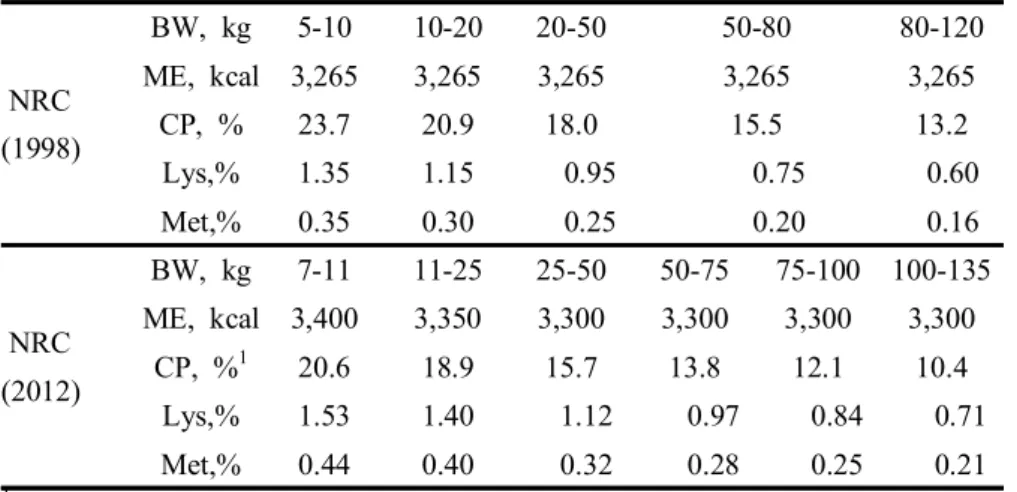
The change of protein and amino acid requirements in NRC is showed in Table 5. NRC (2012) has some characteristics comparison with NRC (1998). Firstly, it was divided growth phase more detail than NRC (1998). Detailed phase feeding could help pig producer to save feed cost and reduce surplus nutrient composition in the feed. Secondly, it showed higher metabolizable energy from 3,265 to 3,300 kcal. Finally, it had lower CP requirement but higher amino acids requirement. Low CP levels might cause lack of limiting amino acids or amino acids unbalance. That’s why NRC (2012) suggested higher amino acids requirements. The shortage of essential amino acids caused by low CP diet could be alleviated through supplementing crystalline amino acids.
Table 5. Nutrient requirements of growing-finishing pig (NRC)
NRC (1998) BW, kg 5-10 10-20 20-50 50-80 80-120 ME, kcal 3,265 3,265 3,265 3,265 3,265 CP, % 23.7 20.9 18.0 15.5 13.2 Lys,% 1.35 1.15 0.95 0.75 0.60 Met,% 0.35 0.30 0.25 0.20 0.16 NRC (2012) BW, kg 7-11 11-25 25-50 50-75 75-100 100-135 ME, kcal 3,400 3,350 3,300 3,300 3,300 3,300 CP, %1 20.6 18.9 15.7 13.8 12.1 10.4 Lys,% 1.53 1.40 1.12 0.97 0.84 0.71 Met,% 0.44 0.40 0.32 0.28 0.25 0.21
1 The value of CP is calculated from N by multiplying by 100/16 (or 6.25). (Swine Nutrition
2.2 Transition of ideal amino acid profile
Limiting amino acid is an essential amino acid that is easily deficient in the feed, which prevents protein synthesis in the body. The first limiting amino acid is mainly lysine. Mitchell (1964) firstly mentioned about ideal amino acid profile. The ideal amino acids profiles refer to an amino acid profile that exactly meets the animal's requirement so that all amino acids are equally limiting for performance. Agricultural research council (ARC; 1981) presented ideal amino acid ratio of essential amino acids based on their concentration in the pig carcass. However, Wu (2010) mentioned that ARC’s ideal amino acid conceptual foundation based only on the essential amino acids (EAA) composition of the animal body. In the same context, Wu (2014) pointed out ARC’s ideal protein concept did not take into consideration the relative contribution of maintenance to the total amino acids needs of the pigs. Moreover, ARC did not include arginine, glycine and all synthesizable amino acids. Since then, Wang and Fuller (1989) suggested other ideal amino acids profile featuring high content of glutamate. They took into consideration the requirements for both maintenance and tissue protein accretion. Glutamate was supplemented in the diet to provide non-specific nitrogen source. Non-specific nitrogen source was thought to be used to compensate for shortage of non-essential amino acids. Between 1990 and 2000, Baker tried to evaluate amino acid requirements of pigs. Chung and Baker (1992) designed ideal amino acids profile including arginine, glycine, histidine and proline. However, they did not take into consideration other
synthesizable amino acids and not explain the reason for the rationale for the use of arginine, glycine, histidine and proline proportions to lysine. Also, the explanation whether glutamate is effective precursor was insufficient and the influence of high content of glutamate on metabolism other amino acids was left out. Since then, NRC and Baker (2000) were not aware of the needs of pigs for proline or glycine. So they were omitted in ideal amino acids profile.
On the other hand, the ratio among amino acids was consistent but the requirement of amino acid for pigs in NRC (2012) was increased. So the need of limiting amino acids was increased. Moreover, lower CP level in NRC (2012) resulted in the emergence of new limiting amino acid such as valine.
Table 6. Amino acid profile (relative to lysine) of ideal protein for 10-20 kg growing pig ARC (1981) Wang-Fuller (1989) Chung-Baker (1992) NRC (1998) Baker (2000) NRC (2012) Lysine 100 100 100 100 100 100 Arginine - - 42 42 42 42 Glycine - - 100 - - -Histidine 33 - 32 32 32 34 Isoleucine 55 60 60 54 60 58 Leucine 100 110 100 102 100 100 Met + Cys 50 63 60 57 60 59 Phe + Tyr 96 120 95 94 95 100 Proline - - 33 - - -Tryptophan 15 18 18 19 17 19 Threonine 60 72 35 62 65 65 Valine 70 75 68 68 68 70 Glutamate - 826 878 - -
-2.3 Valine deficiency of low protein diet in weaning period
Trend for lowering CP level in diet resulted in increase of limiting amino acids such as lysine, methionine and threonine and so on. Valine come into the picture. Lysine is first-limiting and tryptophan, threonine, methionine and valine are equally second-limiting in a reduced protein (13.5% CP) corn-soybean meal-based diet with 8% whey for 10kg pigs (Mavromichalis et al., 1998). According to report of Gloaguen et al. (2011), feeding a valine-deficient diet to piglets had an negative influence on feed intake, thereby affected growth performance. In a similar vein, Goto et al. (2010) conducted animal experiment with rats. they reported that the intracerebroventricular administration of valine to rats fed a valine-free diet restored the cerebrospinal fluid concentration of valine and increased feed intake. As shown in Figure 2, Dever and Hinnebusch (2005) suggested a possible mechanism for anorexia due to valine-deficiency.
Figure 2. Mechanism for anorexia due to valine-deficiency (Dever and Hinnebusch, 2005)
3. Impact of low protein diet on gastrointestinal tract
3.1 Protein fermentation
Both intestinal beneficial and pathogenic bacterium inhabit a pig’s gastrointestinal tract. They may directly influence on intestinal nutrient requirements and have relevance to the availability of dietary nutrients for growth (Burrin and Stoll, 2003). According to the report of Stein and Nyachoti (2003), The population and activity of microflora in the foregut rely on diet type and age. Cranwell and Moughan (1989) gave a report that undigested nutrients like protein and carbohydrates in the intestinal lumen supply a fine source of substrates for microbial fermentation and proliferation. Macfarlane et al. (1992) suggested that protein fermentation is most pronounced in the distal large intestinal tract where carbohydrate can become a limiting factor for microbial fermentation and is followed by increased production of branched-chain fatty acid (BCFA). Also, Pluske et al. (2002) indicated that microbial fermentation of undigested protein source could aggravate diarrhea by contributing to production of potentially toxic and osmotically active byproducts such as indole, phenols and ammonia and so on. Thus Nyachoti et al. (2006) conducted experiment feeding low CP diet and reported that low CP diets help maintain gut health by lowering toxic metabolites caused by microbial fermentation. They observed that significant linear reductions of volatile fatty acid (VFA) and linear reduction of ammonia in ileal digesta. Therefore, they commented that feeding low protein diet with AA supplementation could minimize microbial proliferation in the gut and also their
byproducts caused by microbial fermentation. Thus it makes pigs have better opportunity utilizing dietary nutrients for growth. These findings were in accordance with report of Htoo et al. (2007) and Opapeju et al. (2008) that observed lower concentration of ammonia N in the colon digesta fed by low CP diet. Additionally, Heo et al. (2008) imply feeding a low CP diet after weaning mitigate indices of protein fermentation and post weaning diarrhea (PWD) without adverse effects on production compared with high CP diet.
3.2 Microbial population
Opapeju et al. (2009) demonstrated that pigs fed the 22.5% CP diet had greater microbial abundance and diversity in their colon digesta compared with those fed the 17.6% CP diet 7 d after enterotoxigenic Escherichia coli (ETEC) challenge. This study showed that pigs fed the 17.6% CP diet had a greater prevalence of bacteria in the order Clostridiales particularly family Lachnospiraceae and genus Roseburia and tended to have a lesser prevalence of family Clostridiaceae and genus Clostridium that preferentially ferment protein in their colon digesta compared with those fed the 22.5% CP diet. According to
Louis et al. (2007), the Roseburia/Eubacterium rectale group
preferentially ferments carbohydrates rather than protein. In addtion, Roseburia/Eubacterium rectale are known as a butyrate producing bacteria preferred energy source for intestinal epithelial cells (Bergman, 1990). Thus, Opapeju et al. (2009) indicate that a low CP diet has the potential to increase the prevalence of butyrate-producing bacteria in the
hindgut. These observation were accordance with research of Macfarlane and Macfarlane (1995) that demonstrate that low CP diet showed a direct effect on reduction of substrate availability for protein fermenters like pathogen bacteria. Besides, Konstantinov et al. (2004) suggest that increase in microbial richness and diversity has been associated with increased ecosystem stability and resistance to pathogen invasion.
On the other hand, Naychoti et al. (2006) reported that low CP diet with AA-supplementation had no effect on gastrointestinal microbial populations. The author explained that the study was conducted in a clean experimental facility and the caution should be needed in translating the result to a commercial situation. Because bacterial load in the gut microbial population can be affected by sanitary conditions in the environment where pigs are kept. Indeed, Göransson et al. (1995) demonstrated that a greater effect of low CP diet on PWD and growth performance is observed likely under commercial conditions.
4. Influence of low protein diets on fat deposition
4.1 Impact of low protein diet on lipid metabolism
Numerous previous study showed relation dietary protein level with fat deposition in the animal body. Several studies demonstrated that reduction of dietary protein level resulted in increase of fat deposition (Cromwell et al., 1978, Karlsson et al., 1993; ; Chiba et al., 2002). According to Teye et al. (2006), low CP diets having unbalanced amino acids with net energy (NE) have been used to promote fat deposition in pigs and especially to increase IMF for the benefit of eating quality. However, other researchers still suggested that a tendency for much higher fat deposition with low protein diets even when the pigs are provided with balanced amino acids (Figueroa et al., 2002;Gomez et al., 2002). According to Wood et al. (2013), IMF accumulation was increased fed low protein diet and also highest fed low protein diet with unbalance of amino acids. In this study, however, there was no significant difference between control and low protein diet in subcutaneous or intermuscular fat deposition.
There have been many studies on the causes of fat deposition when low protein diets are fed. The fat deposition is decided by the difference in the rates of lipogenesis and lipolysis. These reactions are regulated by metabolic enzymes and controlled by functional genes in the growth and development process of muscle tissue (Wang et al. 2012). Jurie et al., (2007) also mentioned that IMF deposition was decided by not only the rates of lipogenesis and lipolysis but fatty acid transport in muscle tissue.
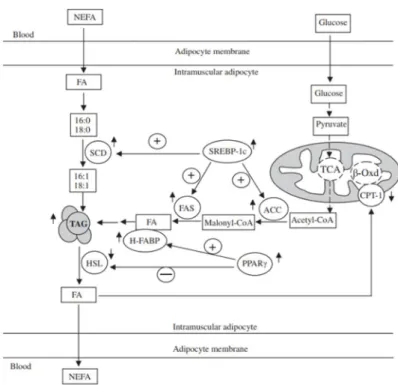
Figure 3. The impact of low dietary protein on lipid metabolism in porcine muscle tissue (Wang et al., 2012) ↑: Up-regulation of gene expression or increased concentration of metabolite. ↓: Down-regulation of gene expression or decreased concentration of metabolite. +: Enhanced metabolic pathway; - : Inhibited metabolic pathway. TCA: tricarboxylic acid cycle; β-Oxd: β-oxidation.
There is evidence that a positive connection between IMF deposition and expression level of SREBP-1 mRNA in muscle tissue of pigs exists (Chen et al., 2008). Some studies indicated a positive relationship between SCD protein expression and amount of total fatty acids in muscle of pigs supplied a low protein diet (Doran,2006). According to report of Wang et al. (2012), there is evidence that the
low CP diet increased the mRNA and protein expression of SREBP-1c, ACC, FAS, and SCD. Additionally, mRNA and protein expression level of lipolytic genes including HSL and CPT-1 were decreased in the LP diet group. Moreover, Guo et al. (2011) showed a positive correlation between an elevated IMF content in pigs fed the low protein diet and activation of PPARg and H-FABP mRNA expression. Zhao et al. (2010) demonstrated that subcutaneous fat deposition was increased in pigs with low protein diet mainly by up-regulation of lipogenic genes at 60 and 100 kg and by down-regulation of lipolytic genes at 60 kg and up-regulation at 100 kg.
Dietary protein level have effect on fatty acid composition in a muscle. According to Wang et al. (2012), the concentration of C18:2, C18:3 and polyunsaturated fatty acid (PUFA) were higher in pigs fed low protein diet than those fed high protein diet. The variance of SCD may result in the difference of fatty acid composition between LP and HP diet. Cohen and Jeffrey (2004) demonstrated that SCD is responsible for the generation of mono-unsaturated fatty acids, which catalyzes its substrates palmitic (16:0) and stearic acid (18:0) to generate the products palmitoleic (16:1) and oleic acid (18:1). Wang et al. (2012) showed that the mRNA and protein expressions of SCD in pigs fed LP diet were higher than those fed HP diet. Futhermore, Wood et al. (2013) explained that oleic acid is the main product of de novo fat synthesis in the pig and it is logical that its concentration increases as the pig gets fatter.
On the other hand, Teye et al. (2006) and Alonso et al. (2010) suggested that pigs fed LP diet showed markedly lower content of
PUFA and higher IMF content. According to Lambe et al. (2013), although the evidence of differences in fat metabolism between pigs fed HP diet and those fed LP diet, indicated by differences in fatty acid composition, there was no significant differences in total fat deposition through the computed tomographic (CT) scans on the pigs during growth.
4.2 Impact of low protein diet on pork quality
Numerous previous studies showed that the IMF deposition was elevated by low protein diet (Teye et al., 2006;Alonso et al., 2010;Wood et al., 2013). Frenandez et al. (1999) indicated that the elevated IMF content in muscle may improve the sensory meat quality such as tenderness, flavor, juiciness and the nutritional value of meat. Like this, other reports also showed the relation between higher tenderness and juiciness and a high IMF content of meat fed low protein diet (Cisneros, Ellis, Baker, Easter, & McKeith, 1996; Teye et al., 2006). Moreover, according to study of Font-i-Furnols et al. (2012), high IMF content improved acceptability of pork perceived by consumer. Dikeman (1987) explained that IMF activated the saliva secretion and improved the juiciness by coating on the tongue, teeth and other parts of the mouth. So the effort have been made to achieve enough IMF to ensure a pleasant eating experience, but a low enough level to mitigate the health concern about high-fat pork (Fortin et al., 2005). High consumption of saturated fatty acids (SFA) may result in elevated plasma cholesterol contributing to cardiovascular disease (Zhang et al., 2007).
Suárez-Belloch et al. (2016) and Teye et al. (2006) showed that Hunter L* value increased in pork fed low protein diet and also moderate elevation of Hunter L* value can improve some visual attributes providing higher lightness. And also, the Hunter b* value has been related to marbling (Suárez-Belloch et al. 2016). According to the study of Goerl et al. (1995), low protein diets increased the Hunter b* values of pork.
Glycolytic potential means that the capacity of all substrates available in a muscle for the generation of lactate after slaughter (Monin and Sellier, 1985). It is of interest because muscle glycogen content at slaughter affects both the rate and the extent of post mortem pH drop (Henckel et al., 2000). Glycogen stored in the muscle, resulted in the production of lactic acid through glycolysis, which caused a drop in pH (Huff-Lonergan and Lonergan, 2005). Ruusunen et al., (2007) showed that glycolytic potential was higher in the low-protein group than in the high-protein group. This is in accordance with a study by Katsumata et al. (2003), who also showed that glycogen content is higher in pigs fed a low-lysine diet than in those fed a high-lysine diet.
5. Environmental impacts of low protein in diets
Nitrogen source including ammonium (NH4+) and volatile organic
compounds (VOC) are major pollutant of pig manure contributing to environmental pollution (Zahn et al.,1997). According to Jackson et al.
surplus AA through removal of α-amino-N. and also bacterial urease
present in feces could convert urinary urea into NH4+ when urine
comes in contact with fecal matter. Ammonia is also generated by enzymatic and bacterial degradation of other nitrogenous source present in urine. Kay and Lee (1997) conducted practical feeding studies that showed ammonia emission was reduced in pigs fed low protein diet. This observation was accordance with report of Richert and Sutton
(2000) that indicated a 33% reduction of NH3 emission when dietary
CP was reduced from 14 to 10%. Furthermore Otto et al. (2002) reported that decreasing 3% of CP level resulted in a 20% reduction in total nitrogen excretion and also reduction of 9% CP level decreased 40% of total nitrogen excretion. Like this, Canh et al. (1998) demonstrated that reducing dietary CP content in diet have effect on reduction in the amount of nitrogen excretion. On the other hand, Gatel and Grosjean (1992) indicated that reduction of nitrogen excretion was observed only in urinary nitrogen but not in faecal nitrogen excretion when lowering dietary CP level in diet. Sutton et al. (1999) and Li et al. (2015) suggested that feeding the reduced CP diets resulted in the
Ⅲ
. Effect of Low Protein Levels with L-Valine
Supplemented in Weaning Diet on Growth
Performance, Fecal Score, Blood Profiles,
Nutrients Digestibility, Carcass Characteristics and
Economic Analysis in Weaning to Finishing Pigs
ABSTRACT: This study was conducted to evaluate optimal crudeprotein levels with L-valine supplementation in weaning pig diet considering subsequent growth performance, fecal score, blood profiles, nutrient digestibility, carcass characteristics and economic analysis from weaning to finishing pigs. A total of 160 weaning pigs ([Yorkshire×Landrace]×Duroc), with an average body weight of 7.86±1.05kg, were used for 22 weeks feeding trial. Pigs were allotted into one of five treatments by body weight and sex in 4 replicates with 8 pigs per pen in a randomized complete block (RCB) design. The treatments were included 1) Corn-SBM based diet with L-valine supplementation + protein content suggested by NRC (1998) (HP), 2) Basal diet + protein content suggested by NRC (1998) - 1% (MHP), 3) Basal diet + protein content suggested by NRC (1998) - 1.5%, 4) Basal diet + protein content suggested by NRC (2012) and 5) Corn-SBM based diet without L-valine supplementation + protein content suggested by NRC (2012). Reducing CP level had negative effect on body weight (BW) (P<0.01) and average daily gain (ADG) (P<0.01) during early growing phase. However, there was no significant
effect of reducing CP level on BW and ADG at the end of experiment. Also, average daily feed intake (ADFI) decreased as dietary protein level decreased in 7-10 week (linear, P<0.05). On the other hand, L-valine supplementation in weaning diet improved BW in 22 week, ADG in 7-14 week and ADFI in 11-14 week (P<0.01, P<0.01 and P<0.05, respectively) compared LP group and LPV- group. There was no significant impact of reducing CP level and L-valine supplementation in weaning diet on fecal score, but fecal consistency tended to decrease as dietary protein level decreased (linear, P<0.10). In blood analysis, there was a positive effect of reducing CP level and L-valine supplementation in weaning diet on blood urea nitrogen (BUN) concentration in both weaning and growing-finishing period (P<0.01; linear, P<0.05). Nutrient digestibility and nitrogen balance was not affected by dietary treatments. In carcass characteristics, pH and water holding capacity (WHC) were decreased linearly as dietary CP level decreased (linear, P<0.05). However, crude fat, Hunter L* and b* value showed increasing linear response as dietary protein level decreased (linear, P<0.05). The fatty acid composition of longissimus muscle was changed by CP level leading to increased MUFA concentration (linear, P<0.05). When pigs were fed low CP diet, feed cost per weight gain, days to market weight and total feed cost were diminished compared to
higher CP treatment groups (P<0.05). Moreover, L-valine
supplementation resulted in improving days to market weight. Consequently, lowering dietary CP level did not show any detrimental impact on growth performance and increase amino acids availability,
crude fat content and MUFA concentration in muscle. Moreover, decreased dietary CP level reduce BUN concentration, feed cost per weight gain, total feed cost, pH and WHC in muscle. On the other hand, supplementation of L-valine in weaning diet resulted in improved growth performance, BUN concentration and numerically decreased days to market weight during growing and finishing period. Although much lower CP level diet was provided during weaning period compared to NRC (2012), there was no detrimental effect on the whole growth performance of pigs. When pigs were fed lowered dietary CP treatment diet, it is desirable to consider supplementing L-valine in weaning pigs’ diet.
Key words : Protein level, Nitrogen excretion, Carcass
characteristics, Growth performance, Weaning to finishing pig
Introduction
Protein is a source of nitrogen and essential amino acids in the body and is used to synthesize polypeptides in order to maintain a lot of metabolism in the body (Wu, 2010). Thus, supply of adequate protein and amino acids is a crucial role in growth of animals (Carpenter et al., 2004). However, as revised from NRC (1998) to NRC (2012), crude protein and amino acid requirements have changed significantly. NRC (2012) showed relatively low crude protein requirement and high amino acid requirement compared to NRC (1998).
The crude protein level in the weaning diet affected the intestinal microflora and diarrhea, according to Opapeju (2009), high crude protein content proliferated the intestinal proteolytic pathogen bacteria, which were associated with piglet diarrhea. In addition, it also increases potential toxic substances such as ammonia, amines, indoles and phenols in the large intestine. Studies have been reported that it can increase amino acid utilization by lowering crude protein and improving amino acid balance for rainbow trout (Green and Hardy, 2002), and that it can reduce nitrogen excretion by reducing crude protein levels in feeds (Nyachoti et al., 2006). It can also improve nitrogen balance by reducing the amount of nitrogen released into the manure that is not digested in the digestive tract (Lordelo et al., 2008). This is a crucial issue that must be considered in the practical field where environmental concern is constantly increasing (Song, 2017). The level of crude protein in the feed can also affect the pork quality, because it can influence on the deposition of IMF (Wood et al, 2013). According to
Wang et al. (2012), IMF levels can be controlled by the level of crude protein in the feed, but the mechanism has not been clarified.
Reducing the crude protein content has several advantages. In the process, however, essential amino acids are prone to become insufficient (Mavromichalis et al., 1998). An example is valine shortage. Valine is the second limiting amino acid in feeding pigs with lower crude protein content in piglets (Mavromichalis et al., 1998;Norgaard and Fernandez, 2004). It has been reported that providing valine deficiency feed to weaning piglets results in decrease of feed intake and consequently affects growth performance (Gloaguen et al., 2011). Therefore, attention should be paid to the valine deficiency when the level of crude protein in feed is reduced.
Thus the crude protein content in the feed can affect on the various physiology of the animal. However, while the NRC was revised, the Korea Livestock Specification Standard (2012) did not propose the crude protein requirement for each stage of growing. So it was concluded that the process of verifying whether changes in the protein requirements suggested by the NRC is indeed appropriate for domestic situation is insufficient. Therefore, this study was conducted to evaluate optimal crude protein levels with L-valine supplementation in weaning pig diet considering growth performance, fecal score, blood profiles, nutrient digestibility, carcass characteristics and economic analysis of weaning to finishing pigs.
Materials and Methods
Experimental animals and management
A total of 160 weaning pigs ([Yorkshire × Landrace] × Duroc) with an average body weight of 7.86 ± 1.05 kg were used for 22 weeks feeding trial at experimental farm of Seoul National University. All pigs were housed in an environmentally controlled building with plastic-slotted floors facility (1.95 x 1.42m) during weaning periods and half-slotted concrete floors facility (2.60 x 2.84m) during growing to finishing periods. Each pen was equipped with a feeder and a nipple drinker to provide ad-libitum access.
Experimental design and diets
Experimental pigs were allotted to one of five treatments by BW and sex in 4 replications with 8 pigs per pen in a randomized complete block (RCB) design. Dietary treatments were: 1) HP : corn-SBM based diet with protein requirement of NRC (1998), 2) MHP : corn-SBM based diet with protein requirement of NRC (1998) - 1%, 3) MLP : corn-SBM based diet with protein requirement of NRC (1998) - 1.5%, 4) LP : corn-SBM based diet with protein requirement of NRC (2012), 5) LPV- : LP treatment diet without L-valine supplementation. After weaning period, LPV- was fed same experimental diet with LP. All nutrients except for protein were met or exceeded the requirement of NRC (2012). Lysine, methionine, threonine, tryptophan and valine were considered to meet or exceed the
requirement of NRC (2012). Experimental diets formula and chemical compositions were presented in Tables 1, 2, 3, 4, 5 and 6.
Growth performance
Body weight (BW) and feed intake were recorded at 0, 2, 6, 10, 14, 18 and 22 week to calculate the average daily gain (ADG), average daily feed intake (ADFI) and gain-to-feed ratio (G:F ratio).
Fecal score
Fecal score was measured every 8:00 am for 42 days during weaning phase. Data were recorded by each pen and divided into 2 phases to assess the general pattern (Phase 1 and Phase 2). Fecal consistency scoring was based on the following index used by Sherman et al. (1983): 0, normal (feces firm and well formed); 1, soft consistency (feces soft and formed); 2, mild diarrhea (fluid feces, usually yellowish); and 3, severe diarrhea (feces watery and projectile). After recording data, evidence of watery diarrhea was cleaned away everytime to avoid infection from previous day.
Blood sampling and analysis
Blood samples were taken from the jugular vein of randomly selected 4 pigs in each treatment for measuring blood urea nitrogen (BUN), glucose, triglyceride, free fatty acids and creatinine when the body weights were recorded. Collected blood samples were quickly centrifuged for 15 min by 3,000 rpm at 4℃. Then, the serum samples were transferred to 1.5 ml plastic tubes by pipette and stored at –20℃
until later analysis. The blood urea nitrogen (BUN), glucose, triglyceride, free fatty acids and creatinine concentration was analyzed using blood analyzer (Cobas 8000, Roche, Germany).
Digestibility trial
A total of 12 crossbred barrows, averaging 32.08 ± 1.773 kg body weight, were allotted to individual metabolic crate () in completely randomized design (CRD) with 3 replicates to evaluate the nutrient digestibility and nitrogen retention. Experimental diets of growing phase (HP: 18% crude protein, MHP: 17% crude protein, MLP: 16.5% crude protein, LP: 15.68% crude protein) were provided to each treatment animals. Total collection method was used for the apparent nutrient digestibility. After a 5 days adaptation period, 5 days of collection period was followed. To determine the first and last day of collection days, 5% of ferric oxide and chromium oxide were added in the first and last experimental diet as selection marker, respectively. During the experimental period, water was provided ad libitum and all pigs were fed a daily level of 1.6 times the estimated maintenance
requirement for energy (i.e. 106 kcal of ME per kg of BW0.75; NRC,
1998). Total urine was collected daily in a plastic container containing
50 ml of 4 N H2SO4 to avoid nitrogen evaporation and frozen during
the 5 days of collection period for nitrogen retention analysis. Collected feces and urine samples were stored –20 ℃ until analysis.
Pork quality and carcass characteristics
slaughtered for the carcass analysis. Longissimus muscles were collected
from nearby 10th rib on right side of carcass. Because of chilling
procedure, 30 minutes after slaughter was regarded as initial time. The pH and meat color were measured at 0, 3, 6, 12 and 24 hour after initial time. The pH was determined by pH meter (Model, Themo Orion, U.S.A) and meat color was determined by CIE color L*, a* and b* value using a CR300 (Minolta Camera Co., Japan). Proximate of pork samples were analyzed by the method of AOAC (2005).
Centrifuge method was used for measuring water holding capacity of pork (Abdullah and Najdawi, 2005). Longissimus muscle samples were grounded and sampled in filter tube, and heated in water bath at 80℃ for 20 min and centrifuged for 10 min at 2,000 rpm and 10℃ (Eppendorf centrifuge 5810R, Germany). Then after that, to calculate the cooking loss, longissimus muscles were packed with polyethylene bag and heated in water bath until core temperature reached 72℃ and weighed before and after cooking. After heated, samples were cored (0.5 inch in diameter) parallel to muscle fiber and the cores were used to measure the shear force using as alter (Warner Bratzler Shear, USA). Cooking loss, shear force, and water holding capacity of pork were analyzed by animal origin food science, Seoul National University.
Fatty acid composition
Lipids in pork samples were extracted from duplicate 10 g samples with chloroform : methanol (2.1, v/v) (Folch et al., 1957) and shaking incubator (25℃, 120 rpm) for 24 hours. Extracted lipids
mL of 0.88 % NaCl was added in the filtered sample and centrifuging at 2,090×g for 10 min (Continent 512R, Hanil Co., Ltd., Incheon, Korea). The supernatant was separated and concentrated pork lipids using N2 gas at 45℃. After concentrating the lipids, 0.1 g was weighted into a 15 mL tube with 1 mL of internal standard (1 mg of undecanoic acid in 1 mL of iso-octane) and 1.5 mL of 0.5 N methanolic NaOH. The samples were heated in the water bath at 85°C for 10 min and cooled to room temperature. After cooling, 2 mL of 14% BF3-methanol was added and then repeated heating process one more time. After then, 2 mL of iso-octane and 1 mL saturated NaCl was added, centrifuged at 2500 rpm for 3 min (Continent 512R, Hanil Co., Ltd., Incheon, Korea). Upper layer containing fatty acid methyl ester(FAME) was dehydrated with anhydrous sodium sulfate and transferred to a vial. Analyzed the vial using a gas chromatograph (HP 7890, Agilent Technologies, Santa Clara, CA, USA) with a split ratio (50:1). A capillary column (DB-23, 60 m x 250 μm x 0.25 μm, Agilent, Santa Clara, CA, USA) was used. The injector and detector temperatures were maintained at 250°C and 280°C, respectively. The column oven temperature were as follows: 50°C for 1 min, increased to 130°C at 25°C/min, 170°C at 8°C/min, then held at 215°C at 1.5°C/min. Nitrogen was used as a carrier gas at linear flow of 4 mL/min. Individual FAME was identified by comparison of the relative retention times of peaks from samples, with those of the external standards (37 FAME mix and CLA mix, Supelco, Bellefonte, PA, USA) calculated based on the Korean Food Standards Codex (MFDS, 2017).
Chemical Analyses
Diets were ground by a Cyclotec 1093 Sample Mill (Foss Tecator, Hillerod, Denmark) and ground diets were analyzed. Collected excreta were pooled and dried in an air-forced drying oven at 60°C for 72 h, and ground into 1 mm particles in a Wiley mill for chemical analysis. Experimental diet and excreta samples were analyzed for contents of dry matter (procedure 930.15; AOAC, 1995), ash (procedure 942.05; AOAC, 1995), ether extract (procedure 920.39; AOAC, 1995), N by using the Kjeldahl procedure with Kjeltec (KjeltecTM 2200, Foss Tecator, Sweden). Experimental diet and excreta samples were analyzed for contents of CP content (nitrogen × 6.25; procedure 988.05; AOAC, 1995).
Economic analysis
As the experimental pigs were reared in the same environmental condition, economic analysis was calculated using only the feed cost without considering other factors. The total feed cost (Won) per body weight gain (kg) was calculated using total feed intake and feed price. The feed cost per weight gain was calculated based on price of raw materials during the time of the experiment. The days to market weight (110 kg) were estimated from the body weight at the end of feeding trial and ADG of 22 weeks.
Statistical analysis
The experimental data was analyzed as a randomized complete block design using the general linear model (GLM) procedure of SAS.
For data on growth performance, fecal score and economic analysis a pen was considered as an experimental unit, while individual pig was used as an unit for data on blood profile, nutrient digestibility and pork quality. Linear and quadratic effects for equally spaced treatments were assessed by measurement of orthogonal polynomial contrast. The differences were declared significant at P<0.05 or highly significant at P<0.01.
Results and Discussion
Growth performance
The effect of low crude protein (CP) and L-valine supplementation in weaning diet on growth performance was presented in Table 7. Reducing CP level showed effect on body weight (BW), average daily gain (ADG), average daily feed intake (ADFI) and gain/feed ratio (G/F ratio) especially during growing period. The body weight tended to decrease linearly with decreasing levels of CP in diet (linear, P=0.06), while BW decreased linearly in the late growing period (linear, P<0.05). However, there was no significant difference at final BW. ADG showed quadratic response in the growing period (quadratic, P<0.05), but there was no significant effect on ADG in the whole experimental period. ADFI decreased as the crude protein level decreased during the early growing period (linear, P<0.05) and tended to decrease linearly in the growing period (7-14 week; linear, P=0.06). G/F ratio showed the highest in MLP treatment (P<0.05) and increased with linear response in late finishing period (linear, P<0.05). In many of previous studies, there was no negative effect on growth performance, even when the amount of CP was reduced (Wahlstrom and Libal, 1983; Tjong et al., 1972; Carpenter et al., 2004). In addition, some researchers reported that the low CP diet with balanced amino acid may boost feed intake (Le Bellego and Noblet, 2002; Fabian et al., 2002). However, in present study, there was a negative effect on BW, ADG and ADFI in the growing period. According to Teye et al. (2006) and Ruusunen et al. (2007), it has been reported
that reduction of CP had a negative effect on growth rate. We observed that the negative effect of low CP was not found in the finishing period. It was the result of the compensatory growth. Fabian et al. (2004) reported that growth retardation by low CP could be recovered by compensatory growth. The restriction period was the growing period because of decreased feed intake. As the feed intake recovered in finishing period, there was no difference in the final weight because the compensatory growth was achieved in the finishing period. Therefore, the results of present study suggested that the reduction of CP up to the level of NRC (2012) did not show a detrimental effect from weaning to finishing period.
The effect of L-valine supplementation in weaning diet did not occur in the weaning period but the ADG was increased in the growing period (P<0.05) and the final BW was increased (P<0.05). Feed intake of LPV- group was significantly decreased in the late growing period (P<0.05), but the G/F ratio did not show a significant difference. According to the Gloaguen et al. (2011), pigs fed valine deficient diet was showed decreased feed intake. In addition, some researchers reported that consumption of feed with poor amino acid balance was reduced (Maurin et al., 2005; Hao et al., 2005). However, in the present study, no significant difference was observed in weaning period but there was a negative effect on the growth performance in the growing period supplied by identical feed. LPV- treatment also should have undergone compensatory growth due to increased feed intake and fulfillment of the Val requirement from the finishing period, but the compensatory growth was incomplete. The incomplete
compensatory growth pattern was obtained from many other researchers (Gilster and Wahlstrom, 1973; Zimmerman and Khajarern, 1973; Campbell and Biden, 1978; Hogberg and Zimmerman, 1978; Wahlstrom and Libal, 1983). Therefore, the supplementation of L-valine can prevent incomplete compensatory growth caused by valine deficiency.
Consequently, when CP level was reduced in weaning diet, L-valine supplementation in the diet showed improved the growth performance of weaning to finishing pigs by satisfying the ideal amino acid profiles.
Fecal score
The effect of low CP and L-valine supplementation in weaning diet on fecal score was presented in Table 8. Reducing CP level in weaning diet did not show significant differences in fecal consistency. In addition, L-valine supplementation into low CP diet did not effect on fecal consistency. However, fecal consistency tended to decrease linearly as CP level was reduced (linear, P<0.10). Heo et al. (2014) reported that reducing CP level in weaning diet decreased fecal consistency because protein fermentation by proteolytic bacteria in the hindgut decreased. Opapeju et al. (2009) demonstrated that the number of ETEC K88 in the small and large intestine digesta was reduced in low CP diet. However, present study did not show significant effect of low CP diet on fecal score. Although weaning piglets recovered from post-weaning syndrome and developed intestinal function normally in late weaning phase (van Beers-Schreurs et al., 1992), fecal score in present study was not recovered until late weaning phase because of
heat stress. Lambert (2008) and Pearce et al. (2013) mentioned that heat stress reduced intestinal barrier integrity and increased intestinal permeability. So, it could cause endotoxemia and diarrhea.
In conclusion, reducing CP level and L-valine supplementation in weaning diet has no effect on fecal consistency compared with high protein diet and low protein diet without L-valine supplementation respectively.
Blood profiles
The effect of low CP and L-valine supplementation in weaning diet on blood profiles such as blood urea nitrogen (BUN), creatinine, glucose, free fatty acid (FFA) and triglyceride (TG) were shown in Table 9 (weaning phase) and Table 10 (growing-finishing phase). The BUN concentration was usually used as and indicator of excessive amino acids which are inefficiently metabolized and released into the blood (Jeong et al., 2010). The BUN concentration not only showed significant differences among treatments during 2 week, 6 week and 18 week but also linearly decreased as dietary CP decreased during weaning to finishing period except for 14 week (linear, P<0.05). These results was in agreement with other authors (Yang et al., 2000; Mejia-Guadarrama et al., 2002). It suggested that high CP diet had excessive amino acids content for pigs and low CP diet was used more efficiently than high CP diet. However, LPV- group showed higher BUN concentration than LP group. LPV- group had unbalanced amino acid content due to valine deficiency and disproportion among amino acids increased BUN concentration (Fernandez-Figares et al., 2007). It