저작자표시-비영리-변경금지 2.0 대한민국 이용자는 아래의 조건을 따르는 경우에 한하여 자유롭게 l 이 저작물을 복제, 배포, 전송, 전시, 공연 및 방송할 수 있습니다. 다음과 같은 조건을 따라야 합니다: l 귀하는, 이 저작물의 재이용이나 배포의 경우, 이 저작물에 적용된 이용허락조건 을 명확하게 나타내어야 합니다. l 저작권자로부터 별도의 허가를 받으면 이러한 조건들은 적용되지 않습니다. 저작권법에 따른 이용자의 권리는 위의 내용에 의하여 영향을 받지 않습니다. 이것은 이용허락규약(Legal Code)을 이해하기 쉽게 요약한 것입니다. Disclaimer 저작자표시. 귀하는 원저작자를 표시하여야 합니다. 비영리. 귀하는 이 저작물을 영리 목적으로 이용할 수 없습니다. 변경금지. 귀하는 이 저작물을 개작, 변형 또는 가공할 수 없습니다.
A Dissertation
for the Degree of Doctor of Philosophy
Effects of Dietary Arginine, Lysine, and Energy
Levels on Physiological Responses and Reproductive
Performance in Sows and Growth of Their Progeny
사료내 아지닌, 라이신, 에너지 수준이
모돈의 생리학적 반응과 번식성적 및 자돈의
성장에 미치는 영향
February, 2018
By
Hong, Jin Su
School of Agricultural Biotechnology
Graduate School, Seoul National University
Effects of Dietary Arginine, Lysine, and Energy
Levels on Physiological Responses and Reproductive
Performance in Sows and Growth of Their Progeny
사료내 아지닌, 라이신, 에너지 수준이 모돈의 생리학적
반응과 번식성적 및 자돈의 성장에 미치는 영향
지도교수 김 유 용
이 논문을 농학박사 학위논문으로 제출함
2018 년 2 월
서울대학교 대학원 농생명공학부
홍 진 수
홍진수의 농학박사 학위논문을 인준함
2018 년 2 월
위 원 장 (인)
부위원장 (인)
위 원 (인)
위 원 (인)
위 원 (인)
Overall Summary
Effects of Dietary Arginine, Lysine, and Energy Levels on
Physiological Responses and Reproductive Performance in
Sows and Growth of Their Progeny
Hyper-prolific sows had some advantages of having high number of piglets and high lactating ability for their litters. Although hyper-prolific sows had high number of piglets born alive, some problems were reported such as severe body weight or backfat loss, low piglet birth weight, low piglet uniformity, and low body weight of weaning pigs. In order to resolve these disadvantages, some researchers have focused on high efficiency of protein or amino acid utilization for nutrition of hyper-prolific sows, considering limited feed allowance for energy restriction (Kim et al., 2009; Zhang et al., 2011; Moehn and Ball, 2013). Supplementation of adequate amino acids amount to lactating sows not only maximizes milk yield for piglets but also retains maternal body component reservoir for the consecutive parities (NRC, 1998; Kim and Easter, 2003). To improve reproductive performance and longevity for modern hyper-prolific sows, three experiments were conducted 1) to compare the effects of arginine supplementation and increased feeding levels on reproductive performance and piglet uniformity in late gestating sows, 2) to evaluate the effects of dietary energy and lysine levels on physiological responses, reproductive performance, blood profiles, and milk composition in primiparous sows, and 3) to investigate the effects of dietary energy and lysine levels on physiological responses, reproductive performance, piglet uniformity, and longevity in sows during 1 to 3 parities.
Experiment I. Effects of Arginine Levels Compared with Increased Feeding on Reproductive Performance and Piglet Uniformity in Late-Gestating Sows
This study was conducted to evaluate the effects of arginine levels compared with increased feeding on reproductive performance and piglet uniformity in late-gestating sows. In the first trial, a total of 40 F1 multiparous sows (Yorkshire × Landrace), body weight 246.1 kg; avg. parity 5.1, were allotted to one of four treatments in a completely randomized design (CRD). Dietary treatments were divided by the supplementation level of arginine during late-gestation period; 1) CON : corn-SBM based diet + Arg 0% (Arg 0.72%), 2) Arg10 : basal diet + L-Arg 0.28% (L-Arg 1.0%), 3) L-Arg15 : basal diet + L-L-Arg 0.79% (L-Arg 1.5%), and 4) Arg20 : basal diet + L-Arg 1.35% (Arg 2.0%). Same lactation diet was provided ad
libitum during lactation period regardless of dietary treatments. There were no
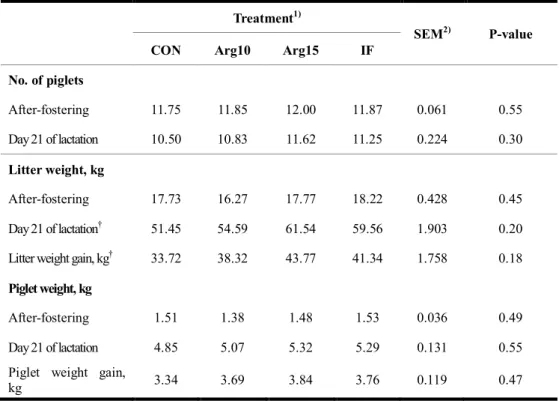
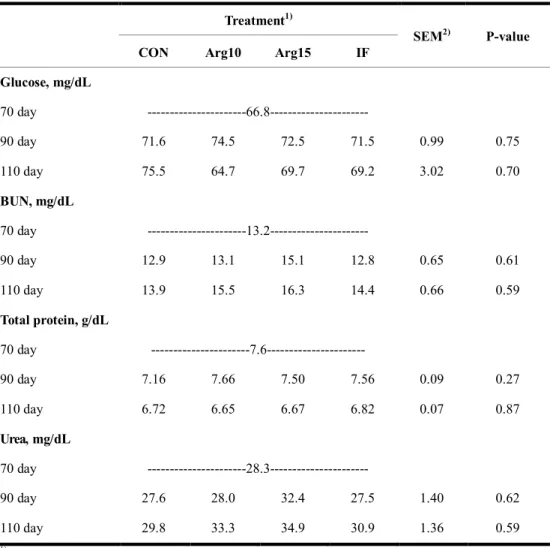
significant differences in body weight and backfat thickness of sows during gestation and lactation. In addition, dietary arginine levels had no significant differences in the number of total born, stillbirth, total born, and piglet growth during lactation. Increasing arginine levels improved total litter weight (Linear, P=0.08) and alive litter wieght (Quadratic, P=0.07). However, additional arginine effect did not show the piglet uniformity in piglet birth weight and piglet weight at day 21 of lactation. Although there was no significant difference in blood profiles in gestating sows, blood urea nitrogen of lactating sows was increased as dietary arginine level increased (Linear, P<0.05). Additional arginine supplementation had no influence on composition of colostrum and milk (21d). In conclusion, L-arginine at 1.0% in late gestation improved total litter weight and alive litter weigth at farrowing. In the second trial, a total of 44 F1 multiparous sows (Yorkshire × Landrace), body weight 229.5 kg; avg. parity 4.8, were allotted to one of four treatments in a completely randomized design (CRD). Dietary treatments were CON (Arg 0.72%), Arg10 (Arg 1.0%), Arg15 (Arg 1.5%) and sows were fed at 2.4 kg/d experimental diet, and increased feeding treatment was provided at 3.0kg/d
CON diet. Same lactation diet was provided ad libitum during lactation regardless of dietary treatments. There were no significant differences in change of body weight and backfat thickness of sows and lactation feed intake among dietary treatments. Also, additional dietary arginine levels had no significant influences on reproductive performance and growth of their progeny compared with increased feeding treatment. However, increasing arginine levels improved litter weight at 3 week and litter weight gain, respectively (Linear, P=0.06, P=0.05). Additional arginine intake during late gestation had no significant effects on piglet uniformity and blood profiles compared with those of increased feeding treatment. Consequently, dietary arginine up to 1.5% in late-gestation diet improved total litter weight and alive litter weight at farrowing, but it did not affect piglet uniformity at birth and piglet growth. Moreover, dietary arginine at 1.5% in late-gestation had an equivalent effect with increased feeding on piglet birth weight and their uniformity. Key words: Arginine, Increased feeding, Late gestating sow, Piglet uniformity,
Experiment II. Effects of Dietary Energy and Lysine Levels on Physiological Responses, Reproductive Performance, Blood Profiles, and Milk Composition in Primiparous Sows
This study was conducted to evaluate the effects of dietary energy and lysine levels on physiological responses, reproductive performance, blood profiles,
and milk composition in primiparous sows. A total of 48 gilts (F1, Yorkshire ×
Landrace), initial BW of 168.1 ± 9.71 kg on 35 day of gestation, were allotted to
one of eight treatments with a 2 × 4 factorial arrangement. The first factor was
energy level in diet (3,265 or 3,365 kcal of ME/kg), and the second factor was total lysine level in diet (gestation 0.55, 0.65, 0.75 or 0.85%, lactation 0.70, 0.85, 1.00 or 1.15%). All sows were fed 2.0 kg/d of experimental diet in gestation and lactation diet was provided ad libitum during lactation. High-energy treatment group showed a greater body weight gain and backfat thickness in gestation period (Energy, P=0.07, P=0.09, respectively). In lactation period, high-energy treatment group had higher body weight at day 21 of lactation (Energy, P=0.09) and lower body weight loss (Energy, P=0.05). Backfat thickness was higher in high-energy treatment group at 24hrs postpartum and day 21 of lactation (Energy, P=0.04, P=0.07, respectively). Weaning to esturs interval was shortened in Lys 0.55/0.70 and Lys 0.75/1.00 (Lysine, P=0.03). In reproductive performance, dietary energy and lysine levels did not affect the number of total born and born alive, total litter weight, alive litter weight, litter weight gain, and piglet uniformity. Sows fed high-energy treatment diet had a tendency of greater piglet weight at 21 day and piglet weight gain (Energy, P=0.08, P=0.08, respectively). Blood urea nitrogen was greater in high-energy treatment group (Energy, P=0.08) and showed the lysine effect (Lysine, P=0.09) in day 110 of gestation. In lactating sows, blood urea nitrogen showed a quadratic decrease in Lys 0.75/1.00 treatment at 24hrs postpartum and day 21 of lactation (Quadratic, P=0.02, P<0.01, respectively). In composition of colostrum, high energy treatment group had greater casein, protein, total solid, solid not fat, and free fatty acid than those of
low-energy treatment group (P=0.03, P=0.03, P=0.03, P=0.03, and P<0.01, respectively). Also, free fatty acid in colostrum was higher in Lys 0.75/1.0 and Lys 0.85/1.15 treatment groups (Lysine, P<0.01). Sows fed high-energy treatment diet had a tendency of increased body protein mass at day 21 of lactation (Energy, P=0.05). In addition, body fat mass of sows fed a high-energy treatment diet tended to increase in whole gestation period and day 21 of lactation (Energy, P=0.06, P=0.08, respectively) and showed a lower body fat loss during lactation (Energy, P=0.09). Consequently, total lysine at 0.75% for gestation and at 1.00% for lactation with 3,365 kcal of ME/kg resulted in improving reproductive performance for primiparous sows and growth of their progeny.
Key words: Energy, Lysine, Physiological response, Primiparous sows, Reproductive performance
Experiment III. Effects of Dietary Energy and Lysine Levels on Physiological Responses, Reproductive Performance, Piglet Uniformity, and Longevity in Sows during 1 to 3 parities
This study was conducted to evaluate the effects of dietary energy and lysine levels on physiological responses, reproductive performance, piglet uniformity, and longevity in sows during 1 to 3 consecutive parities. A total of 48 F1
gilts (Yorkshire × Landrace) were allocated to one of eight dietary treatments in a
completely randomized design (CRD) during the first to third consecutive parities. Experimental diets were composed with different energy level (3,265 or 3,365 kcal of ME/kg) and total lysine level (gestation 0.55, 0.65, 0.75 or 0.85%, and lactation 0.70, 0.85, 1.00 or 1.15%). Third parity sows fed high energy diet had greater body weight at day 110 of gestation, 24hrs postpartum, and huge body weight loss (Energy, P=0.01, P=0.02, and P<0.01, resepectively). Increasing dietary energy level induced a thicker backfat thickness of sows at day 35 of gestation and day 110 of gestation at pairty 2 (Energy, P=0.01, P<0.01, respectively) and at parity 3 (Energy, P<0.01, P<0.01, respectively). In addition, high-energy treatment group showed a greater backfat thickness of 24hrs postpartum in parities 1, 2, and 3 (Energy, P=0.04, P<0.01, and P<0.01, respectively) and the end of lactation at parity 3 (Energy, P=0.01). High-energy treatment group had a greater protein mass in gestation at parity 2 or 3 and in lactation at parity 3 (Energy, P<0.01, P<0.01, and P<0.01, respectively). Sows fed high-energy treatment diet had a greater fat mass in gestation period at parities 2 and 3 (Energy, P<0.05, P<0.01), and in 24hrs postpartum at parities 2 and 3 (Energy, P<0.01, P<0.01). Although there were no significant effects of energy and lysine levels on reproductive performance such as total born, born alive, total litter weight, and alive litter weight, Lys 0.55/0.70 with 3,265 kcal of ME/kg treatment group showed higher performance among treatments. Although piglet weight at 3 week and piglet weight gain at the first parity were higher in 3,365 kcal of ME/kg treatment group (Energy, P=0.08, P=0.08),
interaction responses were observed in final piglet weight and piglet weight gain at the third parity (Interaction, P=0.02, P=0.04). Low-energy treatment group at the second parity had a tendency of decreasing a standard deviation of piglet birth weight (Energy, P=0.06). Moreover, Lys 0.75/1.00% and Lys 0.65/0.85% treatments showed lower standard deviation of piglet birth weight at the second parity (Lysine, P=0.03). Lactation feed intake at parity 3 tended to increase in 3,265 kcal of ME/kg (Energy, P=0.07) treatment group. Considering the number of sow removal as pairty, 3,265 kcal of ME/kg treatment group showed high culling rate in the end of parity 1, and 3,365 kcal of ME/kg group showed high culling rate in the end of parities 2 and 3. Lys 0.55/0.70% with 3,265 kcal of ME/kg group did not have any culled sow and observed greater longevity than other treatment groups. Consequently, total lysine at 0.55 % in gestation diet and at 0.75% in lactation diet with 3,265 kcal of ME/kg resulted in better reproductive performance and longevity in sows at parities 2 and 3.
Contents
Overall Summary---1 Contents---8 List of Tables---11 List of Figures---15 List of Abbreviation---16Chapter I. General Introduction---17
Chapter II. Review of Literature---20
1. Amino acids requirement of Sow ---20
1.1 Primiparous sow---20
1.2 Gestation---23
1.3 Lactation---26
2. Sow nutrition and piglet uniformity---29
2.1 Factors of piglet birth weight variation---29
2.1.1 Genetic selection and litter size---29
2.1.2 Angiogenesis and placental development---29
2.2 Improve piglet uniformity---30
2.2.1 Insulin and IGF-1 mediated nutrition---30
2.2.2 Dietary energy and protein effect---31
2.2.3 Increased feed intake during gestation---32
2.2.4 Amino acids---34
2.3 Effects of arginine supplement---34
2.3.1 Arginine metabolism---34
2.3.2 Effects of arginine on piglet uniformity---37
3. Nutrition for longevity---39
3.1 Gilt ---39
3.2 Nutrition ---41
3.2.2 Lactating sow ---42
3.3 Body condition---43
3.4 Effects of lysine supplement---45
3.4.1 Lysine metabolism---45
3.4.2 Effects of lysine on sow reproduction---47
4. Literature Cited ---50
Chapter III.
Effects of Arginine Levels compared with Increased Feeding during Late Gestation on Reproductive Performance and Piglet Uniformity in Sows [Trial 1] Abstract ---62Introduction ---64
Materials and Methods ---65
Results ---70 Discussion---71 Conclusion---73 References---74 [Trial 2] Abstract ---86 Introduction ---87
Materials and Methods ---88
Results ---93
Discussion---94
Conclusion---96
Chapter IV.
Effects of Dietary Energy and Lysine Levels on Physiological Responses, Reproductive Performance, Blood Profiles, and Milk Composition in Primiparous SowsAbstract ---111
Introduction ---113
Materials and Methods ---115
Results ---119
Discussion ---121
Conclusion---127
References---128
Chapter V.
Effects of Dietary Energy and Lysine Levels on Physiological Responses, Reproductive Performance, Piglet Uniformity, and Longevity in Sows during 1 to 3 Parities Abstract ---147Introduction ---149
Materials and Methods ---151
Results ---154
Discussion ---157
Conclusion---164
References---165
Chapter VI. Overall Conclusion ---
184Chapter VII. Summary in Korean---
185List of Tables
Chapter II. Review of Literature
Table 1. The amino acid contents in maternal tissues and fetus as well as amino acid ratios for protein accretion and maintenance in gilts ... 22 Table 2. Sample calculation of daily protein and lysine requirements of gestating
sows (g/d). Sow liveweight 200 kg; conceptus weight gain 20 kg and maternal weight gain 25 kg ... 23 Table 3. Lysine content and amino acid profile of maternal and fetal body protein,
and of placenta, uterus, chorioallantoic fluid, udder, and milk expressed as a percentage of lysine content ... 24 Table 4. Typical analysis of sows milk, essential amino acid balance and daily
intakes of individual amino acids (total) for lactating sows ... 27
Chapter III. Experiment I
[Trial 1]
Table 1. The formulas and chemical composition of gestation diet ... 77 Table 2. Effects of arginine supplementation levels on body weight and back-fat
thickness in gestating sows………..….78 Table 3. Effects of arginine supplementation levels on body weight, back-fat
thickness and average daily feed intake in lactating sows ...79 Table 4. Effects of arginine supplementation levels on reproductive performance in
gestating sows... 80 Table 5. Effects of arginine supplementation levels on litter performance in lactating
Table 6. Effects of arginine supplementation levels on blood profiles in gestating sows ... 82 Table 7. Effects of arginine supplementation levels on blood profiles in lactating
sows ……….………..….83 Table 8. Effects of arginine supplementation levels on blood profiles in
piglets………84 Table 9. Effects of arginine supplementation levels on milk composition in lactating
sows ... 85
[Trial 2]
Table 1. The formulas and chemical composition of experimental diet ... 101 Table 2. Effects of arginine supplementation levels compared with increased
feeding on body weight and backfat thickness in late gestating sows……….…102 Table 3. Effects of arginine supplementation levels compared with increased
feeding on body weight, backfat thickness, and ADFI in lactating sows...103 Table 4. Effects of arginine supplementation levels compared with increased feeding
on reproductive performance in gestating sows ... 104 Table 5. Effects of arginine supplementation levels compared with increased feeding
on litter performance in lactating sows ………..…….105
Table 6. Effects of arginine supplementation levels compared with increased feeding on piglet uniformity at birth and 21day of lactation ... 106 Table 7. Effects of arginine supplementation levels compared with increased feeding
on blood profiles in gestating sows………..….107 Table 8. Effects of arginine supplementation levels compared with increased feeding
on blood profiles in lactating sows ………..…………..…108 Table 9. Effects of arginine supplementation levels compared with increased feeding
Table 10. Effects of arginine supplementation levels compared with increased feeding on milk composition in lactating sows ... 110
Chapter IV. Experiment II
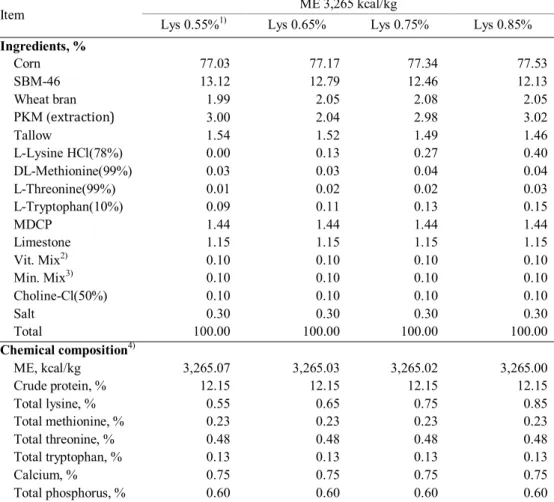
Table 1. The formulas and chemical composition of experimental diet (gestation)………135 Table 2. The formulas and chemical composition of experimental diet
(lactation)………137 Table 3. Effects of dietary energy and lysine levels on growth performance in
primiparous sows during gestation... ..139 Table 4. Effects of dietary energy and lysine levels on growth performance in primiparous sows during lactation ... 140 Table 5. Effects of dietary energy and lysine levels on reproductive performance in primiparous sows ... 141 Table 6. Effects of dietary energy and lysine levels on litter performance in primirparous sows ... 142
Table 7.
Effects of dietary energy and lysine levels on blood profiles in
primiparous sows
... 143Table 8.
Effects of dietary energy and lysine levels on blood profiles in
nursery pigs
... 144Table 9.
Effects of dietary energy and lysine levels on milk composition in
primiparous sows
... 145Table 10.
Effects of dietary energy and lysine levels on body composition in
Chapter V. Experiment III
Table 1. The formulas and chemical composition of experimental diet (gestation)………..……….172
Table 2. The formulas and chemical composition of experimental diet
(lactation)……….…..174 Table 3. Effects of dietary energy and lysine levels on body weight of gestating
a nd l a ct a t i ng s ows du r i ng 1 t o 3 c ons ec u t i ve p a r it i es ………176 Table 4. Effects of dietary energy and lysine levels on backfat thickness of
gestating and lactating sows during 1 to 3 consecutive parities ………177 Table 5. Effects of dietary energy and lysine levels on the estimated protein mass
of gestating and lactating sows during 1 to 3 consecutive parities ……….…178 Table 6. Effects of dietary energy and lysine levels on the estimated fat mass of
gestating and lactating sows during 1 to 3 consecutive parities ………179 Table 7. Effects of dietary energy and lysine levels on reproductive performance
of sows during 1 to 3 consecutive parities ………180
Table 8. Effects of dietary energy and lysine levels on litter performance of sows during 1 to 3 consecutive parities ………181 Table 9. Effects of dietary energy and lysine levels on piglet uniformity in sows
during 1 to 3 consecutive parities ………182 Table 10. Effects of dietary energy and lysine levels on re-estrus, lactation feed
List of Figures
Chapter II. Review of Literature
Figure 1. Typical protein deposition (Pd) patterns for fetus, mammary tissue, placenta and fluids, maternal protein as a function of time, and maternal protein as a function of energy intake during gestation in parity-2 sows based on an anticipated litter size of 13.5 piglets and a mean birth weight of 1.4 kg. ... 25 Figure 2. Simulated SID lysine requirements (g/day) of primiparous (body weight
at mating 140 kg; anticipated total gain 65 kg; mean litter size 12.5; mean piglet birth weight 1.4 kg) and parity-4 (body weight at mating 205 kg; anticipated total gain 45 kg; mean litter size 13.5; mean piglet birth weight 1.4 kg) gestating sows... 25 Figure 3. Typical dietary lysine requirements during lactation (28 days) for a 200
kg sow having 2 kg/d litter growth rate and no maternal weight loss 27 Figure 4. Metabolic pathways of arginine... 35 Figure 5. Nitric oxide and polyamines act to fetus development. ... 36 Figure 6. Role of functional amino acid in regulating synthesis in porcine
placentae ... 37 Figure 7. The relationship between interval from weaning to oestrus and the depth
of backfat on sows at the P2 site ... 44 Figure 8. Catabolic pathway for lysine... 46
List of Abbreviation
AA : Amino acid
ADG : Average daily gain
ADFI : Average daily feed intake
ARG : Arginine
BUN : Blood urea nitrogen
BF : Backfat
BW : Body weight
CP : Crude protein
CRD : Completely randomized design
CV : Coefficient of variation
EBW : Empty body weight
EE : Ether extract
FFA : Free fatty acid
FCR : Feed conversion ratio
GnRH : Gonadotropin releasing hormone
HDL : High-density lipoprotein LDL : Low-density lipoprotein LH : Luteal hormone LW : Litter weight ME : Metabolizable energy NO : Nitric oxide
NRC : National Research Council
PW : Piglet weight
SAS : Statistical Analysis System
SBM : Soybean meal
SD : Standard deviation
Chapter I. General Introduction
As hyper-prolific sows were induced to domestic swine farm recently, the upper ten percentage of Korean swine farms had weaned 25.3 pigs per sow per year and marketed 23.8 pigs per sows per year (HFMS, 2017). Further improvement being proceed, the threshold of 30 pigs per sow per year becomes an accomplishable goal for Korean swine farm. Unfortunately, low thirty percentage of Korean swine farm had weaned 18.8 pigs per sow per year and marketed 14.1 pigs per sow per year (HFMS, 2017). The reason for this difference is that they do not have the accurate understanding of hyper-prolific sows and apply the wrong feeding scheme or breeding management for hyper-prolific sows.
Hyper-prolific sows has some advantages of high number of piglets and high lactating ability for their litters. In other side, because of high number of piglets, severe body weight or backfat loss, low piglet birth weight, low piglet uniformity, and low body weight of weaning pig were easily observed in hyper-prolific sows. In order to overcome these disadvantages, precise nutrient evaluation is needed to hyper-prolific sows.
In the breeding sow, energy is required for growth, maintenance, pregnancy and lactation. Energy utilization of gestating sows was mainly recovered their body deposition and was divided into mammary, water, placenta, fetus, and uterus as the pregnancy progressed. NRC (2012) suggested that energy requirement of gilts or multi-parous sows was higher in late-gestation period than early and middle gestation period. Also, protein is used for maintenance, growth, pregnany and lactation of sows and protein depositions of mammary, uterus, placenta, and fetus were increased gradually during gestation (Patience, 1996). As hyper-prolific sows produce more piglets and have higher necessity of milk for piglets, hyper-prolific sows needed higher protein or amino acid supply rather than ordinary sows.
High energy intake resulted in increased body weight (Van den Brand et al., 2000) and maternal deposition (Dourmad et al., 1999) of sows and improved piglet birth weight (Coffey et al., 1994) or not (Eckhardt et al., 2013). It caused
impaired body condition to reproductive problems such as absence of pregnancy and abortions (Young et al., 1990). High energy intake during gestation could reduce insulin sensitivity and glucose tolerance (Weldon et al., 1994), it may be a risk factor for preweaning survival (van den Peet-Schwering et al., 2004; Averette Gatlin et al., 2002). Therefore, some researchers focused on high efficiency of protein or amino acid utilization for hyper-prolific sows considering limited feed allowance for energy restriction (Kim et al., 2009; Zhang et al., 2011; Moehn and Ball, 2013)
High producing sows were focused on the growth pattern of fetuses (McPherson et al., 2004), mammary glands (Ji et al., 2006), and maternal tissues (Ji et al., 2005). Lysine requirements for maternal, fetal, and mammary tissue gains distinctly differ in gestating sows, which are 5.57 and 8.78 g/d for d 0 to 60 and d 60 to 114 of gestation, respectively, combining the lysine needs for tissue gain and maintenance (Kim et al., 2009). Kim et al. (2009) suggested that primiparous sows, when fed a diet with ideally balanced amino acid, could conserve dietary amino acid for maternal tissue gain and for reducing fetal weight variation.
Importance of amino acid in lactation and mammary gland function of sows increased (Kim and Wu, 2008). In lactating sows, maternal tissue mobilization like body protein and fat contributes to the amino acids needs for milk production and mammary tissue growth (Trottier and Johnston, 2001; Kim and Easter, 2003). Especially, the plasma amino acid profiles of sow (Wu et al., 1999) differ markedly from the amino acid patterns taken up by mammary glands or those in milk of the sow (Trottier et al., 1997). It demonstrated that different rates of amino acid transport and transformation in mammary tissue (O’Quinn et al., 2002), inadequate supplementation of amino acid to lactating sows resulted in excessive mobilization of maternal protein and reproductive failure for the following reproductive cycle (Jones and Stahly, 1999). Thus, supplementation of adequate amino acid to lactating sows not only maximizes milk yield for piglets but also retain maternal body component reservoir for the consequtive parities (NRC, 1998).
conducted 1) to compare the effects of arginine supplementation levels and increased feeding on reproductive performance and piglet uniformity in late gestating sows, 2) to evaluate the effects of dietary energy and lysine levels on physiological responses, reproductive performance, blood profiles, and milk composition in primiparous sows, and 3) to investigate the effects of dietary energy and lysine levels on physiological responses, reproductive performance, piglet uniformity, and longevity in parity 1 to 3 sows.
Chapter II. Review of Literature
1. Amino acid requirement of sow
1.1 Primiparous sow
Inadequate feed intake during lactation was considered as a limiting factor in sow nutrition (O’Grady et al., 1985; Lynch, 1988). The problem was pariticularly evident in the primiparous sow and was thought to be a cause of second-litter reproductive failure and reduced overall productivity (Johnston et al., 1989). The primiparous sow exhibited poor appetite, usually during the initial phase of lactation, in relation to sow requirements for maintenance and milk production (Mullan and Williams, 1990). Because fetal and mammary tissue growth is rapid during late gestation, the amino acids needs are greater, particularly in primiparous sows. Muscle tissue growth must be accounted for in younger sows as part of their reproductive needs (Kim et al., 2007). The amounts of amino acids required for protein accretion and maintenance were summed to obtain the amino acid needs for pregnant primiparous sows and were used to calculate the Lys-based amino acids ratios (Table 1.).
Tokach et al. (1992) suggested that the interactive effects of lysine and ME intake on yield of milk components and dietary influences were not directly associated with changes in blood precursor metabolite concentrations. These results revealed that sow productivity during lactation was dependent on both lysine and ME intakes, because the influence of one was contingent on the level of the other. They concluded that energy intake must be conserved when one recommends lysine levels for lactating sow diets.
Trottier and Easter (1995) demonstrated that the early phase of lactation was associated with a high plasma tryptophan:branch chained amino acid (BCAA) ratio in primiparous sows fed practical corn-soybean meal diets. Reduction in this ratio through dietary addition of BCAA did not increase feed intake, although a
hyperphagic response to BCAA may require a previoius exposure to a high plasma ratio of tryptophan:BCAA, as observed for sows given the control diet.
Touchette et al. (1998) suggested the lysine requirement of lactating primiparous sows for lactational performance and subsequent reproductive performance. They reported that the maintenance of body reserves was influenced by the level of lysine in the diet. The primiparous sows were mobilized sufficient reserves to maintain a high level of milk production for a 17-d lactation at a low level of digestible lysine intake (27 g/d). In addition, a higher level (45 to 48 g/d) of digestible lysine was need to minimize body protein mobilization.
Jones and Stahly (1999) reported that dietary amino acid restriction (0.34% vs. 1.2% lysine) during lactation increased maternal mobilization of proteinaceous tissue and reduced milk nutrient outpu. Also, they showed that maternal protein mobilization was maintained over the entire lactation even though milk outpu was decreased as lactation progresses.
A number of studies had demonstrated that low dietary lysine intake during lactation affect metabolic state, LH secretion, and weaning-to-estrus interval (King and Martin, 1989; Tokach et al., 1992; Jones and Stahly, 1999a) and increased mobilization of body protein (Jones and Stahly, 1999b). These studies focused on the influence of adequate to very low lysine intake during lactation but did not provide data on the responses to very high lysine intake during lactation. Increasing dietary lysine concentration above that required for maximal lactation performance in primiparous sows has shortened theweaning-to-estrus interval (Wilson et al., 1996) and either increased (Tritton et al., 1996) or decreased second litter size (Touchette et al.,1998, Yang et al., 2000b). Yang et al. (2000) demonstrated that low lysine intake during lactation seemed to incrase sow body protein mobilization, and incrased lysine intake seemed to improve the metabolic status of sows. Also, they reported that increasing lysine intake from 16 to 36 g/d incrased LH pulses and estradiol secretion during lactation, but further increasing lysine intake to 56 g/d did not enhance secretion of reproductive hormones.
Table 1. The amino acid contents in maternal tissues and fetus as well as amino acid ratios for protein accretion and maintenance in gilts (Kim et al., 2009).
Item Amino acid
Lys Thr Val Leu Ile Phe Arg His
Protein accretion (d 0 to 60 of gestation)
Carcass, g/d 2.97 1.43 1.86 2.78 1.57 1.45 2.78 1.19 Gastrointestinal tract, g/d 0.01 0.004 0.006 0.008 0.004 0.004 0.008 0.002 Uterus, g/d 0.42 0.24 0.33 0.46 0.22 0.25 0.51 0.14 Liver, g/d -0.06 -0.04 -0.05 -0.08 -0.04 -0.04 -0.05 -0.02 Remaining viscera, g/d -0.04 -0.02 -0.04 -0.05 -0.02 -0.02 -0.04 -0.01 Mammary gland, g/d 0.18 0.10 0.14 0.21 0.10 0.10 0.15 0.06 Fetus, g/d 0.45 0.22 0.27 0.44 0.19 0.23 0.38 0.12 Sum, g/d 3.93 1.94 2.52 3.77 2.03 1.97 3.74 1.48
Ratio relative to Lys, % 100 49.4 64.1 95.9 51.8 50.2 95.3 37.7
Maintenance (d 0 to 60 of gestation)
Amount, g/d 1.64 2.48 1.10 1.15 1.23 0.82 1.23 0.52
Ratio relative to Lys1, % 100 151 67 70 75 50 75 32
Protein accretion + maintenance (d 0 to 60 of gestation)
Amount, g/d 5.57 4.42 3.62 4.92 3.26 2.79 4.97 2.00
Ratio relative to Lys, % 100.0 79.4 65 88.3 58.6 50.1 89.3 35.9
Protein accretion (d 60 to 114 of gestation)
Carcass, g/d 3.13 1.51 1.97 2.94 1.66 1.53 2.94 1.26 Gastrointestinal tract, g/d -0.14 -0.08 -0.11 -0.15 -0.08 -0.08 -0.15 -0.05 Uterus, g/d 0.55 0.31 0.42 0.59 0.29 0.33 0.66 0.18 Liver, g/d -0.002 -0.001 -0.002 -0.003 -0.001 -0.002 -0.002 -0.001 Remaining viscera, g/d -0.026 -0.02 -0.02 -0.03 -0.02 -0.02 -0.03 -0.01 Mammary gland, g/d 1.18 0.70 0.92 1.39 0.68 0.70 1.00 0.42 Fetus, g/d 2.3 1.13 1.46 2.38 1.00 1.20 2.83 0.74 Sum, g/d 7.00 3.56 4.64 7.11 3.53 3.65 7.25 2.55
Ratio relative to Lys, % 100 50.8 66.3 101.6 50.4 52.2 103.6 36.4
Maintenance (d 60 to 114 of gestation)
Amount, g/d 1.78 2.69 1.19 1.25 1.34 0.89 1.34 0.57
Ratio relative to Lys, % 100 151 67 70 75 50 75 32
Protein accretion + maintenance (d 60 to 114 of gestation)
Amount, g/d 8.78 6.25 5.83 8.36 4.87 4.54 8.59 3.12
Ratio relative to Lys, % 100 71.2 66.4 95.3 55.5 51.8 97.9 35.5
1Obtained from NRC (1998), and the ratio of Arg to Lys was adjusted to 75% based on Mateo et al. (2007), Wu and Morris (1998),
1.2 Gestation
The protein and amino acids needs of pregnancy are for maintenance, deposition of reproductive tissue, conceptus tissue and for maternal gain. Once the requirements of fetal development have been satisfied, the remaining dietary protein can be used for maternal growth and recover. The amino acids and protein requirements for gestation are lower than for lactation and the pregnant sow is able to withstand protein deprivation by protecting the developing litter at the expense of maternal tissue
Lysine requirement is considered in the sample calculation of daily protein for maintenance, conceptus and maternal gain (Table 2)
Table 2. Sample calculation of daily protein and lysine requirements of gestating sows (g/d). Sow liveweight 200 kg; conceptus weight gain 20 kg and maternal weight gain 25 kg
Total lysine Ileal digestible
lysine Ideal protein
Maintenance1 2.1 1.9 32.75
Conceptus gain2 4.43 4.04 30.7
Maternal weight gain2 5.53 5.04 38.4
Total 12.0 10.9 101.85
1Based on 36 mg/kg BW0.75/d (Fuller et al., 1989) and 90% digestibility 2Based on 17.5% crude protein and 114 day gestation
3Based on 0.143 g total lysine / 1 g tissue protein (NRC, 1998) 4Based on 0.129 g true ileal lysine / 1 g tissue protein (NRC, 1998)
5Based on lysine/0.065 (Fuller et al., 1989). Crude protein values will be higher as they incorporate the excesses of feed formulation.
While differences in liveweight through changes in maintenance needs will influence lysine requirements, the major component is maternal weight gain. A mature sow of 200 kg liveweight, gaining 25 kg liveweight and 20 kg conceptus weight has a total lysine requirement of 12 g/day (Close and Cole, 2000).
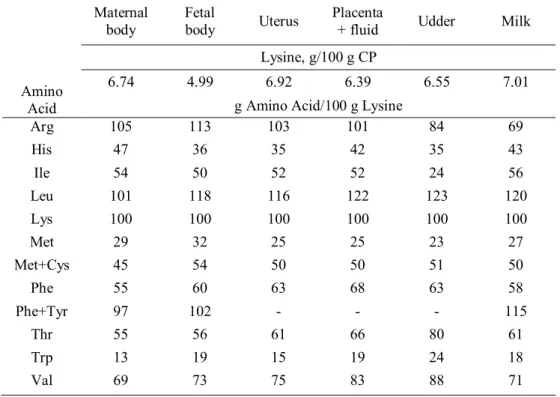
For each of the five protein pools, such as placental tissue, mammary tissue, total fluid (chorioallantoic fluid), uterine tissue, body tissue of dam and fetus, lysine content and amino acid profiles relative to lysine for the protein deposition were presented in Table 3 (NRC, 2012).
Table 3. Lysine content and amino acid profile of maternal and fetal body protein, and of placenta, uterus, chorioallantoic fluid, udder, and milk expressed as a percentage of lysine content (NRC, 2012)
Amino Acid
Maternal
body Fetal body Uterus Placenta + fluid Udder Milk Lysine, g/100 g CP
6.74 4.99 6.92 6.39 6.55 7.01 g Amino Acid/100 g Lysine
Arg 105 113 103 101 84 69 His 47 36 35 42 35 43 Ile 54 50 52 52 24 56 Leu 101 118 116 122 123 120 Lys 100 100 100 100 100 100 Met 29 32 25 25 23 27 Met+Cys 45 54 50 50 51 50 Phe 55 60 63 68 63 58 Phe+Tyr 97 102 - - - 115 Thr 55 56 61 66 80 61 Trp 13 19 15 19 24 18 Val 69 73 75 83 88 71
NRC(2012) suggested that gestating sow model consisted of six different protein pools: fetus, placenta plus fluids, uterus, mammary tissue, time-dependent maternal protein deposition, and energy intake-dependent maternal protein deposition. The protein content of the fetus is estimated using natural logarithmic values and as a function of time (t, days into gestation) and anticipated litter size at farrowing (NRC, 2012). Typical protein deposition patterns for fetus, mammary tissue, placenta and fluids, maternal protein as a function of time, and maternal protein as a function of energy intake during gestation in parity2 sows based on an anticipated litter size of 13.5 piglets and a mean birth weight of 1.4 kg (Figure 1).
Figure 1. Typical protein deposition (Pd) patterns for fetus, mammary tissue, placenta and fluids, maternal protein as a function of time, and maternal protein as a function of energy intake during gestation in parity-2 sows based on an anticipated litter size of 13.5 piglets and a mean birth weight of 1.4 kg (NRC, 2012).
Total SID lysine requirements represent the sum of SID lysine requirements to cover endogenous gut lysine losses and integument lysine losses and SID lysine requirements for lysine retention. Changes in SID lysine requirements (g/day) during gestation were shown in Figure 2.
Figure 2. Simulated SID lysine requirements (g/day) of primiparous (body weight at mating 140 kg; anticipated total gain 65 kg; mean litter size 12.5; mean piglet birth weight 1.4 kg) and parity-4 (body weight at mating 205 kg; anticipated total gain 45 kg; mean litter size 13.5; mean piglet birth weight 1.4 kg) gestating sows. (NRC, 2012)
1.3 Lactation
Nutritional requirements of the modern lactating sow have increased continuously because of genetic improvements for litter size (Boyd and Kensinger, 1998). Considering status of lactating sows, nutrient requirements for lactation result from the needs of maintenance and milk production. The requirement is reduced by any contribution associated with the mobilization of maternal tissues. In early lactation milk production is more dependent on body reserves while in later lactation it is more dependent on both dietary intake and body reserves. The partition of protein between milk production and conservation of maternal tissues varies with both breed and degree of maturity (Sinclair et al., 1996).
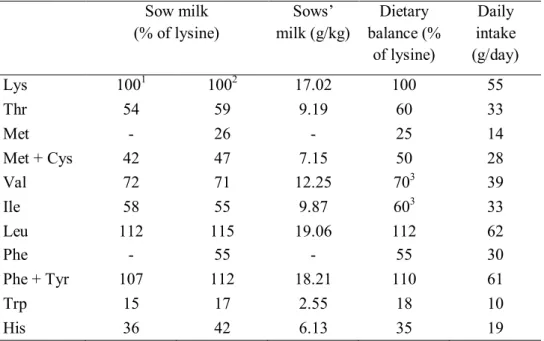
Speer (1990) suggested that efficiency of utilization of absorbed essential amino acids is 100% for maintenance and 80% for milk production which will further influence the establishment of the total requirement. Sow’s milk contains approximately 5.6% crude protein and has the amino acids composition given in Table 4. Also, the amino acid requirements for lactation are closely correlated with the composition of sow’s milk. Although the composition may change to some degree during the lactation period, it appears that a crude protein value of 5.6% of which 7.6% is lysine is appropriate (Elliot et al., 1971; ARC, 1981). The high concentration of lysine in sow’s milk is an indication of the importance of dietary lysine in lactation diets and estimates of this will be considered first.
Requirements increase as milk production gets higher since lactation per se is the major quantitative influence. Thus, requirement follows the shape of the lactation curve (Figure 3), and it is interesting to observe that depending on the level of lactation, maintenance makes up from 4 to 6% of total daily lysine requirement in gilts and 5 to 8% in sows.
Table 4. Typical analysis of sows milk, essential amino acid balance and daily intakes of individual amino acids (total) for lactating sows (Close and Cole, 2000).
Sow milk (% of lysine) Sows’ milk (g/kg) Dietary balance (% of lysine) Daily intake (g/day) Lys 1001 1002 17.02 100 55 Thr 54 59 9.19 60 33 Met - 26 - 25 14 Met + Cys 42 47 7.15 50 28 Val 72 71 12.25 703 39 Ile 58 55 9.87 603 33 Leu 112 115 19.06 112 62 Phe - 55 - 55 30 Phe + Tyr 107 112 18.21 110 61 Trp 15 17 2.55 18 10 His 36 42 6.13 35 19
1Speer (1990) based on a survey of the literature
2van der Peet-Schwering et al (1998) based on a survey of the literature. 3Richert et al. (1996; 1997).
Figure 3. Typical dietary lysine requirements during lactation (28 days) for a 200 kg sow having 2 kg/d litter growth rate and no maternal weight loss (Close and Cole, 2000)
Increasing dietary lysine level of primiparous sows to 1.3% was associated with a large increase in the subsequent litter size (Tritton et al., 1996). Young sows needed a very high level of dietary lysine in lactation and the requirement for maximum prolificacy is greater than the requirement for milk production. However, the daily lysine intake at which piglet growth rate and subsequent litter size were similar, it was 60.6 g/day and in accord with factorial estimates (Tritton et al., 1996). The feed intake of the sows was low and the dietary lysine content had to be increased to 13.1 g/kg to provide the lysine requirement to ensure the highest litter growth rate.
2. Sow nutrition and piglet uniformity
2.1. Factors affecting piglet birth weight variation
2.1.1. Genetic selection and litter size
The genetic improvement over the past 10 years resulted in an increase of 1.8 piglets per litter in sows (Quesnel et al., 2008). It was in agreement with other researches which were reported a successful genetic selection for litter size (Merks, 2000; Foxcroft, 2008). Once the number of fully formed fetuses that can be maintained by the uterus until farrowing is limited, the correlation between increased number of fetuses and individual fetal growth is negative (Wolf et al., 2008). Therefore, various researches reported an increased within-litter variation in piglet birth weight and a decrease in average birth weight of the litter, because of the genetic selection for litter size (Lund et al., 2002; Tribout et al., 2003; Foxcroft, 2008; Quesnel et al., 2008). A greater number of fetuses exceeding the uterine capacity have been related to piglets with limited number of muscle fibers, which results in a compromised fetal growth and development (Foxcroft et al., 2006). In addition, Quiniou et al. (2002) suggested that increased litter size induces an increased proportion of light piglets, a concomitant decrease in litter uniformity and lower piglet birth weight, having negative effects on the piglets’ viability and performance. Consequently, modern sows with high prolificacy leads to negative impacts on the fetal growth and development, as large litters are associated with reduced rates of fetal oxygen and nutrient uptakes, and also with reduced utero-placental blood flow per fetus (Reynolds and Redmer, 2001).
2.1.2. Angiogenesis and placental development
The placenta is the organ through which respiratory gases, nutrients and wastes are exchanged between the maternal and fetal systems. Thus, the fetal growth and development is dependent of the maternal capacity to provide all the metabolic demands required for the fetuses. The efficiency of this process is influenced by the placental blood flow rates, which are dependent on placental vascularization and vasodilatation (Reynolds et al., 1992; Ford, 1995; Reynolds and
Redmer, 2001). Placental angiogenesis is regulated by vascular endothelial growth factor, fibroblast growth factor and the angiopoietin protein families, and also their respective receptors (Reynolds and Redmer, 2001). This process begins with the capillary proliferation and culminates in the formation of a new microcirculatory bed, composed of arterioles, capillaries and venules, and angiogenic factors interact with the local vasodilator nitric oxide to coordinate placental angiogenesis and blood flow (Reynolds and Redmer, 2001).
One of the factors that influence the fetal growth and development is the utero-placental blood flow. The placental circulation has a critical role in the transplacental exchange rates and in the delivery of nutrients for fetal growth. Endogenous relaxant nitric oxide is involved in the vasodilatation of the maternal systemic circulation, regulation of uterine and fetus-placental blood flow (Reynolds and Redmer, 2001). Pere and Etienne (2000) demonstrated that uterine blood flow increased with litter size, but the uterine blood flow per fetus decreased when the litter size increased. It suggested that uterine blood flow adapts to litter size, but within limits. Also, Reynolds et al. (1985) reported that uterine blood flow was positively correlated with the number of fetuses. However, the blood flow per fetus was negatively correlated with the number of fetuses in the uterine horn.
2.2. Improve piglet uniformity
2.2.1. Insulin and IGF-1 mediated nutrition
The effect of preovulatory nutrition on follicles and oocytes is often associated with the effect of nutrition on circulating metabolic hormone concentrations, such as growth hormone and leptin concentrations, but especially insulin and insulin like growth factor -1 (IGF-1) concentrations. Blood concentrations of insulin and IGF-1 are considered to be important for mediating the effect of nutrition on the ovaries. Increasing plasma insulin during the late luteal phase or the early follicular phase, increased ovulation rate irrespective of changes in plasma LH, may be related to the ability of insulin to decrease atresia in small
and medium sized follicles (Prunier and Quesnel, 2000b). Prunier and Quesnel (2000a) demonstrated that insulin had a positive influence on the nutrient supply, growth and development of follicular cells.
Increased insulin and IGF-1 before or at weaning are positively associated with LH pulsatility after weaning. Higher levels of LH stimulate the development receptors and not LH receptors, and then small follicles will be less stimulated and become atretic (Van Den Brand et al., 2009). For this reason, the follicle population becomes more uniform, and a more uniform follicle population seems to result in more uniform oocyte quality (Van Den Brand et al., 2009). For instance, Dextrose supplementation diet during the WEI resulted in higher piglet birth weight uniformity in sows (Van Den Brand et al., 2006). In addition, sows supplemented dextrose plus lactose during a prolonged period before and during follicular phase showed numerically lower within-litter birth weight variation (Van Den Brand et al., 2009). Thse findings are possibly related with the results that dextrose and lactose supplementation possibly increases plasma levels of insulin and IGF-1 (Van Den Brand et al., 2009)
2.2.2. Dietary energy and protein effect
Noblet et al (1985) showed a direct relationship between maternal nutrition and fetal weight, where a decrease in 28% the feed intake after day 80 of gestation resulted in a reduction in fetal growth in gilts. On the other side, some researches insisted that the dams have the ability to mobilize maternal nutrient reserves to support placental and fetal development when these animals are subjected to a restricted energy diet (Anderson, 1975; Pluske et al., 1995; Bee, 2004). So, several studies also reported no effects of low energy supply in the fetal growth (Liao and Veum, 1994; Jindal et al., 1996). Bee (2004) found that different energy intake levels (6.6 amd 10.7 MJ DE/kg) during early gestation in multiparous sows did not affect the average birth weight, weaning weight, number of piglets born alive or number of piglets at weaning, when considering all progenies. Lawlor
et al. (2007) found no influence in birth weight, weaning weight and uniformity of piglet weight when five different dietary digestible energy levels were provided during different gestation phases. Kongsted (2005) suggested that pregnancy rate and litter size can be influenced by energy intake.
Proteins have different funcions and biological activities include structural roles, nutrition, enzymatic catalyses, molecular transport, organism defense and other functions (Lehninger et al., 1993). Therefore, dietary protein intakes during gestation play a critical role in the maternal and fetal growth and development. Wu et al. (1998) demonstrated that dietary protein reduction decreased the activities of nitric oxide synthase, citrulline synthesis from arginine and ornithine decarboxylase activity in placenta and endometrium. It may decrease the maternal ability to transfer nutrients and oxygen to the fetus, resulting in negative impacts on within-litter birth weight uniformity. In agreement with these findings, other studies reported negative effects on intrauterine growth retardation, decreased piglet vitality and birth weight of sow progeny by restricted-protein diets during gestation (Atinmo et al., 1974; Pond et al., 1992; Schoknecht et al., 1994; Wu et al., 2006). Similarly, Redmer et al. (2004), evaluating the effect of nutrient intake during pregnancy, demonstrated that maternal nutrition can have a profound effect on fetal growth and development by changing placental growth and vascular development.
2.2.3. Increased feed intake during gestation
Several studies have been conducted to evaluate the effects of an increased amount of feed during gestation. Mahan (1998) observed that the sows that received a greater quantity of feed, equivalent to 130 g additional feed per day, farrowed more total and live piglet compared with the control group that was given a feed intake similar to the NRC recommendations (NRC, 1988). Similarly, Cromwell et al. 1(1989) concluded that additional feed in late gestation (+ 1.36 kg of feed/day from day 90 of gestation to farrowing) improves the reproductive performance. The results showed a greater total litter weight at birth, an increased birth weight in sows fed extra amounts of feed when compared with a control group.
Nevertheless, several studies have shown no effect of feeding levels during gestation on the sows’ reproductive performance. Dwyer et al. (1994) reported that litter size, pig mortality and birth weights were not significantly affected by different quantities of feed during specific periods of gestation (2.5 vs 5.0 kg/day). However, they concluded that the increased maternal nutrition during early to middle gestation can lead to an increased production of secondary myofibers in the fetus in agreement with results of Gatford et al. (2003) and Bee (2004).
By evaluating different nutritional strategies during gestation, Nissen et al. (2003) found no beneficial effects on average piglet birth weight, litter size at birth and at weaning, when sows ere fed ‘ad libitum’ during different gestation phases (25-50 and 25-70 days of gestation) compared with a control group (restricted diet), demonstrating no beneficial effect in fetal growth and development. In agreement, no differences were observed on within-litter birth and weaning weight variation, total number born and piglets born alive, when sows received 50% more of the same feed compared with the control group (Cerisuelo et al., 2008). Rehfeldt and Kuhn (2006) reported no effect of maternal overnutrition on birth weight of their progeny. Similarly, other studies did not find effect of increased feed intake in sow reproductive performance (Miller et al., 2000; Pond et al., 1981; Sterling and Cline, 1986). In contrast, Lawlor et al. (2007), evaluating different diets during specific gestation phases, reported that an expressive increase in the number of piglets born dead per litter, when sows were overfed from 50 to 80 days of gestation. Also, Musser et al. (2006), evaluating the effects of maternal feed intake during gestation on the fetal muscle development, observed that sows tended to have lower number of pigs born alive when compared with sows fed with the control diet (3.63 vs 1.81 kg/day of gestation). Considered these results, the lower reproductive performance might be that the maternal nutritional status influences the circulating progesterone, which can modify endometrial development and secretory activity, and affects the composition of allantoic fluids that provide nutrients to the fetus (Ashworth, 1991). A detrimental effect of high feed intake on embryo survival was demonstrated as an inverse relationship between nutrition levels and circulating progesterone
concentrations in pigs (Dyck et al., 1980; Prime et al., 1988).
2.2.4. Amino acids
There are some evidences that the arginine family of amino acids (AFAAs; arginine, glutamine, glutamate, proline, aspartate, asparagine, ornithine and citrulline, of which the last two are not substrates for protein synthesis) have an important role in placental vascularization and development, especially during the first half of pregnancy (Wu et al., 2007). The AFAAs have an important role in placental angiogenesis and placental, embryonic and fetal development. AFAAs are interconvertible via complex interorgan metabolism in pigs (Wu et al., 2007). Wu et al. (1996b) have shown an unusual abundance of arginine and ornithine in porcine allantoic fluid from 35 to 40 days of pregnancy as the period of rapid placental growth). Glutamine was the most abundant amino acid in the amniotic fluid during the early fetal stage of pregnancy (days 30 to 45) and was also abundant in the allantoic fluid. For these reason, they concluded that the allantoic fluid may serve as a nutrient-rich reservoir for arginine, ornithine and glutamine, at least during this stage of pregnancy. In addition, being the building blocks of proteins and polypeptides, functional amino acids, such as arginine, cysteine, glutamine, leucine, proline and tryptophan, are important regulators of key metabolic pathways that are crucial for maintenance, growth, reproduction and immunity (Wu, 2009). According to Wu et al. (2010), nitric oxide, polyamines, arginine and other functional amino acids (glutaimine, leucine and proline) may regulate embryonic and fetal muscle growth and development via cell signaling through the mammalian target of rapamycin. Also, they concluded that arginine supplementation increases litter size and litter birth weight, and its combination with glutamine, leucine and proline can reduce variation in birth weights of piglets.
2.3. Effects of arginine supplement
2.3.1. Arginine metabolism
as a precursor for the synthesis of proteins, nitric oxide and polyamines (Figure 4, Luiking et al., 2004). Arginine is particularly abundant in porcine allantoic fluid (4-5 mmol/L) at d 40 of gestation. Also, arginine and ornithine in porcine allantoic fluid accounted for 50% of the total free amino acid nitrogen in allantoic fluid (Wu et al., 1996).
Figure 4. Metabolic pathways of arginine (Luking et al., 2004)
Nitric oxide is an endogenous relaxant factor. It is produced from arginine via nitric oxide synthase and is involved in the vasodilation of the maternal systemic circulation, regulation of uterine and feto-placental blood flow (Wu and Morris, 1988; Wu et al., 2006).
Evidences suggest an interaction between angiogenic factors and nitric oxide to coordinate placental angiogenesis and blood flow, which are crucial events for the placental vascularization and, consequently, fetal growth (Reynolds and Redmer, 2001). Sladek et al. (1997) demonstrated an increased uterine blood flow when stimulators of endogenous nitric oxide were infused into the uterine circulation in sheep and a reduced plasma volume and newborn weights caused by chronic administration of nitric oxide inhibitors to pregnant rats. However, low
nitric oxide from embryonic mesenchymal precursor induced that adipocytes increased and myocytes decreased. Furthermore, nitric oxide (NO) and polyamines concentrations were decreased, and then, secondary fibers (d50-90 in pigs) and numbers of muscle fibers at birth were reduced. Finally, low concentration of nitric oxide during fetus develop phase resulted in poor postnatal muscle growth (Figure 5, Wu et al., 2010)
Figure 5. Nitric oxide and polyamines act to fetus development (Wu et al., 2010)
The unusual abundance of the arginine-family amino acids in fetal fluids is associated with the highest rates of NO and polyamine syntheses in ovine placentae in the first half of pregnancy (Kwon et al., 2003; Kwon et al., 2004).
Polyaminses are related with protein synthesis regulation and cell function and differentiation. The inhibition of placental polyamine synthesis is related to decreased placental size and lower fetal growth (Wu et al., 2004). Polyamines are organic compounds that are derived from ornithine by the arginase pathway, resulting in the synthesis of putrescine, spermidine and spermine (Lehninger et al., 1993; Wang et al., 2003). However, the polyamine synthesis in the porcine placenta is dependent on the conversion of arginine into ornithine and proline via the arginase pathway in other maternal tissues, as arginase activity is not detected in the
maternal placenta (Figure 6, Wu et al., 2010).
Figure 6. Role of functional amino acid in regulating synthesis in porcine placentae (Wu et al., 2010)
2.3.2. Effects of arginine on piglet uniformity
For the higher prolificacy, higher nutritional requirements for supporting the metabolic needs of both the sow and their fetuses are required (Kim et al., 2005). Unbalanced maternal nutrition with respect to increased requirements to support the increased number of fetuses in the uterus may be associated with fetal growth retardation, and, as a results, negative effects on the piglet performance, such as decreased piglet uniformity and decreased piglet birth weight. Kim et al. (2009) insisted greater body weight variations among fetuses mainly after 45 days of gestation, which could be associated with the limitation of sows to provide sufficient nutrient support through blood for maximal growth of all fetuses (Wu et al., 2006).
The relevance of arginine in fetal growth and development have been recognized, because of the participation of nitric oxide and polyamines in critical events during gestation, such as angiogenensis, placental vascularization and embryogenesis (Flynn et al., 2002; Wu et al., 2006).
(22%) and live litter birth weights (24%) without any reduction in the average birth weight of piglets in gilts supplemented with 1% of L-arginine·HCl from days 30 to 114 of gestation compared with a control group that received a control diet (1.7% L-arginine-isonitrogenous diet). In addition, the piglet mortality decreased (65%), the plasma concentration of arginine and its metabolites (ornithine and proline) increased and the birth weight variation of all piglets born alive increased but was not significant. According to the Mateo et al. (2007), the arginine supplementation may have increased the nitric oxide and polyamine synthesis, and thus the increasing placental angiogenesis and growth, enhance the utero placental blood flow, the nutrient transfer from mother to fetus and, consequently, fetal survival and development. For the effects of arginine supplementation, 1% arginine treatment had greater the number of total piglets born alive per litter and litter birth weight of all piglets born alive, but less the number of piglets born dead per litter (Mateo et al., 2007). In blood profiles, the concentration of urea at gestation 90 day and 110d was lower in arginine 1% treatment, and plasma arginine, prolife, ornithine concentration were greater in arginine 1% treatment. In other study of Che et al. (2013), supplementation of additional arginine during gestation from day 30 to 114 had greater number of total pigs born alive and less number of total pigs born dead rather than other treatments (control, arginine supplemented from day 30 to 90). Also, total litter weight and live litter weight were greater in sows supplemented arginine during whole gestation period (d30-114). With supplementation of additional arginine during gestation period, the concentration of urea was increased significantly at day 90 and 110 of gestation. In addition, a higher number of live piglets were observed in sows supplemented with 25g L-arginine per day from 14 to 28 days of gestation, without any effect in the average birth weight (Ramaekers et al., 2006).
3. Nutrition for longevity
3.1. Gilt
Gilt development nutritional trials have had a mixture of positive and negative impacts on sow longevity. Kirkwood (1990) reported that a relationship between body composition at mating and longevity was merely reflecting the consequences of subjecting improved pigs to conventional management and modern gilts are subjected to good management that minimizes weight and condition loss during lactation. Also, he reported that there is no association between live weight or backfat depth at first successful breeding and subsequent reproductive performance. Long et al. (1998) reported that sows fed a high energy, high protein diet ad libitum from 120 days of age until 180 days of age had significantly poorer stayability through four parities than gilts fed a high energy, low protein diet ad
libitum or a restricted-fed high protein diet. In addition, it has been demonstrated
that high energy intake during rearing can lead to reduced mammary gland growth of gilts (Han et al., 2000). Boyd et al. (2002) provide numerous nutritional and management recommendations to maximize lifetime sow productivity. This report describes nutritional methods that can support different rates of growth during pregnancy and recommended feed intakes based on differing body condition scores such that body reserves can be replenished. Also, they demonstrated that lactation feeding strategies including predicted energy and lysine needs for first litter sows and offered feed intake targets based on the litter size the sow is nusing and stage of lactation.
Some minimum level of backfat is needed on replacement gilts so that they maximize lifetime number of piglets born alive. Challinor et al. (1996) reported that gilts that had 18 to 22 mm of backfat at an average weight of 150 kg averaged 7.2 more piglets over five parities than did gilts with 14 to 16 mm backfat. Similarly, Brisbane and Chenais (1996) reported that the difference in survival of sows until at least the fourth parity was 10% higher in gilts from the highest backfat category (>18 mm) when compared to gilts from the leanest backfat category (<10 mm) when backfat probe was adjusted to 100kg. Tummaruk et al. (2001) found that
gilts with higher backfat adjusted to a 100kg constant weight had more live born piglets in their second parity when compared to gilts with low bakcfat. On the other hands, Young et al. (1991) reported that backfat thickness of gilts that averaged 106.8 kg at first oestrus did not account for a substantial amount of variation in the number of piglets born alive in the first parity or total number of piglets born alive per initial sow started on the trial. Similarly, Rozeboom et al. (1996) insisted that body composition at first breeding when average gilt weight was 106.5kg did not affect litter size at pairty one, two, or three, ore overall. In addition, they showed that age at first mating was not associated with the number of piglets born alive in parity one, two, three, or overall. Also, Young et al. (1991) reported that age had no appreciable effect on number of piglets born alive when evaluated on individual sows or on a per initial sow basis. Newton and Mahan (1993) found no relationship between breeding weights of 120, 135, or 150 kg and the ability of gilts to reproduce over three parities when gilts were fed to alter daily gain from 80 kg to breeding.
It is well known that if gilts reach puberty at an earlier age, sow longevity and life reproductive performance will be improved. Chapman et al. (1978) found that selecting gilts that reached puberty and conceived earlier improved reproductive performance. These results appear to be supported by Young and King (1981) who found small differences when gilts were mated at puberty rather than mated at the second or third oestrus and Holder et al. (1995), who reported a higher percentage of gilts that produced five parities in gilts that reached puberty earlier. However, Brooks and Smith (1980) reported that no difference in the number of sows completing five parities, nor the number or weight of pigs born in any of the first five parities in a study where puberty was induced at 160 or 200 days of age. There is a traditional perception among pork producers that increasing age of gilts at first successful breeding will improve sow longevity. Pomeroy (1960) reported that average number of litters and lifetime total pigs born per sow was highest among sows farrowing their first litter at 14 to 16 months of age when compared to gilts at 12 to 14 months of age. These results are not supported by MacPherson et al. (1977),